
Your puppy didn’t come with a chill button. One minute: zoomies. The next: sock thief.
You love the chaos, but you also want a dog who can relax when you need them to. Good news: calm isn’t a personality trait—it’s a skill you can teach. Let’s build that zen together with simple habits you can use today.
Why Calm Matters (And Why It’s Not “Being Boring”)
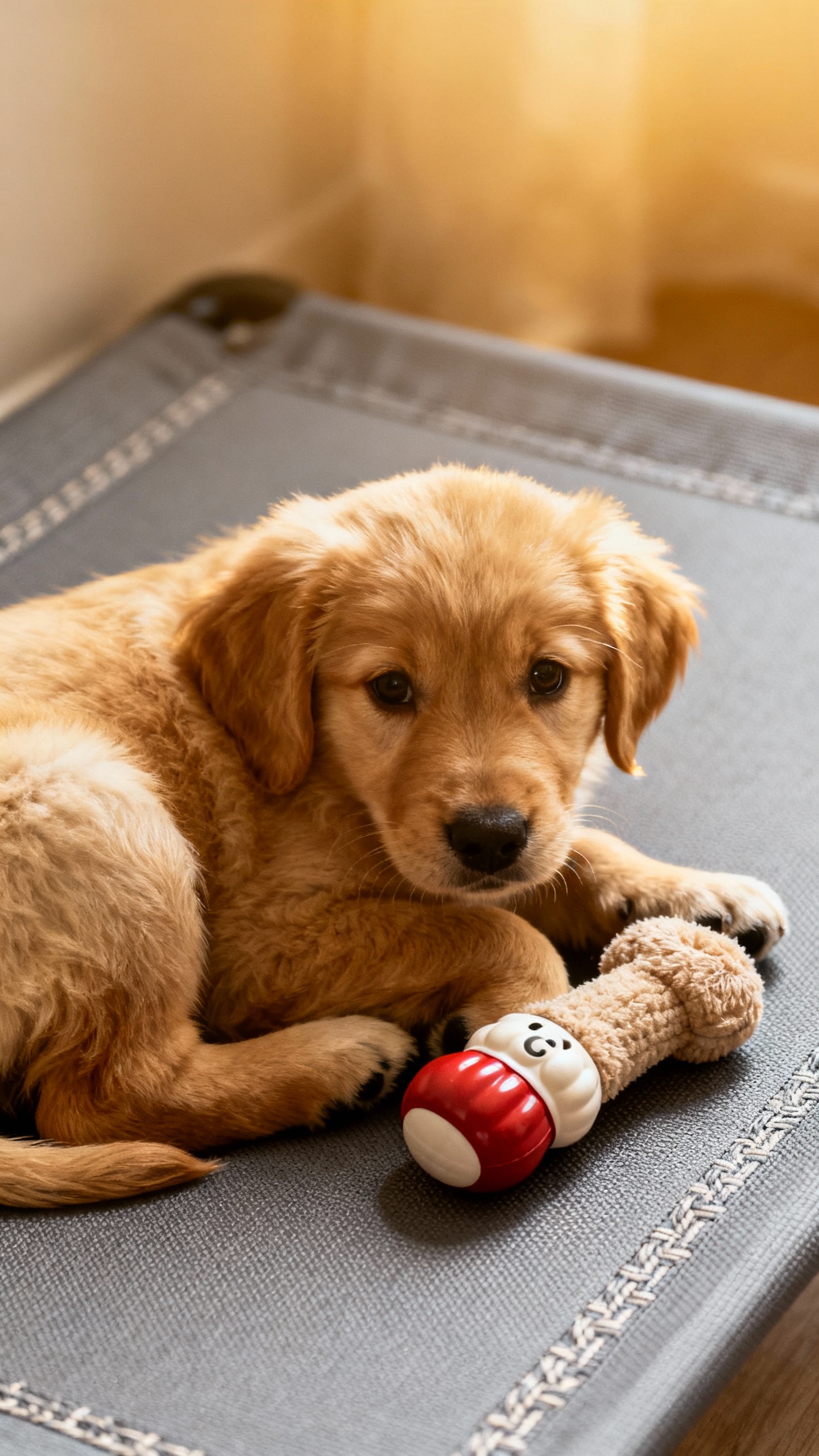
Calm doesn’t mean your puppy turns into a rug.
Calm means your dog knows how to dial it down when life asks for it—company at the door, kids doing homework, a coffee date at a patio. You’ll enjoy your dog more, and your dog will feel safer and more confident. Also, exhausted isn’t the same as calm.
You can run your puppy ragged and still get a tornado indoors. We want a dog who can self-regulate, not just conk out from chaos.
Way #1: Teach a Solid “Settle” on a Mat
A mat or bed gives your puppy a clear “this is where chilling happens” cue. Think of it like a cozy off-switch you can pack anywhere.
How to Teach It
- Place a mat on the floor.
The second your puppy looks at it or steps on it, mark it (say “Yes!”) and reward. Keep the treats small and frequent.
- Build associations. Feed treats on the mat.
Deliver chews on the mat. Scatter a few kibbles on it. Make the mat the happiest square foot in the house.
- Add a cue like “Place” once your pup trots to it reliably.
Reward calm behaviors on the mat: lying down, hip roll, sighing. Ignore wriggly circus tricks. You’re paying for peace.
- Increase duration slowly.
Start with 3–5 seconds of chill, then 10, then 20. Keep it easy and end before your puppy gets fidgety.
Pro Tips
- Use a chew (bully stick, stuffed Kong, safe puppy chew) to help your dog relax for longer.
- Move the mat to different rooms and eventually outside. Calm should travel.
- Pay calm, not presence. If your pup stands and stares at you, wait.
Reward when they lie down or soften.
Way #2: Work the “Calm Ladder” Instead of Over-Excitement
You know when people hype the dog up—“Who’s a good boy?! ARE YOU READY?!”—and then wonder why the dog can’t settle? Yeah.
Let’s use a calmer approach.
The Calm Ladder Explained
Imagine calm in levels:
- Level 1: Still body, soft eyes, slow breathing.
- Level 2: Lying down, head tucked, relaxed jaw.
- Level 3: Chewing quietly or sniffing calmly.
- Level 4: Sitting quietly with attention.
You pay higher for lower levels. If your pup sits, reward. If they lie down and sigh, jackpot.
You shape the dog you want by feeding those moments.
Practice Opportunities
- Before meals: Bowl down only when your pup offers a sit or a down.
- Before going outside: Door opens for calm, not chaos.
- Before greetings: People say hi only when paws stay on the ground.
You build a world where calm opens doors—literally. IMO this changes everything.
Way #3: Use Decompression Walks and Sniffing Games
Tired is good. Regulated is better.
Decompression walks let your puppy move, sniff, and unwind without high-arousal play that wires them up.
What Counts as a Decompression Walk?
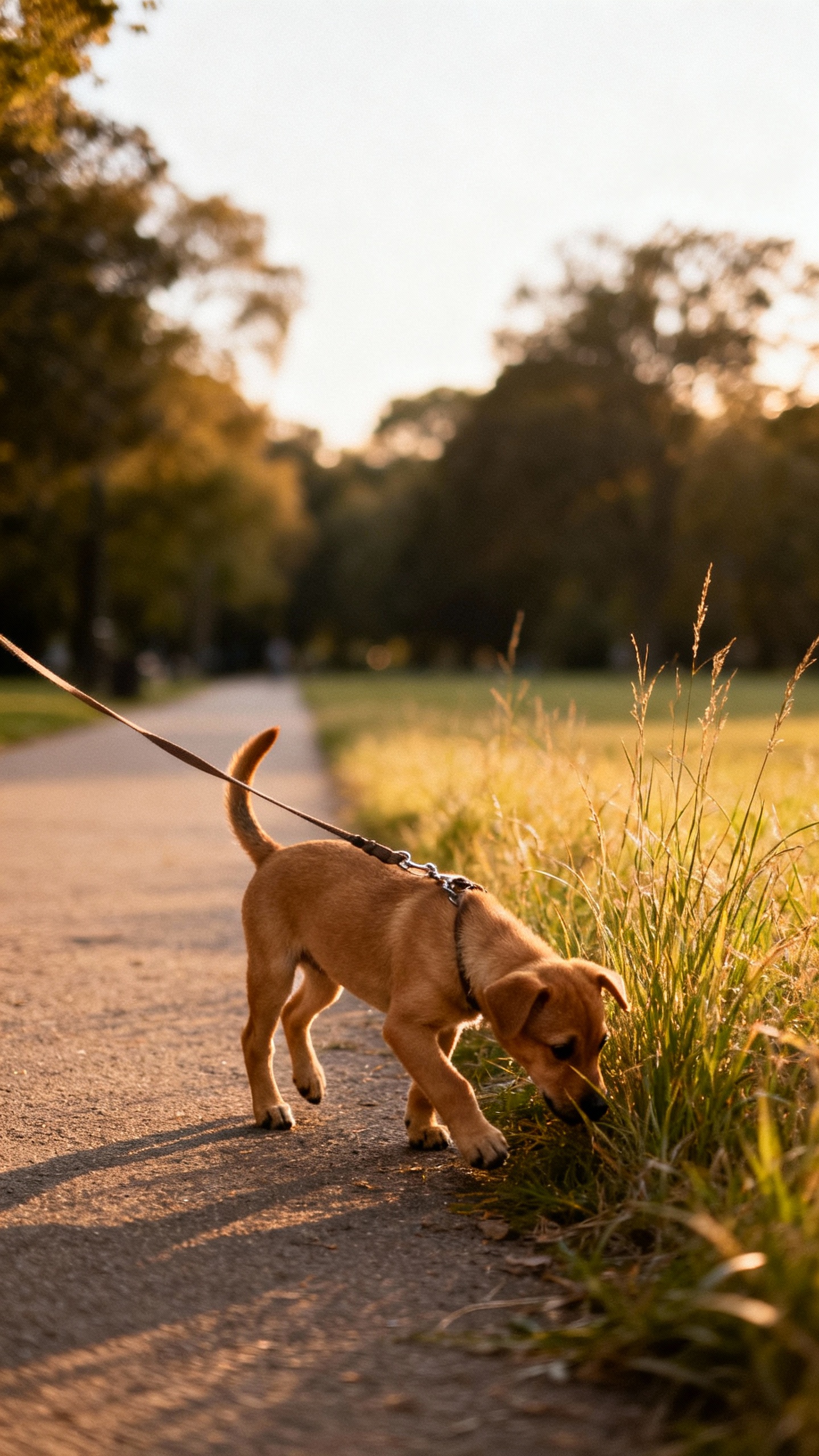
- Loose leash or long line in a quiet area—parks, fields, quiet neighborhoods.
- Minimal cues. Let them sniff and meander. You supervise safety; they choose the route.
- 10–30 minutes depending on age. Puppies don’t need marathons.
They need calm exploration.
Sniffing Games at Home
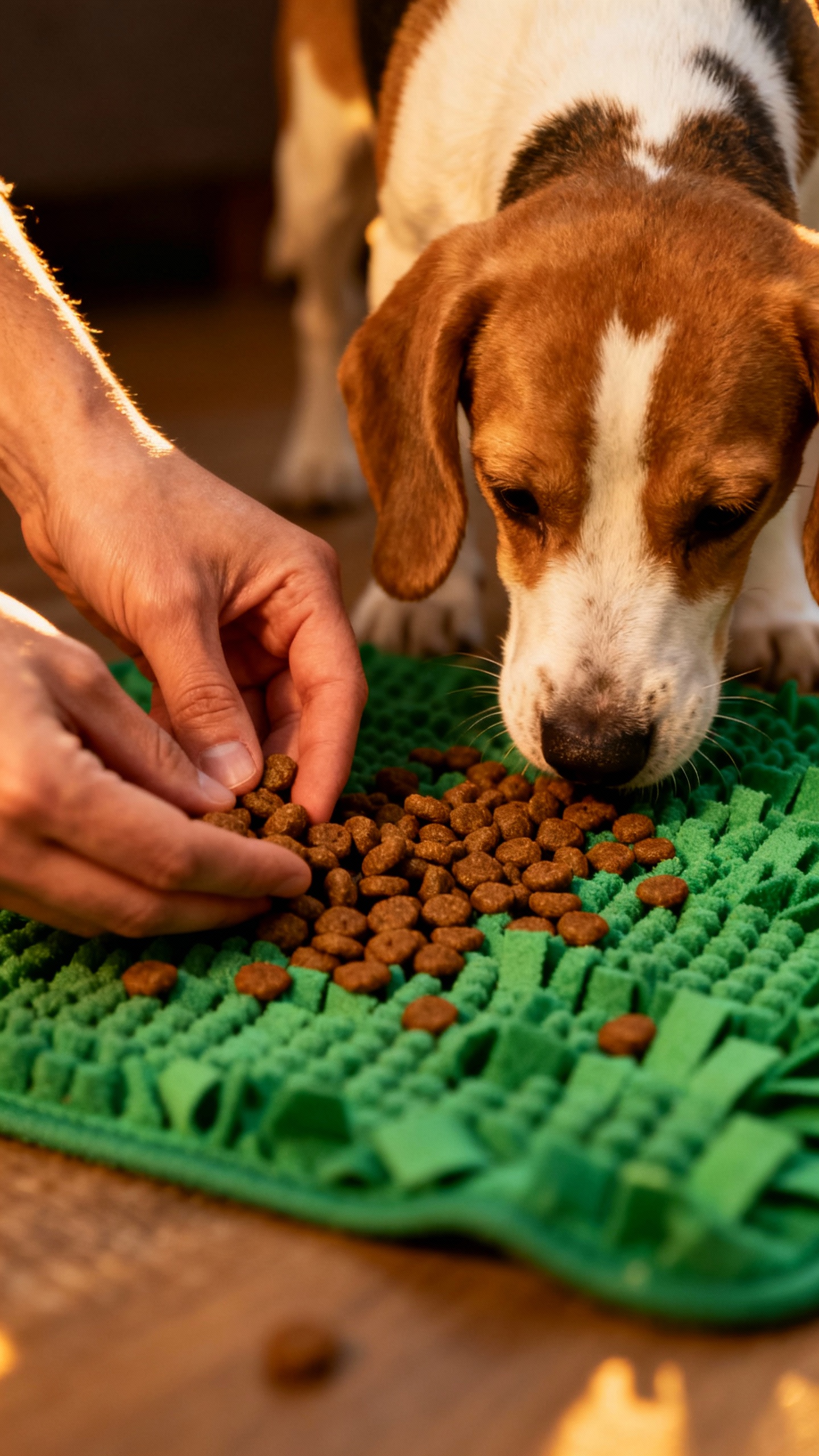
- Scatter feeding: Toss kibble in the grass or on a snuffle mat. Nose down = brain on.
- Box searches: Put treats under cups or inside boxes with holes. Let them figure it out.
- “Find it” cue: Say “Find it!” and toss a treat nearby.
It redirects energy fast during zoomies.
FYI, sniffing lowers heart rate and helps dogs decompress. Science agrees, and your carpet will too.
Way #4: Install an Off Switch with Structured Rest
Puppies nap a lot. If yours doesn’t, they might need help.
Over-tired pups act wild, bite harder, and forget everything you taught them five minutes ago.
Create a Rest Routine
- Crate or pen time after play, training, or walks. Calm chew + white noise = magic.
- Predictable schedule: Play → potty → training → chew → nap. Repeat.
- Darken the room or cover the crate partially.
Lower stimulation = faster snooze.
Teach “All Done”
When play ends, say “All done,” stand up, and go quiet. No more engagement. Put away toys.
Guide your pup to their mat or pen and give a chew. Consistency teaches your dog that hype has an end—and that end equals chill.
Way #5: Manage the Environment (Because Willpower Is Overrated)
Your puppy can’t “choose calm” if your living room looks like a carnival. Set them up to succeed.
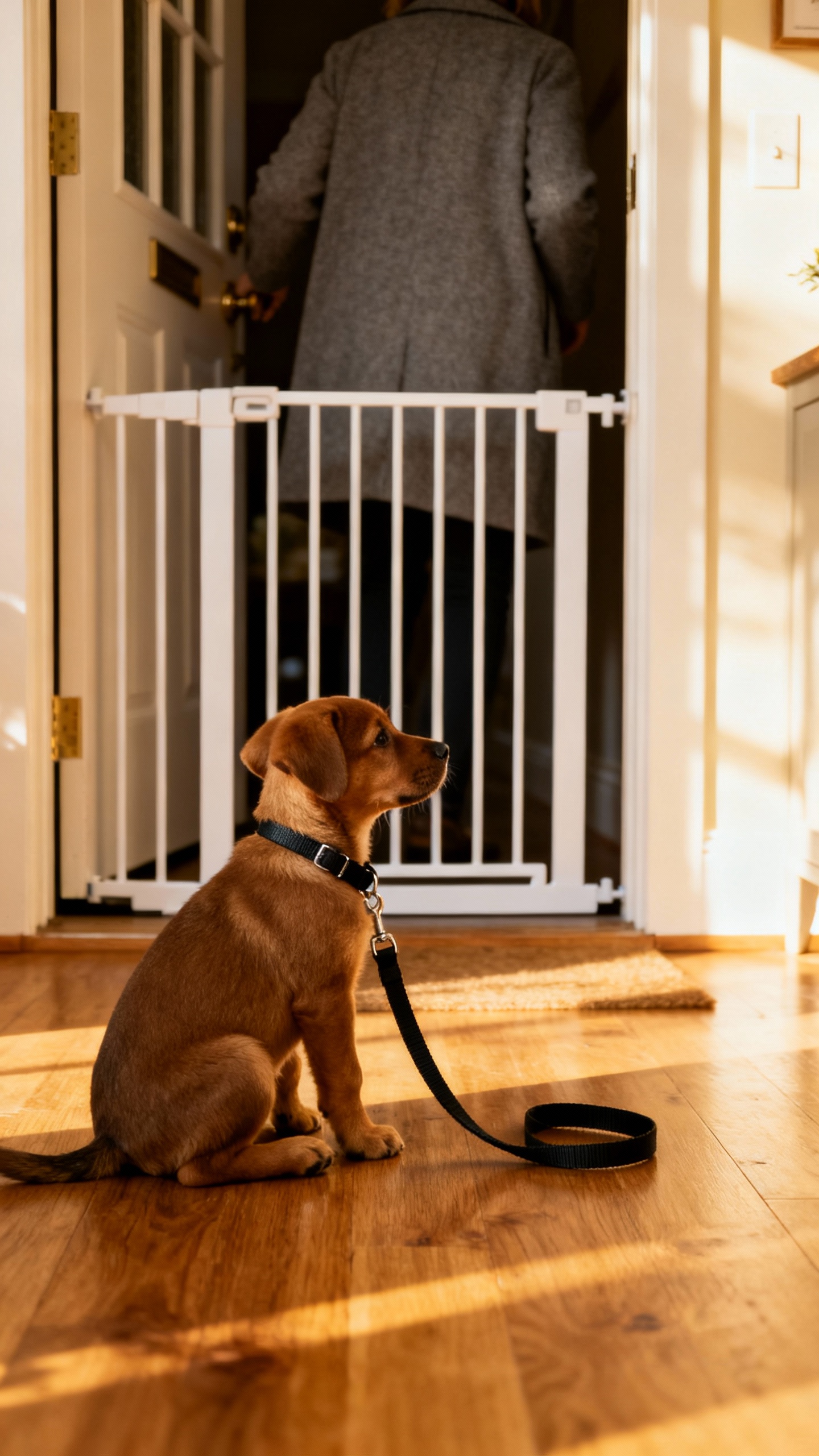
- Block windows or set up baby gates to reduce triggers like squirrels and delivery trucks.
- Pre-load calm chews in the freezer so you can pivot quickly when things get rowdy.
- Rotate toys to keep novelty low.
Fewer choices = fewer zoomies.
- Use music or white noise during work calls or guests to lower arousal.
Greeting Protocol
If visitors send your puppy into orbit, try this:
- Before the knock, put the puppy on their mat or in a pen with a chew.
- Let the guest enter and settle. No greetings yet.
- Release for a short hello only if the pup stays relatively calm. If not?
Try again next time. Calm earns access.
Way #6: Train Calm Cues in Real Life, Not Just Class
I love puppy class. But you need “calm fluency” in real-life chaos.
Micro-Sessions Everywhere
- At cafes: One minute of mat settle, then a short walk, then back to settle.
Alternate arousal and calm.
- At the car: Door opens only when your pup sits and breathes. No pogo sticks.
- On walks: Stop often and wait for a sit or a glance. Pay quiet focus.
Be Boring On Purpose
When your puppy throws attention-seeking behaviors (barking, pawing, nibbling your sleeve), go neutral.
Cross your arms. Look away. Reward when they sit or lie down.
Your attention is currency—spend it wisely.
Common Mistakes to Avoid
- Over-exercising and expecting calm. You get a fitter athlete, not a zen monk.
- Talking nonstop. Calm is mostly body language. Lower your voice, slow your movements.
- Training only when it’s convenient. You need calm reps during the messy, real-life moments.
- Reinforcing chaos by accident. Laughing at jumping or giving attention to barking teaches the wrong lesson.
Cute now, annoying later—IMO.
FAQ
How long can a puppy “settle” at a time?
Start with seconds, not minutes. Aim for 10–30 seconds, then 1–2 minutes, and build up to 10–15 minutes with a chew. Most young pups need breaks often.
Quality beats marathon sessions.
What if my puppy won’t stop biting during calm practice?
Use management. Shorten sessions, provide a chew, and schedule more naps. Redirect biting to a toy, then end the game with “All done” if the sharkiness continues.
Over-tired puppies bite more—fix the rest first.
Do certain breeds struggle with calm more?
Some working and herding breeds run hotter by default, but every puppy can learn calm with the right structure. You’ll just need more sniffing, more decompression, and stricter routines. Think “smart management,” not “lost cause.”
Can I use food for calm without creating a treat-obsessed pup?
Yes.
Reward low-energy behaviors generously early on. Fade to intermittent rewards and calm praise once your dog understands. Also, use their regular meals in training—no need to add tons of extra calories.
Is the crate necessary?
Not mandatory, but super useful.
A crate or pen gives your puppy a safe, predictable spot to downshift. If you’d rather skip a crate, use a gated room and a mat routine. The principle stays the same: structure + rest.
What if guests hype up my puppy?
Set the rules before they enter.
Puppy greets only when calm, or puppy chills behind a gate with a chew. Your house, your boundaries. Hand guests treats and show them how to reward four-on-the-floor behavior only.
Wrap-Up: Calm Is a Muscle—Train It
You don’t need a perfectly chill puppy.
You need skills and habits that make calm easy. Build your mat routine, pay quiet behaviors, use decompression walks, and protect rest like it’s sacred. Stick with it and your little tornado will learn to park the zoomies when it matters.
Bonus: you’ll finally drink coffee while it’s still hot.
Leave a Reply