
Your dog’s sleeping position says more than you think. It’s canine body language, just without the barking. Watch closely and you’ll spot clues about comfort, confidence, temperature, and even health.
Ready to decode the bedtime weirdness? Let’s talk dog naps.
The Classic Curl: The Donut
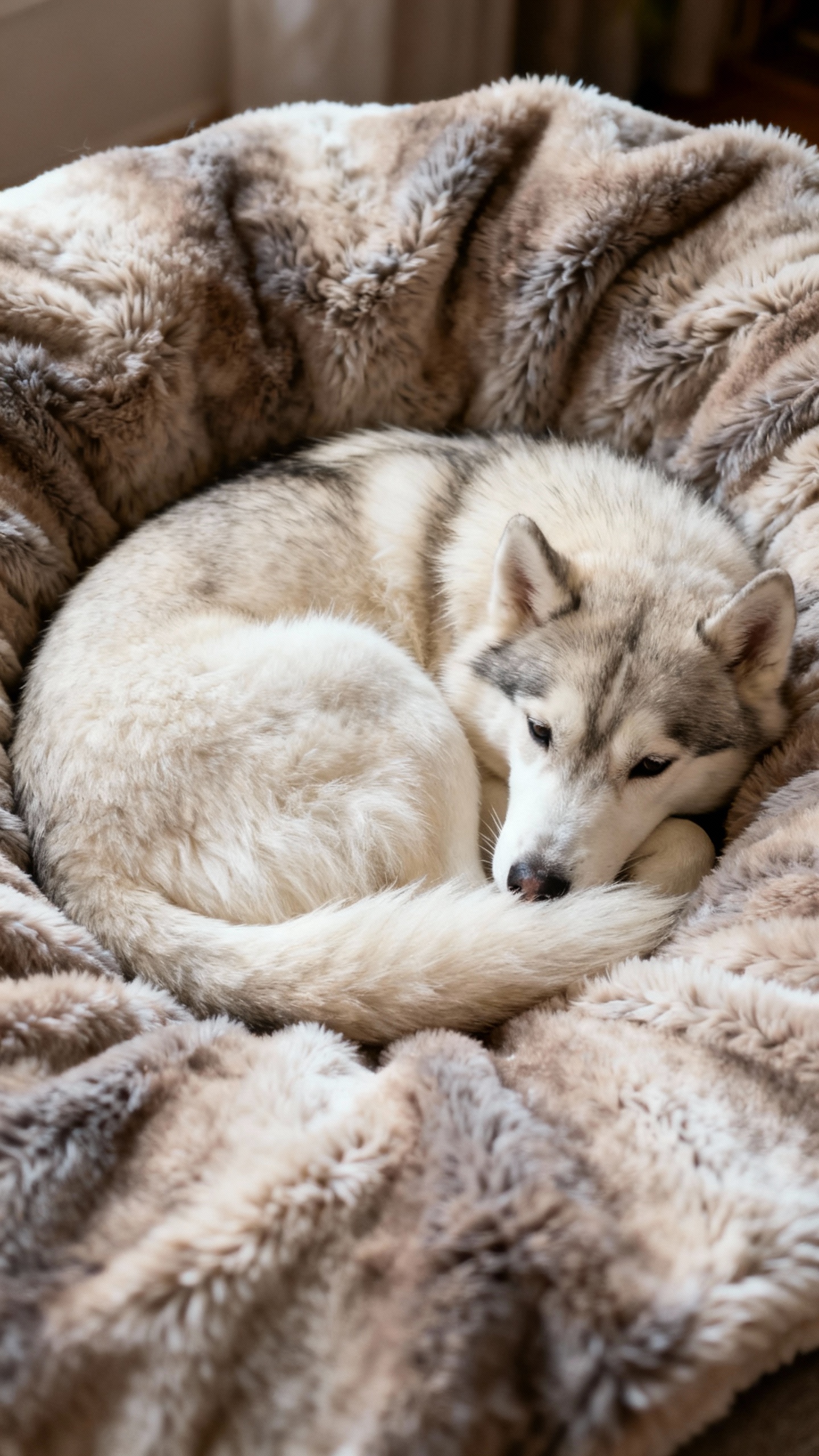
Dogs curl into a tight ball with their nose tucked under their tail. It looks cozy because it is.
This position keeps warmth in and protects vital organs—ancestors used it for survival. What it usually means:
- They want warmth or they’re sleeping in a cool room.
- They feel safe but cautious—not anxious, just practical.
- They plan a short nap rather than a deep sleep.
When to take note
If your dog curls tightly all the time—even when the room is warm—they might feel a bit uneasy. Try offering a den-like bed, dimmed lights, or a blanket. FYI, seniors curl more often because joints feel better in a supported shape.
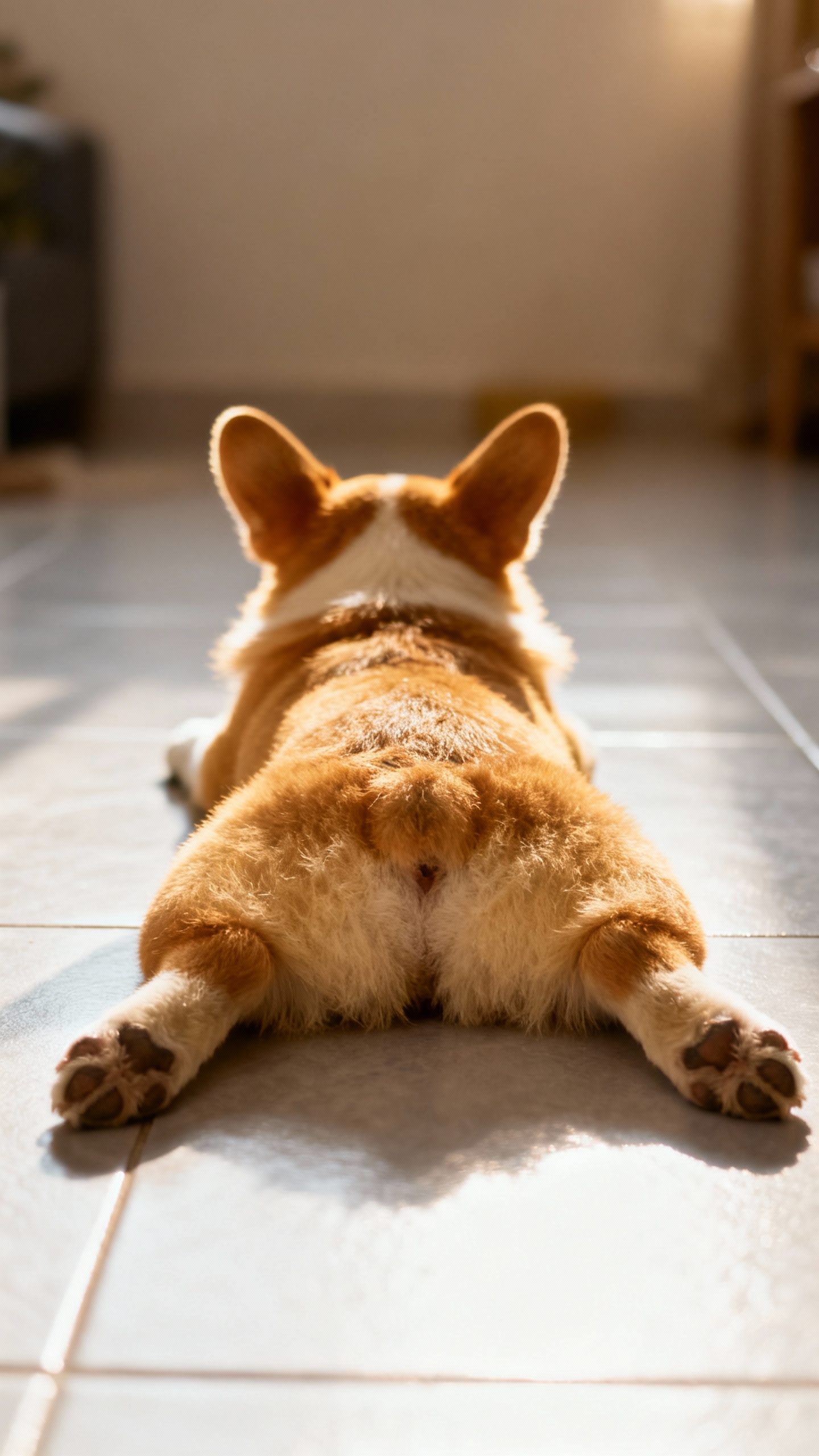
The Sploot or Superdog: Belly Down, Legs Behind
Picture a superhero landing: belly flat, hips stretched, back legs splayed like frog legs.
Bonus points if the front legs reach forward. What it usually means:
- Cooling strategy: the belly hits the cool floor to shed heat.
- Relaxed hips and a comfy spine, especially in younger dogs.
- Ready to bounce: this is a “resting, not out cold” pose.
Hip health check
Puppies sploot with wild abandon. Adult dogs can too, but if your dog avoids this position or seems stiff standing up, keep an eye on hip comfort. Not instant cause for panic—just an IMO “note it and watch” situation.
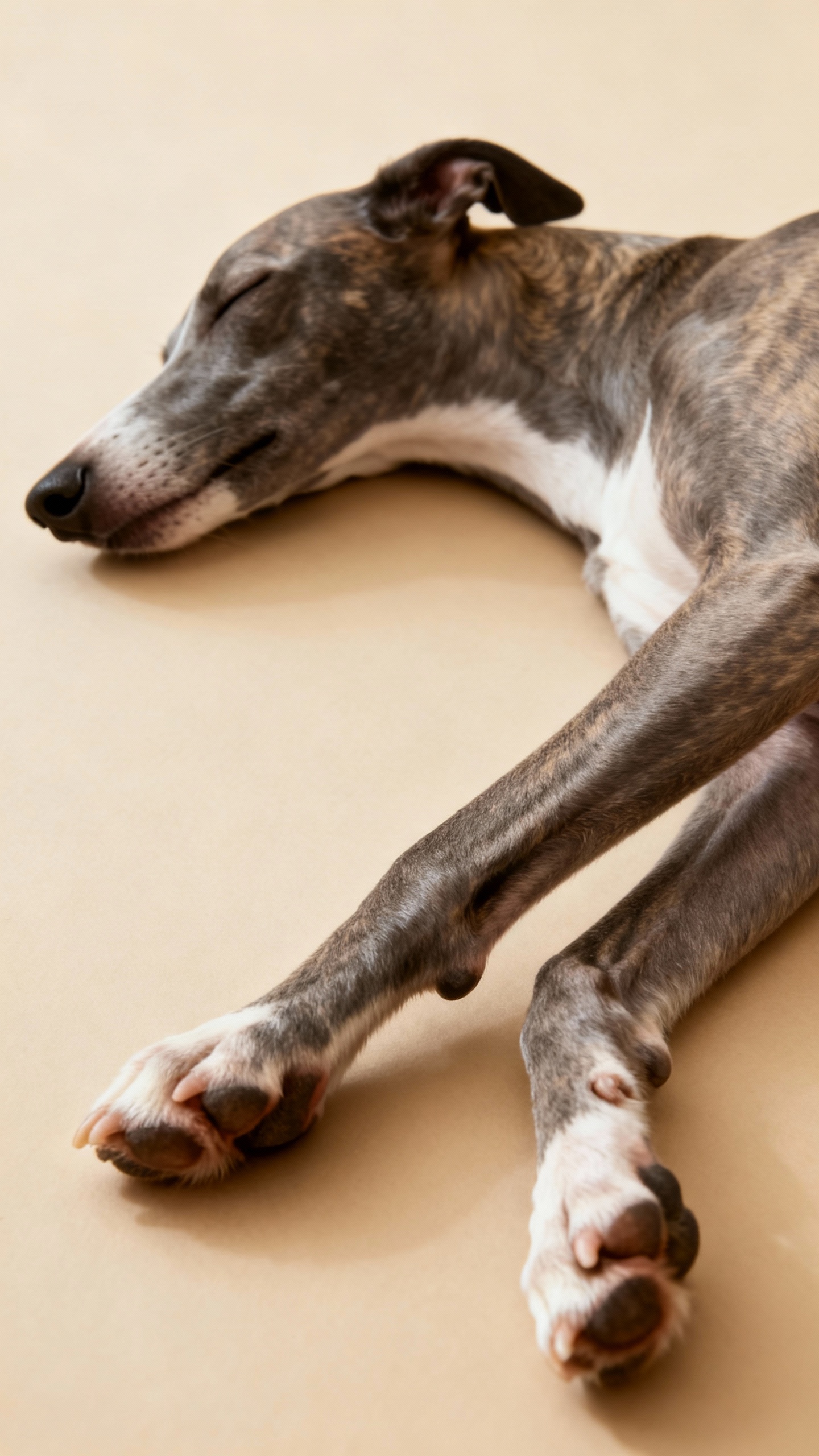
Side Sleeper: Legs Out, Fully Flopped
Your dog lies on their side, legs extended, face relaxed, probably snoring like a tiny chainsaw.
This is nap nirvana. What it usually means:
- They feel secure in their environment.
- They’re logging deep REM sleep, which means memory consolidation and dream twitching.
- It’s a trust move: the belly and throat feel exposed.
Dream twitching vs. distress
Kicking legs, ear flicks, soft woofs—normal REM drama. If you see rigid limbs, intense paddling, or they can’t wake easily, record it and talk to your vet just to rule out seizures. Rare, but worth a mention.
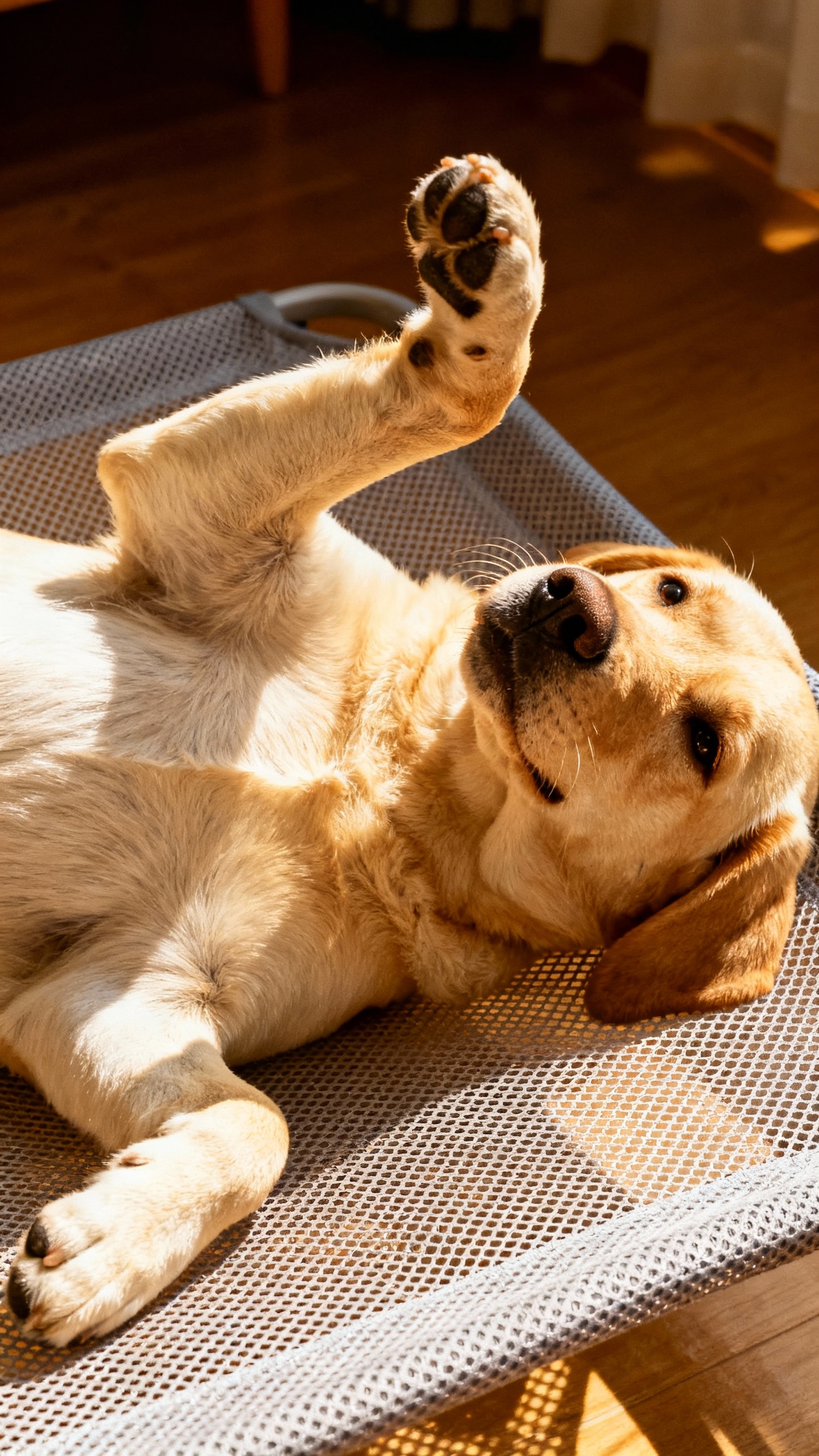
Back Sleeper: Paws in the Air, Belly Up
This one’s hilarious.
Belly exposed, feet skyward, sometimes with a tongue lolling out like a dropped sock. Peak vulnerability, peak comfort. What it usually means:
- They’re roasting and want to vent heat from the belly and paw pads.
- Maximum trust in you and the space—no threat detected.
- Loose joints and relaxed muscles, often seen in well-exercised dogs.
When it’s extra telling
If a new rescue flips to this within days, you nailed the environment. Keep the room cool and offer a breathable bed.
If you hear loud snoring here, try a slightly elevated pillow for neck support.
The Cuddle Pile: Pressed Against You (or Another Pet)
Your dog sleeps glued to your legs, wedged behind your knees, or stacked like a furry Jenga piece with another dog. Cute? Yes.
Strategic? Also yes. What it usually means:
- Social bonding—dogs are group sleepers by nature.
- Temperature sharing when it’s chilly.
- Security blanket vibes during thunderstorms or changes in routine.
Boundaries without guilt
If you love the cuddles, enjoy. If you don’t, set a “bed spot” with a plush mat near you.
Reward them for choosing their spot. You can protect your sleep and still be the hero—win-win.
The Sphinx: Upright Chest, Head Down
Think regal statue vibes: chest up, paws tucked, head resting lightly. They’re asleep, but ready to snap awake like a security guard on espresso. What it usually means:
- Alert rest—they’re guarding or waiting for something (you, the doorbell, the cheese drawer).
- Short nap mode rather than deep sleep.
- Transition position before they flop to the side once they feel safe.
Is it anxiety?
Not automatically.
But if your dog rarely leaves this position and startles at small noises, work on decompression: predictable routines, enrichment puzzles, and a quiet, comfy sleep zone.
How Environment Shapes Sleep Positions
Dogs don’t pick a single pose for life. They rotate based on temperature, energy, and mood. You can make choices that help them snooze better. Quick tweaks that matter:
- Temperature: cool mats for hot dogs, fleece for cold sleepers.
- Bed style: bolster beds for curlers, flat orthopedic pads for side sleepers and seniors.
- Noise/light: white noise for city pups, blackout curtains if streetlights bother them.
- Routine: exercise + mental play = deeper, more relaxed positions later.
FYI, a sniffy walk beats a frantic fetch session for calmness.
Health Clues Hidden in Sleep
Sleep positions can flag comfort issues. Don’t panic, but do pay attention. Worth noticing:
- Persistent curling with shivering: check room temp or ask your vet about pain or anxiety.
- Restless shifting and frequent position changes: could indicate joint discomfort, itchiness, or GI upset.
- Neck extended to breathe: talk to your vet about airway comfort, especially in flat-faced breeds.
- Sudden new snoring: can be allergies, weight gain, or sleep position—IMO, worth a quick check.
FAQ
Why does my dog switch positions all night?
They regulate temperature, chase dreams, and respond to tiny sounds. Position changes help them stay comfortable and protect pressure points.
It’s normal unless they can’t settle at all.
Is it bad if my dog always sleeps on their back?
Nope—back sleeping usually screams confidence and a need to cool down. If it comes with loud, labored breathing or gasping, mention it to your vet, especially for brachycephalic breeds.
Why does my dog press against me when sleeping?
It’s bonding, warmth, and trust rolled into one fluffy sandwich. They also learn that touching you gets them pets and attention.
If it disrupts your sleep, teach a “place” command with rewards on their bed.
Should I worry if my senior dog stopped splooting?
Not necessarily. As joints age, certain stretches feel less fun. Focus on comfy, supportive beds and consider joint supplements after talking to your vet.
Gentle warm-ups before play help too, FYI.
Do certain breeds prefer certain positions?
Some trends show up: sighthounds love side sleeping, huskies curl tight in cold rooms, and big breeds sprawl like they pay the mortgage. But every dog has quirks—watch your individual pup.
Why does my dog curl up tightly even when it’s warm?
Comfort habit, mild insecurity, or simply a favorite pose. Offer a cooler surface and a safe, quiet corner.
If they still pick the donut, that’s just their comfort zone—no personality diagnosis required.
Final Thoughts
Your dog’s sleep position is basically a status update: comfy, hot, alert, cuddly, or “please do not disturb.” Rotate beds, keep the room comfy, and let them choose what feels right. If something suddenly changes and sticks, take note and ask a pro. Otherwise, enjoy the nightly comedy show—paws-up weirdness and all.
IMO, a happy sleeper equals a happy home.
Leave a Reply