
Your dog doesn’t need a spa day to chill out. You just need a plan, a few daily habits, and consistency that your pup can trust. The good news?
Calm is teachable. The better news? It doesn’t require fancy gear or a mystical guru—just you, showing up and leading.
Teach Calm Like It’s a Skill (Because It Is)

Dogs don’t “find” calm; they learn it.
You set the conditions, reward the right choices, and repeat until your dog goes, “Oh, we’re relaxing now. Got it.” How to train calm on purpose:
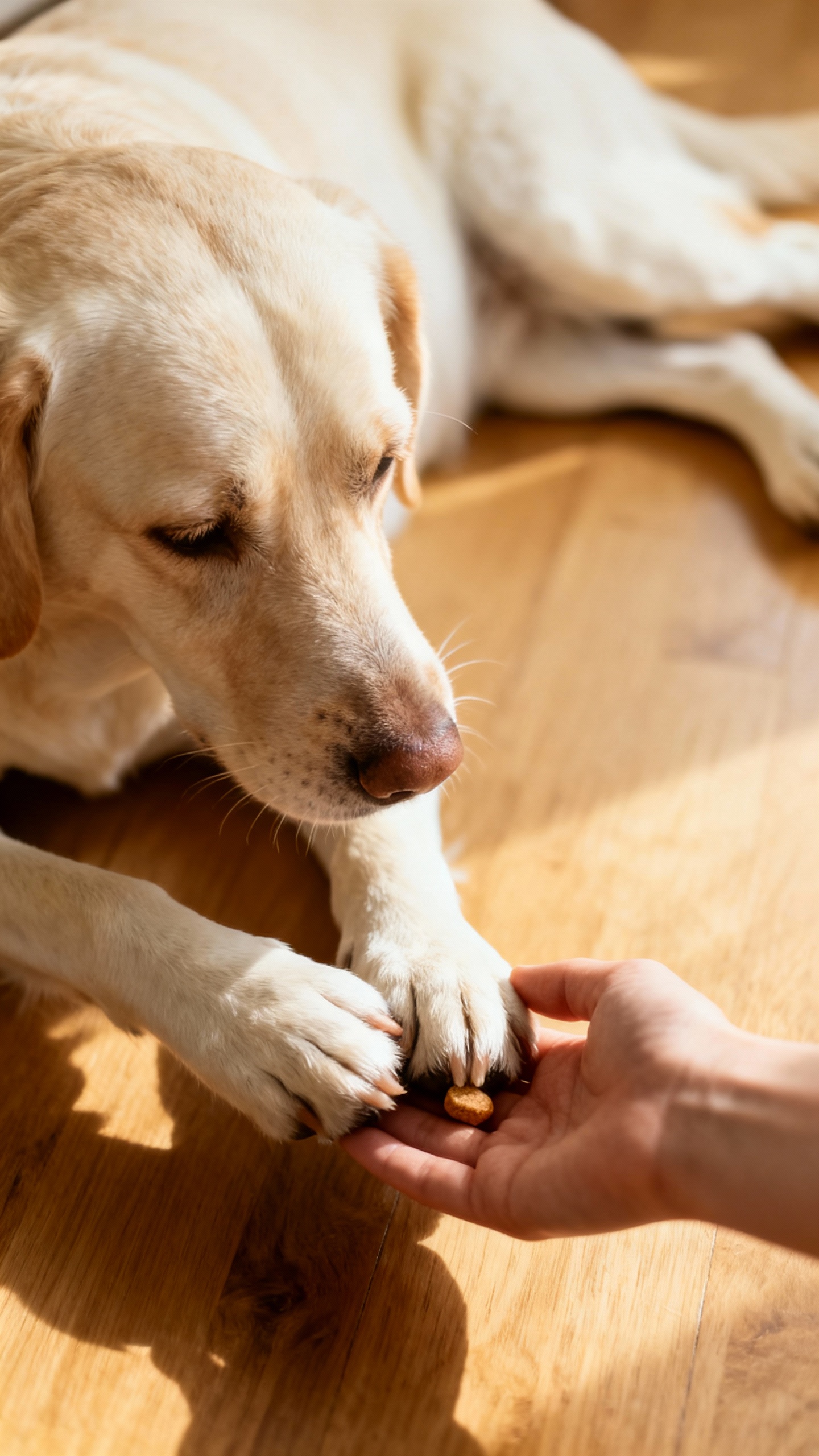
- Capture calm: When your dog lies down quietly or sighs on their own, mark it with “Yes!” and drop a treat at their paws. No cheerleading, no excitement—just quiet rewards for quiet behavior.
- Install a Relax Mat: Teach your dog to lie on a mat for treats.
Start with one paw on the mat, then two, then a down. Build up to longer relax sessions.
- Pair calm with cues: Use a word like “settle.” Say it only when you know your dog will succeed, then reward calm. You’re building a reliable off-switch.
Common mistake
We reward chaos without realizing it.
If your dog jumps and you talk, touch, or toss a toy, you just paid for chaos. Quiet gets attention. Wild gets nothing. IMO, that one shift solves half the problem.
Exercise the Brain Before the Body
Tired doesn’t always equal calm. Some dogs get fitter and more wired if you only do fetch and zoomies.
Brain work teaches them to think, which naturally slows them down. Try these mental workouts:
- Sniff walks: Let them sniff everything. Use a long line in safe areas and stroll. Sniffing lowers arousal like magic.
FYI, it’s not laziness—it’s therapy.
- Scatter feeding and snuffle mats: Toss kibble into grass or use a snuffle mat. Nose down = heart rate down.
- Simple problem-solving: Easy puzzle toys, muffin tin with tennis balls over treats, or rolled towels. Keep it solvable so frustration doesn’t spike.
- Short training bursts: 3–5 minutes of sits, downs, touches, spins.
End while they’re winning.
Balance the workout
Use a rule of thumb: for every session of high-arousal play (fetch, flirt pole), follow with decompression (sniff walk, settle on mat). It’s like a cool-down for the brain.

Structure the Day So Calm Feels Predictable
Uncertainty cranks up stress. Predictability lowers it.
Your dog relaxes when they know when stuff happens and when nothing does. Build a calming rhythm:
- Anchor points: Pick consistent times for meals, walks, and training.
- Downtime signals: Put on mellow music, dim lights, give a chew, and say your “settle” cue.
- Place training: Send your dog to a bed in the living room when you cook, work, or watch TV. Pay them for choosing to stay there.
- Quiet time crates or pens: If your dog likes a den, teach short, happy crate breaks. Not punishment—just a cozy nap nook.
Chews are your friend
Long-lasting chews (bully sticks, safe bones, stuffed Kongs) give your dog an outlet for natural behaviors and activate the relaxy side of their nervous system. Think of chews as nature’s chill switch.
Train Calm in the Places That Trigger Hype
Your dog might act zen at home and bonkers at the park.
That’s normal. You need to practice calm where hype happens—at a distance your dog can handle. Desensitize smartly:
- Find your dog’s “calm distance”: Far enough away from the trigger (dogs, doorbells, skateboards) that your dog can still think.
- Mark and feed for quiet watching: Every time your dog notices the trigger and stays cool, say “Yes” and feed.
- Work in small slices: 2–5 minutes, then leave. End while calm holds, not after it breaks.
- Gradually move closer: Only when your dog stays relaxed at the current distance.
No rushing.
Leash skills that lower arousal
Fast, tense walks create fast, tense dogs. Teach loose-leash walking with frequent pauses for sniffing and check-ins. Reward eye contact and easy pace.
You’ll see calmer behavior carry back into the house.
Feed the Nervous System (Not Just the Belly)
You can support calm with what you feed and how you deliver it. No, I’m not selling magic kibble. But some choices help. Nutrition tweaks that can help:
- Balanced meals: Ensure quality protein, healthy fats, and appropriate calories.
Hungry or sugar-crashing dogs don’t chill.
- Omega-3s: EPA/DHA from fish oil can support brain health. Ask your vet for dosing.
- Lickables: Stuff Kongs with wet food, yogurt (if tolerated), banana, or canned pumpkin. Licking is soothing.
- Routine feeding: Regular times = less scavenger-mode stress.
FYI: If anxiety runs high, chat with your vet about supplements or meds.
You can’t train a brain that’s constantly on fire.
Your Energy Becomes Their Energy

Dogs read us like subtitles. If you respond to chaos with more chaos, your dog thinks that’s the vibe. Be boring when they’re hyper, be steady when they’re unsure, and save your party voice for moments you actually want to amp up. Set the example:
- Lower your voice: Calm tone, slower movements.
- Short, clear cues: One cue, then quiet.
Don’t nag.
- Reward what you like: Catch them being good—often.
- Ignore the attention-seeking: Jumping and barking for fun gets zero payout.
IMO, the handler is the thermostat. Set the temperature you want the room to be.
Common Pitfalls That Sabotage Calm
- Weekend warrior workouts: Monster Saturday runs with zero weekday structure create a rollercoaster brain.
- Over-socializing: Not every dog wants to greet every dog. Quality, not quantity.
- Inconsistent rules: If sometimes the couch is fine and sometimes it’s not, confusion wins.
Confused dogs get edgy.
- Too much hype play: Tug and fetch rock, but end with a settle routine so arousal doesn’t stick.
FAQ
How long before I see a calmer dog?
Most owners notice small wins within a week when they reward calm and add decompression walks. Bigger, reliable changes usually show up in 4–6 weeks of consistent practice. Keep sessions short and stack small wins.
Is my dog “just high-energy,” or is this anxiety?
High-energy dogs settle after a workout and can rest between activities.
Anxious dogs struggle to relax even when tired and cling to you or react to small noises. If you suspect anxiety, loop in your vet or a certified trainer.
Do I need a trainer?
Not always, but a good trainer speeds things up. Look for someone who uses reward-based methods, understands arousal modulation, and can create a step-by-step plan for your dog’s triggers.
What if my dog goes wild when guests arrive?
Pre-load calm.
Ten minutes before guests, do a sniffy potty break, a few quick cues, and then settle on a mat with a stuffed Kong. Leash your dog if needed. Reward four paws on the floor.
Keep greetings boring until calm sticks.
Are certain breeds just not calm?
Some breeds run hotter, sure. But every dog can learn a decent off-switch with training, structure, and outlets that fit their needs. You might not get “yoga instructor,” but you can leave “rock concert roadie” behind.
Can I overuse food rewards?
Use food to build the behavior, then fade to intermittent treats and life rewards (sniffing, couch time, access to you).
The goal: calm becomes the habit, not a treat vending machine.
Wrap-Up: Calm Is a Daily Choice
Raising a calm dog isn’t a mystery; it’s a routine. Teach calm on purpose, exercise the brain, create predictable downtime, practice in trigger zones, and back it with smart nutrition and steady energy. Do that, and your dog learns to exhale on cue.
And hey, you might breathe easier too.
Leave a Reply