
Dog kisses: adorable, slimy, mildly questionable. One moment you melt; the next you remember where that tongue’s been. Still, those snout smooches carry more meaning than you might think.
Let’s decode the truth, the myths, and the “please don’t lick my eyeball” moments behind your pup’s lip service.
They’re Not Just “Kisses” — They’re Communication

Your dog doesn’t read romance novels. That lick? It’s dog-speak.
Puppies lick their mom for food and comfort, and adult dogs carry that behavior into social bonding. Translation: a lick can mean “hi,” “I like you,” “don’t be mad,” or “what’s that taste?” Dogs multitask with their tongues.
How Dogs Use Licking to Talk
- Appeasement: A low-stress “I come in peace” signal, especially toward bigger humans.
- Affection: You smell like safety and snacks. That earns a lick.
- Information gathering: Your skin tastes like salt, lotion, or a hint of rotisserie chicken. Intriguing!
Dog Saliva Isn’t Magical — But It’s Not Pure Horror Either
Let’s kill the myth: dog mouths aren’t cleaner than human mouths.
Different bacteria, not fewer. Could dog saliva heal wounds? Not exactly.
Licking can remove debris, but it can also introduce bacteria. Bottom line: Let your dog lick your hand, sure. Your open wound or eyeball? Hard pass.
When Licks Become a Health Risk
- Compromised immune system: If you’re immunocompromised, avoid face licks.
- Open cuts or rashes: Keep them covered.
Your dog doesn’t need to “help.”
- GI bugs: Dogs that eat questionable snacks outdoors (you know the ones) can pass nasty microbes.
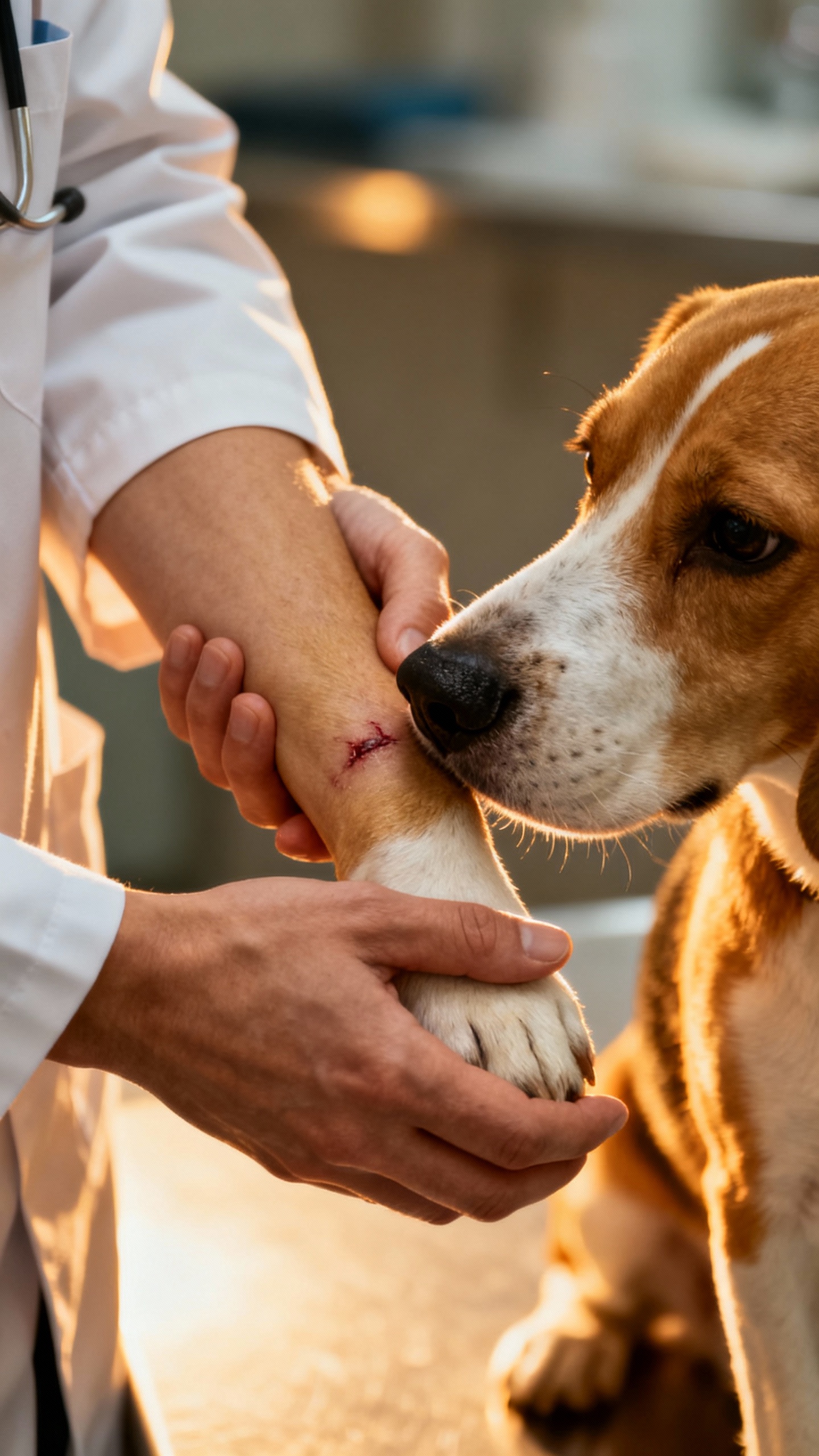
Your Dog Might Be Tasting Your Feelings
Sounds woo-woo, but dogs pick up chemical clues. Your sweat, breath, and skin oils change when you feel stressed or excited. Dogs notice—and sometimes they lick to soothe you or themselves. You ever get extra licks after a tense phone call?
That’s your dog saying, “We cool? I’m checking.” IMO, that’s a top-tier friend move.
Stress and Smooches: What’s the Link?
- Oxytocin bump: Gentle interactions can raise oxytocin in both of you. That bonding hormone loves a good snuggle session.
- Self-soothing: Some dogs lick more when anxious—your face, their paws, the couch (RIP cushions).
- Your routine: If licking gets big reactions, your dog may use it as a “button” to get attention.
They Learn How Much Licking You’ll Tolerate
Dogs are expert behavior hackers.
If a lick gets laughs, squeals, or cuddles, they store that data. Reinforcement teaches the habit—even when you think you aren’t training. Not into face licks? Totally fair.
You can shift the habit without hurting feelings.
How to Gently Redirect the Lick Monster
- Teach “settle” or “kiss” on cue: Reward short, controlled licks or nose touches.
- Offer a toy: Replace face time with tug or fetch when excitement spikes.
- Stand up and turn away: Zero drama, just remove the reward (your attention).
- Say yes to alternatives: Reward calm sits, paw target, or chin rest instead.
Sorry, But Taste Matters More Than Romance
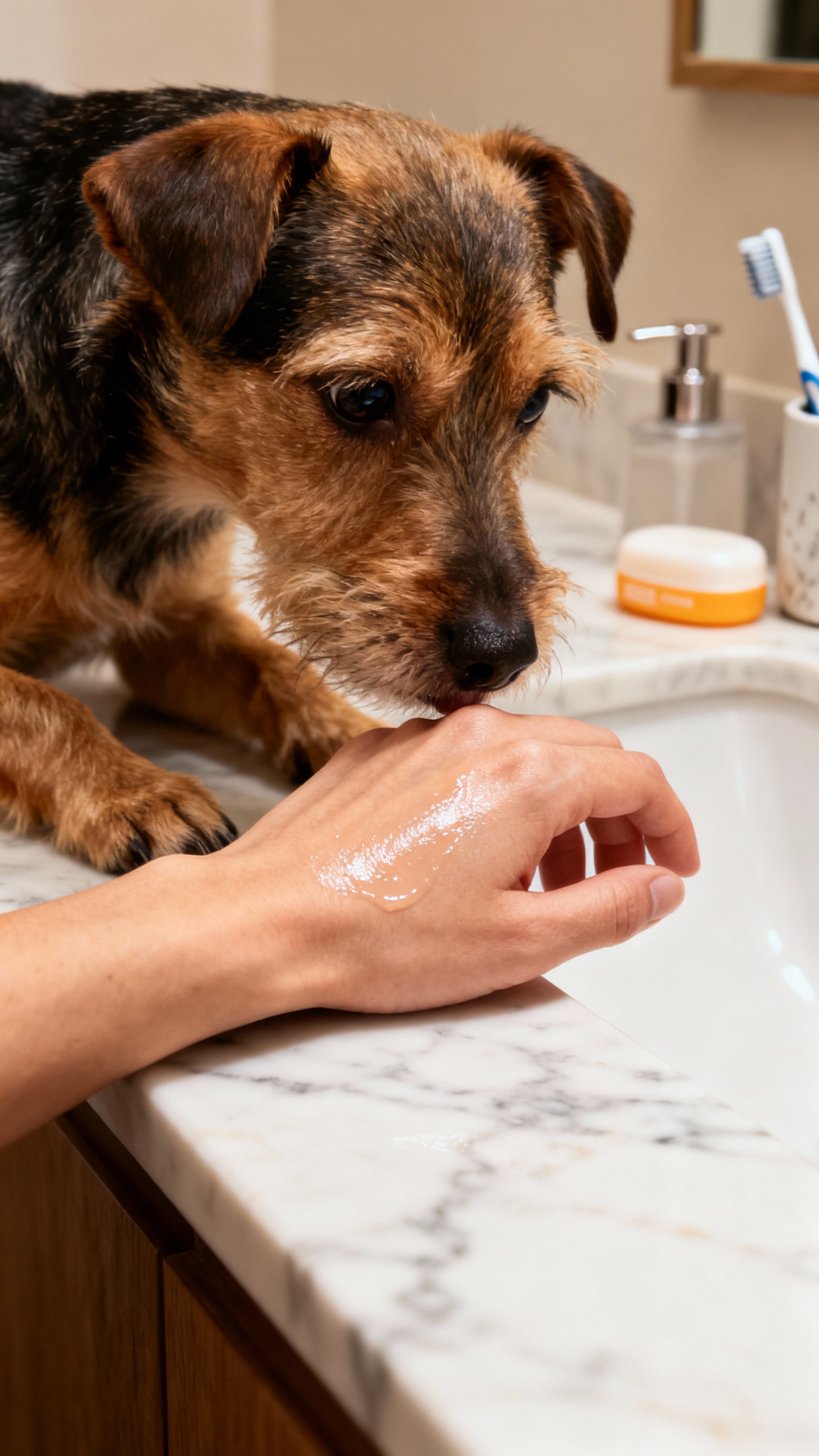
As much as we’d love a Disney explanation, dogs lick because you taste interesting. Sweat is salty. Lotions and sunscreen smell like a snack.
That smear of peanut butter? Say less. If your dog targets specific spots—like behind your ears or knees—it’s often about sweat glands.
FYI: some medicated lotions can be harmful if ingested, so keep licky tongues away after you apply them.
Decoding Targeted Licking
- Face and mouth: Classic greeting and attention-seeking zone (also smells like your last meal).
- Hands: Food scents, lotions, and salt. You’re basically a walking charcuterie board.
- Feet: Strong smells, easy access, and wiggly toes. Irresistible, apparently.
Excessive Licking Can Signal a Problem

A few kisses?
Cute. Relentless licking? That might signal stress, boredom, pain, or GI issues (especially if they lick floors, walls, or the air). Watch for patterns.
Does it spike at night? When visitors come? After meals?
If it turns compulsive—or you notice skin irritation—loop in your vet.
When to Call the Vet
- Sudden increase in licking without a clear trigger
- Licking one area of their body repeatedly (could be pain or allergies)
- Air licking or snapping at imaginary flies (neurological or GI issues sometimes)
- GI symptoms like drooling, vomiting, or gulping with the licking
Yes, You Can Teach a “Polite Kiss”
If you love dog kisses but prefer boundaries, train it. You can shape a quick boop or a gentle lick on cue, then end the session before it turns into a full face wash. Simple protocol:
- Say “kiss.”
- Present your cheek or hand briefly.
- Mark and reward one gentle lick—or a nose touch if you prefer zero slobber.
- End with “all done,” then switch to a calm sit or cuddle to avoid overexcitement.
IMO, a tidy kiss on cue beats the surprise nose invasion every time.
FAQ
Is it safe to let my dog lick my face?
Generally, yes—if you’re healthy and your dog stays up to date on vet care. Avoid mouth-to-mouth, eyes, and any cuts.
If you’re immunocompromised or pregnant, skip face licks and stick to hand pets.
Why does my dog lick me more at night?
Evenings often bring downtime, which means more attention-seeking and bonding rituals. You also carry the day’s smells—food, sweat, sunscreen—and that’s a buffet. If it becomes obsessive, add a pre-bed routine with sniffy walks and chew time.
Do dogs understand that licking is affection?
They understand that licking builds social bonds and gets good reactions.
Affection? In dog terms, yes. But it’s also communication and exploration—not a human-style kiss.
Can I stop my dog from licking guests?
Absolutely.
Use management plus training. Leash your dog for greetings, reward four-on-the-floor behavior, and teach a “go to mat” cue. Let guests give treats for sits instead of tolerating tongue attacks.
Why does my dog lick the sofa, not me?
That can be boredom, anxiety, or a habit reinforced by flavor (spilled crumbs).
It can also point to GI discomfort. Increase enrichment, clean the area well, and check with your vet if it persists.
Is licking a dominance thing?
Nope. That old myth needs a nap.
Licking aligns with appeasement, bonding, and curiosity—not power plays.
Conclusion
Dog kisses carry stories—comfort from puppyhood, social signals, a dash of salt obsession, and a sprinkle of “pay attention to me.” You can enjoy them, shape them, or set boundaries without drama. Keep it safe, keep it fun, and if your dog tries to French kiss you after rolling in mystery goo—FYI, you’re allowed to say no.
Leave a Reply