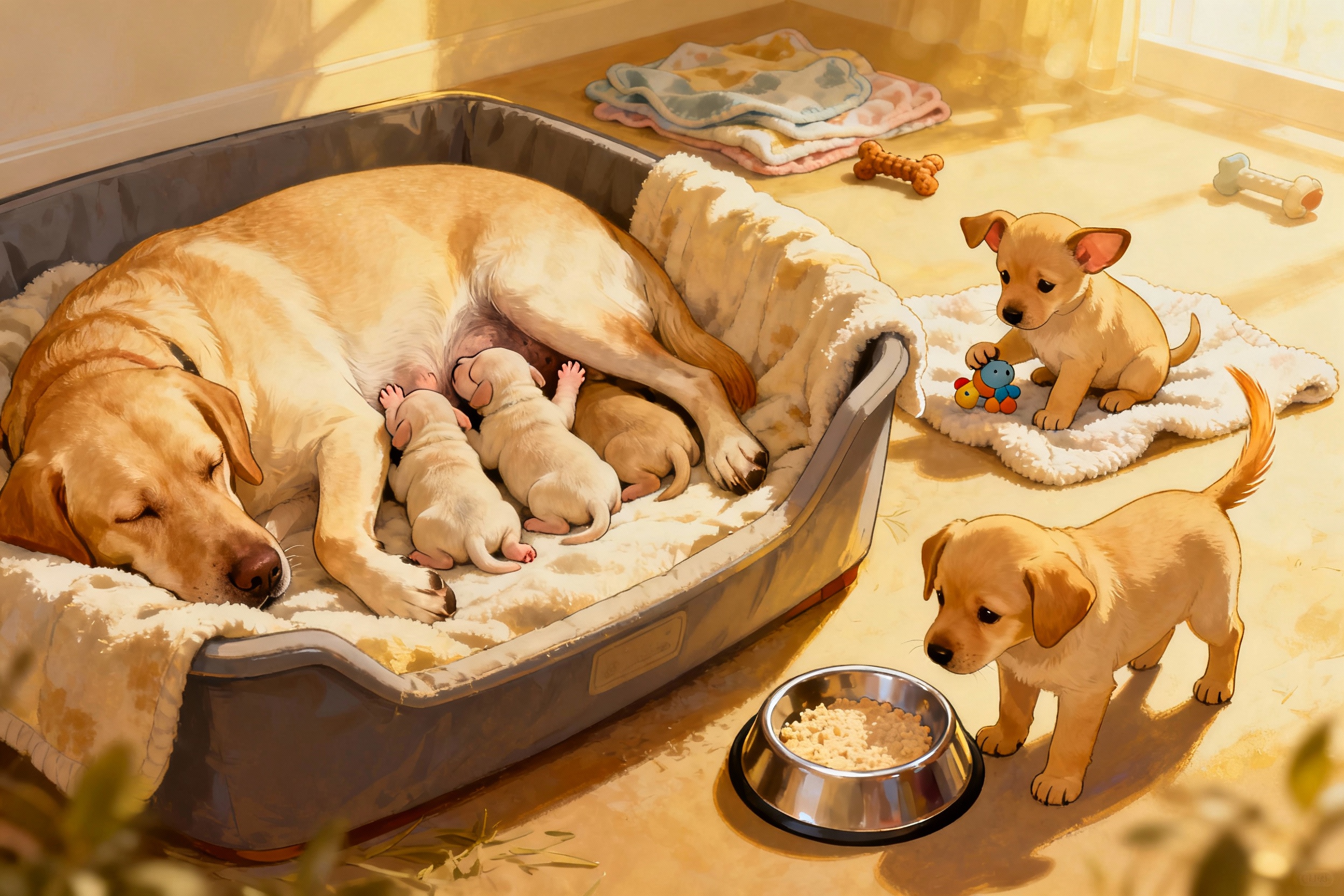
You’ve got Labrador Retriever puppies on the way and about 12,000 questions. Good. That means you care.
Raising Lab pups from birth isn’t complicated, but it does demand attention, patience, and a sense of humor when someone pees on your sock at 3 a.m. You’ll guide tiny potatoes into wiggly, brilliant dogs—and it’s honestly a blast.
Setting Up for Whelping and the First 48 Hours
Welcome to the chaos factory. You need a clean, warm, quiet space for mom (the dam) to deliver and recover.
- Whelping box: Low enough for mom to step in, high enough to keep pups inside.
Add pig rails to prevent accidental squishing.
- Temperature: Keep it around 85–90°F (29–32°C) for the first week. Use a heat lamp or pad and always let mom escape to a cooler spot.
- Sanitation: Line with washable pads or towels. Swap them often.
Clean ≠ sterile, but aim high.
- Supplies: Scale (grams), iodine for umbilical tips, puppy-safe milk replacer, bottle or syringe, clean towels, and your vet’s number on speed dial.
Birth Basics
Puppies should nurse within an hour. That first milk (colostrum) is liquid immunity. Count placentas, check for steady breathing, and make sure each pup finds a teat.
If one puppy falls behind, guide them gently. If anyone looks limp, cold, or cries nonstop, warm them and call the vet.
Weeks 0–2: The Potato Phase
Puppies basically eat, sleep, and wiggle. Mom does the rest.
- Feeding: They nurse every 2–3 hours.
If mom’s milk seems low, supplement after nursing—not instead of it.
- Weight checks: Weigh daily at the same time. Healthy pups gain weight daily. Flat or dropping numbers = call your vet ASAP.
- Warmth: They can’t regulate temperature yet. Keep them toasty and dry.
- Toileting: Mom stimulates elimination by licking.
If mom can’t, use warm damp cotton to rub their belly and rear after feeds.
Early Neurological Stimulation (ENS)
FYI, a brief ENS routine (days 3–16) may build resilience:
- Tactile stimulation: Gently tickle paws with a Q-tip for 3–5 seconds.
- Head up/down, supine, and thermal stimulation: Short, gentle positions and brief contact with a cool towel.
Keep it gentle. We’re building confidence, not Navy SEALs.
Weeks 2–4: Eyes Open, World Engaged
Around day 10–14, eyes crack open and ears start working. Prepare for little squeaks of opinion.
- Parasite control: Deworm under your vet’s guidance starting at 2 weeks, then every 2 weeks until 8 weeks.
- Claws: File or clip tiny tips weekly to protect mom and siblings.
- Handling: Short, positive sessions daily.
Hold each pup, touch paws, ears, tail, and mouth. Build trust early.
Cleanliness Upgrades
Start introducing a “potty zone” with a different surface—pellet tray, washable pad, or turf. Puppies naturally prefer a separate potty area.
You’ll thank yourself later.
Weeks 3–5: Weaning and Micro-Socialization
Teeth arrive, appetites spike, and mom starts looking at you like, “Your turn.”
- Weaning start: Around 3.5–4 weeks, offer gruel: high-quality puppy kibble soaked in warm water or puppy milk replacer and blended soupy.
- Feeding schedule: 3–4 small meals/day. Keep mom nearby; they still nurse as you transition.
- Water: Shallow bowl, refreshed often. Monitor so no one faceplants and swims.
- Litter training: Expand the potty zone.
After naps and meals, place pups there. Celebrate tiny victories.
Enrichment That Doesn’t Overwhelm
Add age-appropriate stimulation:
- Different textures underfoot: rubber mat, bath mat, crinkly fabric.
- Soft obstacles: rolled towels, low foam blocks.
- Sounds: low-volume household noise, short soundtracks of city, storms, etc.
Keep sessions short and positive. Never force or flood—confidence grows from choice.
Weeks 5–8: Brains On, Legs Fast
This is the fun zone. They learn fast, explore hard, and chew absolutely everything.
- Food: Transition to thicker mush, then moistened kibble by 6–7 weeks. 4 meals/day.
- Vaccines: First shots typically at 6–8 weeks.
Follow your vet’s schedule. No dog parks yet, immunity isn’t ready.
- Toilet skills: Guide to the potty area immediately after sleeping, eating, and play.
- Crate intro: Place a small crate with the door open. Toss treats and feed a meal inside to build happy associations.
Social Skills 101
Teach bite inhibition and polite play:
- Yelp lightly and pause play if a pup bites too hard.
- Reward calm sits with attention and treats.
- Handle collars, touch paws, open mouths—pair with food to create “this is fine” energy.
Health Checks, Red Flags, and Routine Care
You don’t need to panic at every squeak, but pay attention.
- Normal: Warm bodies, steady weight gain, quiet sleep, active nursing, soft round bellies.
- Red flags: Persistent crying, cold body, diarrhea, vomiting, labored breathing, pale gums, failure to gain weight.
- Common issues: Dehydration (gums feel tacky), puppy diarrhea (can spiral fast), aspiration risk during bottle feeding, parasites.
- Vet partnership: Schedule checkups, set vaccination and deworming plans, discuss microchipping and spay/neuter timing.
Grooming Basics
Labs have double coats, so start grooming routines early:
- Soft-bristle brushing 2–3x/week.
- Introduce nail clipping with treats.
- Wipe ears with vet-approved solution when needed.
- Baths rarely necessary; use warm water and puppy shampoo only when truly gross.
Building Good Canine Citizens
Labs want jobs. Give them simple ones early.
- Name recognition: Say the name, mark the look, reward.
Easy win.
- Sit: Lure with a treat. Reward as the butt touches ground. Keep it short and fun.
- Recall: “Puppy, puppy!” crouch down, cheer, reward big.
Make coming to you a party.
- Surface confidence: Walk over different textures and tiny wobble boards.
- Car rides: Very short, positive trips after 6 weeks. End with food and cuddles.
Socialization Do’s and Don’ts
- Do: Meet safe, vaccinated adult dogs with great manners; introduce friendly humans of all ages; expose to normal life sounds.
- Don’t: Dog parks, pet store floors, or random puppy piles before vaccines. Germs love innocence.
- Goal: Curious, confident, and resilient pups who choose engagement over panic.
Feeding Mom and Managing the Household
Mom needs you too.
Nursing burns calories like a marathon.
- Food: High-quality puppy formula food for mom during lactation. Increase portions 2–3x normal in peak weeks.
- Hydration: Fresh water everywhere. Add a splash of goat milk or broth if she slacks.
- Breaks: Give her quiet time away from pups daily.
She’s a mom, not a mattress.
- Calcium watch: Signs of eclampsia—tremors, restlessness, fever—require emergency vet care. Don’t supplement calcium without vet advice, IMO.
Placing Puppies in Great Homes
You’ll blink and suddenly it’s go-home time (usually 8 weeks). Prepare new families like a pro.
- Puppy packet: Vet records, deworming dates, microchip info, feeding schedule, a week’s worth of food, and a blanket that smells like home.
- Expectations: Explain crate training, potty routine, and safe socialization.
Clear instructions prevent panic texts.
- Screening: Choose homes that understand Labs: energy, shedding, training, and chew potential. Your pups deserve committed people, FYI.
FAQ
When should I start weaning Labrador puppies?
Begin around 3.5–4 weeks with thin gruel and increase thickness gradually. Keep nursing alongside meals until 6–7 weeks.
Their teeth and coordination guide the pace—if they eat well and stay round, you’re on track.
How often should I weigh the puppies?
Daily for the first two weeks, then every 2–3 days until 8 weeks. Use a gram scale. Consistent gains matter more than big jumps. A plateau or drop means intervene quickly.
What temperature should the whelping area be?
Aim for 85–90°F (29–32°C) in week 1, 80–85°F in week 2, then gradually down to 75°F by week 4 as pups regulate better.
Always provide a warm zone and a cooler escape so they can self-regulate.
When can puppies go outside?
Safe, controlled outdoor time in a clean yard can start around 6–7 weeks for short visits. Avoid public spaces until after core vaccines. Sun, grass, and fresh air are great—unknown dog traffic is not.
Do I need to supplement calcium for the nursing mom?
Not unless your vet says so.
A high-quality, calorie-dense diet usually covers it. Unsupervised calcium can backfire and raise eclampsia risk, IMO. Watch for signs and keep your vet in the loop.
How do I stop puppy biting?
Redirect, don’t scold.
Offer a toy, end play briefly after hard bites, and reward gentle mouths. Consistency across all humans matters. Labs learn fast when the rules stay the same.
Conclusion
Raising Labrador Retriever puppies from birth = early mornings, laundry mountains, and a ridiculous amount of joy.
Keep them warm, fed, clean, and curious. Layer in vet care, smart socialization, and kind boundaries. Do that, and you’ll send home pups who look at the world like it’s an adventure—and honestly, with a Lab, it always is.
Leave a Reply