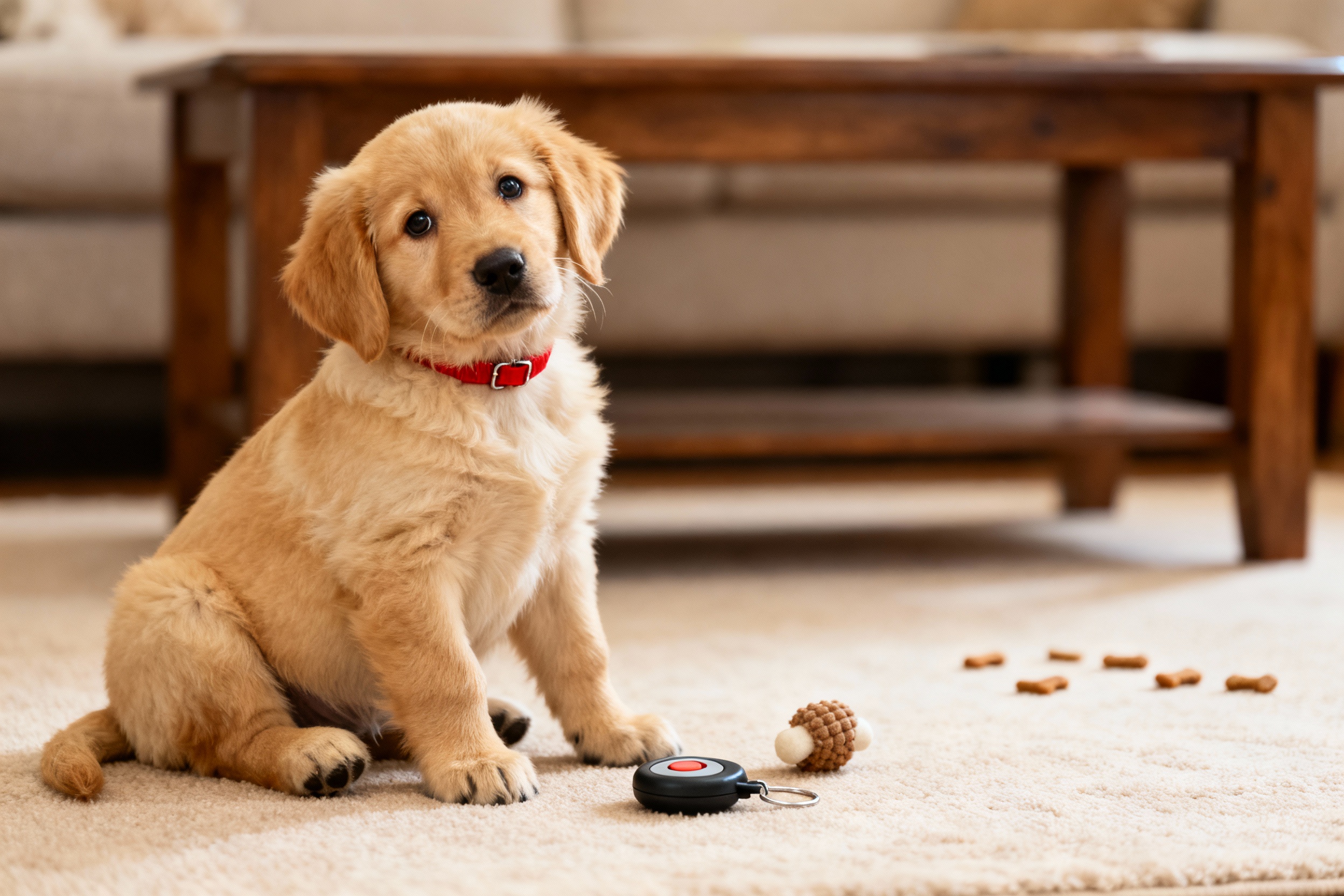
Your 2-month-old Lab is basically a furry tornado with baby teeth. You’ve got a tiny land shark that naps like a champ and chews like it’s his job. The good news?
Labs love to learn, and training now makes everything easier later. Let’s set up habits that save your shoes, your sanity, and your future adult dog.
Know What’s Realistic at 8 Weeks
You’re not raising a robot. You’re guiding a baby dog with the attention span of a goldfish.
Set expectations right now and you’ll avoid frustration later.
- Potty training takes weeks. You’ll have accidents. Plan for them.
- Short sessions only: 2–5 minutes, several times a day.
Keep them fun.
- Teething and mouthing are normal. You’ll redirect, not scold.
- Sleep matters: 18–20 hours a day. A tired puppy isn’t “well-trained,” just overtired.
Potty Training Without Tears (Yours or Theirs)
This is your first big win.
Consistency beats everything.
- Go out constantly: right after waking, eating, playing, and every 45–60 minutes.
- Pick one potty spot in the yard. Say a cue like “Go potty.”
- Party immediately when they go: praise + treat within 2 seconds.
- Supervise or confine. Use a crate or playpen when you can’t watch.
- Clean accidents deeply with enzymatic cleaner.
Regular stuff won’t cut it.
Crate Setup That Actually Works
Make the crate cozy, not scary. Use a comfortable mat, safe chew, and cover part of it for den vibes. Take them in and out calm and matter-of-fact. Never use the crate as punishment.
For most 2-month-old Labs, 2–3 hours is the max daytime stretch. Overnight? Do a planned potty break.
Bitey Piranha Phase: Survive the Mouth
Your Lab explores with teeth.
It’s normal, annoying, and fixable.
- Redirect immediately to a toy when they grab skin or clothing.
- Yelp-lite, then pause if they bite hard. Stand up, turn away for 5–10 seconds. Repeat.
- Offer multiple textures: rubber, rope, frozen washcloth, puppy-safe chews.
- Reinforce calm mouths.
Treat when they sit politely instead of gnawing your socks.
Frozen Kong = Sanity Saver
Stuff a puppy-sized Kong with wet food or soaked kibble and freeze it. It soothes gums and buys you 15 glorious minutes of peace. FYI, supervise like a hawk.
Socialization Done Right (And Safely)
The socialization window swings wide open now.
You need to show your pup the world without overwhelming them.
- People: different ages, sizes, hats, glasses, wheelchairs. Treat for calm curiosity.
- Surfaces: grass, gravel, rubber mats, stairs. Make a game of it.
- No dog parks yet.
Choose vaccinated, friendly dogs in controlled spaces.
- Public field trips: carried or in a stroller until vaccines progress. Vet or trainer-approved puppy classes = gold.
Green Light vs. Red Flag
– Green light: sniffing, tail loose, taking treats, ready to engage. – Red flag: tail tucked, yawning, lip licking, cowering, ignoring treats.
If red flags show up, quietly leave and try again later with more distance. IMO, confidence beats bravery at this age.
Build the Basics: Micro-Sessions That Stick
Keep it easy, upbeat, and fast. Two minutes, 5–8 treats, done.
- Name recognition: Say their name once.
When they look at you, treat. Do 10 reps daily.
- Sit: Lure the nose up, mark “Yes!” and treat. Add “Sit” once they get it.
- Down: Lure to the floor, reward.
Keep it comfy, no pushing.
- Come: Crouch, happy voice, “Puppy, come!” Treat the second they arrive. Use a long line outdoors.
- Drop/Trade: Offer a treat, say “Trade,” take the item, return item or offer better. Prevents resource guarding.
- Touch: Present your hand.
When nose boops it, reward. “Touch” becomes a steering wheel later.
Marker Words 101
Use a crisp “Yes!” to mark the exact moment they do the thing you want. Then deliver a treat. Markers speed up learning like cheat codes.
Leash Skills for Wiggly Noodles
Start inside where life is boring.
No battles. No dragging.
- Collar or harness acclimation: Put it on, treat, remove. Repeat until zero drama.
- Follow the food: Hold a treat by your leg and walk a few steps.
Reward for staying near.
- Loose leash = movement. Tight leash? You stop.
Leash loosens? You move. Simple rules.
- Keep walks short: 5–10 minutes, many sniff breaks.
Sniffing is dog news, let them read it.
Puppy Energy Without Overdoing It
At 2 months, joints are still developing. Skip forced running or stairs marathons. Choose age-appropriate play: tug with rules, gentle fetch on soft ground, puzzle feeders, short sniffy walks.
Routine = Your Secret Weapon
Puppies thrive on rhythm.
Structure prevents chaos.
- Morning: potty → brief play/training → breakfast → potty → rest
- Midday: potty → play → training burst → crate nap
- Evening: potty → calm play → dinner → potty → chew time → bedtime routine
Feeding and Treat Strategy
– Use part of their daily kibble as training rewards to avoid overfeeding. – Save higher-value treats (soft, stinky) for hard stuff like recalls or scary noises. – Labs eat like they invented eating. Measure meals and monitor body condition from the start, FYI.
Common Mistakes to Dodge
Let’s skip the regret.
- Too much freedom too soon. Use baby gates and pens.
- Repeating cues. Don’t say “Sit, sit, sit.” Say it once, then help them succeed.
- Punishing accidents.
Scolding creates secret poopers. Just clean and move on.
- Skipping socialization. Waiting “until fully vaccinated” without alternatives can backfire.
Balance safety with exposure.
- Over-exercising. Tired and overstimulated are different. Aim for fulfilled, not fried.
FAQ
How long can my 2-month-old Lab hold their bladder?
General rule: one hour per month of age, give or take.
So around two hours during the day. Overnight stretches can be longer, but plan for at least one potty break. If they’re playing hard or just drank water, shorten that timeline.
What’s the best way to stop jumping?
Don’t reward it with attention.
Stand still, wait for four paws on the floor, then greet and treat. Teach an incompatible behavior like Sit for greetings. Consistency from everyone matters or your puppy will game the system.
When can I start obedience classes?
Right now—as long as it’s a puppy-specific class that requires vaccine records and cleans well.
Early, positive group classes build confidence and social skills. IMO, a good trainer is worth their weight in bully sticks.
Which cues should I prioritize?
Focus on Name, Come, Sit, Drop/Trade, and Touch. These cues help daily life and safety.
Fancy stuff can wait until your pup understands the basics.
How do I handle barking and whining in the crate?
First, check needs: potty, heat, boredom. If all good, wait for a split second of quiet, then open and reward calm. Release during silence so whining doesn’t “work.” Gradually lengthen quiet periods.
What chew toys are safe for a 2-month-old?
Choose puppy-specific rubber toys, soft Nylabones for puppies, and frozen Kongs.
Avoid cooked bones, antlers, and super-hard chews that can crack baby teeth. Supervise and toss toys that break or fray.
Bringing It All Together
You’re shaping a future dream dog one tiny rep at a time. Keep sessions short, celebrate small wins, and protect that eager Lab enthusiasm.
Train the skills, but also train the habits—routine, rest, and good choices. Do that, and in a few months you’ll wonder why you ever doubted this floppy-eared genius. IMO, that’s the real magic of starting early.
Leave a Reply