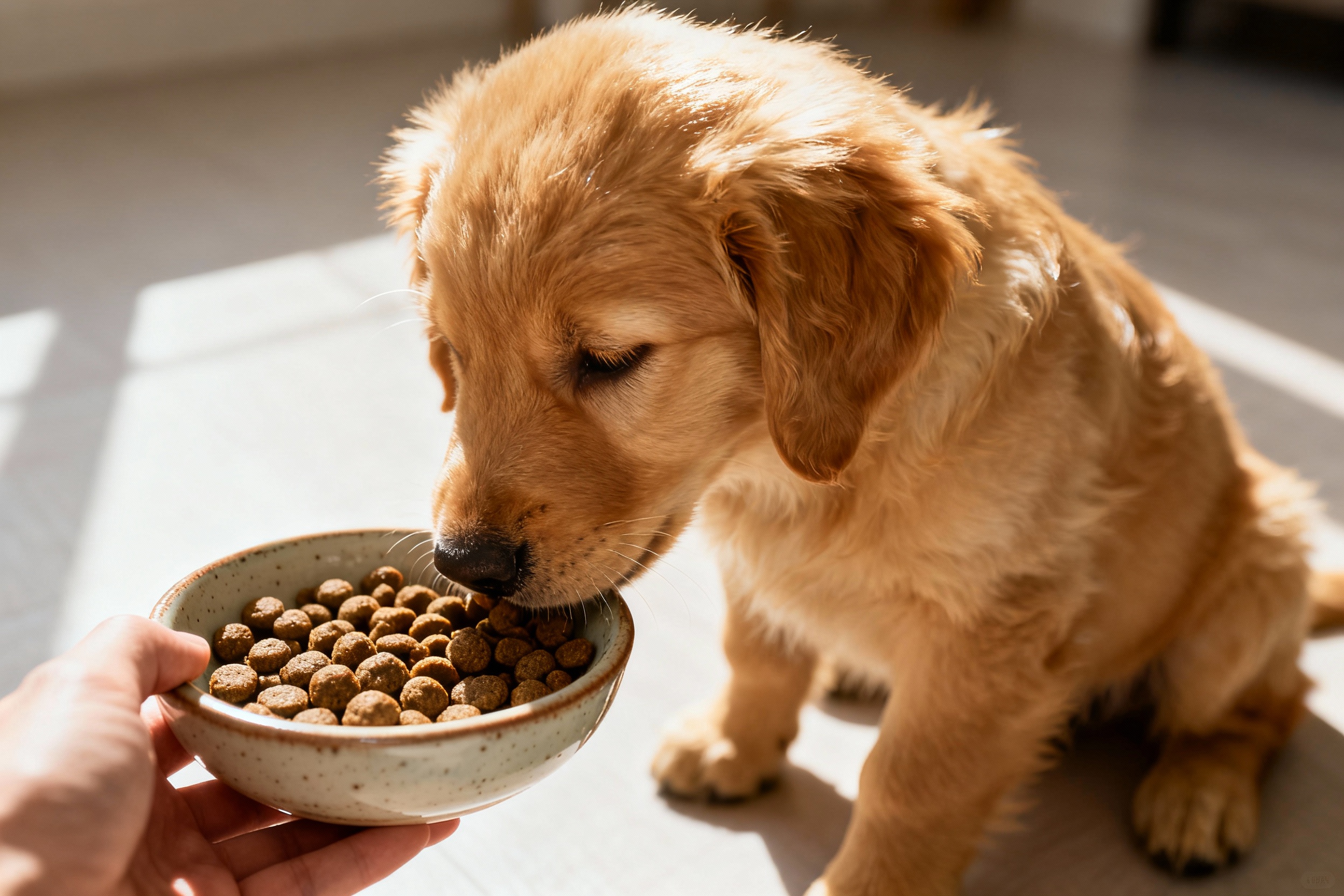
Golden Retriever puppies come with two speeds: cuddle and chow. If yours is staring at you like you owe them rent (in kibble), you’re in the right place. Feeding a golden puppy isn’t just about filling a bowl; it’s about fueling smart growth and preventing future health drama.
Let’s get you set up with a plan that keeps your fluffball happy, healthy, and not begging under the table… too much.
Know What “Good Food” Actually Means

Puppy food isn’t a marketing gimmick—it’s a growth plan. Golden Retrievers grow fast, and their joints need the right balance of nutrients to keep up. Look for a food labeled for large-breed puppies because goldens count as large-breed, even when they look like golden potatoes. What to look for on the label:
- Large-breed puppy formula (this helps control growth rate and supports joints)
- AAFCO statement for growth, including large-size dogs
- Protein around 24–28% and fat around 12–18% for balanced growth
- Calcium around 1.0–1.3% and a calcium-to-phosphorus ratio close to 1.2:1
Dry, Wet, Raw, or Fresh?
You’ve got choices, and they all come with trade-offs.
Kibble is convenient, consistent, and better for budgets. Wet food tastes amazing (to dogs), but can mess with teeth and costs more. Fresh and raw look fancy, but you must ensure balance—golden puppies need exact nutrients, not vibes.
If you go raw or home-cooked, work with a vet nutritionist. IMO, most families do best with a high-quality large-breed puppy kibble and optional wet toppers.
How Much Should You Feed? (And How Often?)
Puppy stomachs are tiny and ambition is huge. Spread meals to keep energy stable and avoid tummy upsets. General feeding schedule:
- 8–12 weeks: 3–4 meals per day
- 3–6 months: 3 meals per day
- 6–12 months: 2 meals per day
How much per day? Start with the brand’s chart based on expected adult weight (most goldens fall between 55–75 lbs).
Then adjust weekly. Your puppy should look sleek, not chunky. You should feel ribs with light pressure, not see them.
If your puppy looks like a sausage with legs, reduce portions. If they’re skinny and wild-hungry, bump up slowly.
Body Condition: The Real Guide
Numbers help, but your eyes win. A healthy puppy has:
- Waist: visible from above
- Tuck: slight upward tuck behind ribs
- Ribs: easy to feel but not popping out
When in doubt, ask your vet to show you a body condition score.
It’s like doggie BMI, but useful.

Transition Food the Right Way
New puppy? Do not yank them onto a new food in one day unless you enjoy cleaning. Transition over 7–10 days.
- Days 1–3: 75% old food, 25% new
- Days 4–6: 50/50
- Days 7–10: 25% old, 75% new
- Day 11: 100% new
FYI: Mild soft stool can happen during a switch.
If you see vomiting, diarrhea, lethargy, or refusal to eat, pause and call your vet.
Treats, Toppers, and the Begging Olympics
Treats help with training, but they can secretly pack on pounds. Keep treats to no more than 10% of daily calories. Adjust meal portions if you train a lot with food.
Smart Treat Strategies
- Use part of their kibble as training treats—free and balanced
- Mix in low-calorie options like tiny bits of cooked chicken, blueberries, or carrot coins
- Skip high-fat stuff like bacon (pancreatitis is not a vibe)
Toppers can entice picky eaters.
Good options:
- Warm water or a splash of low-sodium bone broth
- A spoon of plain pumpkin (helps digestion)
- A bit of wet food that matches the puppy’s main diet

Avoid These Common Feeding Mistakes
Let’s save you stress—here’s what trips up new golden parents:
- Free-feeding (leaving food out all day): encourages overeating and makes potty training harder
- Too much calcium: avoid extra supplements; it can harm growing joints
- Switching foods constantly: pick a good one and stick with it
- Overfeeding “because they’re puppies”: goldens act hungry even after eating—don’t fall for it
- Ignoring diarrhea: persistent loose stool means something’s off—call your vet
Foods to Skip (Seriously, Don’t)
- Grapes/raisins, onions/garlic, xylitol (in sugar-free gum), chocolate
- Cooked bones (splinters), high-fat table scraps
- Unbalanced home-cooked diets without vet guidance
Hydration, Bowls, and Routine

Fresh water always. Puppies play hard and forget to drink, so refresh the bowl often. If you notice excessive drinking or peeing, check with your vet—better safe than sorry. Bowls and setup:
- Stainless steel bowls clean easiest and don’t hold smells
- Slow-feeder bowls help fast eaters and reduce gulping
- Skip elevated feeders for puppies unless your vet suggests otherwise
Establish a routine: feed in the same place and times daily.
Puppies thrive on predictability, and your floors will too.
When to Switch to Adult Food
Large-breed puppies need puppy food longer than small dogs. For goldens, plan to switch to adult food around 12–14 months. If your pup still looks lanky at 12 months, you can stretch the puppy food until 15 months.
Transition slowly, just like before.
Spay/Neuter and Calories
After spay or neuter, metabolism can drop. Many dogs need a 10–20% calorie reduction. Watch body condition for a month and adjust meals as needed.
IMO, weighing your dog monthly helps more than eyeballing alone.
What About Supplements?
The best supplement for a healthy puppy is a complete, balanced diet. That said:
- Omega-3s (EPA/DHA) can support skin, coat, and joints—look for fish oil designed for dogs
- Probiotics may help sensitive tummies during transitions or stress
- Avoid calcium supplements unless your vet prescribes them
If your dog eats a balanced commercial puppy food, you usually don’t need extras. More isn’t better; more is just… more.
Sample Daily Plan (Adjust as Needed)
Here’s a simple, realistic day for a 12-week-old golden puppy:
- 7:00 AM: Breakfast (1/3 of daily portion), short potty break, play, training with kibble
- 12:00 PM: Lunch (1/3 of daily portion), gentle walk, chew time
- 5:30 PM: Dinner (1/3 of daily portion), play, wind-down
- Throughout: Water available, a few tiny treats during training
If your pup gets the zoomies at 10 PM, consider feeding dinner slightly earlier and add a sniffy walk to help settle.
FAQ
How do I know if my golden retriever puppy is eating enough?
Check body condition weekly.
You should feel ribs easily with light pressure and see a waist. Track weight on the same scale at the same time of day. If energy is good and stool is normal, you’re probably spot on.
Can I feed my puppy human food?
Some, yes—but keep it minimal and safe.
Good options include plain cooked chicken, green beans, blueberries, and pumpkin. Avoid toxic foods like grapes, onions, and anything with xylitol. Keep treats under 10% of calories and adjust meals to match.
My puppy eats too fast.
What should I do?
Use a slow-feeder bowl or a snuffle mat. Split meals into smaller portions and feed over 10–15 minutes. You can also mix in a bit of water with kibble.
Fast eating can cause gas and discomfort, so slowing down helps a ton.
What if my puppy has diarrhea after switching foods?
Pause at the previous step of the transition and give it a day. Add a spoon of plain pumpkin and consider a dog-safe probiotic. If diarrhea lasts more than 24–48 hours, or you see blood, lethargy, or vomiting, call your vet.
Do golden retriever puppies need grain-free food?
Not by default.
Many do great on diets with healthy grains like rice or oats. Some grain-free diets have been linked to heart issues (DCM) in certain dogs; talk to your vet before going grain-free. The priority is a balanced, large-breed puppy formula from a reputable brand.
How many calories does a golden retriever puppy need?
It varies with age, weight, and activity.
A rough ballpark for a 20–30 lb golden puppy might be 900–1200 calories/day, but use your food’s feeding guide and adjust based on body condition. Your vet can help calculate a more precise number.
Bottom Line
Feed a high-quality large-breed puppy formula, stick to a steady routine, and let body condition—not just the bag—guide portions. Keep treats reasonable, transition slowly, and don’t overthink every bite.
You’ll make tweaks as your pup grows, and that’s normal. Do that, and your golden will grow into the shiny, goofy best friend you signed up for—crumbs on the floor and all.
Leave a Reply