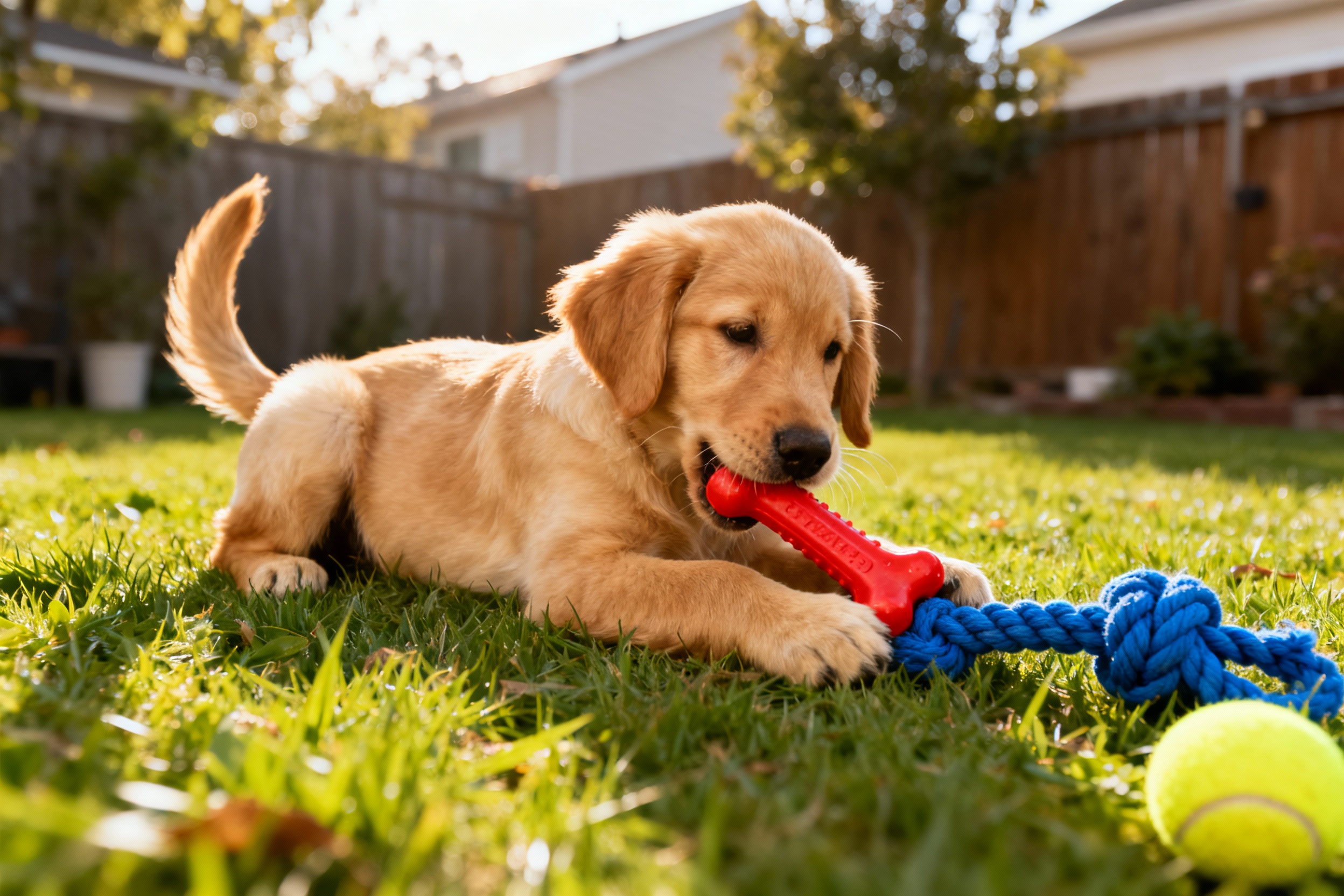
Your Golden Retriever puppy isn’t a couch potato. They’re a fuzzy tornado with a heart of gold and a mouth that believes everything is a chew toy. You want to keep them busy without losing your mind (or your favorite shoes)?
Good news—you can. Here’s how to channel that adorable chaos into smart, satisfying activities that actually work.
Match Energy With Smart Routines

Golden puppies wake up ready for action. If you don’t plan their day, they will—usually with bad decisions.
Build a simple rhythm that balances brain work and body work.
- Morning: Potty, short sniffy walk, 5–10 minutes of training, breakfast from a puzzle feeder.
- Midday: Play session (fetch or tug), nap, short indoor training or trick session.
- Evening: Walk, calm enrichment (lick mat or stuffed Kong), cuddles, bedtime routine.
Keep sessions short. Puppies burn out fast. Aim for 5–10 minute bursts and then a nap. Tired brain = calm puppy.
How much is too much?
Use the “5-minute rule” for structured exercise: about 5 minutes per month of age, up to twice a day.
Add sniffy walks and mental games freely—they tire the brain without crushing growing joints.
Make Food Work For You (and Them)
You already feed your puppy daily. Turn meals into fun and training moments. It’s the easiest win ever.
- Use puzzle feeders: Snuffle mats, slow bowls, and food-dispensing toys make them hunt and think.
- Stuffed Kongs: Layer kibble, plain yogurt, mashed banana, or pumpkin.
Freeze for extra challenge.
- Scatter feeding: Toss kibble over a rug or grass. Their nose does the work, their brain does the rest.
DIY enrichment ideas
- Muffin tin + tennis balls: Hide treats in cups and cover with balls.
- Towel burrito: Roll treats in a towel, fold, and let them puzzle it out.
- Cardboard hunt: Put kibble in boxes with holes. Supervise so your pup doesn’t snack on cardboard (IMO: they still try).

Teach the Brain: Training That Tires
Training isn’t a chore—it’s your secret weapon.
Your puppy wants a job. Give them one, and watch the chaos settle.
- Name game: Say their name, reward eye contact. You can’t train a puppy who ignores you.
- Basic cues: Sit, down, touch (nose to palm), drop it, and leave it.
Five minutes, two to three times daily.
- Settle on a mat: Reward calm on a designated mat. Build this slowly and take it everywhere.
- Impulse control: Practice “wait” at doors, food bowls, and before tossing a toy. Golden brains love rules when you keep them clear.
Tricks that double as energy drains
- Spin, bow, figure-eight through legs—great for coordination.
- Find it—hide a toy and let them search with their nose.
- Place—send them to a bed from a few feet away, then longer distances.
FYI: Training builds confidence and reduces boredom chewing.
It’s also cute. That matters.
Play With Purpose (and Boundaries)
Goldens love to party. That’s great—until your arm falls off from fetch.
Mix up play styles, and you’ll get a happier, calmer pup.
- Fetch: Keep sessions short on soft surfaces. Use soft toys for baby teeth.
- Tug: Add rules—“take it,” “drop,” “sit to restart.” Tug teaches control and burns steam fast.
- Flirt pole: A dog-safe lure on a stick. Great for quick bursts and practicing “leave it.”
- Chew time: Offer safe chews like rubber toys, nylon bones, or frozen cloths for teething relief.
Indoor games for rainy days
- Hallway fetch with a soft toy.
- Hide-and-seek with you or a family member.
- Targeting: Teach them to touch their nose or paw to a target.
Sounds boring, tires them out.

Socialize Without Overloading
Your Golden wants to meet everyone. Set them up for success with smart, controlled exposure.
- New places: Short trips to pet-friendly stores, outdoor cafes, or parks (skip dog-dense areas until vaccinations finish).
- People variety: Hats, beards, kids, umbrellas, wheelchairs—reward calm curiosity.
- Dog friends: Arrange playdates with vaccinated, gentle dogs. Keep sessions brief and positive.
Watch body language. Happy puppy: loose tail, soft eyes, bouncy movement.
Overwhelmed puppy: tucked tail, yawning, hiding. If they look stressed, leave. Confidence beats “toughing it out.”
Car time can help
Short car rides to watch the world from a safe spot count as enrichment.
Toss a treat for calm behavior. No chaos required.
Build Alone-Time Skills Early

Golden Retriever puppies love their people. That’s adorable until they glue themselves to you.
Teach independence so downtime doesn’t feel like punishment.
- Crate or pen training: Feed meals inside, drop surprise treats when they settle, and keep it cozy.
- Micro departures: Step out for 30 seconds, then 2 minutes, then 5. Return calmly.
- Stationing: Send them to a mat while you move around. Reward calm stays.
Important: If your puppy howls or panics every time you leave, slow down.
Pair absences with special chews they only get during alone time.
Use the Nose—It’s Their Superpower
Goldens love scent games. Nose work burns energy and builds confidence like nothing else.
- Find the treat: Show a treat, let them sniff it, hide it under a cup. Add more cups as they improve.
- Treasure trails: Drag a smelly treat on the ground to create a scent path.
Reward at the end.
- Named toys: Teach “Find Bear!” and watch them search the house. Yes, you’ll feel smug (and you should).
Sniffy walks > speed walks
Let them sniff bushes, posts, and lawns. Sniffing is like reading the neighborhood newspaper—mentally rich, physically gentle.
Rotate, Don’t Accumulate
You don’t need a toy mountain.
You need novelty. Rotate toys so each one feels new again.
- Keep 3–4 toys out. Hide the rest in a bin.
- Swap weekly.
Reinvent favorites by adding scent (rub with a treat) or changing locations.
- Mix textures: plush, rope, rubber, crinkle. Puppies love variety.
Pro tip: Name the toys. Use the names during play.
Suddenly, you’re training and playing at the same time. Efficient and sneaky.
FAQs
How much exercise does a Golden Retriever puppy need?
Use short, frequent bursts. Aim for a couple of 10–20 minute play or walk sessions depending on age, plus mental games throughout the day.
Avoid long runs or high-impact jumping until growth plates close (around 12–18 months).
What toys keep Golden Retriever puppies busy the longest?
Food puzzles, stuffed Kongs, and durable chew toys win. Rotate in a snuffle mat and a tug toy with rules. Skip flimsy plush if your pup shreds and swallows pieces—safety first.
How do I stop my puppy from chewing furniture?
Supervise, manage, and redirect.
Use baby gates or pens, offer appropriate chews, and trade furniture for a toy with an enthusiastic “yes!” Reward when they chew the right thing. Add more enrichment to reduce boredom chewing.
Is fetch bad for puppies?
Not if you keep it short and soft. Use gentle tosses on grass, avoid sharp turns, and take breaks.
Mix in nose work, training, and tug to spread the load on growing joints.
What should I do on days when I’m busy?
Prep frozen Kongs, use a snuffle mat for meals, and run a 5-minute training session. A flirt pole burst or hallway fetch helps too. If possible, hire a vetted dog walker or arrange a calm playdate.
When can my puppy go to the dog park?
After vaccinations finish and your puppy listens well enough to recall away from distractions.
IMO, skip crowded dog parks with puppies—choose smaller, controlled playdates instead. Safer and more positive.
Conclusion
You don’t need endless time or a professional trainer badge to keep a Golden Retriever puppy busy. You just need variety, short sessions, and a plan that blends food puzzles, training, play, and sniffy adventures.
Rotate toys, teach independence, and celebrate the small wins. Do that, and your golden tornado becomes a golden companion—still goofy, just focused enough to keep your shoes alive.
Leave a Reply