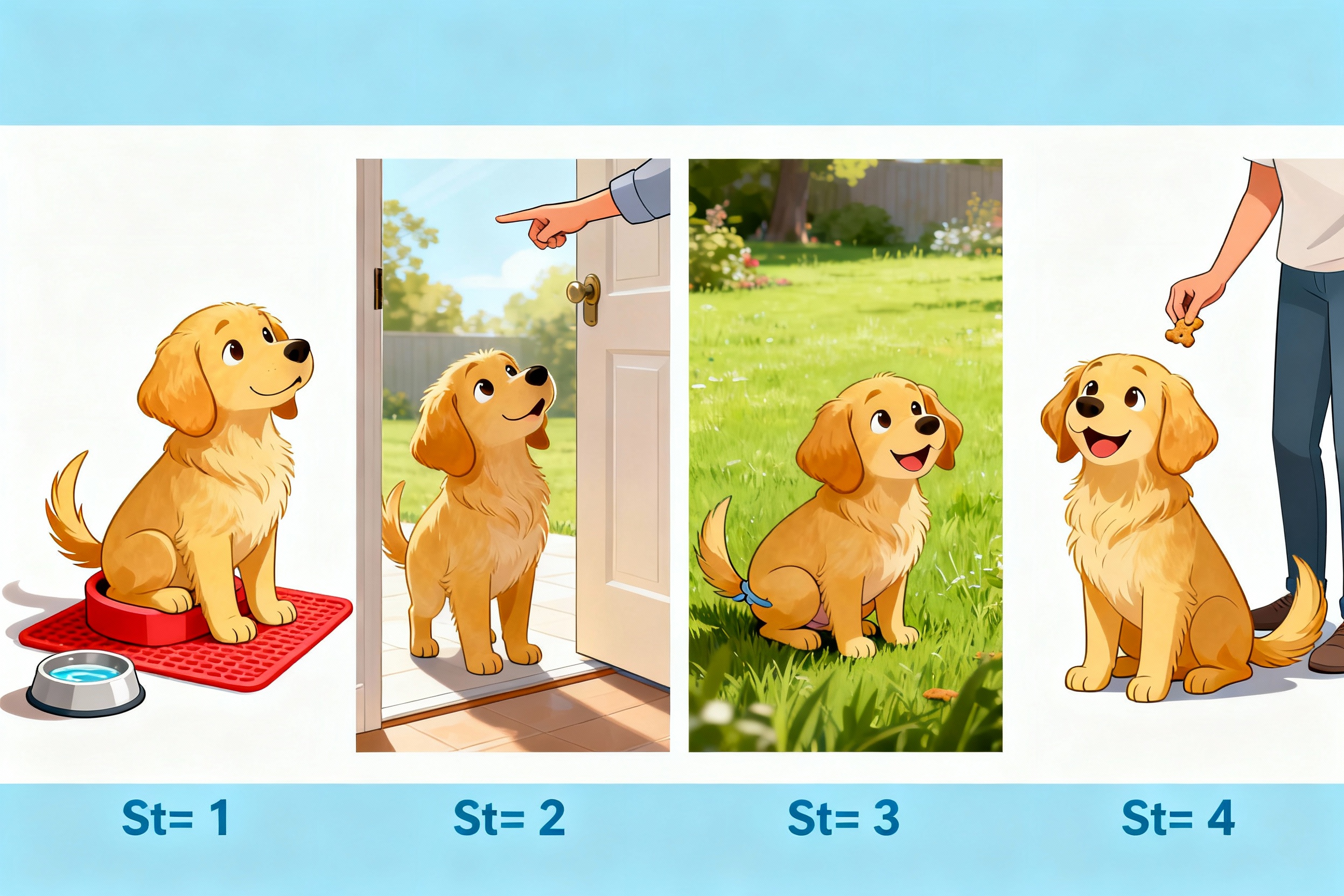
Puppy pee on the rug? Been there. Golden Retrievers learn fast, but their bladders didn’t get the memo.
The good news: you can toilet train your Golden pup quickly with the right routine, timing, and rewards. No magic, no shame—just consistency, a crate, and lots of praise. Ready to get your floors back?
Know Your Golden: What You’re Working With

Golden Retrievers want to please you.
That’s your superpower here. They also get easily excited, which can lead to “oops” moments. Expect enthusiasm… and the occasional puddle.
Their bladder control develops with age. At 8-12 weeks, they can hold it for about 2-3 hours. By 4-6 months, you’ll see big improvements. Set realistic expectations and you’ll avoid frustration.
Build the Routine: Timing Is Everything
Your secret weapon?
A rinse-and-repeat schedule. Take your puppy out:
- First thing in the morning
- After every meal (within 10-20 minutes)
- After naps
- After play sessions
- Right before bed
- Every 2-3 hours in between at first
Pick a consistent potty spot outside. Stand quietly and wait.
When they go, praise like they just solved world peace, then give a treat immediately. You’re building a habit loop: go outside → reward → repeat.
How Long Should You Wait Outside?
Give it 5-10 minutes. If nothing happens, bring them back in calmly, supervise closely, and try again in 15 minutes.
Don’t turn potty breaks into playtime mid-mission. Do your business, then party.

Crate Training: Your Best Friend’s Best Tool
Crates aren’t cages of doom—they’re dens. Dogs naturally avoid soiling their sleeping area.
When you introduce the crate properly, you’ll get fewer accidents and a calmer pup. How to get the crate right:
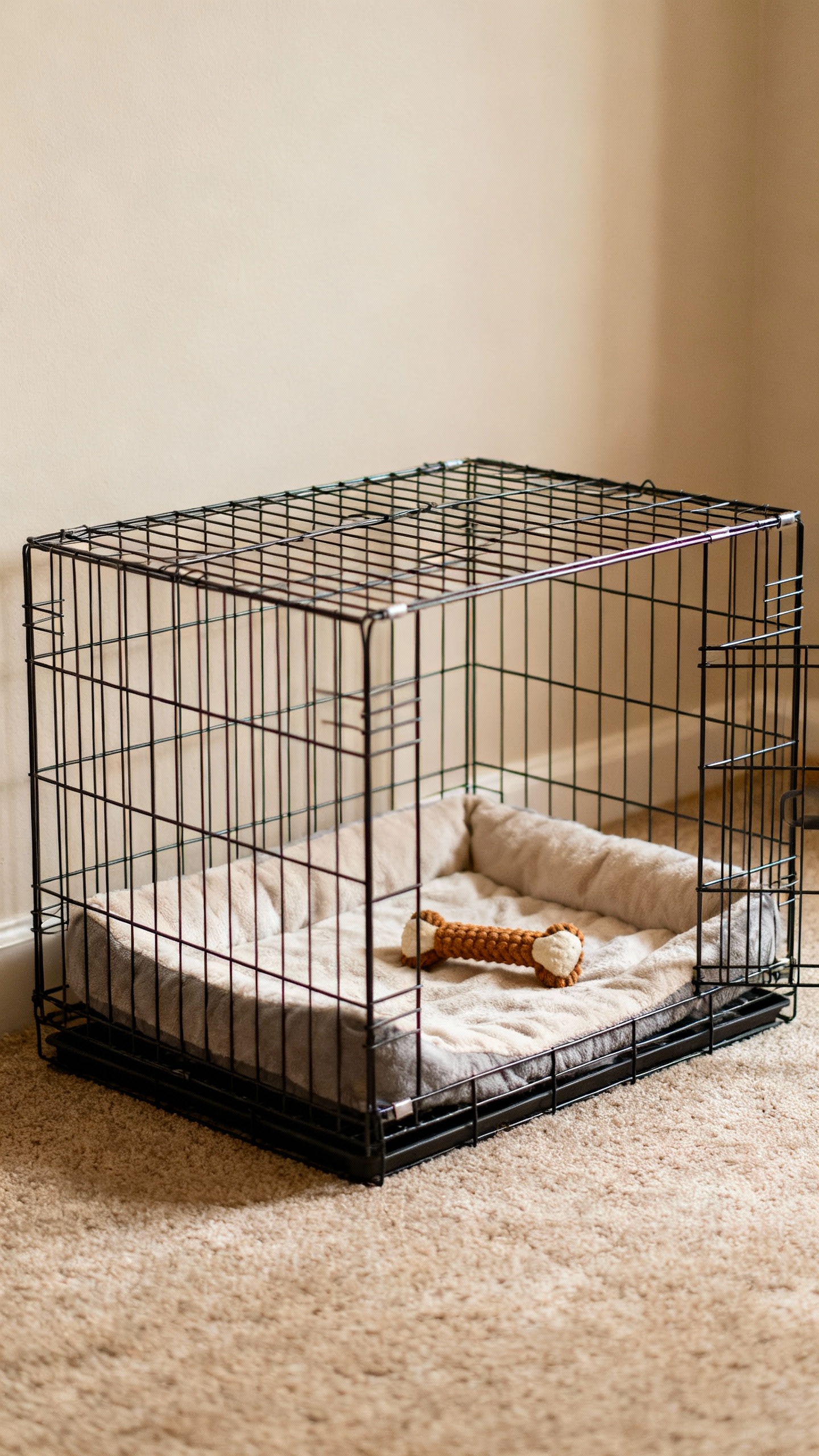
- Choose a size where the puppy can stand, turn, and lie down—no extra real estate for a “bathroom annex.” Use a divider if needed.
- Make it comfy: soft bedding, a safe chew, and a calm vibe.
- Start with short sessions and treats so the crate feels like Club Chill, not jail.
Crate Schedule Basics
Use the crate when you can’t supervise 100%. Let them out immediately after naps or around the 2-3 hour mark. At night, take them out once if they’re under 12 weeks.
Keep night potty trips boring: out, pee, back to bed. No TED Talks at 2 a.m.
Supervision: Catch Success, Not Accidents
If your pup roams, your carpet loses. Keep them in your line of sight or use a leash indoors to “tether” them to you.
That way you spot the signs: circling, sniffing, pacing, sudden stillness. When you see it, hustle outside. Pro tip: Set a timer on your phone. The schedule won’t keep itself.
And IMO, a timer saves carpets.
What About Playpens and Baby Gates?
Great idea. Limit access so you control the environment. Use a pen for short stints when the crate feels too confining.
Still, supervise. A playpen doesn’t potty train a puppy—you do.
Rewards, Cues, and Consistency
You want your pup to think: grass = jackpot. Keep a small treat bag by the door and reward immediately after they finish outside.
Don’t wait until you get back inside or they’ll think the treat is for… walking. Pick a potty cue like “Go potty” or “Do your business.” Say it as they start to go, not before. Over time, they’ll understand the cue means it’s time to pee or poo, not time to freestyle.
How to Use Meal Timing to Your Advantage
Feed on a schedule.
No free-feeding. Take uneaten food away after 15 minutes. Regular meals = predictable bathroom breaks.
FYI, a cold turkey switch to new food can cause tummy chaos—transition slowly to avoid extra messes.
Accidents Happen: Handle Them Like a Pro

If you catch them mid-squat, interrupt gently with a quick “Outside!” and whisk them to the spot. When they finish outside, praise and reward. If you find a dried puddle, clean it and move on.
Dogs don’t do guilt, that face just looks convincing. Clean like you mean it:
- Use an enzymatic cleaner to break down odor molecules.
- Avoid ammonia-based products—they smell like pee and can attract repeat performances.
Common Mistakes to Avoid
- Too much freedom too soon: Earned freedom prevents setbacks.
- Inconsistent schedule: Your pup can’t guess your calendar.
- Late rewards: Treats must follow action immediately.
- Punishing accidents: It teaches fear, not bathroom etiquette.
Nighttime and Weather: The Real-World Stuff
Night training takes patience. Cut water an hour before bedtime, take them out, then crate. If they whine at night, give it a minute.
If it persists, take them out calmly. If they don’t go, back to the crate. Rain or snow?
Your Golden might hesitate. Go out with them, use a big umbrella, clear a small patch of grass, and reward generously. Many dogs get picky about surface texture.
If you train on grass, stick to grass.
When to Expand Freedom
After 2-3 weeks with no accidents, allow short off-leash time in one room. Keep doors closed elsewhere. If accidents return, you expanded too fast—no drama, just dial it back.
Creating a Simple Daily Plan
Here’s a sample schedule for a 10- to 12-week-old Golden:
- 6:30 a.m. – Outside, then breakfast, then outside again.
- Play/training + inside tethering or supervised free time.
- Every 2 hours – Quick potty break.
- 12:00 p.m. – Lunch, then outside.
- Afternoon play, naps in crate, potty after each nap.
- 5:30 p.m. – Dinner, then outside.
- Evening calm time, last water around 7:30-8:00 p.m.
- 10:00 p.m. – Final potty, then bed.
One quick night trip if needed.
Tweak timing to your life, but keep the intervals consistent. Consistency gets you to victory faster, IMO.
How Long Does This Take?
Many Golden puppies get reliable by 4-6 months with tight routines. You’ll see rapid progress in the first few weeks.
Full trust with big freedoms may take longer, and that’s normal. Celebrate small wins—like that first week with no “surprises.”
FAQ
What if my Golden puppy keeps having accidents in the crate?
Check crate size first. If it’s too big, they can sleep in one corner and potty in the other.
Limit water a bit before bedtime, take them out more frequently, and clean thoroughly with enzyme cleaner. If accidents continue, rule out a UTI with your vet.
Should I use pee pads?
If you can get outside easily, skip them. Pads can confuse the “inside vs. outside” message.
If you live in a high-rise or have limited mobility, use pads as a stepping stone near the door, then gradually move them closer to the outdoor spot until you transition fully outside.
How do I handle excited peeing when guests arrive?
Keep greetings low-key. Ask guests to ignore the puppy for the first minute. Take the pup out to potty before visitors come in.
Build calm habits: reward sits and quiet behavior. As bladder control improves, excited dribbles usually fade.
My puppy pees right after coming back inside. Help?
Extend the outdoor potty window by a few minutes and cut the chatter.
If they don’t go, bring them in and keep them tethered or crated for 10-15 minutes, then try again. Reward outside only—never for indoor pee pad use if your goal is outdoor training.
Can I train with a dog door?
Yes, but supervise early on so the door doesn’t become a shortcut to yard zoomies instead of potty. Take them out after they use the door and reward outside to reinforce the goal.
When should I worry it’s a medical issue?
If your puppy pees very frequently in tiny amounts, strains, has blood in urine, or suddenly regresses after doing well, call your vet.
Medical issues can mimic behavior problems, and it’s better to check early.
Conclusion
Toilet training a Golden Retriever puppy isn’t rocket science—it’s rhythm. Stick to a tight schedule, supervise like a hawk, crate kindly, and reward like a vending machine. You’ll stack wins fast.
Stay patient, laugh off the hiccups, and soon your pup will master the art of going where grass grows and carpets fear to tread.
Leave a Reply