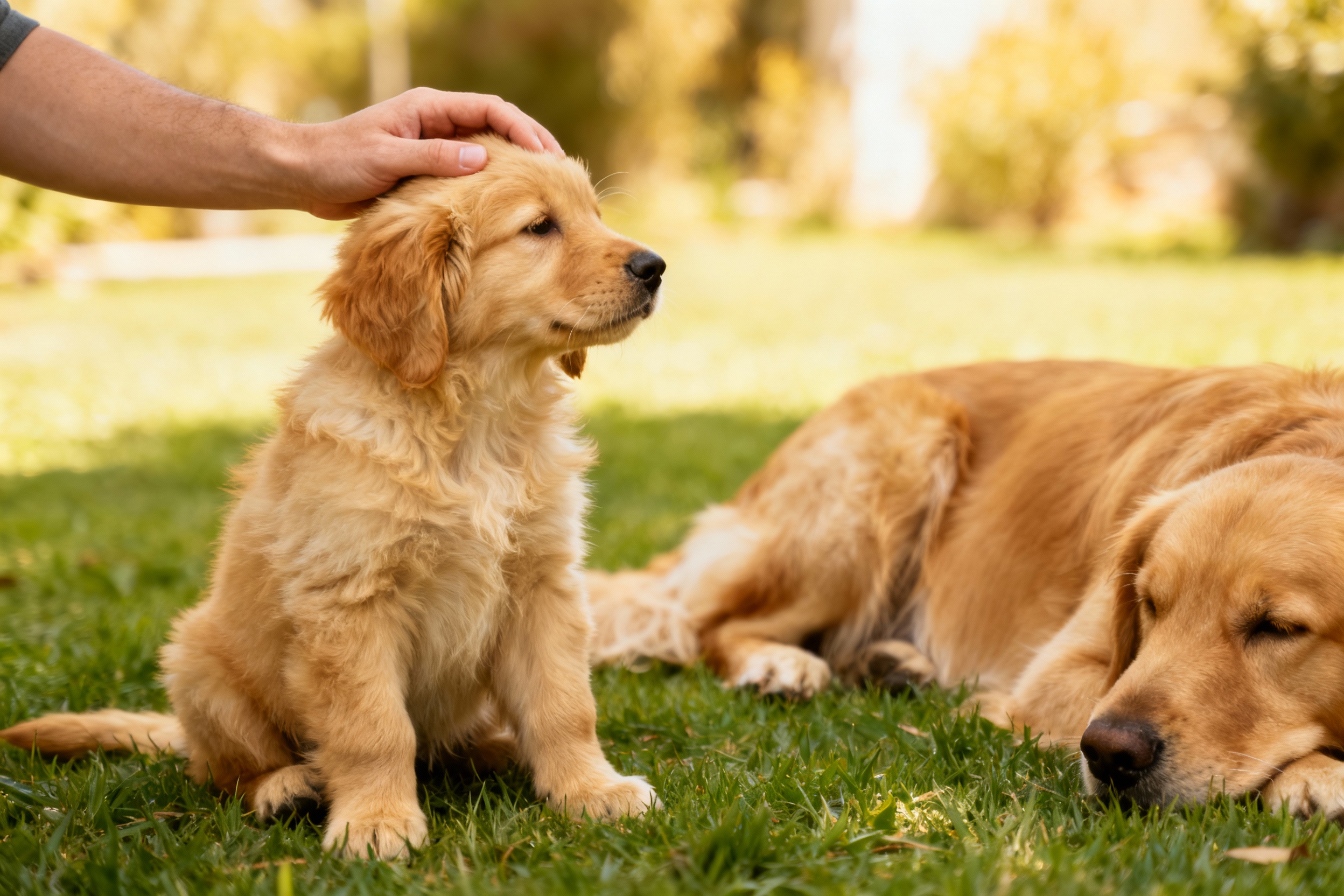
Your golden retriever puppy wants to be everyone’s best friend—great news, right? Yes… unless you skip socialization and end up with a lovable fluffball who panics at skateboards and melts down at the vet. The good news: you can build a confident, go-with-the-flow dog with a little strategy and a lot of snacks.
Let’s make your golden the calmest, friendliest dog on the block—without turning your life into a training montage.
Why Socialization Matters (And When to Start)

You’re not just “introducing new stuff.” You’re teaching your puppy that the world = fun, safe, and predictable. Socialization builds resilience, lowers stress, and prevents fear-based behaviors later. Start early.
The socialization window runs roughly from 8–16 weeks. You won’t close the door when it ends, but the biggest impact happens now. FYI, you still protect your pup from disease—use safe environments, carry them in busy places, and stick to vaccinated dogs until your vet gives the green light.
Safety First
– Keep interactions short and positive. – Pair new experiences with high-value treats. – Leave if your puppy looks overwhelmed: tucked tail, yawning, excessive lip-licking, or freezing.
The Golden Mindset: Curious, Sensitive, Food-Motivated
Goldens love people and praise, but they also feel emotions big.
They can flip from “wow new friend!” to “uhh what is that roar” fast. So you control intensity and reward curiosity. Use what goldens love: – Treats (soft, pea-sized, smelly) – Toys (tug and soft fetch) – Cheerful voice (be the hype squad) – Calm breaks (sniffing, short naps between exposures) IMO, your golden wants to get it right.
Set them up to win every time.

Weekly Socialization Game Plan (8–16 Weeks)
Think short, fun “missions.” Aim for 1–2 new exposures per day, 3–5 minutes each. You’ll repeat and rotate to build comfort.
Week 1–2: Gentle Introductions
– Surfaces: carpet, hardwood, rubber mats, grass, gravel. – Objects: umbrellas, rolling suitcases, shopping bags, step stools. – Sounds: low TV, doorbell at a distance, hairdryer on low (treats raining). – Handling: touch paws, ears, tail, collar gently. Treat after each touch.
Week 3–4: People & Movement
– People in hats, glasses, hoodies, bulky coats. – Slow bikes and scooters (distance first). – Strollers and wheelchairs—pair with treats while stationary, then moving. – Calm, vaccinated dogs with known good manners.
Week 5–6: Busy Places (Controlled)
– Hardware stores or pet-friendly shops during quiet hours. – Car rides to nowhere (treats, then relax). – Short walks near parks to watch the world.
You don’t need to greet everyone. Observation counts. Rule of thumb: New thing shows up → puppy notices → you mark “Yes!” → deliver treat → retreat before stress builds. End on a win.
People and Dogs: Quality Over Quantity
Your golden doesn’t need to meet 50 new people every week.
Instead, focus on different “types” of humans and dog experiences.
Meeting People
– Coach greeters to be boring at first. No looming or squealing. – Ask them to turn sideways, kneel if comfortable, and let the puppy approach. – Reward your puppy for looking, sniffing, and choosing to engage. No forced petting.
Meeting Dogs
– Choose calm adult dogs with soft body language. – Keep leashes loose, 3-second sniffs, then call away for a treat.
Repeat. – Avoid chaotic dog parks early. It’s the Vegas of dog socializing—loud, unpredictable, and you’ll probably lose money (or confidence). Red flag: Overexcited play with nonstop chasing or body slamming. Interrupt gently, do a short reset, and reward calmer interactions.

Household Confidence: Vet-Ready and Groomer-Ready
A confident golden handles care like a champ because you practiced it early.
Make vet and grooming their second language.
Handling Routine
– Paws: Hold each paw 1–2 seconds, treat. Build to nail touch, clipper noise, and gentle pressure. – Ears: Lift flap, peek, treat. Add cotton ball near ear.
No actual cleaning unless needed. – Teeth: Lift lip, touch canine, treat. Introduce toothbrush with peanut butter—don’t actually brush yet.
Grooming Tools
– Brush: One stroke, treat. Two strokes, treat.
End before they wriggle. – Blow-dryer: On low, far away. Treat for calm glances and soft body. – Bath intro: Dry tub with nonslip mat, treat. Add a few drops of water next time. Pro tip: Teach a “chin rest” on your palm or a towel.
It signals “I’m ready; go ahead,” and helps the pup feel in control.
Leashes, Noises, and the Big Scary World

You can’t bubble-wrap the planet, so you build coping skills instead.
Leash Skills for Socialization
– Clip leash at home, feed treats for following you around. – Walk to the mailbox, then back. Done. Keep sessions tiny. – Practice “Let’s go” and U-turns with snacks.
You’ll need these when a skateboarder appears from another dimension.
Noise Confidence
– Play sound playlists (thunder, fireworks) at whisper volume during mealtime. – Pair with licking mats and chews. Gradually nudge volume up over days. – If your puppy startles, say “good job” lightly, feed a treat, and carry on. No drama.
Reading Your Puppy: Green, Yellow, Red
You can’t socialize well without reading the room—specifically, your dog’s body language. – Green (keep going): Soft eyes, loose body, sniffing, tail at mid-height, taking treats. – Yellow (dial it down): Pauses, lip licking, half-tucked tail, slower taking of treats.
Increase distance, shorten session. – Red (end it now): Freezing, full tuck, growling, hiding, refusing food. Retreat, decompress, try again later at an easier level. IMO, brave doesn’t mean fearless—it means supported.
Your job: be the safety net.
Socialization Games You’ll Actually Use
– Cookie Scatter: Toss 5–10 treats in grass while a new thing happens nearby. Sniffing lowers arousal and builds positive associations. – Look at That: Puppy glances at the trigger → you mark “Yes!” → treat. Repeat until your pup looks at you after noticing things.
Magic. – Mat Time: Teach your puppy to relax on a mat at cafes or parks. Feed calm behavior. Portable chill mode = freedom.
Common Mistakes (No Judgment, We’ve All Done Them)
– Forcing greetings. Let your puppy choose.
Consent equals confidence. – Too much, too fast. Ten minutes of great reps beats an hour of overwhelm. – Dog-park dependency. It’s not a personality builder. Controlled play beats chaos. – Skipping practice at home. Grooming and handling matter as much as meeting strangers. – Only socializing to people and dogs. Surfaces, noises, objects, and places count too.
Sample One-Week Plan
- Mon: New surface walk (gravel) + brushing 2 minutes
- Tue: Watch bikes from 30 feet + cookie scatter
- Wed: Meet a calm adult dog, 3-second greetings
- Thu: Car ride to pet-friendly store, 5-minute aisle stroll
- Fri: Handling practice—ears and paws, 3 treats each
- Sat: Kids playing at a distance, play “Look at That”
- Sun: Quiet cafe patio, mat time with chews, then nap
FAQ
What if my puppy seems scared of everything?
Scale way back. Increase distance, shorten sessions, and sweeten the deal with better treats.
Keep exposures predictable and end before stress shows. If fear persists, loop in a trainer or behavior consultant who uses positive reinforcement.
Can I socialize before all vaccines?
Yes—with caution. Avoid dog parks and unknown dogs.
Carry your puppy in busier areas, visit friends’ homes with healthy vaccinated dogs, and choose clean indoor spaces. Your vet can advise a safe plan for your area.
How many new experiences per day is ideal?
One or two is plenty. Focus on quality and recovery time.
Repeat the same exposure over a few days to build comfort rather than chasing novelty every hour.
My golden gets too excited around people—what do I do?
Teach an incompatible behavior like “sit” for greetings. Reward sits like you’re a slot machine. Ask people to pause until your puppy sits, then pet.
If excitement skyrockets, increase distance and practice calm watching instead of greeting.
What treats work best for socialization?
Soft, smelly, bite-sized rewards—think tiny bits of chicken, cheese, or commercial training treats. You need fast, frequent reinforcement. Kibble usually won’t cut it for the big, weird world.
Do I have to do this forever?
You’ll front-load effort during 8–16 weeks, then maintain.
Keep sprinkling in new places and easy wins. Confidence is a muscle—use it or lose it.
Conclusion
Socializing your golden retriever puppy isn’t about collecting high-fives from strangers—it’s about building a calm, confident teammate who trusts you. Keep sessions short, pair new stuff with great rewards, and watch your pup bloom.
Be patient, celebrate tiny wins, and remember: you’re raising the world’s friendliest dog. Don’t rush the magic.
Leave a Reply