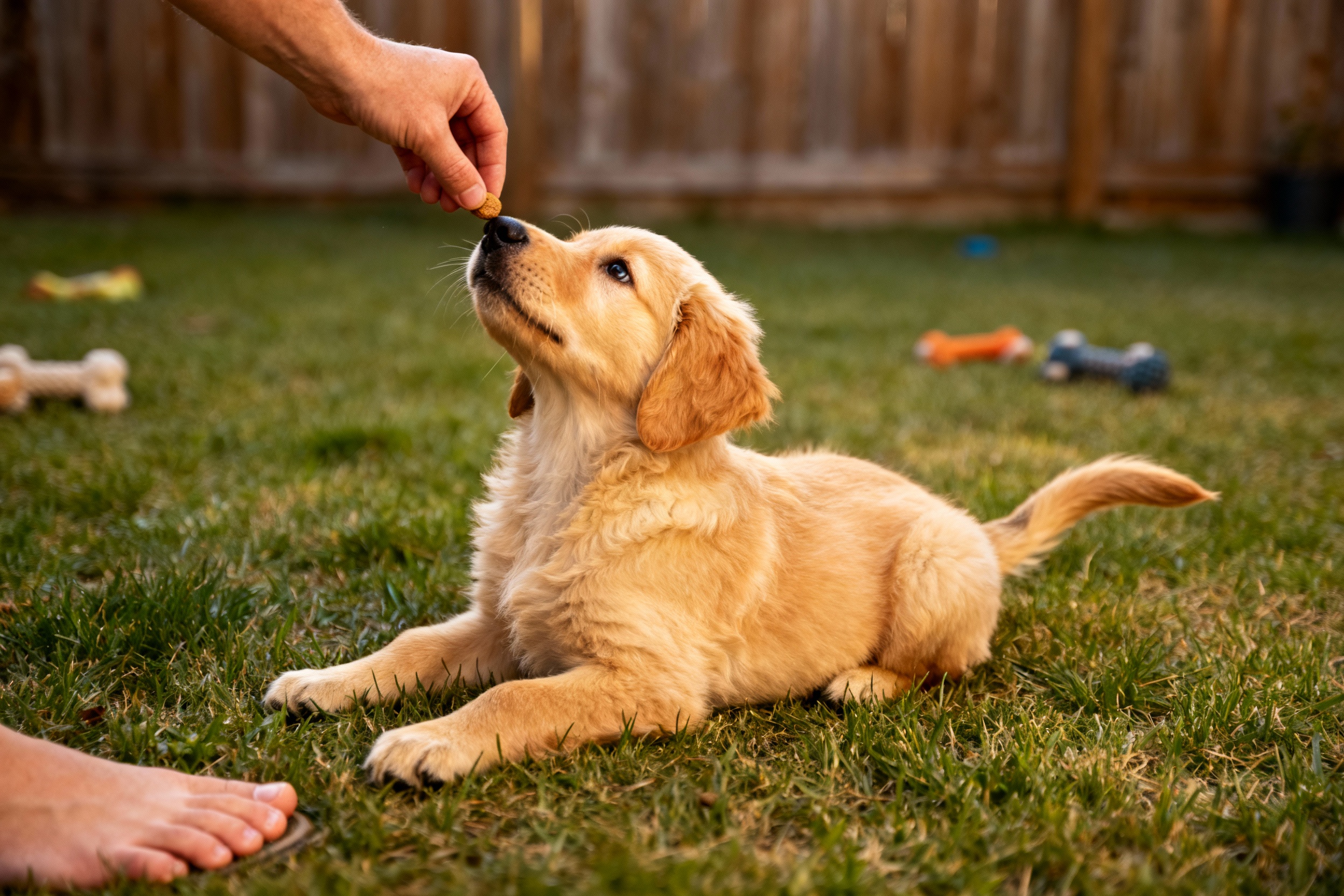
Your 8-week-old Golden Retriever puppy is a tiny tornado of fluff, teeth, and optimism. You don’t need a military-grade training plan—you need a simple, consistent routine that teaches good habits fast. The sooner you start, the easier everything gets: potty training, biting, sleeping, walking—yes, even the zoomies.
Ready to raise a happy, polite golden who doesn’t eat your shoes for breakfast? Let’s do it.
Set Up Your Puppy’s World (Structure = Sanity)

You control the environment, not the other way around. Limit your puppy’s freedom early so you prevent chaos and build good habits.
Think of it as baby-proofing, but your baby has sharper teeth. Must-have setup:
- Crate: Right size so your pup can stand, turn, and lie down—no extra space for accidents.
- Playpen/gated area: Safe zone for when you can’t supervise directly.
- Chew station: A basket with 4–6 chew options you rotate daily.
- Potty spot: One outdoor area you always use. Consistency builds the habit.
Daily Rhythm That Actually Works
Use a simple loop: wake → potty → short play → short training → nap. Repeat.
Puppies at 8 weeks sleep a lot—like 16–18 hours. When they’re awake, keep sessions short and purposeful. You’ll reduce meltdowns and zoomies that end in ankle attacks.
Potty Training Without Tears (Yours)
Golden puppies are smart, but their bladders didn’t get the memo.
At 8 weeks, expect to take them out:
- First thing in the morning and last thing before bed
- After eating, playing, and waking up from naps
- Every 45–60 minutes while awake
How to nail it:
- Go to the same spot. Say your cue (e.g., “Go potty”).
- Stand still. Quietly wait.
No play until they finish.
- Praise like they won the lottery. Treat right after they go, outside.
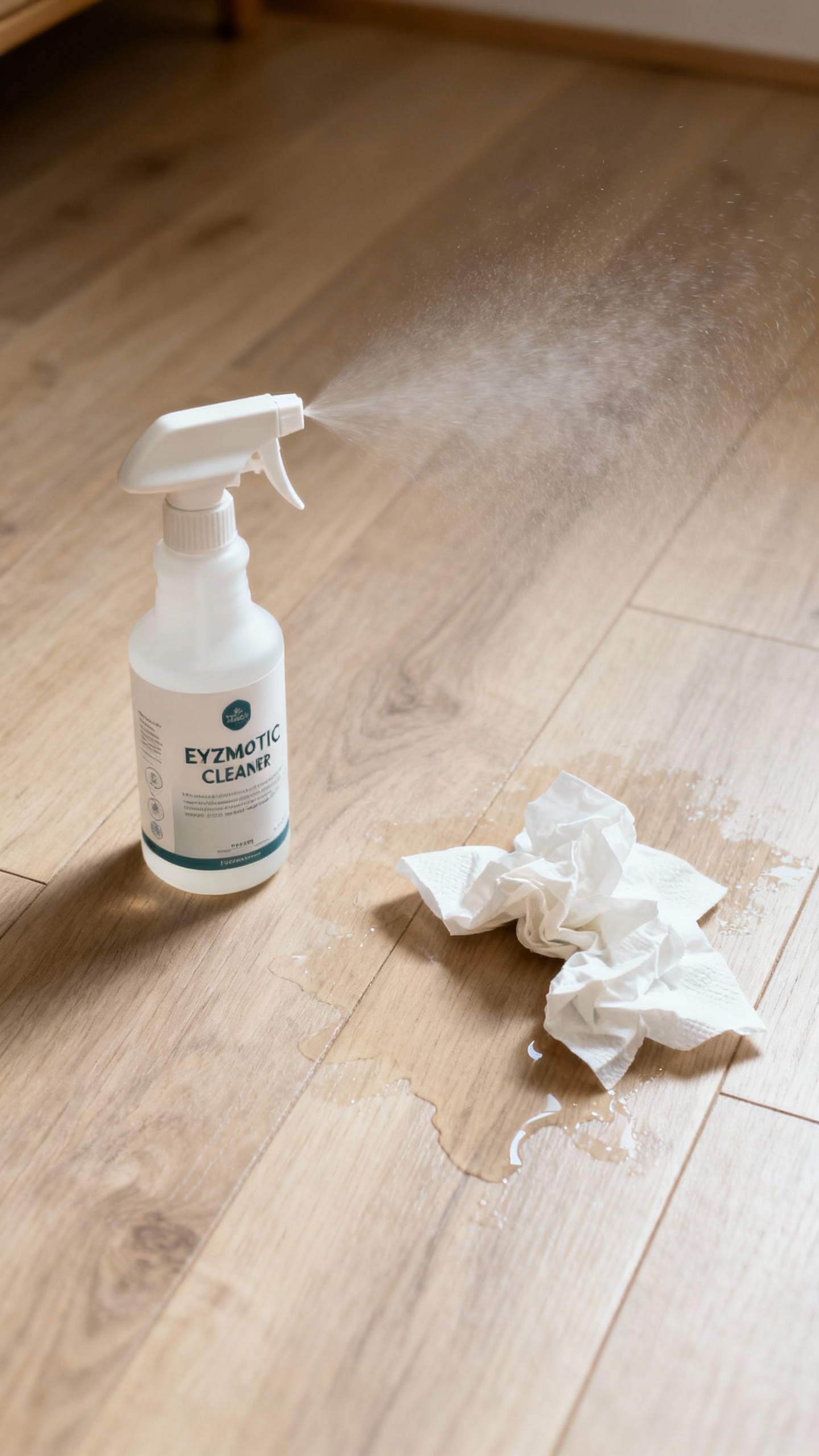
Accidents? Totally normal. Interrupt gently if you catch them (clap once), carry them outside, and clean with an enzymatic cleaner.
No scolding—your puppy won’t connect the dots, and it can make them sneak off to go in secret. IMO, prevention beats correction 10/10.

Crate Training: Your Secret Weapon
Crates help with potty training, naps, and preventing random sock-eating. They also give your puppy a calm place to relax.
You want the crate to feel like a den, not a jail. Make it cozy:
- Feed meals in the crate with the door open at first.
- Use a safe chew or stuffed Kong during crate time.
- Start with 3–5 minute sessions and build up slowly.
Nighttime Strategy
Put the crate near your bed for the first few weeks so you can hear the puppy stir. Expect 1–2 potty breaks at night. Keep them boring: no play, low light, in and out.
If they cry, try a calm “shh” or a few gentle taps on the crate. If it continues, take them out—better safe than mopping at 2 a.m.
Basic Training That Actually Sticks
At 8 weeks, keep sessions fun and short—like 2–3 minutes, 3–5 times a day. Always end on a win.
Golden Retrievers live to please, but you still need to pay them for their work. Core skills to start now:
- Name recognition: Say their name once, reward when they look at you.
- Sit: Lure with a treat over the nose, mark (“Yes!”), reward. Use sit for every door and meal.
- Come: Back up, clap, use happy voice, reward big when they reach you. No “come = bath time only.”
- Drop it: Trade up—offer a treat, they drop the sock, they get the treat, then a toy.
- Touch (nose to hand): Great for redirection and recall foundations.
Leash Skills for Tiny Explorers
Start indoors.
Let your puppy drag a lightweight leash. Reward for standing by you and following your movement. When you go outside, keep first “walks” short and sniffy.
Sniffing equals learning, FYI.
Nipping, Biting, and Chewing: The Baby Shark Phase
Your golden will bite—a lot. They’re not rude; they’re teething and exploring. You’ll survive by giving appropriate outlets and guarding your skin like it’s a national treasure. What to do:
- Offer chew rotations: Puppy-safe chews, rubber toys, frozen wet washcloth twist (supervised), stuffed Kongs.
- Redirect: If they nip, calmly offer a toy.
When they chew the toy, praise.
- End the game: If biting escalates, stand up and walk away for 20–30 seconds. Fun stops when teeth touch skin.
- Work on bite inhibition: Play gentle tug and reward soft mouths. If they chomp, pause the game.
Energy Management = Fewer Gremlin Moments
Baby puppies don’t need long walks.
They need bite-sized play plus brain work:
- Scatter feed kibble in the yard or on a snuffle mat
- Short tug sessions with rules (sit to restart)
- Simple scent games: hide a treat under a cup
Tired brains make sweet puppies. Overtired puppies act like caffeinated squirrels.
Socialization That Builds Confidence

Weeks 8–16 make or break your puppy’s social skills. Your goal: hundreds of positive experiences, not random chaos.
Focus on sights, sounds, surfaces, and gentle people. Smart socialization ideas:
- Carry your puppy to busy places for sound exposure
- Meet friendly, vaccinated dogs you know in controlled settings
- Touch paws, ears, tail daily with treats—prep for vet and grooming
- Expose to umbrellas, hats, stairs, wheelchairs, doorbells—pair with snacks
Health and Safety Notes
Until your vet clears it, avoid high-traffic dog areas like dog parks. You can still socialize safely by:
- Hosting calm dog friends in your yard
- Visiting pet-friendly stores that require vaccination (carried if needed)
- Sitting outside a café and letting your puppy watch the world with treats
IMO, quality beats quantity. One great experience beats five “meh” ones.
Feeding, Rewards, and Motivation
Your puppy’s food equals your training fuel.
Use a big chunk of daily kibble as rewards. Save high-value treats for tough moments—nails trimmed, recall from squirrels, scary garbage trucks. Feeding tips:
- 3 meals a day at 8 weeks
- Measure portions; Goldens love food and do not self-regulate
- Pair meals with training: sit, wait, name, touch
Water stays available except a couple of hours before bedtime to help with nights.
Common Mistakes to Dodge
We all mess up. But you can sidestep the big ones:
- Too much freedom too soon: Leads to accidents and chewing sprees.
- Inconsistent rules: If “no couch,” then no couch—especially when they’re cute and sleepy.
- Training when overtired: Schedule matters.
Cranky puppies learn nothing.
- Repeating cues: Say it once, help the puppy succeed, then reward. Don’t turn “sit sit sit sit” into background noise.
Sample Day Plan (Flexible, Not Rigid)
- 7:00 — Out to potty, short play, breakfast + training
- 7:45 — Nap in crate
- 9:00 — Potty, play, chew time, socialization outing (10–15 min)
- 10:00 — Nap
- 12:00 — Potty, lunch + training, calm play
- 1:00 — Nap
- 3:00 — Potty, mini walk/sniff tour, handling practice
- 4:00 — Nap
- 6:00 — Potty, dinner + training, family hangout in playpen
- 8:30 — Potty, quiet chew
- 9:30 — Final potty, bedtime in crate
Adjust times to your schedule. The pattern matters more than the clock.
FAQ
How long can an 8-week-old puppy hold it?
Rough rule: one hour per month of age while awake, so about 1–2 hours.
Nighttime stretches last longer. Always take out after meals, play, and naps.
When should I start obedience classes?
As soon as your vet okays it, usually after the first round of shots. Many puppy classes accept vaccinated puppies at 8–10 weeks.
Look for classes that focus on socialization, confidence, and positive reinforcement.
My puppy cries in the crate—what do I do?
Start with baby steps, reward calm, and keep the crate near you at night. Give a safe chew, cover the crate partially, and use short sessions. If they need a potty break, take them out, then back to bed.
Consistency beats tough love here.
Is it okay to use potty pads?
You can, but they can slow outdoor training. If you live in an apartment or have harsh weather, place pads near the door and transition them outside ASAP by moving the pad closer to the exit daily.
How much exercise does an 8-week-old Golden need?
Think minutes, not miles. Short play blocks, mini sniff walks, and brain games.
The “5-minute rule per month of age” for structured walking is a helpful ceiling—but mix in rest and training.
What vaccines and health checks should I plan?
Your vet will guide you, but expect a series of core vaccines from 6–16 weeks, deworming, and flea/tick prevention as needed. Keep socialization going in safe ways while you complete the series.
Wrapping It Up
You don’t need perfection—you need consistency, structure, and tiny daily wins. Keep sessions short, reward generously, and manage the environment like a pro.
In a few weeks, you’ll see the chaos settle into a routine. And that wiggly golden? They’ll turn into the best sidekick you ever trained—IMO, totally worth the early wake-ups.
Leave a Reply