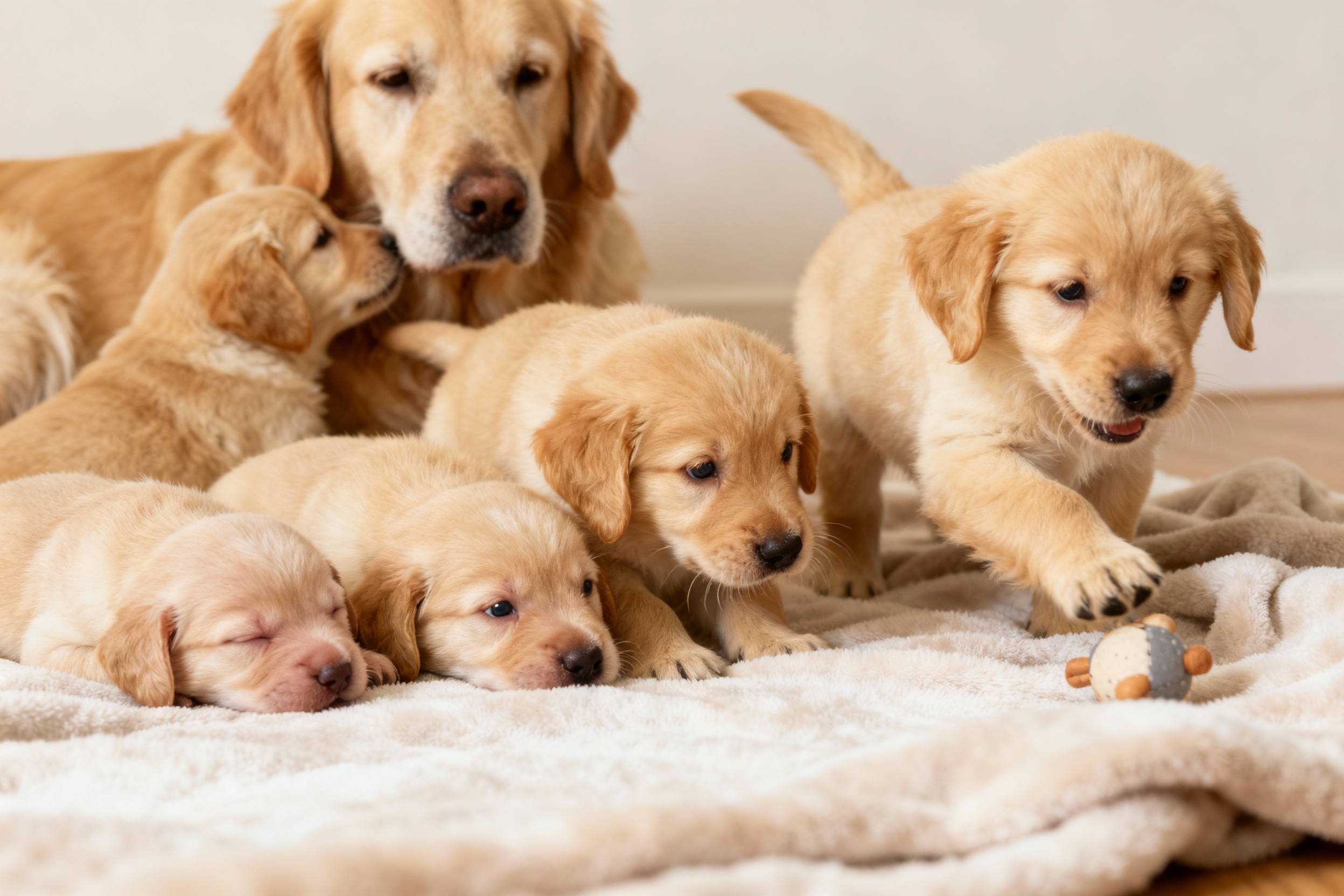
Golden Retriever puppies don’t raise themselves (shocking, I know). From those sleepy potato-nuggets on day one to goofy teenagers with tennis ball obsessions, you’re the guide, the chef, the janitor, and the cuddle provider. Want to raise a confident, healthy, well-mannered Golden from birth?
Let’s walk through it step by step—no fluff, just the good stuff.
Prepare the Nest: Whelping Setup and First 48 Hours
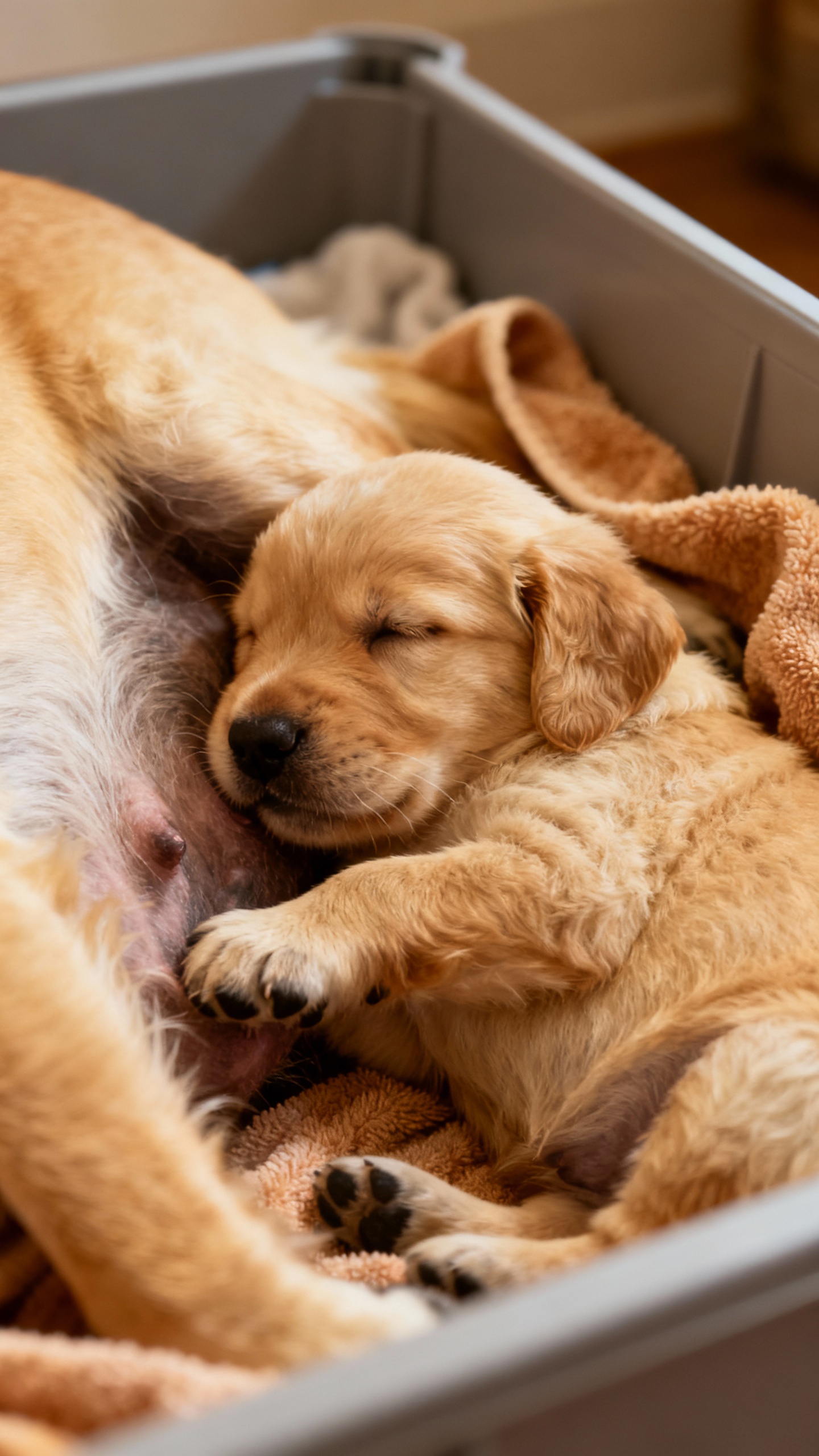
You need a safe, warm, clean space ready before the puppies arrive. A whelping box with low sides works best so mom can hop in and out while the pups stay contained. Line it with washable pads or towels—you’ll change them often. Temperature matters a lot. Keep the box around 85–90°F (29–32°C) for the first week, then slowly lower it to 75°F (24°C) by week four.
Newborns can’t regulate their body temperature, and chilled pups crash fast. A heating pad under half the box lets pups move away if they get too warm.
First Checks After Birth
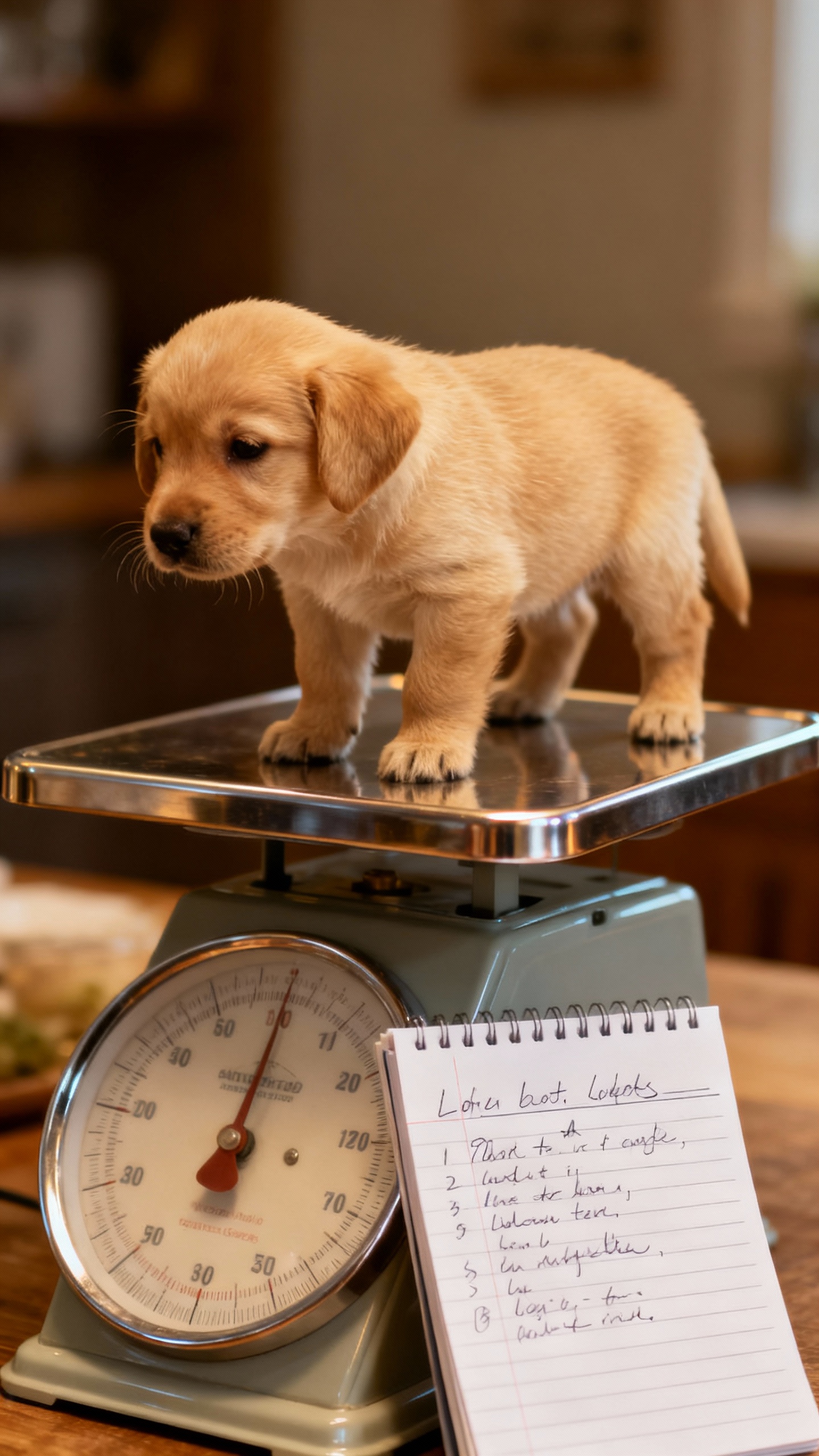
– Ensure each pup nurses within the first two hours. That colostrum kickstarts immunity. – Weigh every pup at birth and daily for the first two weeks.
Use a small kitchen scale. – If a pup struggles to latch, guide them. If they still can’t, call your vet and consider bottle or tube feeding with a canine milk replacer—not cow’s milk.
Weeks 0–2: Eat, Sleep, Squeak, Repeat
These tiny potatoes do three things: nurse, sleep, complain loudly. Mama dog handles most of the care, including cleaning and stimulating them to potty.
You monitor like a hawk. Daily routine, IMO: – Weigh pups and log gains. Aim for steady growth; small dips mean trouble. – Check bellies for fullness and bodies for warmth. – Keep nails short to avoid scratching mom. Use baby nail clippers—carefully.
Early Neurological Stimulation (ENS)
From days 3–16, try gentle ENS once daily:
- Hold the pup upright for 3–5 seconds.
- Hold head-down for 3–5 seconds.
- Lay on back for 3–5 seconds.
- Tactile stimulation by gently tickling paws.
- Place on a cool surface for 3–5 seconds.
It sounds funny, but it helps stress resilience later.
Keep it gentle and brief. If a puppy fusses hard, stop. We’re raising Goldens, not Navy SEALs.
Weeks 2–4: Eyes Open, Ears On, Personalities Loading
Eyes usually open around day 10–14, and hearing comes online soon after.
The wobbly walking starts, and yes, it’s adorable chaos. Prepare for mini explorers. What you do now: – Introduce a “potty zone” with washable pee pads at one end of the box. – Start simple handling by different people (clean hands, calm voices). – Keep noises normal: music, vacuum, TV. No need to tiptoe—life makes sounds.
Parasites and Vet Care
– Deworm at 2, 4, 6, and 8 weeks per your vet’s guidance. – Schedule a vet check for mom and pups around 2–3 weeks to catch early issues. – Watch for signs of fading puppy syndrome: lethargy, refusal to nurse, cold body.
That’s an emergency—go now, not later.
Weeks 3–5: Weaning and Social Skills 101
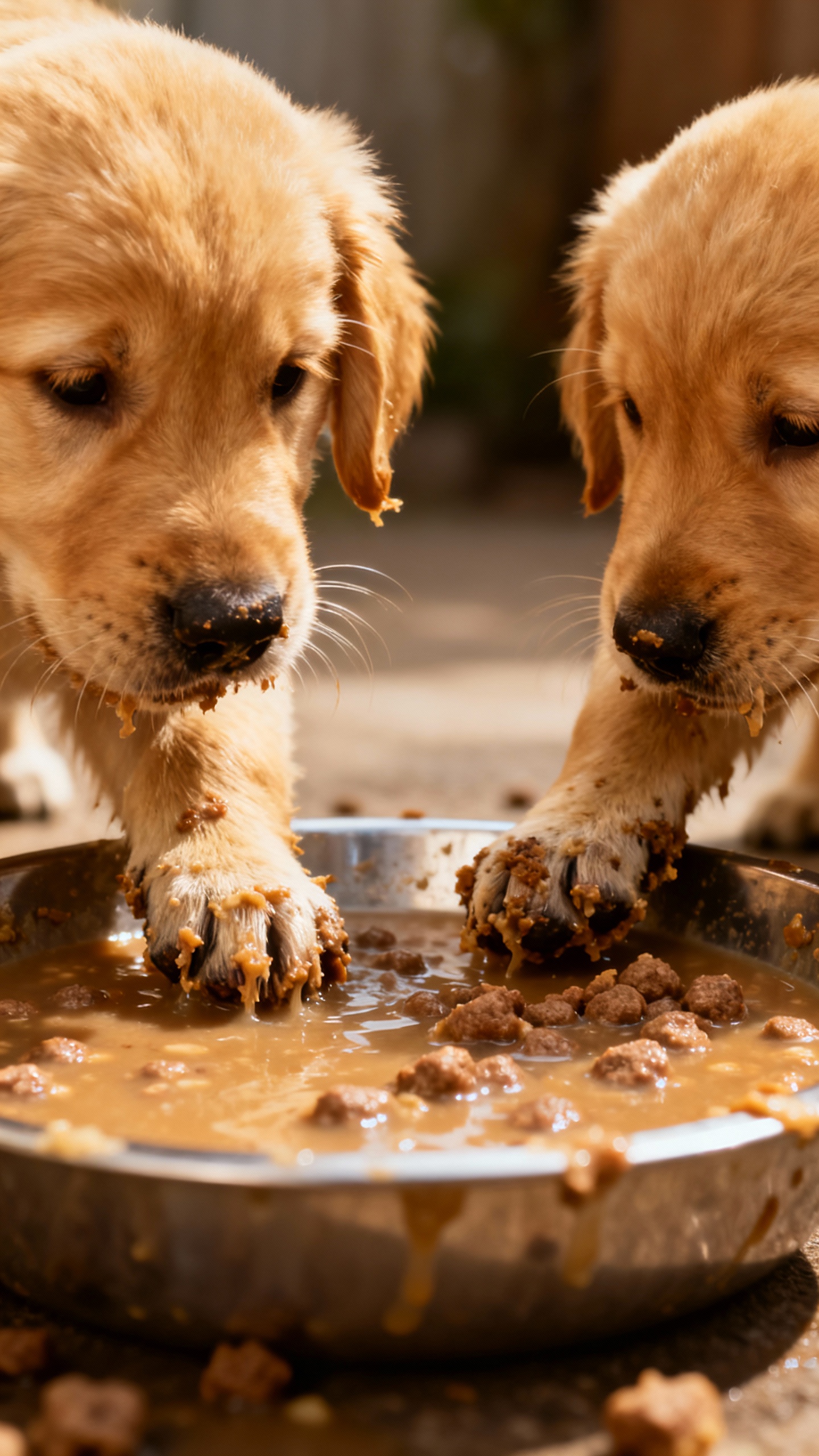
Time for mush. Start weaning around week 3–4 by offering a shallow dish of puppy food soaked in warm water or puppy formula until it’s soupy. Let them step in it, wear it, paint with it—mess equals learning.
Gradually thicken the food over a week or two. Basic schedule idea: – 4 small meals per day. – Water available at all times (shallow bowl to prevent mishaps). – Nursing continues as a comfort, but meals do the heavy lifting.
Early Socialization Starts Here
– Introduce new textures (rubber mats, carpet, grass). – Try gentle sounds (clinking pans, doorbell, hairdryer from a distance). – Short, happy handling sessions: touch ears, paws, tails. Reward with calm praise. – Rotate safe toys: soft squeakers, chew toys, puzzle feeders.
Weeks 5–8: Little Sponges with Teeth
Golden puppies hit peak curiosity now. You want brave, curious, people-loving pups—not chaos gremlins.
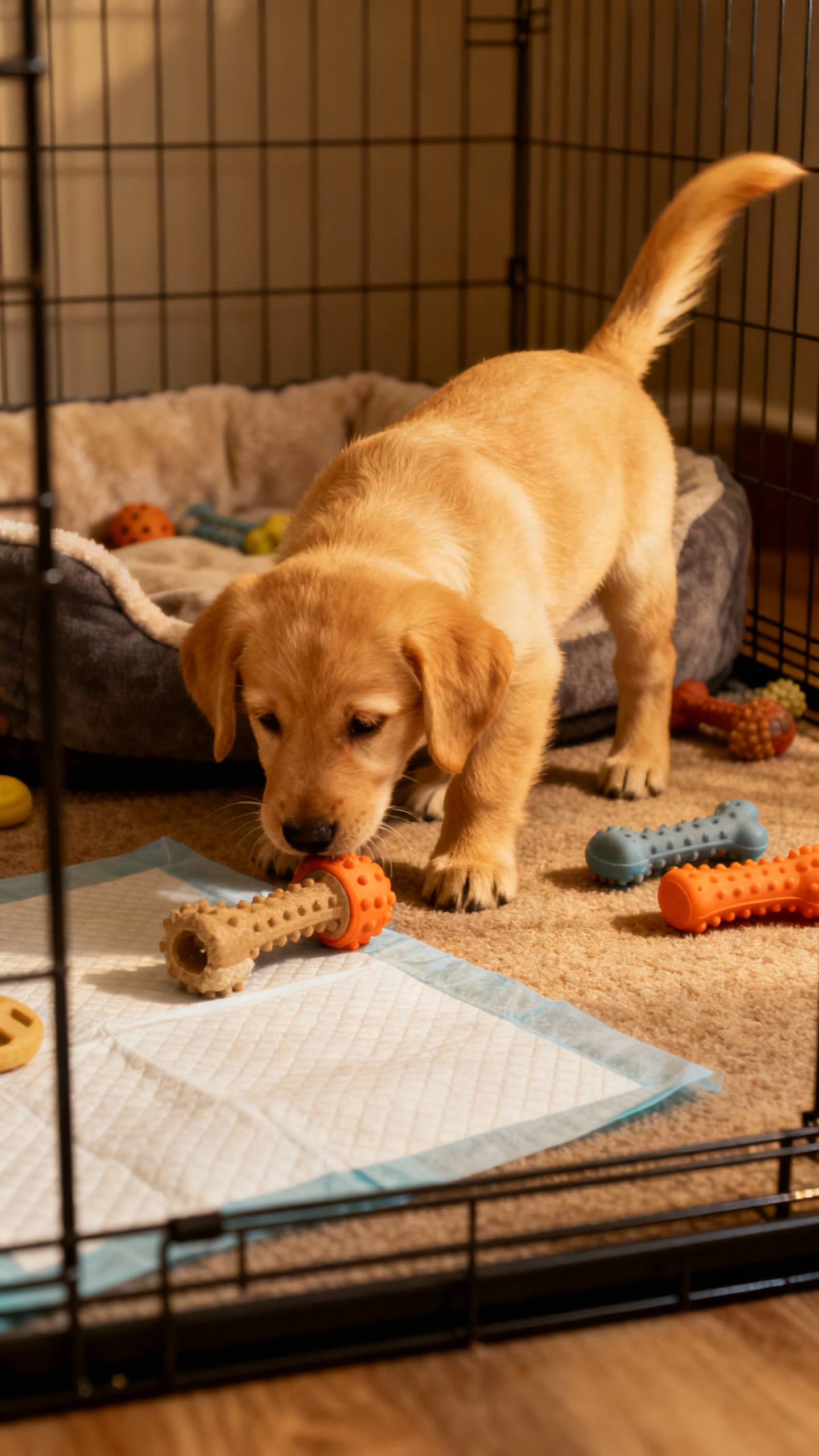
Structure helps. Set up a puppy pen with zones: – Sleep area: cozy bed or crate. – Play area: toys and chew items. – Potty area: pads or turf square. Micro-training (keep it fun): – Name recognition: say the name, treat. – Come: crouch low, clap, make silly noises, reward generously. – Sit: lure with food, reward when butt hits floor. – Gentle bite inhibition: yelp “ouch,” pause play, offer chew toy instead.
Crate Introduction
Start crate training early. Toss treats into the crate, feed meals there, and keep doors open at first. Make it the puppy’s safe den, not a time-out box.
Short naps in the crate build independence, which helps with separation later.
Nutrition Basics: Grow Smart, Not Fast
Golden Retrievers count as large-breed dogs. That means you choose large-breed puppy food to support steady bone growth and healthy joints. Watch for: – Correct calcium-phosphorus ratios (your vet can recommend brands). – Body condition: you want a waistline and easily felt ribs, not a butterball. – Fresh water at all times. Hydration isn’t optional.
If bottle-feeding, use a canine milk replacer and a proper puppy nipple. Warm the formula to body temperature and feed with the pup belly-down (never on the back). Measure carefully to avoid overfeeding and aspiration.
FYI, slow and steady beats chug-and-choke.
Health, Hygiene, and Grooming Without Tears
Golden coats don’t magically maintain themselves. Start grooming now to make it normal. Grooming routine: – Brush 2–3 times a week with a soft brush. – Handle ears daily; Goldens love ear gunk. Clean gently with vet-approved solution. – Trim nails weekly—short sessions with treats. – Introduce a soft toothbrush once teeth erupt; no minty human paste, please. Vaccines and vet visits: – First vaccines around 6–8 weeks, then boosters every 3–4 weeks until 16 weeks. – Keep socialization going but avoid high-risk areas (dog parks, pet store floors) until vaccines finish.
Common Red Flags
Call your vet if you see: – Persistent diarrhea or vomiting – Lethargy or refusal to eat – Swollen belly, coughing, or sneezing fits – Limping or pain after normal play Early intervention saves lives and money—two wins.
Social Skills That Stick: People, Places, Puppies
You shape the classic Golden vibe: friendly, confident, enthusiastic but not bonkers.
Expose them to the world in small, positive doses. Socialization checklist ideas:
- Different humans: hats, glasses, beards, kids (supervised), older folks.
- New environments: car rides, quiet parks, vet lobby, friends’ yards.
- Surfaces and obstacles: ramps, grates, stairs, wobble boards.
- Handled by multiple people (gently). Reward calm behavior.
Keep sessions short and end on a win. Overwhelmed puppy?
Retreat, reset, try again tomorrow. IMO, quality beats quantity every time.
Setting Up for the Teenage Phase
You’ll send pups to new homes around 8 weeks, but if you’re raising your keeper, prepare for the adolescent chaos. Continue: – Short training daily: sit, down, stay, recall. – Leash skills: reward a loose leash and a check-in glance. – Chew management: rotate safe chews; crate during downtime. – Mental games: snuffle mats, food puzzles, easy scent games.
A tired Golden behaves like an angel. A bored Golden redesigns your sofa. Choose your fighter.
FAQ
When should I start weaning Golden Retriever puppies?
Start around 3–4 weeks with warm, soupy puppy food and transition to thicker meals over 1–2 weeks.
Keep nursing available for comfort but shift calories to solid food by week 5.
How often should puppies eat?
From 4–8 weeks, feed 4 small meals daily. After 8 weeks, many switch to 3 meals. Keep portions appropriate for a large-breed puppy and monitor weight weekly.
When do I start crate training?
Introduce the crate around 5 weeks as a happy place with treats and naps.
For a puppy you bring home at 8 weeks, start day one with short, positive sessions and frequent potty breaks.
What vaccinations do Golden puppies need?
Core vaccines typically include distemper, parvo, adenovirus, and parainfluenza, starting at 6–8 weeks with boosters every 3–4 weeks until 16 weeks. Your vet may add leptospirosis and recommend timing for rabies per local laws.
How do I handle puppy biting?
Redirect, don’t punish. Say “ouch,” pause play, and offer a chew toy.
Reward gentle mouth behavior. Consistency across all humans matters, or the puppy learns mixed messages.
When can they safely meet other dogs?
After the first vaccine, start with known, vaccinated, calm dogs in controlled settings. Skip dog parks until the full vaccine series finishes around 16 weeks.
Safety first, confidence always.
Conclusion
Raising Golden Retriever puppies from birth looks like a juggling act—because it is. But with warmth, structure, smart socialization, and the right food, you’ll grow bold, healthy pups who love people and listen (most of the time). Keep sessions short, keep it positive, and celebrate the tiny wins.
You’ve got this—those wiggly tails will tell you you’re doing it right.
Leave a Reply