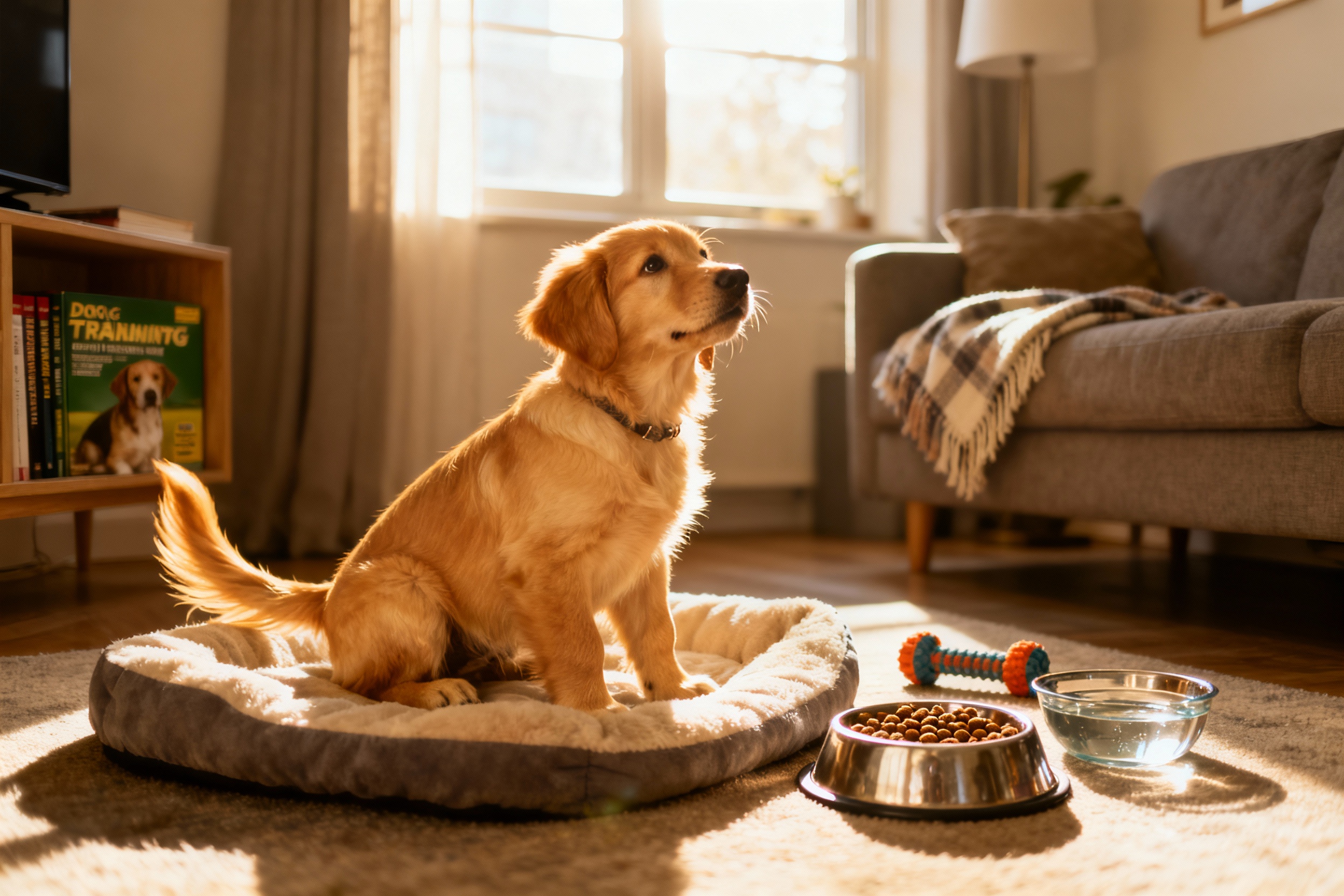
You brought home a golden retriever puppy and you live in an apartment. Brave. Also totally doable.
Goldens don’t need a mansion; they need structure, exercise, and a human who doesn’t mind a little fur in their coffee. Let’s talk practical tactics—how to help your fluffball thrive in a small space without losing your sanity (or your security deposit).
Set Up a “Puppy Zone” You Actually Use

Create a designated space where your puppy can chill, nap, and safely exist while you answer emails or shower. Think calm vibes, not prison cell.
- Crate + pen combo: Use a crate for naps and overnight, and an exercise pen attached for hangouts.
Puppies love den-like spaces when you introduce them well.
- Puppy-proof everything: Hide wires, stash shoes, elevate plants, and block off forbidden zones. If it dangles, a puppy will chew it.
- Surface matters: Add a washable rug or mats for traction. Slippery floors make zoomies dangerous.
Crate Training Without the Tears
Make the crate a jackpot spot.
Feed meals in it, toss treats in randomly, and keep naps predictable. Start with the door open, then short door-closed moments, then gradually extend. If your puppy whines, let them out when quiet—not mid-drama.
You’re training the behavior you reward.
Burn Energy—Smart, Not Just Hard
Goldens have brains and legs. Use both. In an apartment, you need intentional exercise, not just “hope they tire out.”
- Age-appropriate walks: Rule of thumb: about 5 minutes of structured walking per month of age, up to twice a day.
Keep it relaxed and sniffy.
- Indoor brain games: Scatter-feed kibble, use snuffle mats, hide-and-seek with treats, food puzzles. Ten minutes of nose work can beat a 30-minute sprint, IMO.
- Training reps as exercise: Short sessions of sit, down, place, leave it. Combine cues with movement: recall across the room, touch target, reward.
- Fetch—but low-impact: Roll balls instead of full-on jumps until growth plates close (~12-18 months).
Tiny Training Drills That Pay Off
Do 3-minute “micro-sessions” throughout the day:
- Name recognition + recall: say their name once, reward eye contact; call from short distances.
- Place mat: send to a mat while you cook.
Keeps paws off your ankles.
- Impulse control: wait at doors, release on cue. Apartment hallways get spicy.

Potty Training Without Hallway Shame
You live in a building. Elevators exist.
Timing matters. Set a tight routine from day one.
- Go out constantly at first: After waking, eating, playing, and every 60–90 minutes. Yes, it’s a lot.
No, it won’t last forever.
- Pick one potty spot: Same patch outside each time if possible. Consistency helps.
- Use a cue: “Go potty,” then party when they do. Treat within 2 seconds—don’t wait until you’re back inside.
- Indoor backup plan: If getting outside isn’t realistic at 3 a.m., use a grass patch on a balcony or a tray in a bathroom short-term.
Transition out as quickly as you can.
Crushing Accidents Without Drama
If they start to go inside, interrupt with a cheerful “outside!” and head out. Clean with enzymatic cleaner only. No scolding.
You’re not “teaching a lesson”—you’re teaching anxiety if you punish.
Socialization That Fits Apartment Life
You want a confident, friendly adult dog. That starts now, in small doses, at a pace your puppy can handle.
- Elevators, stairs, carts, umbrellas: Pair new stuff with treats and calm praise. Keep sessions short.
- People of all types: Hats, beards, wheelchairs, kids (supervised).
Puppy chooses the pace—no forced petting.
- Dog exposure: One or two vaccinated, stable adult dog friends beat chaotic dog parks. Skipping dog parks early = good decision, FYI.
Noise Desensitization
Play low-volume sounds of traffic, fireworks, and building noise while your puppy eats or chews a stuffed Kong. Slowly raise volume over days.
Confidence grows with predictability.

Barking, Biting, and Other “Adorable” Habits
Apartment life magnifies small issues. Address them early with simple, consistent rules.
- Nipping: Redirect immediately to a toy. If they keep going, calmly disengage for 30 seconds.
No yelling. Your sleeves will thank you.
- Jumping: Reward four paws on the floor. Ask for a sit before greetings.
Humans must follow the rule too—don’t let neighbors undo your training.
- Barking: Identify the cause. Boredom? Add brain games.
Alert barking at hallway noise? Teach “place” and reward quiet. Close blinds if window patrol turns them into a security guard.
Chewing: Channel the Chaos
Goldens chew because teething, boredom, or stress.
Provide:
- Rotation of safe chews (bully sticks, rubber chew toys, frozen wet washcloths for teething)
- Stuffed/frozen Kongs during your work blocks
- Firm “trade” cue to swap contraband for treats
Grooming and Shedding in Tight Quarters

Yes, your dog will shed. Yes, you’ll survive.
- Brush 3–4 times a week: Slicker brush for topcoat, undercoat rake during seasonal blowouts. Short, positive sessions.
- Wipe paws: Keep a towel at the door.
Saves your floors and sanity.
- Ear care: Goldens get gunky ears. Check weekly, wipe gently with vet-approved cleaner.
- Nails: Trim or Dremel every 1–2 weeks. Long nails = click-clack + joint stress.
- Vacuum schedule: Quick daily pass in high-traffic spots.
Embrace it. It’s your new hobby.
Feeding, Health, and Routine Stuff You Can’t Skip
Routine wins in apartment life. Puppies love a predictable flow.
- Food: Choose a large-breed puppy formula to support joint development.
Split into 3–4 meals daily. Measure portions—goldens can pack on pounds fast.
- Water timing: Offer plenty, but pull the bowl 1–2 hours before bedtime while potty training.
- Vet plan: Vaccinations, deworming, flea/tick prevention. Keep copies of records for building or daycare requirements.
- Insurance (IMO, worth it): Goldens can face allergies and orthopedic issues.
Consider it before you need it.
Daily Rhythm That Works
Sample weekday flow:
- Morning: potty, short walk, breakfast, training micro-session
- Mid-morning: chew/Kong in pen while you work
- Lunch: potty, sniffy walk, quick play
- Afternoon: nap, puzzle feeder
- Evening: training + low-impact fetch, dinner, grooming touch-up
- Pre-bed: calm potty trip, settling chew, lights out
Enrichment That Doesn’t Annoy Your Neighbors
Stimulation matters, but we want the quiet kind.
- Scent games: Hide treats in boxes, under cups, or around a single room. Watch the nose go to work.
- Cardboard carnage: Tape empty boxes together, sprinkle kibble inside, let your puppy “forage.” Supervise to avoid eating tape.
- Training field trips: Lobby sits, calm elevator rides, short visits to pet-friendly stores once vaccinated.
- Playdates in controlled spaces: Schedule with a calm dog friend. Short and sweet beats chaotic and long.
FAQ
How much exercise does a golden retriever puppy need in an apartment?
Aim for several short bouts of age-appropriate activity daily: gentle walks, training, and brain games.
Avoid high-impact running or jumping until growth plates close. Quality over quantity—mental work tires them fast.
Can I leave my golden puppy alone while I work?
Yes, but build up gradually. Use a crate and pen, provide a safe chew or stuffed Kong, and schedule a midday potty break.
Start with 10–20 minutes and increase slowly so you don’t create separation issues.
What’s the best way to stop biting?
Redirect to a toy every time and end play briefly if they chomp skin. Reinforce calm behaviors like sit or down. Teething peaks around 4–6 months, so stock those frozen chews.
Are dog parks good for socialization?
Not for young puppies.
Overwhelming, unpredictable, and risky before full vaccinations. Choose calm, vaccinated dog friends or supervised puppy classes instead—safer and way more educational, IMO.
How do I manage barking at hallway noises?
Cover windows if needed, use white noise, and teach a “place” cue away from the door. Reward quiet and practice calm door routines.
Increase mental exercise—tired brain, quiet mouth.
Do I need professional training?
It helps a ton. A reputable positive-reinforcement trainer can set foundations for recall, loose-leash walking, and impulse control. Even a 4–6 week puppy class pays dividends for apartment life.
Conclusion
Raising a golden retriever puppy in an apartment isn’t about having endless space—it’s about smart routines, steady training, and plenty of mental work.
Keep sessions short, expectations realistic, and your sense of humor handy. Do that, and you’ll end up with a confident, happy golden who thinks your cozy apartment is the best place on earth—because it’s where you are.
Leave a Reply