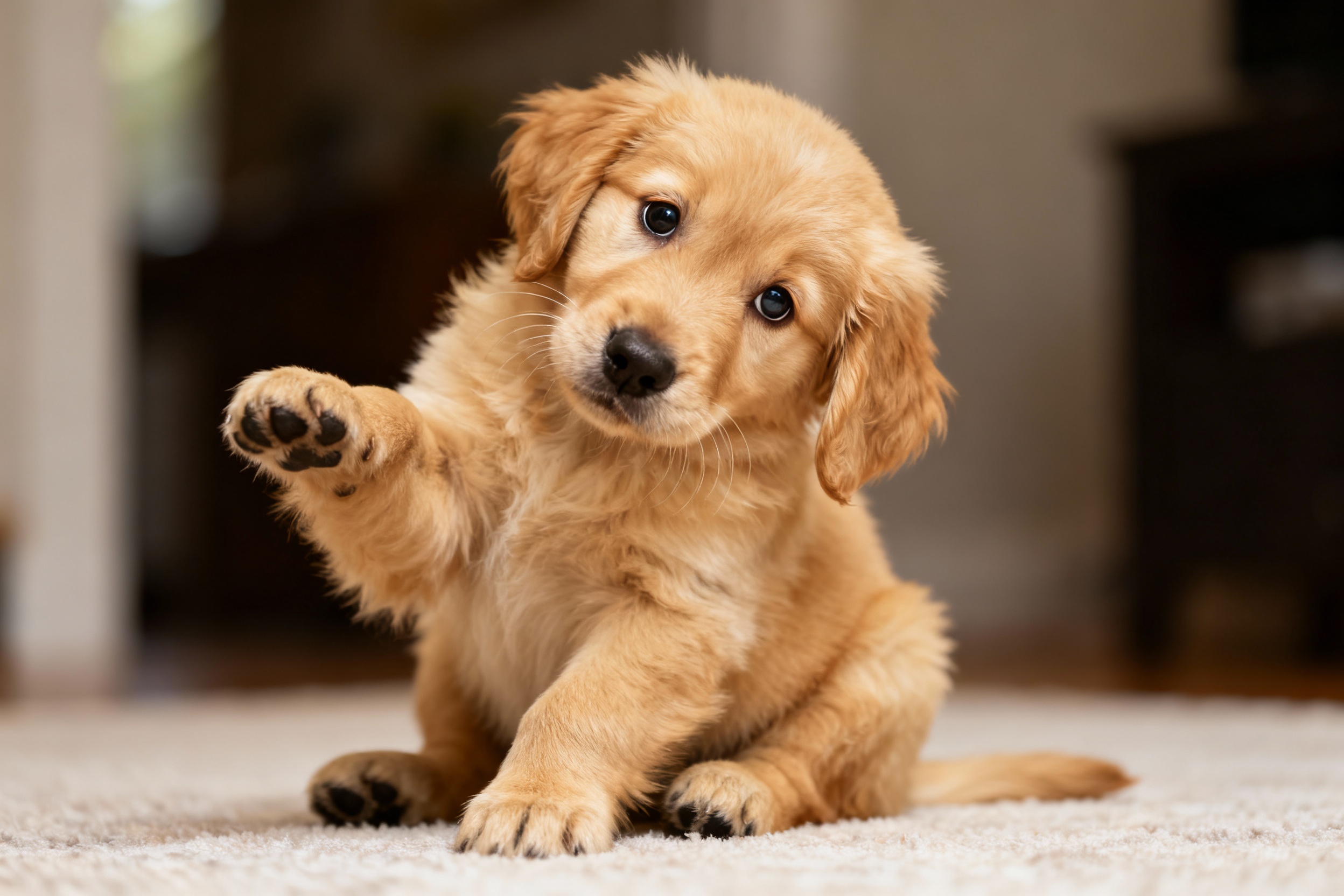
Your 6-week-old Golden Retriever puppy looks like a plush toy with batteries included. They bounce. They nibble.
They nap mid-zoomie. And yes—they can start training right now. Keep it short, sweet, and fun.
At this age you’re building habits, not teaching calculus. Ready to raise a well-mannered little golden tornado?
First Things First: What 6 Weeks Really Means
A quick reality check: most breeders keep pups until 8 weeks. If you already have your puppy at 6 weeks, you’ll need to fill in extra “mom and littermate” lessons—bite inhibition, body language, and confidence.
No guilt—just be intentional. Focus on three pillars at this age:
- Bonding through gentle handling and short training moments
- Routine for sleeping, potty breaks, and feeding
- Positive experiences with sights, sounds, and surfaces
House Rules: Potty Training Without Tears
Set your puppy up to win. Six-week-old bladders operate on chaos mode, so you’ll beat accidents with timing and supervision. Use this simple rhythm:
- Take your puppy outside every 30–45 minutes when awake.
- Always go out after naps, after meals, and after play.
- Pick a potty spot and stand still. Don’t play, don’t chat.
Boring equals business.
- When they go, throw a tiny party: “Yes!” + treat within 2 seconds.
Crate training helps—not as punishment, but as a cozy den. Choose a small crate with a comfy blanket and a safe chew. Use it for naps and quiet time.
If you can’t watch the puppy, the crate or a small playpen saves your floors (and your sanity).
Nighttime Game Plan
Expect 1–2 potty trips overnight. Set an alarm rather than waiting for whining. Scoop the pup up, go straight to the spot, praise for success, then right back to bed.
Keep lights low. Don’t turn it into a midnight party.
Basic Training: Yes, You Can Start Now
Six-week-olds learn fast in tiny bursts. Train for 1–3 minutes, a few times a day.
Think micro-sessions, not boot camp. Start with these foundations:
- Name recognition: Say the name once. When the pup looks at you, mark with “Yes!” and reward.
- Hand target: Present your palm near their nose. When they touch it, “Yes!” + treat.
This becomes your magic recall tool later.
- Sit: Lure the nose up and back. As the butt hits the floor, “Yes!” + treat. Keep it fun, not formal.
- Drop it/Trade: Offer a treat for whatever’s in their mouth.
Say “Trade,” give treat, calmly take item, then return a toy. You’ll thank me when they find your socks.
Keep criteria low. Reward tries. If they stall, you asked too much.
Reset and make it easier. Training at this age is 90% vibe, 10% mechanics. IMO, that vibe matters most.
Markers and Rewards 101
Use a cheerful “Yes!” to mark the exact moment your puppy does something right.
Then deliver a treat quickly. Rotate rewards—kibble, soft treats, tiny bits of boiled chicken, or a quick tug game. Variety keeps their brain switched on.
Bite Inhibition: Turning Shark Teeth Into Soft Mouths
Puppy nibbles feel cute until they don’t.
Your job: teach gentle jaws without scaring your pup. Use this plan:
- When teeth touch skin, calmly say “Ouch” once and withdraw attention for 3–5 seconds. No yelling. No flapping arms.
- Redirect to a toy immediately.
Praise when they chew the right thing.
- Stop rough play if it amps up biting. Resume when calm.
Stock a chew buffet:
- Soft rubber toys
- Frozen washcloths (twist, wet, freeze—teething relief!)
- Food-stuffed lick mats or Kongs
Consistency matters. Everyone in the house follows the same rules.
FYI, hands are not chew toys—ever.
Socialization: Safe, Gentle, and Smart
You’re in the critical window for socialization, and it’s not just “meet a ton of dogs.” It’s about positive, controlled exposure to the world. Think “sightseeing,” not “chaos tour”:
- Carry your puppy in a sling or arms for quick trips: hardware store, quiet café patio, school drop-off line.
- Introduce surfaces: grass, carpet, tile, rubber mat, a wobble board on the floor (very stable at first).
- Play soundscapes softly: thunder, fireworks, traffic. Treat while playing sounds at a low volume.
- Meet a few fully vaccinated, gentle adult dogs in a safe yard.
Health note: Until your puppy completes vaccines, avoid dog parks, high-traffic dog areas, and mystery poop zones. Common sense wins.
Handling Exercises
Prep your pup for vet life like a pro:
- Touch ears, open mouth, lift tail—treat each touch.
- Hold paws for a second, then treat.
Build up slowly.
- Collar grabs: gently touch collar, treat. Make it a happy moment.
Do 30–60 seconds daily. Future you will cry happy tears at the vet.
Feeding, Sleep, and Energy: The Golden Rhythm
Golden puppies act like wind-up toys.
They zoom, crash, and repeat. Give structure so they don’t self-destruct. Daily flow to aim for:
- Feed 3–4 small meals spaced through the day.
- Potty after meals, then 5–10 minutes of training or play, then a nap.
- Nap a lot—up to 18–20 hours total. Over-tired pups bite more and listen less.
Same, honestly.
Enrichment ideas that won’t fry their brain:
- Scatter feeding on a snuffle mat
- Simple food puzzles (very easy at this age)
- Short tug and fetch with soft toys
Water stays available. Keep play short. Golden Retrievers rarely “self-regulate.” You set the off switch.
Leashes, Collars, and the Art of Not Pulling (Yet)
No full walks yet.
Joints still develop, and vaccines still roll in. But you can start leash basics indoors. Leash warm-up:
- Clip a lightweight leash on the collar or harness. Let the puppy drag it while you supervise.
- Reward for following you a step or two.
Think “happy shadow” training.
- Practice name recognition and hand targets while on leash.
Use a flat collar or a soft harness designed for puppies. Skip retractables. They teach bad habits fast.
Micro-Recall Games
Recall starts inside the house.
Play “ping-pong” with two people:
- One person calls the puppy’s name cheerfully, crouches, and rewards.
- The other person calls next. Repeat 6–8 times.
- Keep it short. Stop while your puppy still begs for more.
Pro tip: Never call your puppy to end fun.
Go get them instead. Protect the recall word like a sacred spell.
What To Avoid (Because Future Problems Are Boring)
Let’s dodge common mistakes so you don’t message me in six months like, “Help.”
- No punishment. No nose taps, leash pops, or yelling. You’ll damage trust and create sneaky pups.
- No long walks or stairs marathons. Baby joints need gentle handling.
- No free-for-all with kids. Teach calm interactions.
Supervise every time.
- No inconsistent rules. Couch or no couch—pick one. Puppies thrive on clarity.
IMO, the fastest training tool is prevention. Manage the environment so good choices are easy and bad ones feel impossible.
FAQ
How long can a 6-week-old puppy hold their bladder?
Not long.
Expect 30–60 minutes when awake, and a bit longer during sleep. Plan very frequent potty trips. The “age in months + 1” hour rule doesn’t really apply yet.
Be proactive rather than reactive.
What treats are safe for training at this age?
Use tiny, soft treats or their regular kibble. You can also use boiled chicken or turkey in pea-sized bits. Avoid anything hard, spicy, or high-fat.
Keep portions small to protect little tummies.
When should I start socialization classes?
Ask your vet about safe start classes that require vaccine records and disinfect the space. Many allow puppies after their first set of shots. Until then, focus on careful exposure at home and supervised visits with healthy, vaccinated dogs you know.
My puppy cries in the crate.
What do I do?
Make the crate a jackpot. Feed meals inside, toss treats in, add a stuffed chew, and close the door for a few seconds before opening again. Gradually build duration.
If crying escalates, you moved too fast—shorten sessions and try again. Nighttime potty breaks are normal, not “spoiling.”
How much exercise is okay?
Think “little and often.” Play for 5–10 minutes, then nap. Avoid fetch marathons, long walks, and stairs.
Mental work like short training sessions and sniffing games tires them out gently.
When do I start formal obedience?
You already started! Keep it playful now. Around 10–12 weeks you’ll stretch sessions a bit and add simple leash walking and stay.
For now, nail name response, sit, hand targets, gentle mouth, and potty habits.
Conclusion
Your 6-week-old Golden is a sponge with paws. Keep sessions short, celebrate tiny wins, and prioritize routine, socialization, and sleep. Build trust today, and you’ll shape a confident, joyful dog tomorrow.
You’ve got this—and if you need a cheerleader, I’m right here, snacks in hand.
Leave a Reply