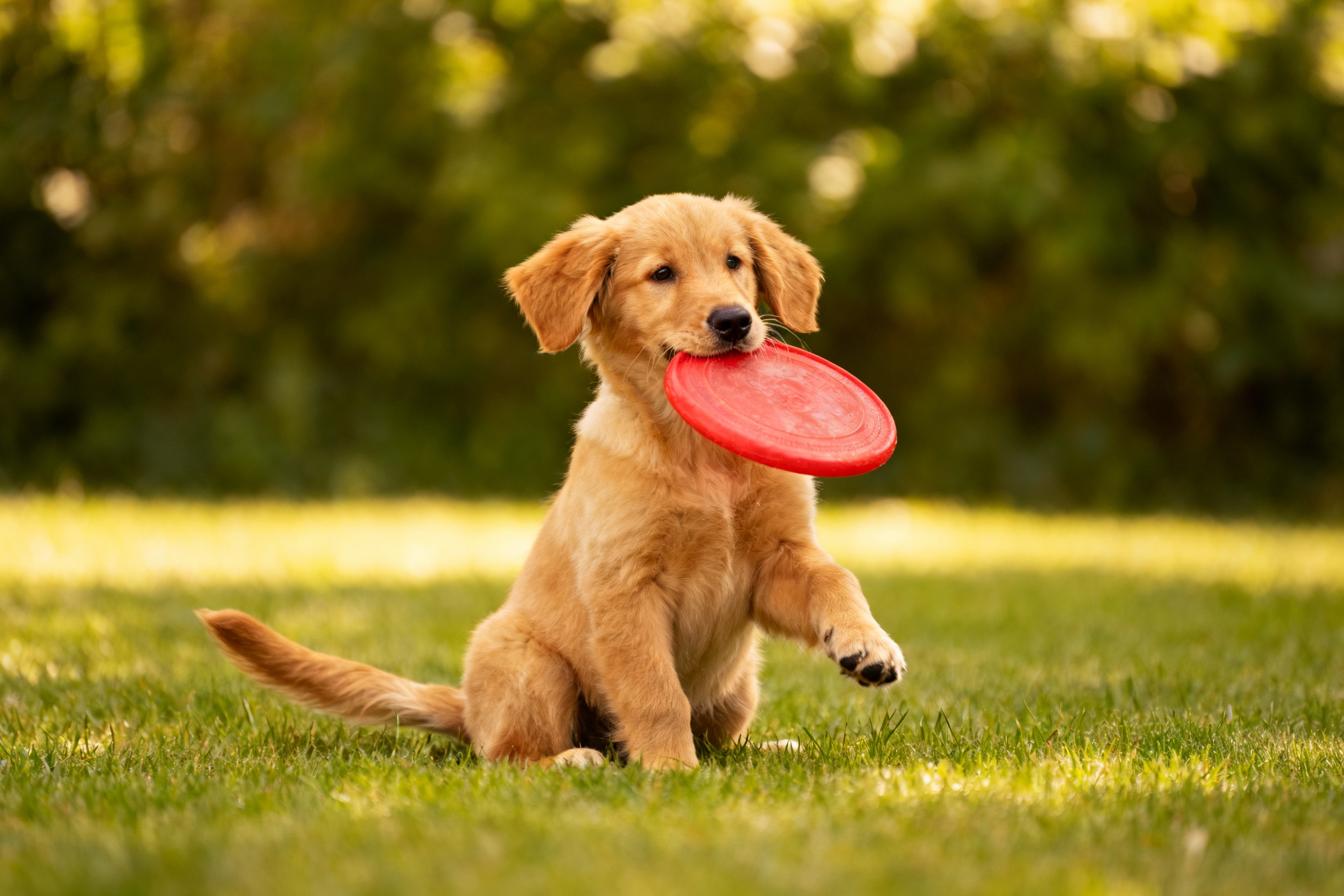
Golden retriever puppies look like sunshine in dog form—and they know it. They charm you with those floppy ears and then promptly chew your shoelaces. Training a golden isn’t hard, but it does require consistency, patience, and treats (many treats).
Let’s set you up with a smart, confident, well-mannered pup who still keeps that goofy golden sparkle.
Set the Stage: Routine, Space, and Supplies
You can’t train chaos. Start with structure. Create a simple daily routine for feeding, potty breaks, short training sessions, naps, and play.
Goldens thrive when they know what’s coming next. Build a puppy-friendly setup:
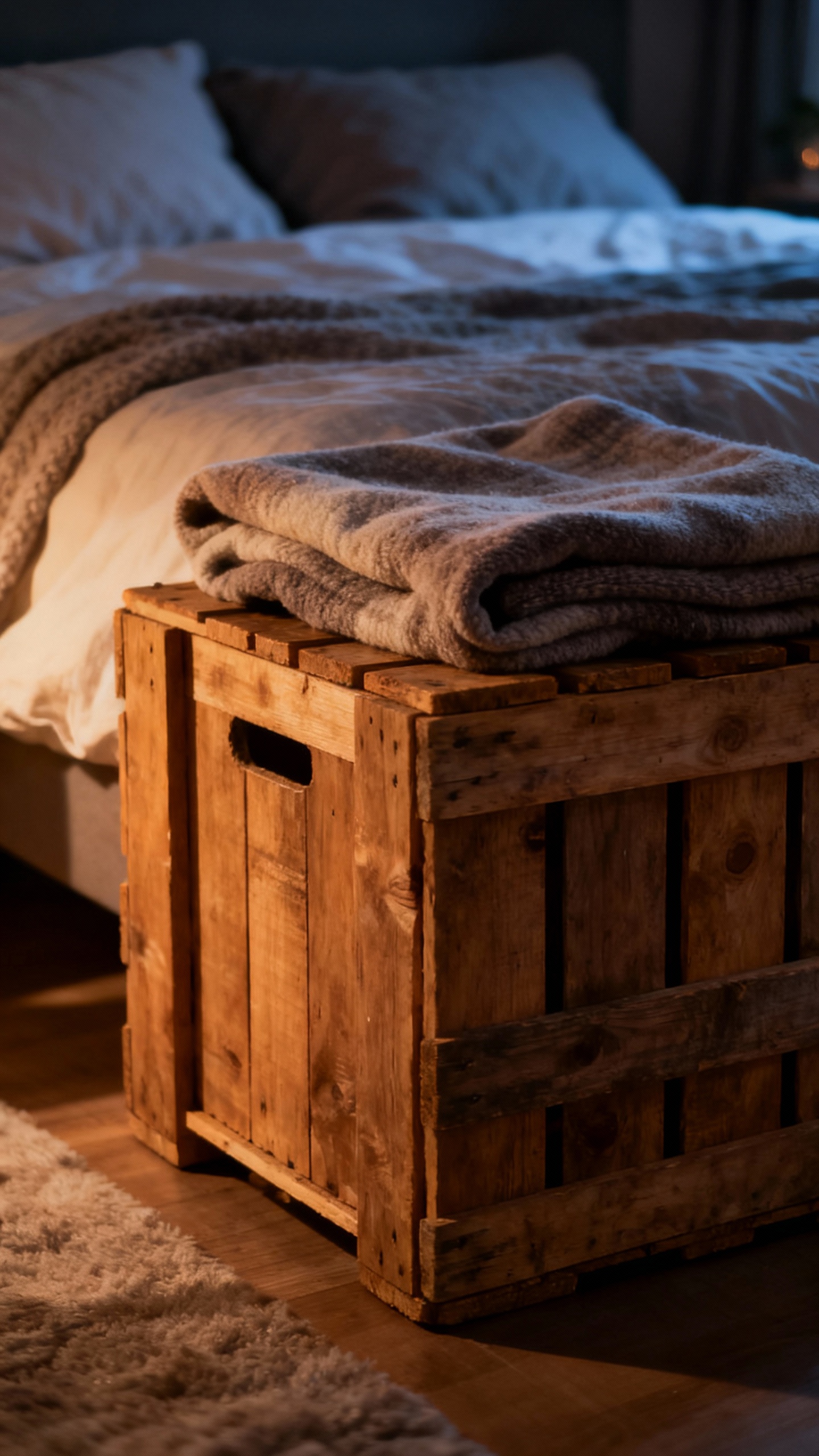
- Crate: Choose one big enough for adult size with a divider. It becomes your puppy’s safe den, not a jail cell.
- Playpen or gated area: Manage freedom. Fewer mistakes happen in smaller spaces.
- Chews and toys: Teething happens.
Offer safe chews and rotate toys to keep them interesting.
- Treats: Soft, tiny, high-value rewards. Think pea-sized, not boulder-sized.
Golden-Specific Pro Tip
Goldens work for food and praise. Use both. A warm “good!” plus a treat hits the jackpot.
They melt under approval, so use that superpower.
Potty Training Without Tears
Potty training equals timing and supervision. Take your puppy out first thing in the morning, after meals, after play, after naps, and every 2–3 hours. Stand in the same potty spot and wait quietly.
When they go, praise like they’ve discovered electricity. House rules that actually work:
- Crate between outings: Dogs avoid soiling their sleeping area. Don’t overdo time in the crate, though.
- Leash indoors: Tether your puppy to you for a few hours daily. You’ll catch sniff-and-circle signs early.
- Accidents happen: Clean with an enzymatic cleaner and move on.
No scolding—your puppy will just learn you’re scary, not where to pee.
Nighttime Strategy
Place the crate near your bed. If they fuss, take them out calmly, no playtime, then right back to bed. Keep nights boring and they’ll sleep longer, faster.
Core Obedience: Teach the Essentials Early
You don’t need fancy tricks yet.
You need reliable basics that make daily life easy.
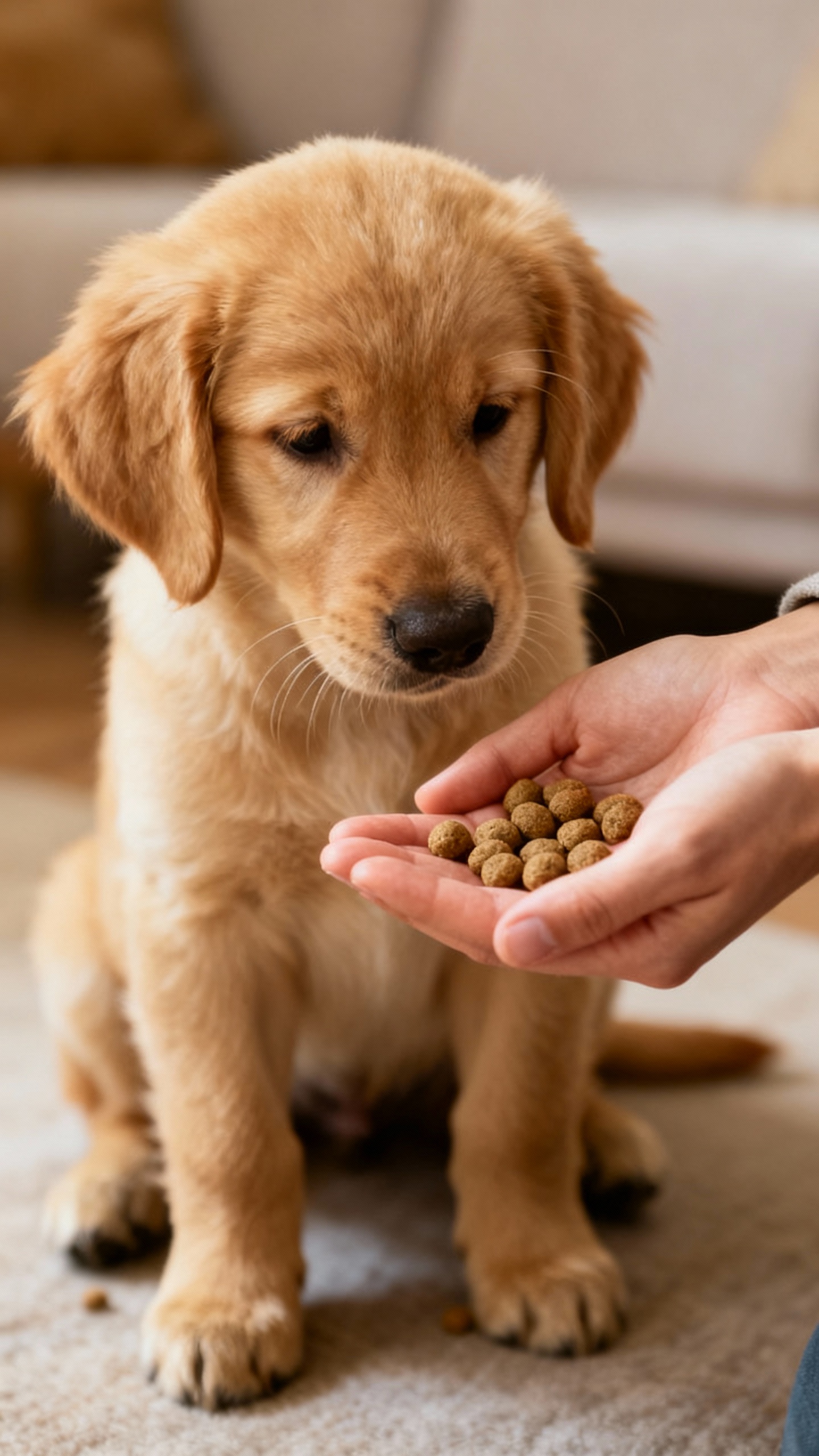
- Name recognition: Say the name once. When the puppy looks, mark with “yes!” and treat. Repeat in different rooms.
- Sit: Lure the nose up and back with a treat.
Butt hits ground, “yes!” and treat. No pushing their rear, IMO that confuses them.
- Down: From sit, lure to the floor. Reward the instant elbows touch down.
- Come: Start inside.
Crouch, open arms, “Puppy, come!” Reward heavily. Make coming to you the best party in town.
- Leave it: Hold a treat in a closed fist. When the puppy backs off, “yes!” and reward from the other hand.
Lifesaver on walks.
Keep sessions short: 3–5 minutes, 3–5 times a day. Quit while they still want more. Training should feel like a fun game, not a lecture.
Marker Words and Timing
Use a crisp marker like “yes!” at the exact moment the puppy does the right thing.
Then deliver the treat. That timing makes learning fast and clear.
Leash Manners for the Fluffy Freight Train
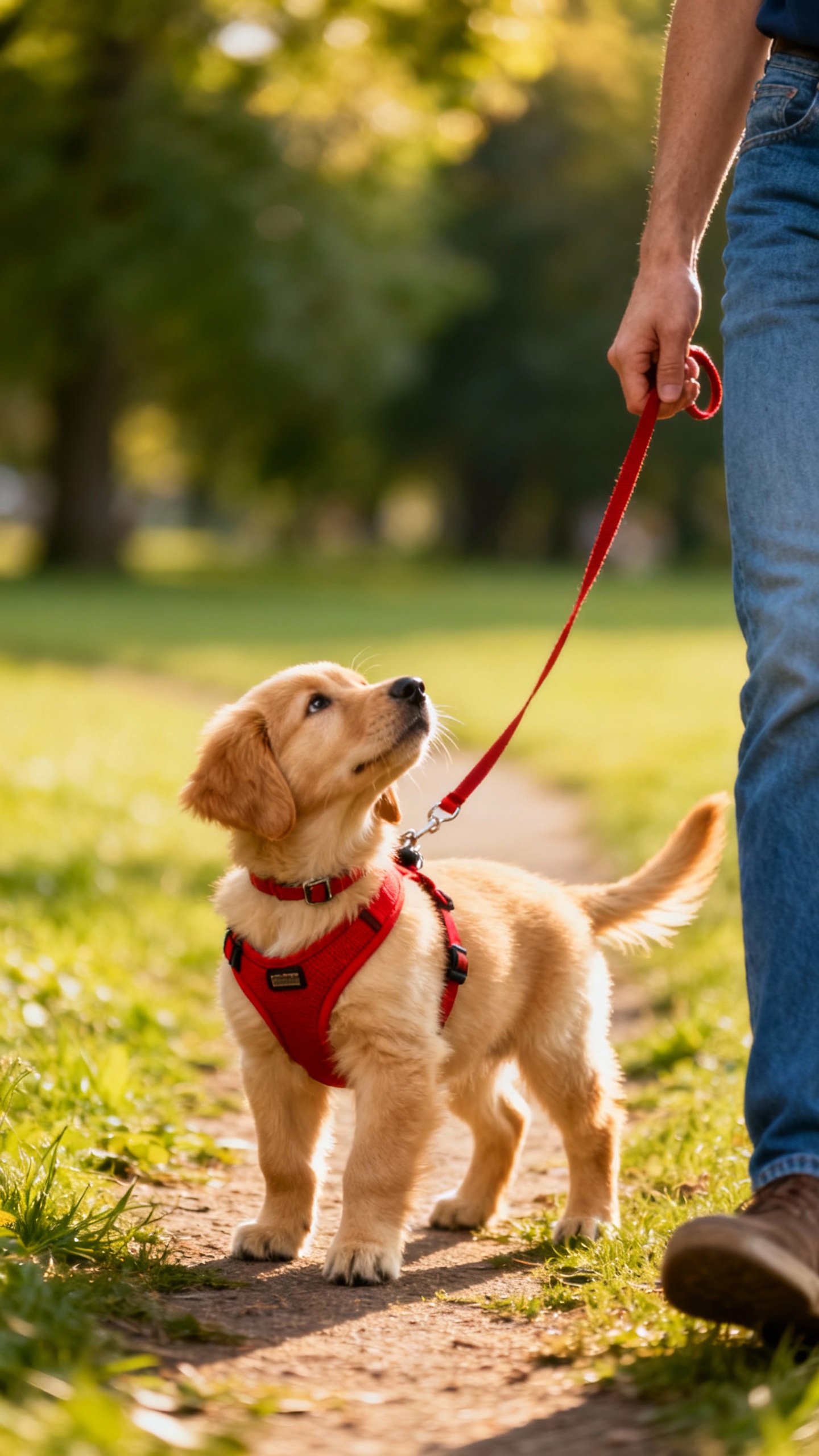
Goldens grow into strong pullers. Teach polite walking now before your shoulder regrets everything. Loose-leash 101:
- Reinforce position: Treat for standing or walking beside your leg.
Take one step, treat. Two steps, treat. Build gradually.
- Be a tree: If they pull, stop moving.
Wait for slack, then continue. Pulling never works, slack does. Simple and effective.
- Change direction: If they forge ahead, turn 180 degrees and encourage them to follow.
Reward when they catch up.
Gear Check
Use a flat collar or well-fitted harness. No retractable leashes for training—they reward pulling by design. A 4–6 foot leash keeps communication clear.
Bite Inhibition and Chewing Without the Drama
Your golden puppy uses teeth like toddlers use hands. Teach soft mouth early.
When they nip during play, yelp lightly or say “too bad,” pause play for 10–15 seconds, then resume. Calm, consistent feedback beats scolding. Redirect like a pro:
- Offer a toy after “no teeth on skin” moments.
- Rotate chew options: rubber toys, braided chews, frozen washcloths for teething.
- Feed part of their daily food through puzzle toys to burn brain energy.
What About Furniture and Shoes?
If they grab a shoe, don’t turn it into a chase. Trade it for a treat or toy, then put the shoe away next time.
Management plus training beats “no” on repeat, FYI.
Socialization: Confident, Not Overwhelmed
The socialization window runs fast—usually up to 16 weeks. You want tons of positive, controlled exposure to people, surfaces, sounds, and other dogs. Think “curated experiences,” not chaos. Build a checklist:
- Different humans: hats, beards, kids at a distance, people using canes or wheelchairs.
- Novel sounds: vacuum, blender, traffic, thunder recordings at low volume.
- Surfaces: grass, gravel, metal grates, hardwood, carpet.
- Calm, vaccinated adult dogs with good manners.
Avoid dog parks until fully vaccinated.
Keep sessions short and end on success. Pair every new thing with treats and happy praise. If your puppy looks unsure, create distance, slow down, and try again.
Confidence beats speed every time.
Crate Training: The Cozy Den
Crate training helps with potty training and gives your puppy a calm place to chill. Make it comfy—soft bedding, safe chew, and a cover if your pup relaxes better in a darker space. Simple crate plan:
- Feed meals in the crate with the door open.
- Close the door for 1–2 minutes while you’re nearby, then release before fussing starts.
- Gradually add time and step out of sight for seconds, then minutes.
If they protest, reduce duration and go slower. You’re building trust, not a storm bunker.
Mental Enrichment So Your Golden Doesn’t Redecorate
A tired golden is a good golden—but don’t just run them into the ground.
Balance physical and mental work. Great options:
- Sniff walks with time to explore. Let that nose do its job.
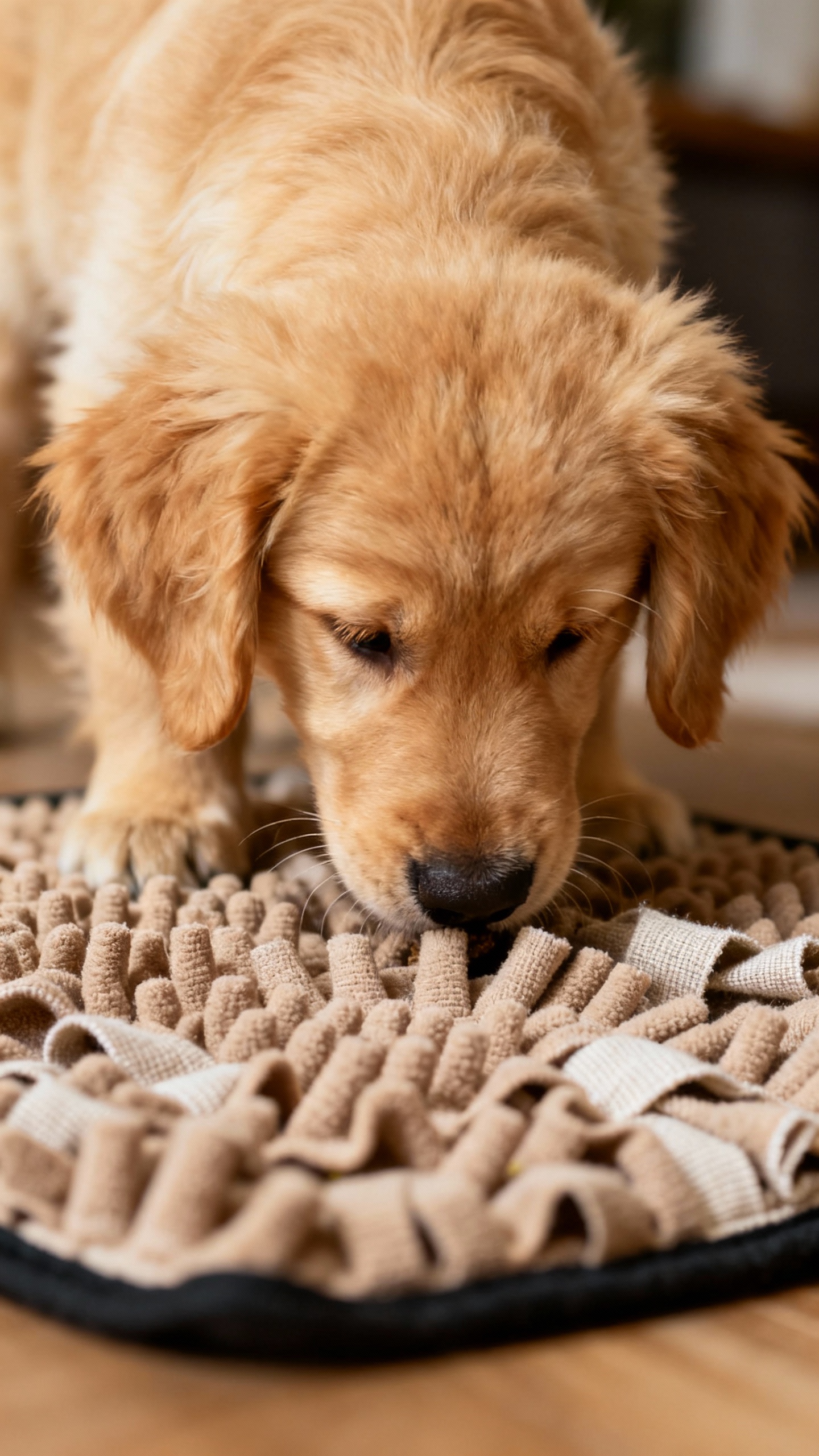
- Food puzzles and snuffle mats for meals.
- Short fetch sessions with rules: sit, fetch, drop, sit again.
- Simple scent games: hide treats in boxes and let them search.
IMO, 10 minutes of brain games beats 30 minutes of wild zoomies for long-term calm.
Consistency, Boundaries, and Realistic Expectations
Set house rules early: couch or no couch, jumping allowed or not, where the dog sleeps. Everyone in the home must follow the same rules or your puppy will learn “ask the soft human for better options.” What “consistent” looks like:
- Use the same cue words: “down” vs. “off” means different things—pick one.
- Reward what you like every time, especially early on.
- Manage the environment to prevent unwanted habits.
Progress won’t look linear.
Puppies hit fear periods and zoomy phases. Keep sessions fun, keep rewarding wins, and trust the process.
FAQ
When should I start training my golden retriever puppy?
Start on day one. Keep it light and fun with 3–5 minute sessions.
Puppies soak up patterns immediately, so you might as well teach good ones.
How many treats is too many?
Use tiny treats and factor them into daily calories. You can switch to kibble for easy tasks and save jackpot treats for hard stuff. If your pup’s waistline disappears, cut back and use more praise and play.
My puppy won’t stop jumping on people.
Help?
Teach an incompatible behavior like sit for greetings. Ask for a sit before anyone pets your puppy. If the pup jumps, step back and remove attention.
Calm sits get attention; jumping gets nothing. Consistency from all humans is key.
What about chewing the furniture?
Manage access and provide legal chewing outlets. Use baby gates, crate time, and lots of chew options.
Interrupt gently, trade for a toy, and praise when they chew the right thing. Also, meet their exercise and mental needs—bored pups remodel homes.
Do I need puppy classes?
Highly recommended. A good class gives structured socialization, real-life distractions, and skilled coaching.
Look for positive reinforcement methods and small class sizes. It’s also a great place to ask all your “is this normal?!” questions.
How much exercise does a golden puppy need?
Short, frequent play and gentle walks. A rough guideline: 5 minutes of formal leash walking per month of age, up to twice a day, plus play and training.
Avoid repetitive high-impact activities while joints develop.
Conclusion
Raising a golden retriever puppy means balancing boundaries with big love. You’ll set routines, reward good choices, and ignore the occasional sock theft with grace. Stick to short sessions, socialize smartly, and keep things fun.
Do that, and you’ll end up with the best combo: a well-trained dog who still brings that golden goofiness everywhere they go.
Leave a Reply