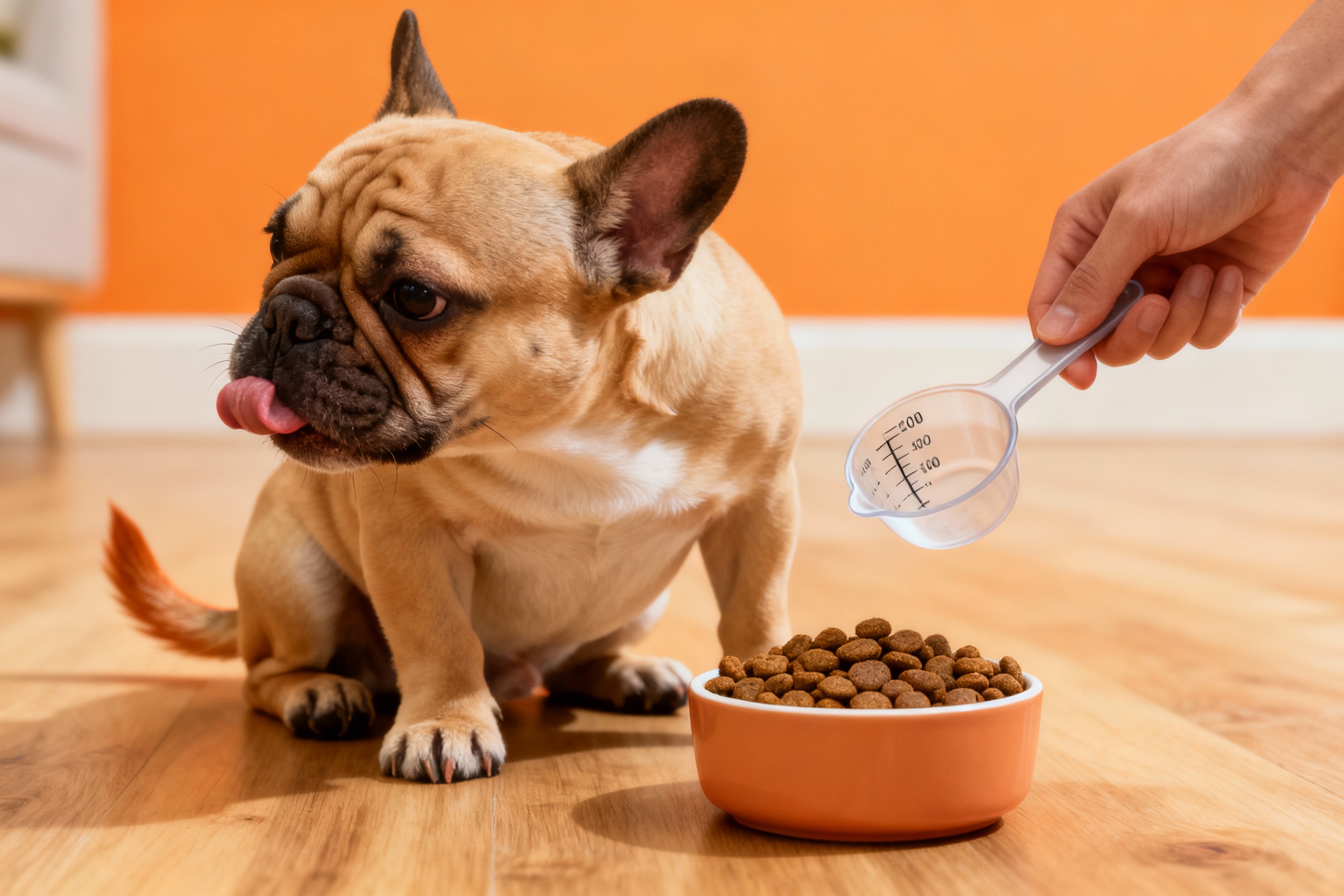
Frenchie puppy in the house? Congrats—you’ve adopted a compact comedian with a bottomless appetite and a sensitive tummy. Feeding a French Bulldog puppy sounds simple until you meet the gas, the allergies, and the “I’m starving” eyes.
Let’s keep your little bat-eared gremlin happy, healthy, and not a walking whoopie cushion.
Know What Your Frenchie Puppy Actually Needs

French Bulldog puppies grow fast but stay small. That combo means they need dense nutrition in tiny portions. Think high-quality protein, balanced fat, and controlled carbs.
Overfeed them and you’ll see extra rolls fast—cute, yes—healthy, no. Key nutrients to look for:
- Protein (22–28%): Chicken, turkey, salmon, or lamb as the first ingredient
- Fat (12–18%): For energy and a healthy coat (omega-3s help)
- DHA: Brain and eye development (big win for training focus)
- Calcium/Phosphorus: Balanced ratio (about 1.2–1.4:1) for bones
Small Mouth, Big Appetite
Frenchie puppies have short muzzles and small jaws. Choose small-bite kibble or soften it with warm water for easier chewing. You’ll avoid frustration and choking, and meal time won’t look like a wrestling match.
Kibble, Wet, Raw, or Fresh?
Let’s Talk Options
You can feed a Frenchie puppy lots of ways. The best option fits your budget, time, and your pup’s stomach.
- High-quality puppy kibble: Easy, affordable, consistent. Look for brands made for small breeds or “all breeds” with small kibble.
- Wet food: Tasty and hydrating.
Great topper for picky eaters, but watch calories—those cans add up fast.
- Fresh/frozen formulas: Balanced, minimally processed, and very palatable. Pricier, but many Frenchies thrive on them.
- Raw diets: Can work with expert guidance, but handle with care—especially around kids and immunocompromised people.
IMO: Start with a reputable puppy kibble and optionally mix in a little wet or fresh food. Keep it simple at first.
You want a calm stomach more than a fancy menu.

How Much and How Often?
You feed by weight, age, and activity—not by the “hunger face.” Frenchies love to act like they missed three meals. Don’t fall for it. General guideline (always check your specific food’s chart):
- 8–12 weeks: 3–4 meals/day, roughly 1 to 1.5 cups total per day
- 3–6 months: 3 meals/day, about 1 to 1.75 cups total per day
- 6–12 months: 2–3 meals/day, about 1 to 2 cups total per day
Every food has different calories, so measure based on calories per cup. Watch body condition weekly:
- You should feel ribs with light pressure, not see them.
- There should be a waist from above and a slight tummy tuck from the side.
Easy Feeding Schedule
- Morning (7–8 AM): Breakfast
- Midday (12–1 PM): Lunch
- Evening (5–6 PM): Dinner
Avoid late-night meals to reduce accidents and post-dinner zoomies.
FYI, water stays out all day.
Transitioning Foods Without a Tummy Meltdown
Switching foods too fast = diarrhea roulette. Take it slow over 7–10 days.
- Days 1–3: 75% old food, 25% new
- Days 4–6: 50/50
- Days 7–9: 25% old, 75% new
- Day 10: 100% new food
Pro tip: Add a simple probiotic for puppies during transitions. You’ll thank yourself later.
Signs You Need to Pause
- Loose stools for more than 48 hours
- Vomiting more than once
- Excessive itching, hives, or ear gunk
If you spot these, slow the transition or talk to your vet.

Treats, Snacks, and the Art of Not Overdoing It
Treats win hearts and fuel training, but they also sneak in calories.
Keep treats under 10% of daily calories. Great puppy-safe treats:
- Freeze-dried single-ingredient meats (chicken, salmon)
- Small training treats with limited ingredients
- Blueberries or tiny apple bits (no seeds)
Skip these:
- Cooked bones
- High-fat table scraps
- Grapes/raisins, onions, garlic, xylitol (poisonous)
IMO: Break treats into pea-sized pieces. Your pup doesn’t count; they just want the flavor and your praise.
Frenchie-Specific Issues: Allergies, Gas, and Sensitive Bellies

French Bulldogs can star in a one-dog gas orchestra.
Often, it’s the food. Common triggers:
- Chicken or beef in some pups (protein sensitivities happen)
- Wheat, corn, soy fillers
- Dairy—many pups don’t digest it well
If your puppy gets itchy skin, red paws, ear infections, or constant loose stools, try:
- Limited-ingredient diets with a novel protein (turkey, duck, salmon)
- Grain-inclusive with rice or oats if grain-free foods cause issues
- Probiotics + pumpkin (a spoonful of plain canned pumpkin helps firm stools)
Slow the Chow
Frenchies inhale food. Use a slow-feeder bowl or puzzle feeder. It reduces choking, gas, and bloat risk.
Plus, it makes mealtime a mini-brain game.
Supplements: What’s Worth It?
You don’t need a pharmacy. Start simple and only add what your puppy needs.
- Probiotics: Support digestion and immunity; great during food transitions.
- Omega-3s (fish oil): Help skin, coat, and inflammation. Use puppy-safe dosing.
- Joint support: Not essential for puppies unless your vet recommends it.
- Multivitamins: Only if your diet isn’t complete and balanced (most quality foods are).
Important: Don’t add calcium on your own.
Too much can harm developing bones.
Feeding Tips for Training and House Manners
Use part of your puppy’s daily kibble as training treats. You’ll keep calories under control and motivation high. Smart tricks:
- Meal-prep a treat pouch with kibble each morning for training rewards.
- Stuff a lick mat or puppy-safe chew with a bit of wet food to slow them down.
- Keep a routine: Dogs love predictability—especially Frenchies.
FAQ
How long should my French Bulldog stay on puppy food?
Most Frenchies switch to adult food around 10–12 months.
If your pup grows fast or looks chunky, chat with your vet about switching a bit earlier to an adult formula with fewer calories.
Is grain-free food better for French Bulldogs?
Not necessarily. Some do well on grain-free, others do better on grain-inclusive. If your pup has soft stools or skin issues, try a different formula rather than ditching grains automatically.
FYI, some grain-free diets link to heart issues in certain cases, so choose brands with strong nutrition research.
What if my puppy refuses to eat?
First, rule out pickiness versus illness. Try warming the food, adding a spoon of wet food, or switching to a different protein. If your puppy skips more than one meal, acts lethargic, or vomits, call your vet.
How do I stop the gas?
Slow feeding, avoid dairy, and test a different protein source.
Add a probiotic and keep treats simple. If it still smells like a swamp daily, your vet can check for deeper GI issues.
Can I feed home-cooked meals?
Yes, but only with a vet nutritionist’s recipe. Puppies need precise calcium and phosphorus ratios.
Guessing turns risky fast. Home-cooked can be great—just do it right.
How much water should my puppy drink?
Offer fresh water at all times. Rough rule: 0.5–1 ounce per pound of body weight daily, more if it’s hot or you’ve been training.
Excessive thirst can signal a health issue—note any big changes.
Conclusion
Feeding a French Bulldog puppy doesn’t need to be chaotic. Choose a solid puppy food, feed small meals on a schedule, and watch their body condition like a hawk. Tweak proteins if skin or tummy issues pop up, and keep treats tiny.
Do that, and you’ll raise a healthy, happy Frenchie who brings the laughs—without the constant tummy drama. IMO, that’s a win for everyone’s noses.
Leave a Reply