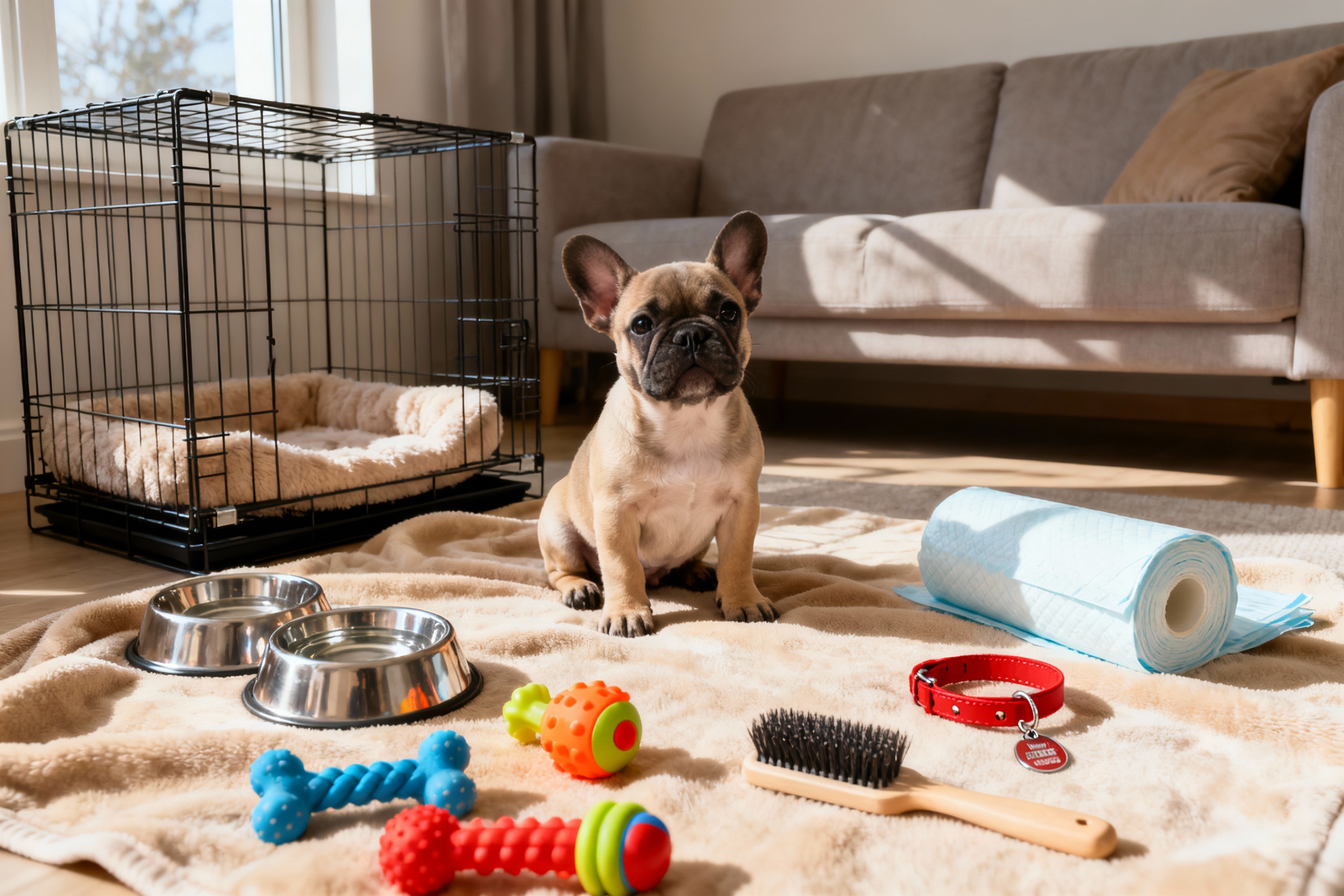
So you’ve decided to bring home a French Bulldog puppy. Congrats—you’re about to live with a compact comedian who snores like a lumberjack and stares into your soul at dinner. Let’s get you ready so Day One feels magical, not chaotic.
We’ll cover gear, setup, health must-knows, training, and those Frenchie-specific quirks no one tells you about until after the couch is chewed.
Set Up Your Home Base Before Pickup

You want your Frenchie to step into a world that screams “I belong here.” Create a safe, defined area where your puppy can rest, eat, and learn the house rules.
Create a comfy “puppy zone”
- Crate: Pick a small crate with a divider. Frenchies love cozy spaces, and you’ll use it for potty training and naps.
- Playpen: Attach a pen to the crate to give safe roaming room. It saves your sanity when you can’t supervise.
- Flooring: Lay down washable mats or cheap rugs.
Potty accidents happen. Embrace it.
Stock the essentials
- Food and water bowls (heavy, non-tip). Avoid tall feeders—Frenchies don’t need them.
- Puppy food your breeder or rescue used.
Transition slowly later if needed.
- Collar + ID tag and a harness (Frenchie chests are… substantial).
- Leash (4–6 feet, no retractables for training).
- Chew toys and puzzle toys to save your shoes and stimulate their brain.
- Training treats—pea-sized, soft, and irresistible.
- Potty pads for backup, but aim to go outside from day one.
- Enzyme cleaner for mistakes. Regular cleaner won’t cut it.
Frenchie Health: What You Must Know (And Budget For)
French Bulldogs are adorable potatoes with special maintenance. FYI, a little prep now prevents a lot of drama later.
- Brachycephalic heads: They overheat easily and breathe noisily.
Keep them cool, skip long runs, and never leave them in cars. Ever.
- Skin folds: Clean with gentle wipes a few times a week to prevent irritation and infections.
- Ears: Their bat ears catch everything. Check weekly and clean as needed.
- Allergies: Common.
Watch for itchiness, red paws, or chronic ear gunk. A vet can guide diet tweaks.
- Spine and hips: Avoid high-impact jumps. Use ramps or steps for couches and beds.
Vet prep and emergency game plan
- Schedule a first vet visit within 48–72 hours to confirm health, vaccines, and deworming.
- Microchip + register if not already done.
- Pet insurance: IMO, worth it for Frenchies.
Get it before pre-existing conditions pop up.
- Emergency contacts: Save a 24/7 clinic number and know the fastest route.

Potty Training Without Tears (Mostly)
You’ll win this with consistency, not magic. Frenchies are smart but stubborn—like tiny philosophers who question all your rules.
Set a schedule and stick to it
- Take them out first thing in the morning, after meals, after naps, after play, and last thing at night.
- Use the same door and spot. Say a cue like “Go potty.” Praise like they just paid your mortgage.
- Limit water close to bedtime (but never restrict excessively—ask your vet for balance).
Handle accidents like a pro
- Don’t scold.
Just clean with enzyme cleaner and move on.
- If you catch them mid-accident, calmly interrupt and carry outside.
- Crate when you can’t supervise. It’s not mean—it’s structure.
Training: Start Small, Start Now
Early training turns your stubborn nugget into a well-mannered sidekick. Keep sessions short and fun—like 3–5 minutes.
Foundation skills to teach first
- Name and recall: Say their name once.
When they look at you, treat. Add a cheerful “come.”
- Sit: Easiest control button. Ask before food, leashes, and doors.
- Leave it: Crucial for dropped snacks, mystery sidewalk treasures, and your socks.
- Leash manners: Practice inside first.
Reward for a loose leash position.
Crate = cozy, not prison
- Feed meals in the crate with the door open at first.
- Toss treats in; let them wander in and out.
- Close the door for short, calm intervals. Release before whining escalates.
Socialization done right
- Expose your pup to different people, surfaces, sounds, and gentle dogs.
- Avoid dog parks early on. Controlled playdates and puppy classes are safer.
- Keep it positive.
One bad scare can stick.

Frenchie-Proof Your Life
They’re curious, mouthy, and low to the ground—aka pros at finding trouble. You’ll want to outsmart them.
- Secure cords, trash cans, and cabinets. Frenchies are food-driven little goblins.
- Pick up tiny items (hair ties, batteries, Lego pieces).
If it fits in the mouth… it goes in.
- Block stairs and use ramps. Frenchies launch themselves like cannonballs. Knees disagree.
- Watch houseplants: Many are toxic.
Check your monstera and friends.
Feeding and Supplies: Keep It Simple

Frenchies can get chunky fast. Chubby is cute—until the breathing and joint issues hit.
Food basics
- Feed measured meals 3 times a day for young pups, then 2 times as they grow.
- Transition foods over 7–10 days if you switch from the breeder’s brand.
- Use training treats as part of their daily calories to avoid overfeeding.
Grooming kit you’ll actually use
- Soft brush for weekly de-shedding (yes, they shed).
- Fold and paw wipes every few days.
- Nail grinder or clippers—practice early with treats.
- Ear cleaner and gauze pads.
- Dog-safe shampoo for occasional baths. Keep it mild.
Day-One Game Plan
The first 24 hours set the tone.
Keep it chill, predictable, and full of wins.
- Potty break first before entering the house.
- Explore one area at a time. Save house tours for later.
- Introduce the crate with treats and a chew.
- Short play, short nap. Over-tired puppies meltdown.
Same, honestly.
- Keep visitors limited. You’ll have a lifetime for meet-and-greets.
- Stick to a schedule—meals, potty, play, naps.
Common Mistakes to Avoid
- Overexercising or walking in heat. Frenchies overheat fast.
- Free-feeding.
You’ll blink and have a potato with legs.
- Skipping socialization because they seem “chill.” Confidence needs practice.
- Using retractable leashes. They teach pulling and reduce control.
- Inconsistent rules. If the couch is sometimes okay, it’s always okay in their mind.
FAQ
How much exercise does a French Bulldog puppy need?
Aim for short, frequent play sessions—5 to 10 minutes a few times a day—plus gentle walks.
They tire quickly and overheat easily. Quality mental stimulation (training and puzzle toys) beats long walks for Frenchies.
What temperature is safe for my Frenchie?
They struggle in heat and humidity. Keep outdoor time short above 75–80°F, avoid midday sun, and always provide shade and water.
Inside, use fans or AC and cooling mats. If they pant hard or seem lethargic, get them cool fast and call your vet.
When can I start training classes?
As soon as your vet clears it—usually after the first round or two of vaccinations. Many puppy classes accept pups at 10–12 weeks with proof of vaccines.
Early socialization matters more than perfection, IMO.
Should I get pet insurance for a Frenchie?
Strong yes. Frenchies can rack up bills for airway, skin, and allergy issues. Get coverage early to avoid pre-existing exclusions.
Compare plans for hereditary coverage and exam fees.
Can Frenchies swim?
Not well. Their heavy front and flat faces make swimming risky. Use a life jacket near water, keep them shallow, and supervise like a hawk.
Bathtub confidence does not equal pool safety, FYI.
What harness works best?
Choose a Y-front harness that allows shoulder movement and avoids neck pressure. Look for adjustable straps and breathable fabric. Bring treats and fit it slowly so your pup associates it with good things.
Conclusion
A French Bulldog puppy brings laughter, snorts, and a tiny shadow that follows you everywhere—even to the bathroom, sorry.
Prep your space, plan your routine, and learn their special care needs, and you’ll crush those first weeks. Do that, and your little bat-eared gremlin will grow into a confident, hilarious best friend. And yes, you’ll love the snores.
IMO, they’re part of the charm.
Leave a Reply