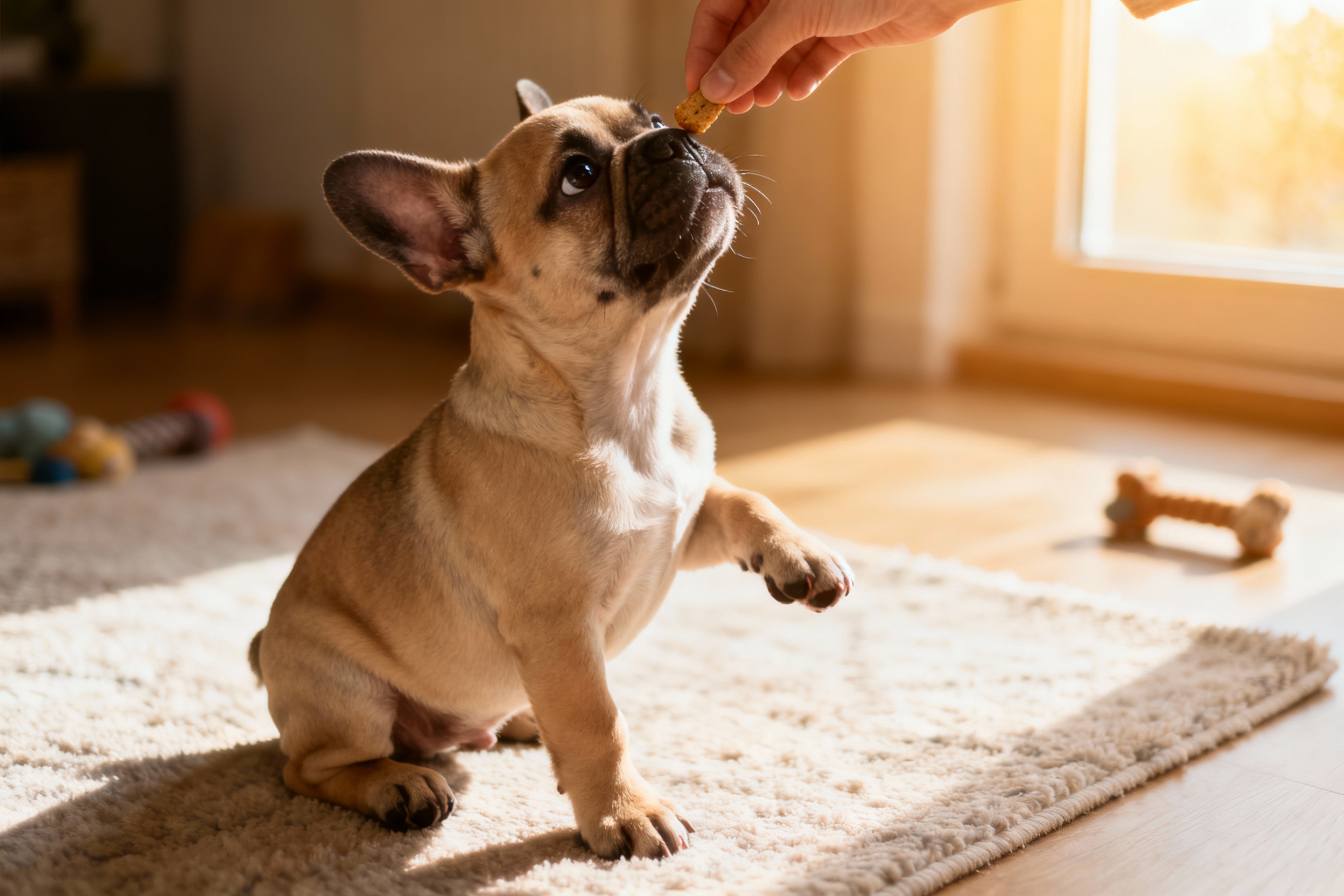
French Bulldog puppies look like squishy loaves with ears, but don’t let the cuteness fool you—three months old is prime time to build good habits. Your little gremlin learns fast right now, and yes, that includes both tricks and chaos. Let’s channel the energy into training that’s simple, fun, and actually works.
Short sessions, big praise, and a sense of humor—ready?
Know Your 3-Month-Old Frenchie
At three months, your Frenchie is curious, clingy, and a bit stubborn (charmingly so). Expect bursts of zoomies followed by epic naps. Their attention span?
About a TikTok video. Key goals at this age:
- House training and crate comfort
- Basic cues: name, sit, come, leave it
- Socialization with people, sounds, and safe dogs
- Gentle leash introduction
Golden rule: Keep sessions 3–5 minutes, 3–5 times a day. End on a win. Treats + praise = success.
House Training Without Losing Your Mind
Potty training feels like a full-time job.
It kind of is—for a few weeks. Consistency beats everything. Create a predictable schedule:
- First thing in the morning
- After meals and water
- After naps and play
- Before bedtime
Take your pup to the same spot every time. Stand still.
Say a cue like “go potty” once. When they go, party like you just won the lottery—treats within 2 seconds.
Accidents Happen (Because Puppies)
If you catch them mid-squat, interrupt with a calm “outside,” pick up, and take them out. Don’t scold after the fact.
Clean accidents with an enzymatic cleaner so the scent doesn’t invite a repeat performance.
Crate Training: Your Sanity Saver
Think of the crate as a cozy den, not doggy jail. It helps with potty training and keeps tiny jaws off your shoes. Make it inviting:
- Soft bed, safe chew, and a blanket
- Feed meals in the crate to build happy vibes
- Start with the door open and toss treats inside
Close the door for short periods while you’re nearby. Gradually increase time.
If your pup whines, wait for a calm moment before opening the door. You reward calm, not noise. IMO, a covered crate can help Frenchies relax.
How Long in the Crate?
General rule: months old + 1 = hours they can hold it (daytime).
At night, they can go a little longer. Don’t push it—small bladders, big consequences.
Core Cues Every Frenchie Should Know
You don’t need a circus act. You need polite basics that make daily life easier. Start with these:
- Name: Say their name once.
When they look at you, mark it with “yes!” and treat.
- Sit: Lure their nose up and back with a treat. When their butt hits the floor, “yes!” + treat.
- Come: Say “come,” crouch down, open arms, be exciting. Reward like crazy when they arrive.
- Leave it: Hold a treat in your fist.
When they stop mouthing and look away, “yes!” + give a different treat.
Pro tip: One-word cues, happy tone, and no shouting. Frenchies respond to fun, not drill sergeant energy.
Use a Marker Word
A crisp “yes!” the instant your pup does the right thing bridges the gap between action and reward. It’s like taking a snapshot of good behavior.
Clickers work too if you like gadgets.
Socialization That Builds Confidence
This age window matters. You want your Frenchie to think the world is safe and awesome. Expose them to:
- Different people: hats, beards, kids (supervised), canes, strollers
- Sounds: traffic, doorbells, hairdryers, vacuum (start at a distance)
- Surfaces: grass, gravel, mats, wood floors
Pair every new thing with treats and praise. If your pup seems unsure, create distance, then feed. Never force interactions. FYI, stick to vaccinated, friendly dogs only and safe environments until your vet gives the green light.
Puppy Classes = Social Skills + Structure
A good puppy kindergarten gives controlled exposure, basic training, and pro guidance.
Ask for trainers who use reward-based methods only. No harsh corrections—Frenchies shut down fast.
Leash Skills for Little Tanks
Frenchies come with built-in swagger, not built-in leash manners. Start indoors first. Step-by-step:
- Get a comfy harness (front-clip can help) and a 4–6 ft leash.
- Reward for checking in with you—treat every time they look your way.
- If they pull, stop.
Be a tree. When the leash slackens, move forward and reward.
Short, happy walks. Avoid long stair climbs and high-impact play—Frenchie joints need time.
And yes, they overheat easily. Walk during cooler hours and bring water.
Bitey Gremlin Mode: Nipping and Chewing
Puppy teeth are like tiny razors. They explore with their mouths—it’s normal.
You just need rules. Redirect, don’t scold:
- Offer chew toys when nipping starts
- End play briefly if they get too amped
- Rotate chews to keep things interesting
If teeth touch skin, say “ouch,” disengage for 10–20 seconds, then resume calmer play. Consistency teaches bite inhibition. IMO, frozen carrot chunks or a frozen wet washcloth (supervised) soothe teething gums.
What About Jumping?
Frenchies love spring-loaded greetings.
Teach an alternative: ask for “sit,” then reward and give attention. No sit = no hello. Everyone in the house must follow this, or your pup will pick the weakest link.
They always do.
Routine, Enrichment, and Rest
A calm puppy comes from a solid rhythm. Over-tired pups act like toddlers at a birthday party: unhinged. Daily flow idea:
- Wake, potty, short training, breakfast
- Nap (lots—like hours)
- Play + potty + training snack-size sessions
- Short walk or sniffari
- Evening wind-down, chew time, bedtime routine
Add brain games: snuffle mats, food puzzles, hide-and-seek. Mental work tires them out without risking overexertion.
Health and Safety Basics (Important for Frenchies)
Frenchies are adorable and… slightly high-maintenance.
Watch for overheating, breathing difficulty, and tummy sensitivities. Keep in mind:
- Use a harness, not a collar, for leash walking
- Clean face wrinkles gently and often
- Ask your vet about vaccine schedule and safe socialization timing
- Choose small, soft training treats to avoid tummy upset
If your pup snores loudly or struggles in mild heat, cut activity short and cool them down. Safety first, heroics later.
FAQ
How many training sessions per day is ideal?
Aim for 3–5 mini-sessions, 3–5 minutes each. Sprinkle them around meals and playtimes.
Short and sweet keeps your Frenchie engaged and hungry for more.
When should I start leash training?
Start now—indoors. Practice putting on the harness, rewarding eye contact, and walking a few steps with a loose leash. Move outside once your pup nails it inside and your vet okays outdoor adventures.
What treats work best for training?
Use pea-sized, soft treats your puppy can swallow quickly: tiny bits of chicken, low-ingredient training treats, or freeze-dried meat.
If your pup’s tummy protests, switch proteins or use part of their kibble for easy wins.
My Frenchie hates the crate. What should I do?
Slow down. Feed meals in the crate, toss treats in, and close the door for seconds at a time while you sit nearby.
Build up gradually. Add a safe chew and a worn T-shirt for comfort. No forced crating marathons—trust beats speed.
How do I stop barking at noises?
Preempt it.
When your pup notices a sound, say “thanks,” toss a treat on their bed, and reward quiet. You teach them: hear sound, look to you, get paid. Consistency turns them from alarm system into polite notifier.
When can I expect my puppy to be potty trained?
With consistency, many Frenchie pups show strong progress by 4–5 months, but accidents still happen.
Stick to the schedule, supervise, and celebrate small wins. Regression during growth spurts is normal—just tighten the routine.
Wrapping It Up
Three-month-old Frenchies are silly, stubborn, and ridiculously lovable. Keep training playful, keep sessions short, and reward the heck out of good choices.
Build routines now and you’ll get a confident, well-mannered sidekick for years. And when chaos hits? Deep breath, treat pouch on, you’ve got this.
FYI: the cute ears help.
Leave a Reply