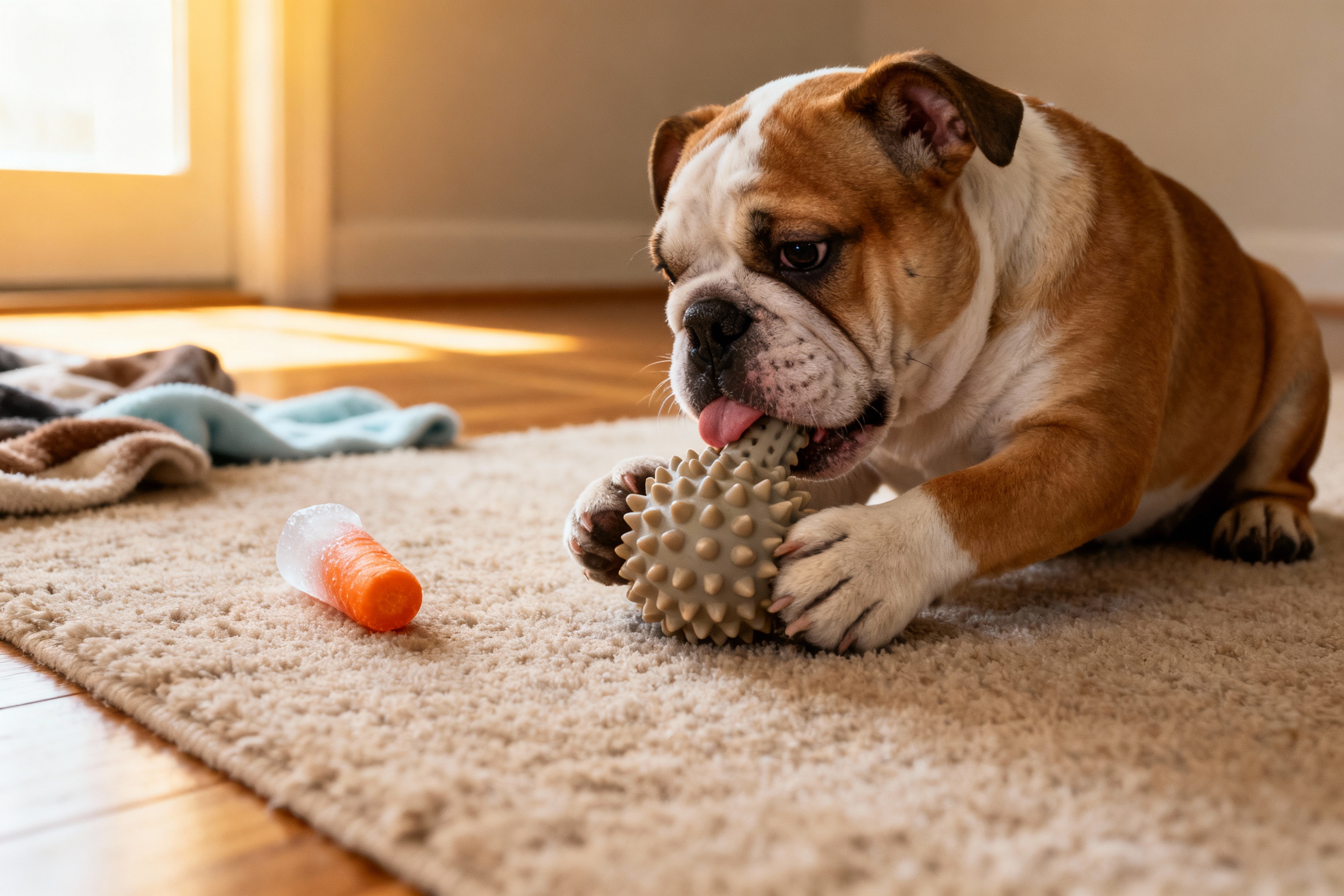
Teething bulldogs are adorable little land hippos with sore gums and zero chill. One minute they nap like angels, the next they’re gnawing your chair leg like it owes them money. Good news: you can help them through it without sacrificing your furniture or your sanity.
Let’s break down what’s normal, what actually helps, and what to avoid so those puppy teeth don’t turn your home into a chew graveyard.
Know the Teething Timeline (So You Don’t Panic)

Bulldog puppies start teething around 3-4 months, and they usually finish by 7-8 months. During this time, their 28 baby teeth make way for 42 adult teeth. That’s a lot of action in a small mouth.
What does that mean for you? Expect drool, chew mania, and a bit of whining. You might even spot tiny baby teeth on the floor like weird little souvenirs.
Gross? Kind of. Normal? Totally.
Signs Your Bulldog Is Teething
- Chewing everything (including your fingers, FYI)
- Drooling more than usual
- Red or puffy gums
- Mild fussiness or sleep changes
- Small spots of blood on toys or chews
If you see heavy bleeding, a bad smell, or swelling that looks angry, call your vet.
Teething shouldn’t look like a horror movie.
Offer Safe, Soothing Chews (Your Furniture Will Thank You)
Chews give those irritated gums something to work on and help loosen stubborn baby teeth. Choose the right textures and rotate them to keep your bulldog interested.
Best Chews for Teething Bulldogs
- Rubber toys with a bit of give (think durable but not rock-hard)
- Textured teething toys made for puppies
- Frozen rubber toys or frozen wet washcloths (clean ones, obviously)
- Soft edible chews like bully sticks, yak chews for puppies, or dental sticks
Chews to Avoid
- Antlers, bones, and hooves – too hard and can crack teeth
- Cooked bones – splinter city
- Stuffing-heavy plushies if your pup is a shredder
The rule of thumb: if you can’t make a dent with your fingernail, it’s probably too hard for a teething puppy.

Chill the Gums: Cold Therapy That Works
Cold helps reduce inflammation and numbs the soreness. Simple, cheap, effective.
Easy Cold Options
- Frozen carrot (peeled and thick – supervise to prevent choking)
- Frozen banana slices for a quick treat
- Frozen wet washcloth knotted and damp (great texture)
- Freeze-safe rubber toys with a little water or low-sodium broth inside
Don’t hand over giant ice cubes, IMO.
They’re slippery, hard, and not worth the risk.
Redirect the Bite: Training That Actually Sticks
Teething pups will bite. Your job is to show them what to bite and when to stop. Consistency wins here.
Simple Bite-Redirect Routine
- Pup bites your hand? Say “ouch” calmly and pause all interaction.
- Offer a chew toy immediately.
- When they take the toy, praise like they just won an Oscar.
- Repeat 1000 times.
Yes, really. It works.
Short training sessions help too. Teach “leave it,” “drop it,” and “gentle.” These cues save lives (mostly your sleeves).

Protect Your Stuff (Because Bulldogs Don’t Care What Things Cost)
You can’t reason with a teething gremlin.
You can bulldog-proof your space and make good choices easier than bad ones.
- Confine with a pen or crate when you can’t supervise
- Rotate toys – put out 3-4 at a time, switch daily to keep them “new”
- Use bitter spray on baseboards, rugs, and table legs
- Pick up clutter – socks, cords, kids’ toys, remote controls
A tired bulldog chews less. Short training bursts, sniff walks, and brain games beat chaotic zoomies and bored chewing.
Mind the Bulldog-Specific Stuff

Bulldogs have… unique architecture. That squishy face changes how you support teething care.
Watch for Overheating
They run hot.
If you use chews or play sessions, keep them short and let them rest. Avoid heavy play in warm rooms, and keep water nearby.
Jaw and Tooth Spacing
Their undershot jaw can trap debris. Check daily for stuck food or chew fragments. A quick peek prevents irritation or infection.
Start Gentle Dental Care Early
Introduce a finger brush or soft puppy toothbrush now.
Go slow, reward tons, and make it positive. Healthy adult teeth later = fewer vet bills, IMO.
Comfort Without Overdoing It
You can’t cure teething, but you can make your pup feel better. Keep routines predictable and your reactions calm.
- Stick to feeding times, potty breaks, and naps
- Use short cuddle breaks when they get cranky
- Try a snuffle mat to burn mental energy without rough chewing
- Offer gentle gum massage with a clean finger if they’ll allow it
Skip human pain meds.
They’re dangerous for dogs. If you think your pup needs medication, your vet will guide you safely.
When to Call the Vet
Most teething drama stays mild. But sometimes you need backup.
Contact your vet if you see:
- Persistent baby teeth not falling out as adult teeth grow in
- Bad breath with drooling and pawing at the mouth
- Swollen, bleeding, or discolored gums
- Refusing food or noticeable weight loss
- Fever, lethargy, or pain that seems beyond normal fussiness
Retained baby teeth can mess up alignment and trap bacteria. Quick vet care prevents bigger problems later.
FAQs
How long does teething last for bulldogs?
Most bulldogs start around 3-4 months and finish by 7-8 months. Some take a bit longer, especially with stubborn baby canines.
If you still see baby teeth hanging out after 8 months, ask your vet.
Are frozen treats safe for teething?
Yes, in moderation. Use soft, frozen options like wet washcloths, rubber toys, or small fruit pieces. Avoid large hard ice cubes or anything they can crack a tooth on.
What’s the safest chew toy for a bulldog puppy?
A durable rubber toy with some flex hits the sweet spot.
Brands designed for puppies usually nail the texture. If your nail can’t dent it at all, it’s probably too hard.
Why does my bulldog chew me more at night?
Evening zoomies and sore gums make for extra mouthiness. Try a short sniff walk, some training reps, and a frozen chew before bed.
You’ll get fewer “shark attacks,” IMO.
Do I need dental cleanings later if I brush now?
Probably, yes—bulldogs tend to need periodic professional cleanings. But early brushing reduces plaque and can push cleanings further apart. Your future wallet will thank you.
Is blood on toys normal during teething?
A few small spots?
Totally normal. Heavy bleeding, swelling, or obvious pain? That’s a vet visit, FYI.
Conclusion
Teething turns your bulldog into a drooly chew machine, but it’s just a phase.
With safe chews, cold comfort, smart training, and a bulldog-proofed home, you’ll glide through it with minimal casualties. Keep it calm, keep it consistent, and keep a sense of humor. One day soon, those puppy teeth will be gone—and your furniture might even survive.
Leave a Reply