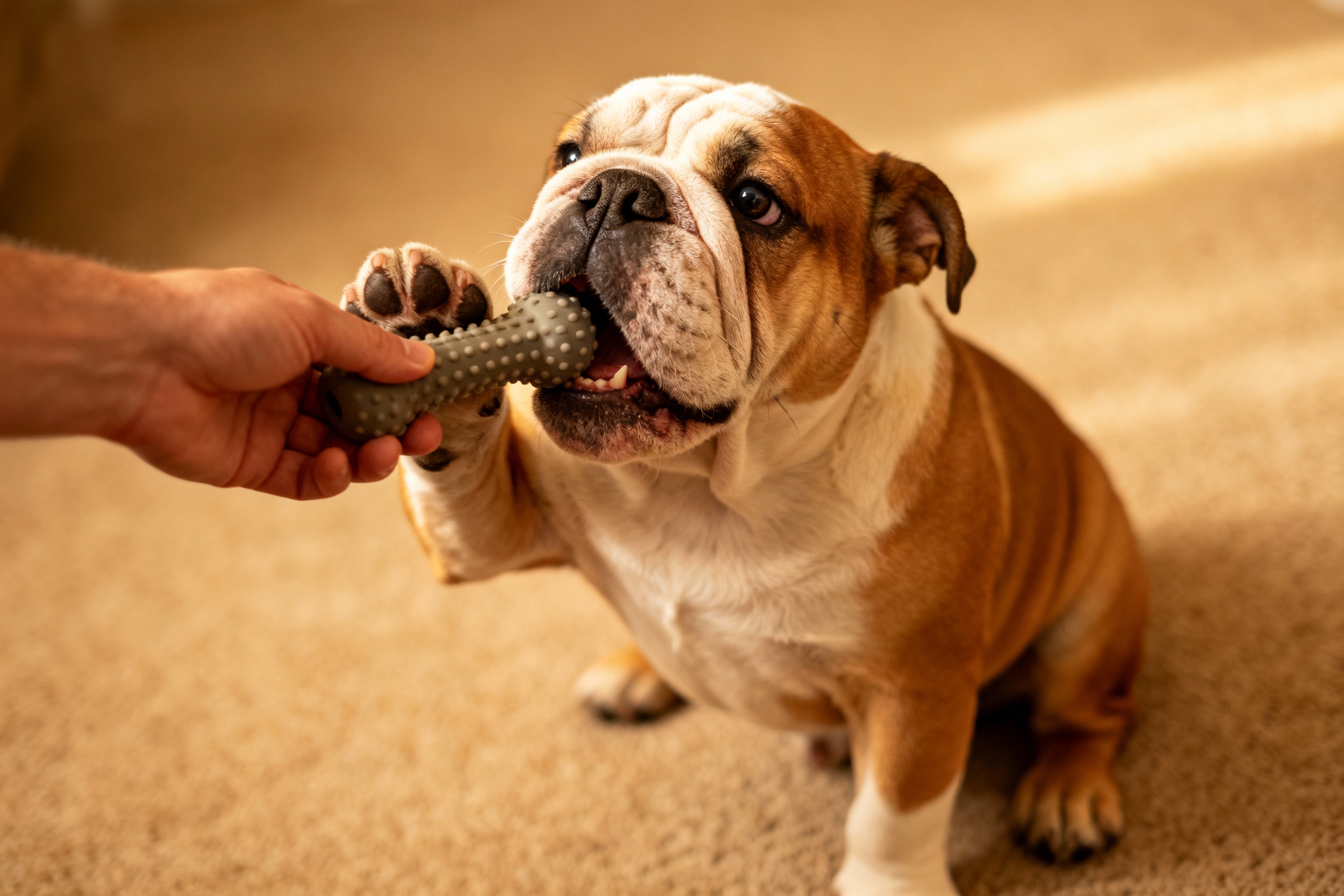
Teeny bulldog teeth feel like tiny sewing needles, don’t they? Your pup isn’t a villain—just a baby hippo with enthusiasm and zero bite etiquette. The good news: you can teach your bulldog to keep those chompers to themselves without turning training into a wrestling match.
Let’s keep it simple, consistent, and actually fun.
Understand Why Your Bulldog Puppy Bites
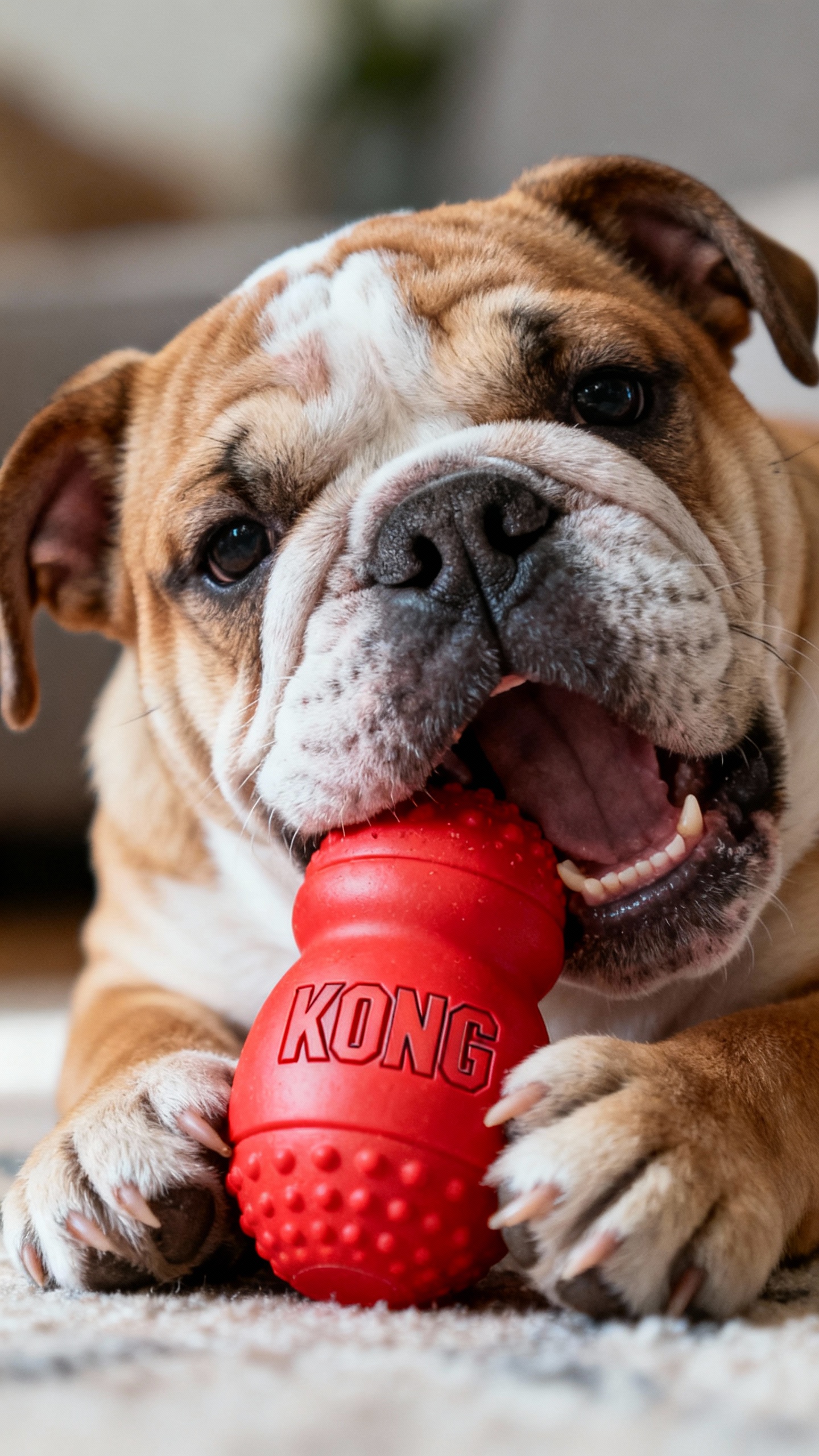
Puppies bite because they explore the world with their mouths—and bulldogs double down thanks to play drive and teething. They don’t know your wrist isn’t a chew toy yet. You’ll teach that. Common reasons for biting:
- Teething: gums hurt, chewing soothes.
- Overstimulation: excitement turns into nipping.
- Attention-seeking: “Mouth = human reacts.
Cool.”
- Lack of impulse control: bulldogs can be stubborn and spicy.
Set expectations early
Decide right now: no teeth on skin. Not “sometimes,” not “when it doesn’t hurt.” Consistency makes learning fast and avoids mixed signals.
Step One: Redirect, Don’t Wrestle
When your bulldog mouths you, give them a legal outlet immediately. Think “replace” not “punish.” Here’s the play:
- Yelp or say “ouch” once in a calm, higher tone.
No drama.
- Freeze for 2-3 seconds. Hands still, no pushing or flapping.
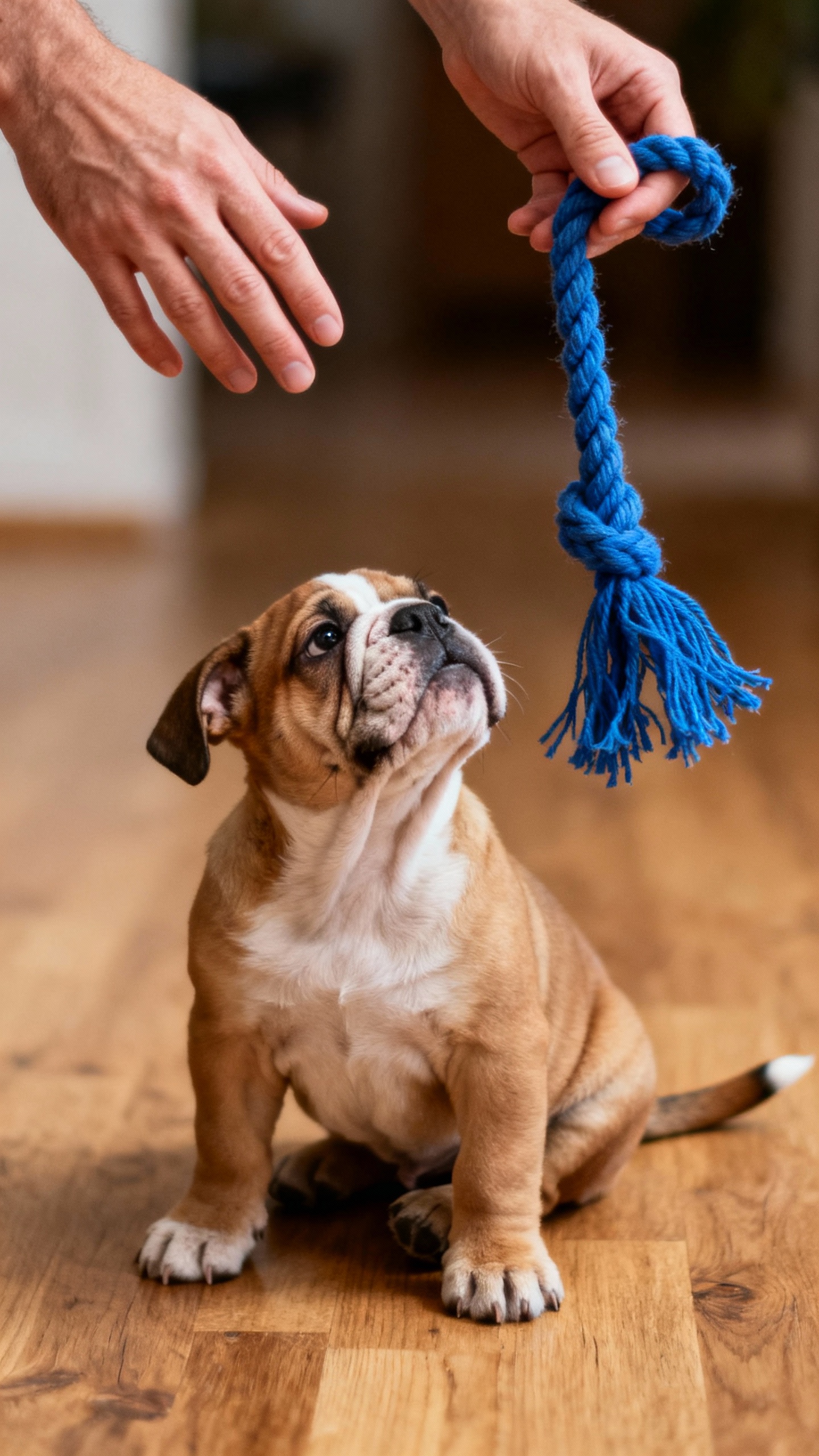
- Redirect to a toy. Offer a tug rope, rubber chew, or stuffed toy.
- Praise and play when they bite the toy.
Reinforce the good choice.
If your pup ignores the toy and keeps going, take a quick 30–60 second timeout. Stand up, turn away, or step behind a baby gate. Then reset.
FYI: timeouts only work if they’re short and boring.
Choose the right toys
Bulldogs love resistance and texture. Keep a mix around:
- Rubber chews (KONG-style) for teething relief
- Tug toys to channel play-biting
- Flat fleece or rope for gentle tug sessions
Rotate toys to keep novelty high. Old toy = snooze.
New-ish toy = “I must chew this now.”
Teach Bite Inhibition (The Gentle Rule)
You want your puppy to learn that human skin is delicate, even during play. Start by rewarding gentle mouths and dialing down tolerance over time. Simple method:
- Play normally. If your pup mouths softly, keep the game going.
- If pressure increases, say “ouch,” freeze, and end play for 10–15 seconds.
- Resume with a toy.
Gentle = game continues. Hard = game stops.
This teaches control, not fear. IMO, this step matters more than any command you’ll teach this month.
Use a “Gentle” cue
When your pup takes treats, hold them loosely.
If they lunge, close your fist. Re-offer and say “Gentle.” Mark and reward when they take it softly. That transfers to calmer mouths in play.
Burn Energy the Smart Way
A tired bulldog bites less.
But they’re not marathoners, so choose low-impact outlets that won’t overheat them. Good options:
- Short tug sessions with rules (sit to start, drop to reset)
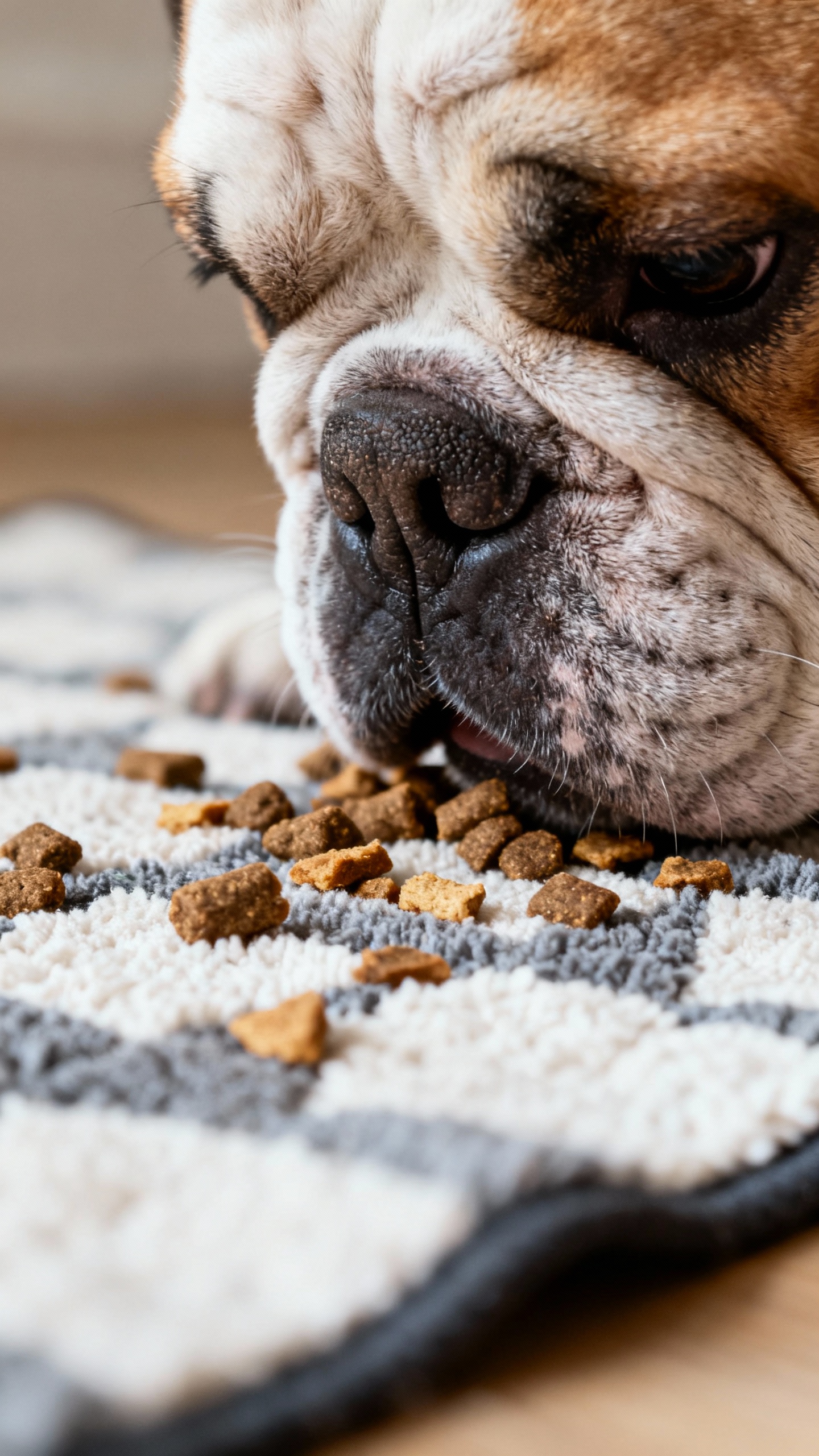
- Snuffle mats and scatter feeding for brain work
- 5–10 minute training bursts for sits, downs, and name game
- Frozen chews (carrot, pup-safe frozen kong) for teething relief
Watch for bulldog overheating—snorts get louder, tongue widens, energy crashes. Breaks are your friend.
Train Impulse Control: Tiny Rules, Big Results
Bulldogs thrive with simple, consistent boundaries. You’re building “ask first, bite never” behavior. Teach these fast:
- Sit to say please: before play, meals, leashes, and petting.
- Drop it: trade toy for treat, then return the toy.
Builds trust.
- Leave it: start with a treat in your hand; reward looking away.
Tug with rules
– Start only when pup sits. – Say “take it” to begin. – Say “drop,” trade for treat, pause, then “take it” again. You just taught manners with a game. Chef’s kiss.
Prevent Biting Before It Starts
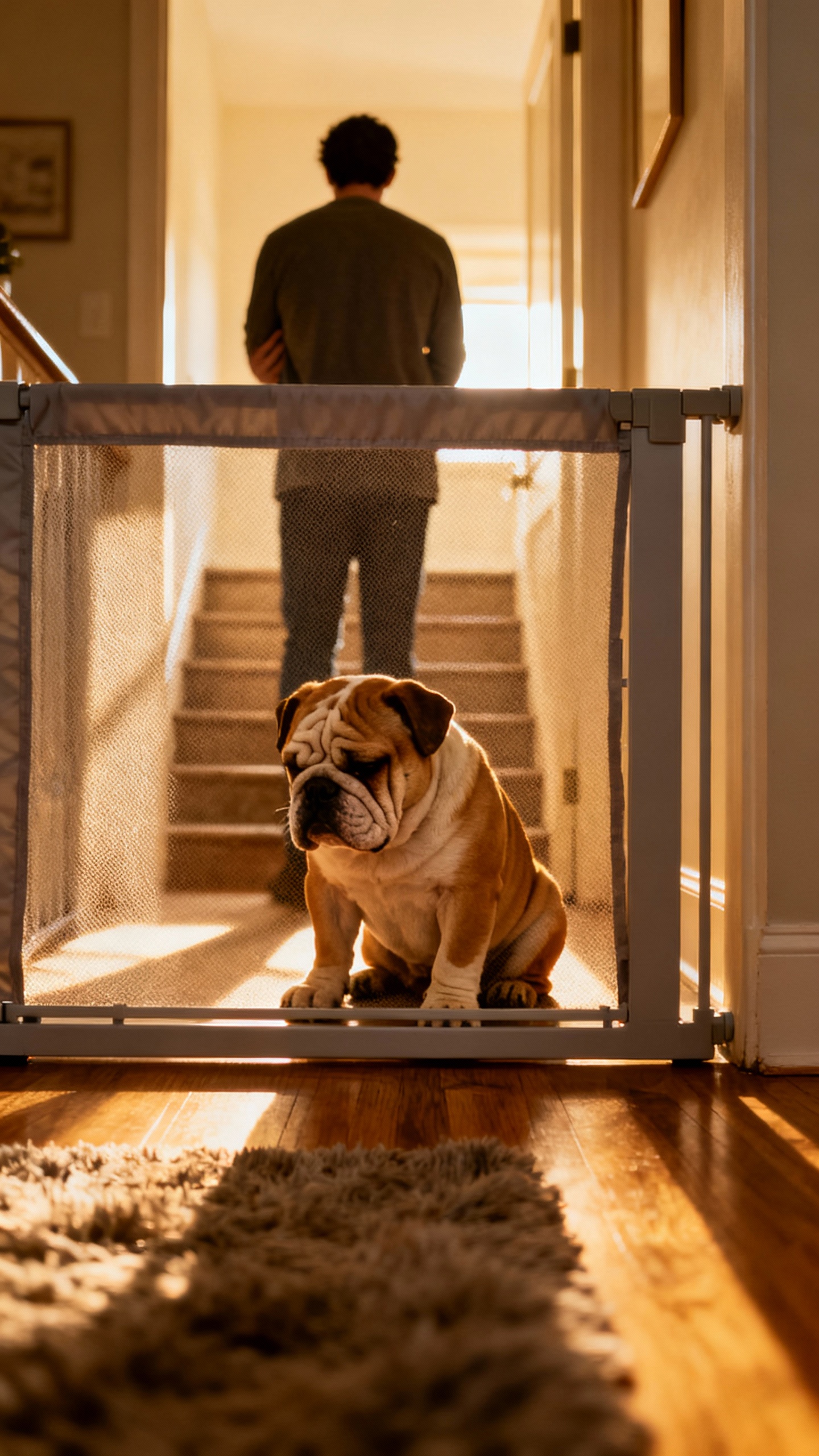
Management wins.
You’ll sidestep 80% of problems with smart setup. Use this toolkit:
- Baby gates and pens to limit chaos during zoomies
- Leash drag indoors for easy, gentle redirection
- Chew stations in rooms where you hang out
- Predictable nap schedule because overtired = velociraptor
And yes, tell kids to move like trees, not squeaky toys. Flailing arms invite nips. Adults too—keep sleeves out of the bite zone.
What Not To Do (Seriously)
You’ll hear some spicy advice out there.
Hard pass on these:
- Don’t smack or muzzle-grab: you’ll scare or amp up your pup.
- Don’t alpha roll: dangerous and outdated.
- Don’t yell endlessly: noise fuels excitement; calm beats chaos.
- Don’t let “cute nips” slide: your 25-pound future self will thank you.
FYI: Bulldogs remember what works. If biting gets attention, they’ll keep doing it. Starve the behavior; feed the good stuff.
Sample Daily Routine (Bite-Friendly)
Morning:
- Potty, then 5 minutes of tug with rules
- Breakfast from a puzzle feeder
- 2–3 minutes of “sit,” “touch,” “drop it” practice
Afternoon:
- Short sniff walk or indoor training game
- Frozen chew break and nap
Evening:
- Play with structured fetch or tug, then calm petting
- Slow feeding to wind down
Night:
- Quiet chew toy during TV time
- Quick potty, lights out
Consistency beats intensity.
Do small chunks daily and watch the needle move.
FAQs
When will my bulldog puppy stop biting?
Most pups improve a lot between 4–6 months as teething ends and training sticks. You’ll see real progress if you stay consistent. If biting escalates or involves guarding, reach out to a qualified trainer sooner than later.
Should I use bitter spray on my hands or clothes?
You can, but it’s a Band-Aid, not a solution.
Better to teach what to bite and reinforce it. Bitter sprays also wear off and some bulldogs treat them like a new flavor. IMO, invest effort in redirection and timeouts.
What if my puppy bites when overstimulated around guests?
Use management.
Leash your pup, give a stuffed Kong, and reward calm on a mat. Keep greetings short and low-energy. Release for short play only when your pup sits first and mouths a toy, not people.
Is tug-of-war safe for a mouthy puppy?
Yes—if you add rules.
Start on cue, end on cue, and trade calmly. Tug channels energy into a toy, strengthens your bond, and actually reduces skin nipping when done right.
My pup bites ankles and pants—help?
Freeze, stop walking, and lure them to a toy. Keep a tug toy handy specifically for movement.
Reward walking next to you while holding the toy. If needed, pop the leash on indoors to prevent drive-by ambushes.
Do teeth touching skin always mean game over?
For baby pups, use it as feedback. If it’s gentle, redirect to a toy and keep play going.
If it hurts or repeats, pause the game. Over time, tighten the rule so skin contact ends play every time.
Conclusion
You’re not raising a land shark—you’re raising a bulldog with big feelings and zero manual. Keep it simple: redirect to toys, reward gentle mouths, end play for hard bites, and manage the chaos.
Stack small wins every day and your pup will learn fast. And hey, those needle teeth don’t last forever—your patience will. IMO, you’ve got this.
Leave a Reply