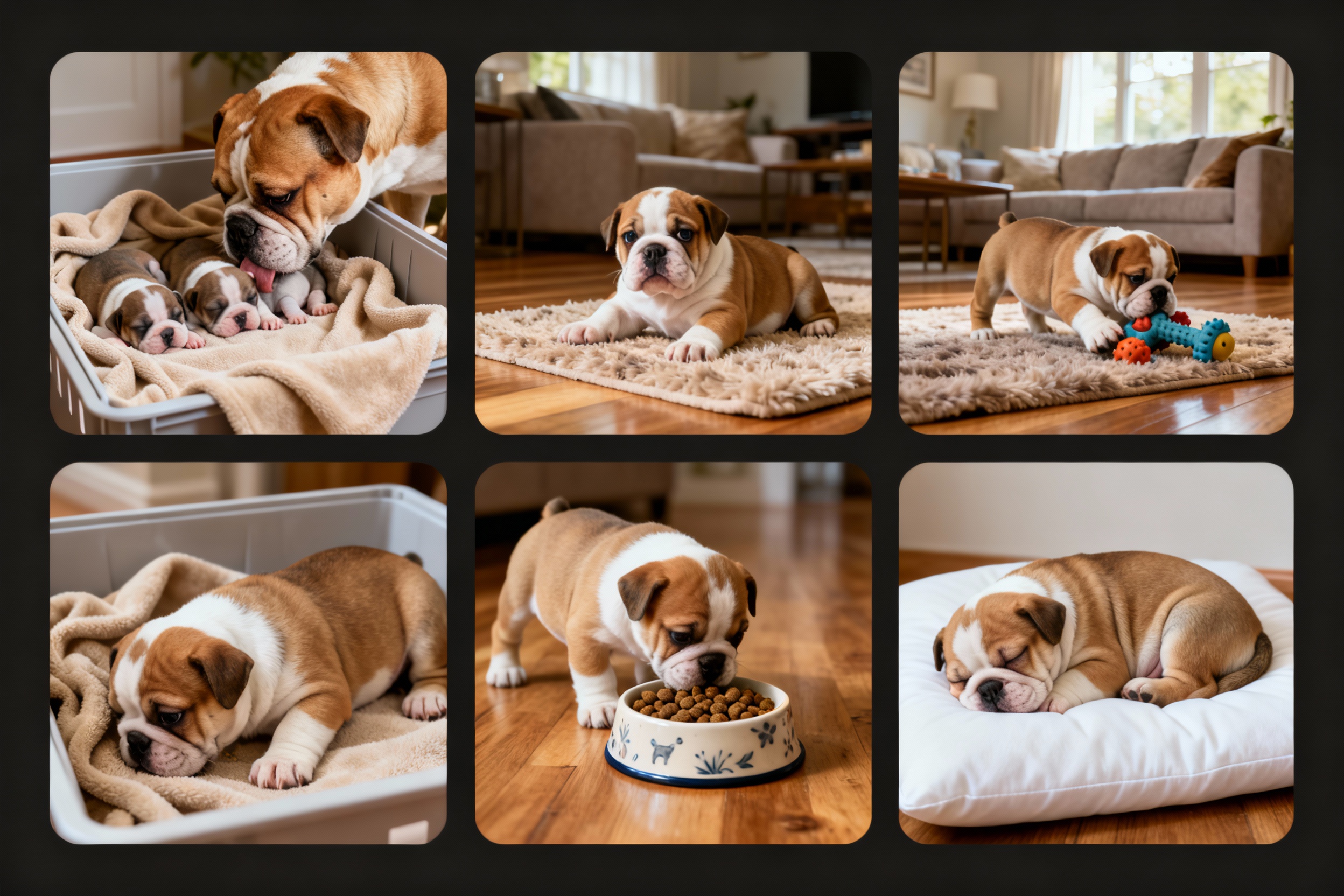
Bulldog puppies don’t tiptoe into your life—they belly-flop. Wrinkly faces, snorty snores, and a stubborn streak that could outlast a toddler’s tantrum. If you’re raising them from birth, you’ll play nurse, chef, teacher, and comedian, sometimes all in the same hour.
Ready to keep tiny tanks thriving? Let’s get into it.
Set Up the Whelping Zone
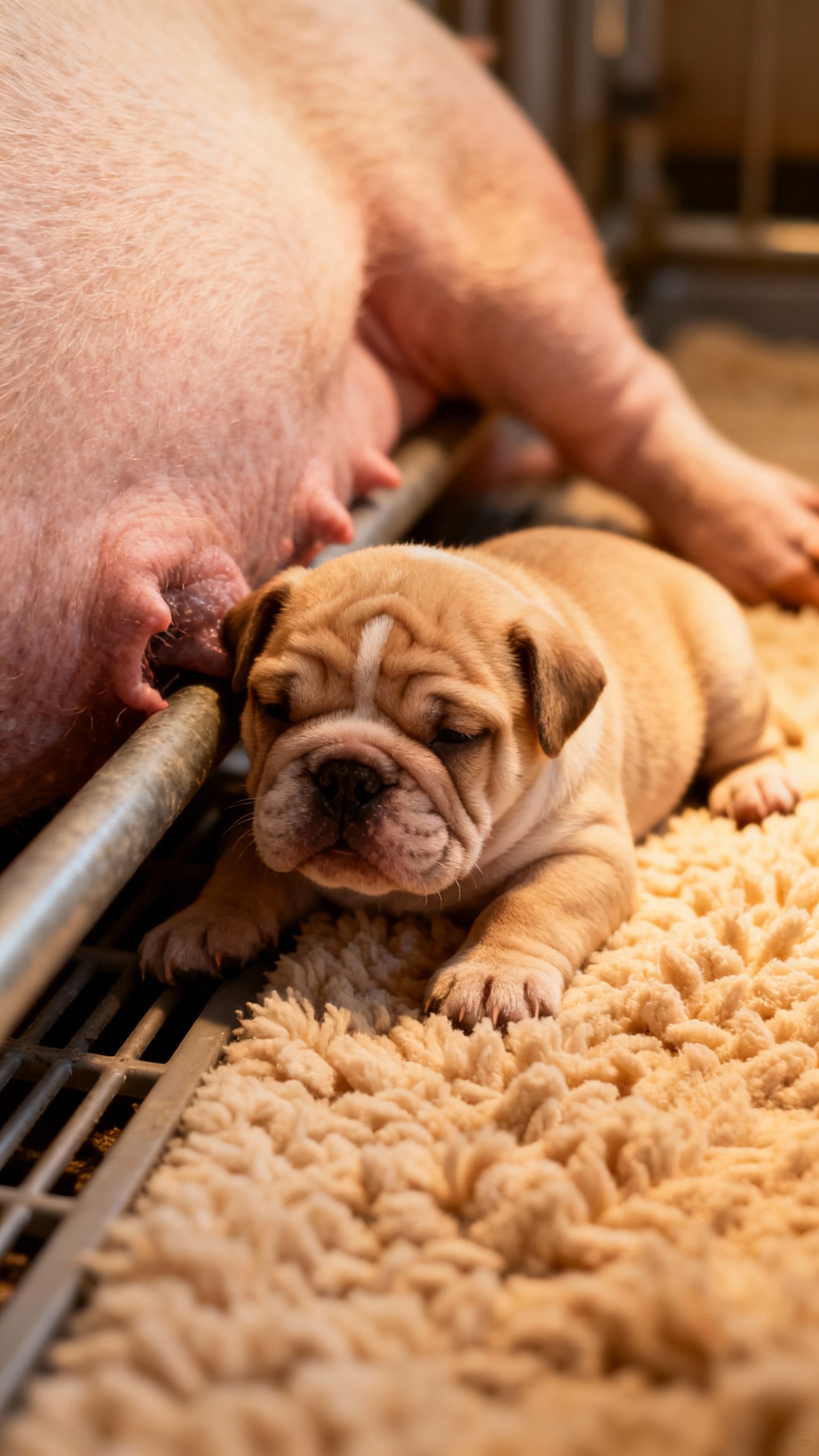
You need a safe, warm, easy-to-clean space where mom and pups can relax. Bulldogs can be clumsy moms, so create a setup that prevents accidental squishing.
Think low walls, non-slip bedding, and easy access for you.
- Whelping box: Large enough for mom to stretch, with pig rails to prevent crushing.
- Bedding: Washable pads or vet fleece. Skip loose blankets for newborns—they tangle.
- Temperature: 85–90°F (29–32°C) for week one, then drop a few degrees weekly to ~75°F.
- Heat source: Heat lamp or heating pad under half the box so pups can move if hot.
- Sanitation: Keep it spotless. Replace soiled bedding fast to prevent infections.
Bulldog Birth Reality Check
Many Bulldogs deliver via C-section due to their build.
If your girl is pregnant, plan with your vet for the birth method, timing, and emergency backup. Don’t wing it—Bulldogs do not reward improvisation.
The First 72 Hours: Survival and Routine
Those first days set the tone. Pups can’t regulate heat, see, or hear.
They can only eat, sleep, and squeak—and they need you watching like a hawk.
- Latch and nurse: Ensure each pup latches within the first 2 hours for colostrum. Rotate the smaller ones to the best nipples.
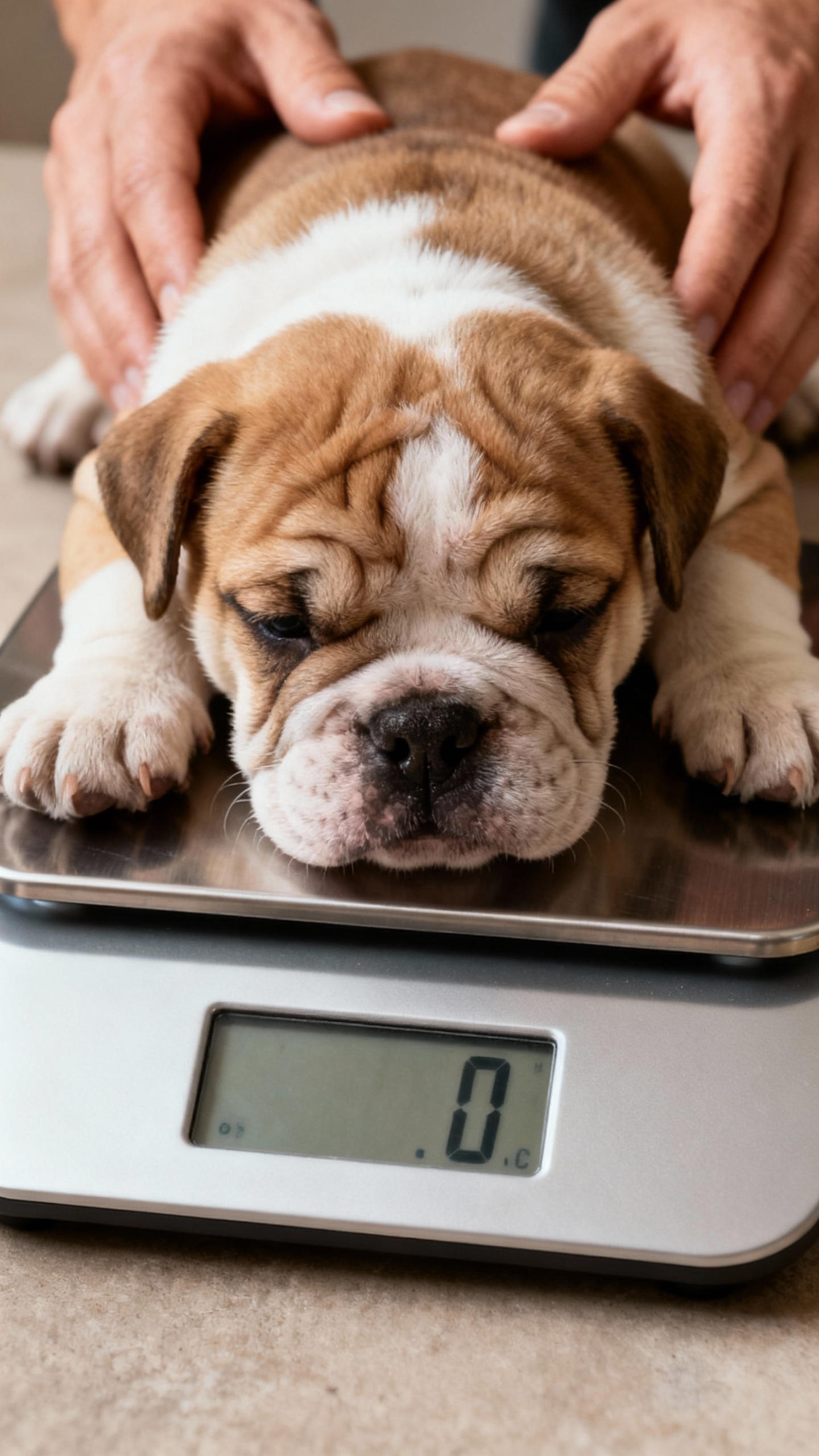
- Weigh daily: Use a gram scale. Expect 5–10% weight gain per day. No gain = problem.
- Hydration and energy: Lethargy, cold body temp, or constant crying means trouble.
Warm first, then feed.
- Supervised nursing: Many Bulldog moms need you present during feeds to avoid accidental smothering.
If Mom Can’t Nurse
Sometimes the milk doesn’t flow or mom needs recovery time after a C-section. Use a canine milk replacer (not cow’s milk, ever). Feed with a bottle or tube every 2–3 hours.
Burp pups gently and keep them warm. IMO, a kitchen timer will save your sanity.
Hygiene, Poop, and Other Glamorous Duties
Newborn puppies can’t pee or poop on their own. Mom usually stimulates them by licking after each feed.
If she doesn’t, congrats—you’re the butt wrangler.
- Stimulation: Use warm, damp cotton balls to rub the genital and anal areas after feeding.
- Umbilical care: Keep the area clean and dry. Watch for redness or swelling.
- Cleanliness: Wipe pups gently if they get messy. Swap bedding throughout the day.
When to Call the Vet
Call your vet for any pup with:
- No weight gain for 24 hours
- Persistent crying or labored breathing
- Diarrhea, dehydration, or pale gums
- Body temp below 96°F (35.5°C)
FYI, fast action saves lives with neonates.
Weeks 2–4: Growing, Eyes Open, Personalities Loading
By week two, eyes start to open.
Hearing follows. You’ll see wobbly attempts at walking and more interaction. It’s adorable—and a lot.
- Parasite control: Deworm at 2 and 4 weeks (per vet protocol).
- Claw trims: Weekly snips to protect mom’s belly and each other’s faces.
- Short, gentle handling: Daily cuddles build resilience and trust.
Introducing the Potty Area
Start a two-zone setup in the box: sleep area and a pee pad area.
Bulldogs love routine. Make it painfully obvious where to go, and you’ll thank yourself later.
Weaning Without the Chaos (Weeks 4–6)
When pups start chewing mom like she’s a chew toy, it’s time. Begin weaning with a mushy, nutrient-dense starter diet.
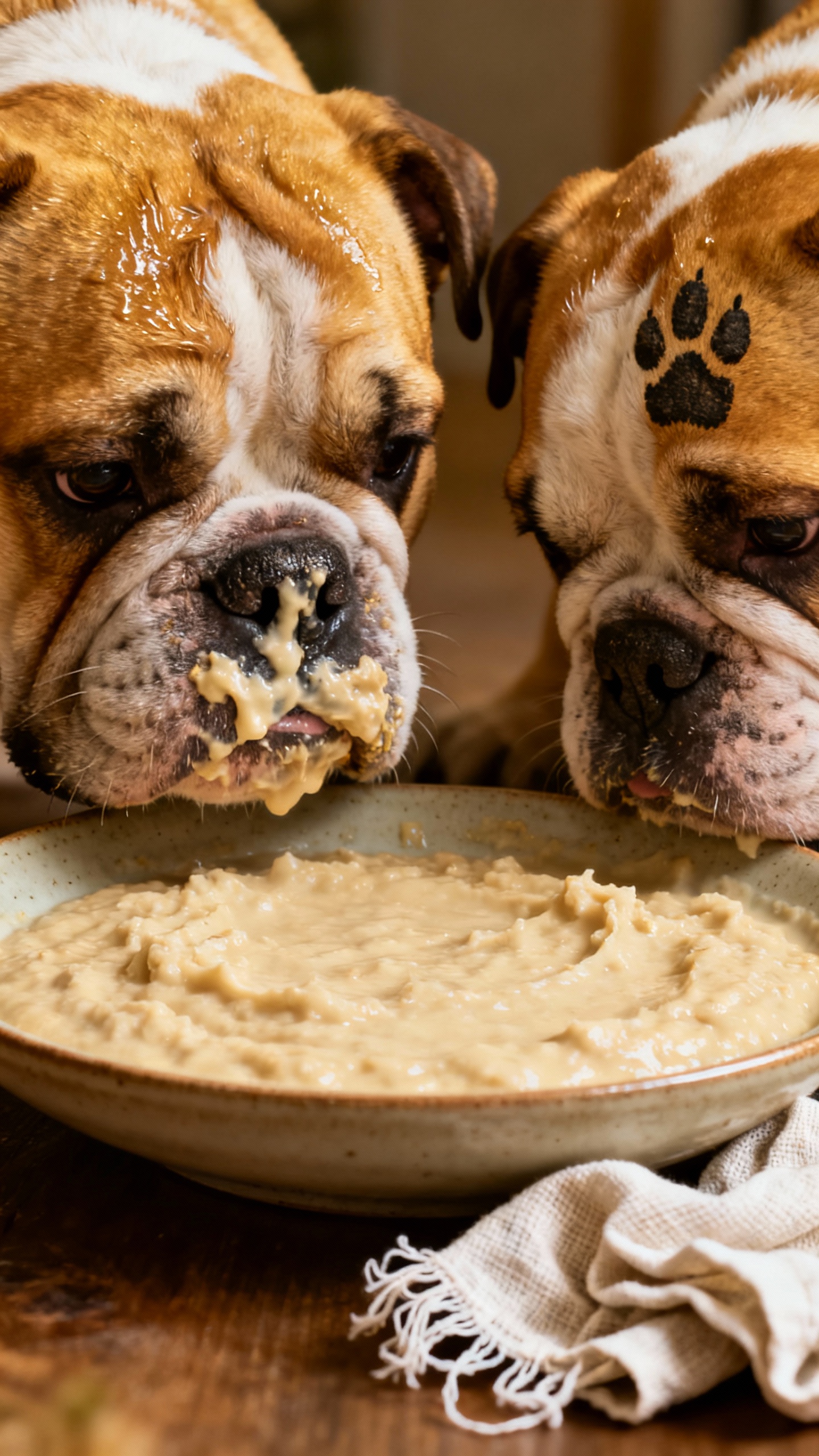
- Start with gruel: Puppy kibble soaked in warm water or milk replacer until soupy.
Offer 3–4x daily.
- Transition gradually: Over 1–2 weeks, make it thicker. Always offer fresh water.
- Monitor weight: Keep scaling daily. Any drop?
Increase feeding frequency or adjust formula.
- Limit mom’s access: Shorter nursing sessions prevent overdependence and sore nipples.
Preventing Aspiration
Serve on a shallow plate. Keep heads level, not tilted back. Wipe faces after eating—Bulldogs plus mush equals sticky disaster.
Socialization, Crate Basics, and Manners (Weeks 6–10)
This window shapes their behavior for life.
You want confident, curious pups, not anxious couch goblins.
- New experiences: Different surfaces, gentle noises, car rides, and short visits from calm people.
- Handling drills: Touch paws, ears, mouth. Reward calm behavior. Grooming later will thank you.
- Crate introduction: Cozy crate with treats and naps.
Never use it as punishment.
- Playtime rules: Interrupt rough play, redirect to toys, reward polite sit for attention.
Bulldog-Specific Care
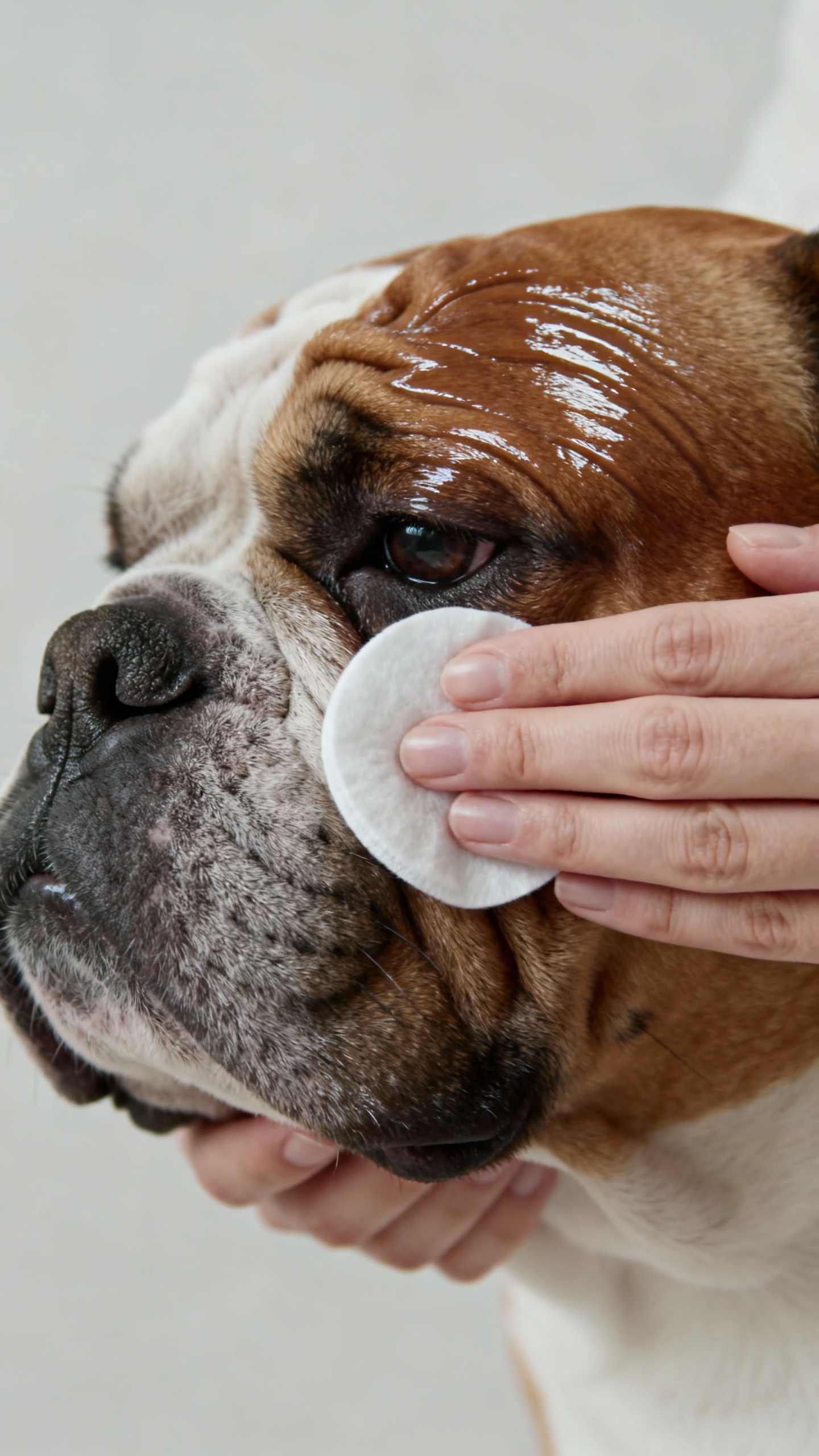
– Wrinkle care: Clean and dry facial folds 3–4x a week. Moisture causes yeast and funk. – Heat sensitivity: Keep them cool. Bulldogs overheat fast—indoors exercise only on hot days. – Breathing checks: Snorts are cute; gasping isn’t.
Monitor for signs of BOAS and ask your vet for guidance.
Health Milestones and Vet Stuff
Keep a simple schedule and you’ll stay ahead of problems. Bulldogs do best with proactive care.
- Vaccines: Typically start around 6–8 weeks, then every 3–4 weeks until 16 weeks. Follow your vet’s plan.
- Deworming: Repeat at 6 and 8 weeks.
Do fecal checks to confirm.
- Microchipping: Do it before pups go to new homes.
- Health checks: Monitor nostrils, palate, hips, skin, and tail pocket. Bulldogs have…features.
Weight and Body Condition
Bulldogs grow fast, but you don’t want pudgy pups. You should feel ribs under a thin layer of fat. Overfeeding stresses joints and breathing. Feed for steady growth, not chonk glory.
Setting Up Future Owners for Success
If your pups go to new homes, send them off like the rockstars they are.
A good handoff prevents returns and heartbreak.
- Puppy packet: Vaccination records, microchip info, feeding guide, crate schedule, and basic training tips.
- 48–72 hours of food: Reduce tummy drama during transition.
- Comfort item: A blanket that smells like mom/littermates.
- Honest convo: Explain bulldog maintenance: wrinkle care, heat limits, insurance costs, and vet needs. No surprises.
Common Mistakes to Dodge
Let’s save you some stress (and a few emergency vet bills).
- Ignoring temperature control: Cold pups can’t digest, hot pups overheat fast. Watch it like a hawk.
- Free-feeding early: Leads to diarrhea and aspiration.
Stick to scheduled meals.
- Skipping weight checks: Numbers tell the truth. Feelings don’t.
- Under-socializing: Shy bulldogs become stubborn bulldogs. Introduce the world early and gently.
- Overexerting: Bulldogs are not joggers.
Keep exercise short and purposeful.
FAQ
How often should newborn bulldog puppies eat?
Every 2–3 hours for the first week, then stretch to every 3–4 hours as they gain strength. If bottle-feeding, keep feeds small and frequent. Consistency beats giant meals.
When do bulldog puppies open their eyes?
Usually around 10–14 days.
Don’t force lids open. If you see swelling or discharge, call your vet—it could be an infection.
What temperature should I keep the whelping area?
Around 85–90°F (29–32°C) for week one, then lower by a few degrees each week to about 75°F by week four. Always give a warm side and a cooler side so pups can self-regulate.
How do I know if a puppy is failing to thrive?
Watch for no weight gain, constant crying, weakness, or chilling.
Weigh daily, track trends, and intervene early. Warm first, then feed, and loop in your vet immediately.
When can bulldog puppies go to new homes?
At 8–10 weeks, after at least one vaccine and a clean bill of health. Earlier placements can harm social development and increase behavior issues.
Do bulldogs need special training?
Yes—short, upbeat sessions with high-value rewards.
Bulldogs respond to fun and food, not lectures. Keep it simple and celebrate tiny wins, IMO.
Conclusion
Raising bulldog puppies from birth takes planning, patience, and a sense of humor. You’ll clean more, sleep less, and fall hard for every squishy face.
Keep them warm, fed, clean, and socialized, and you’ll raise confident little charmers. And when they finally nap? Enjoy the silence—it’s your victory lap.
Leave a Reply