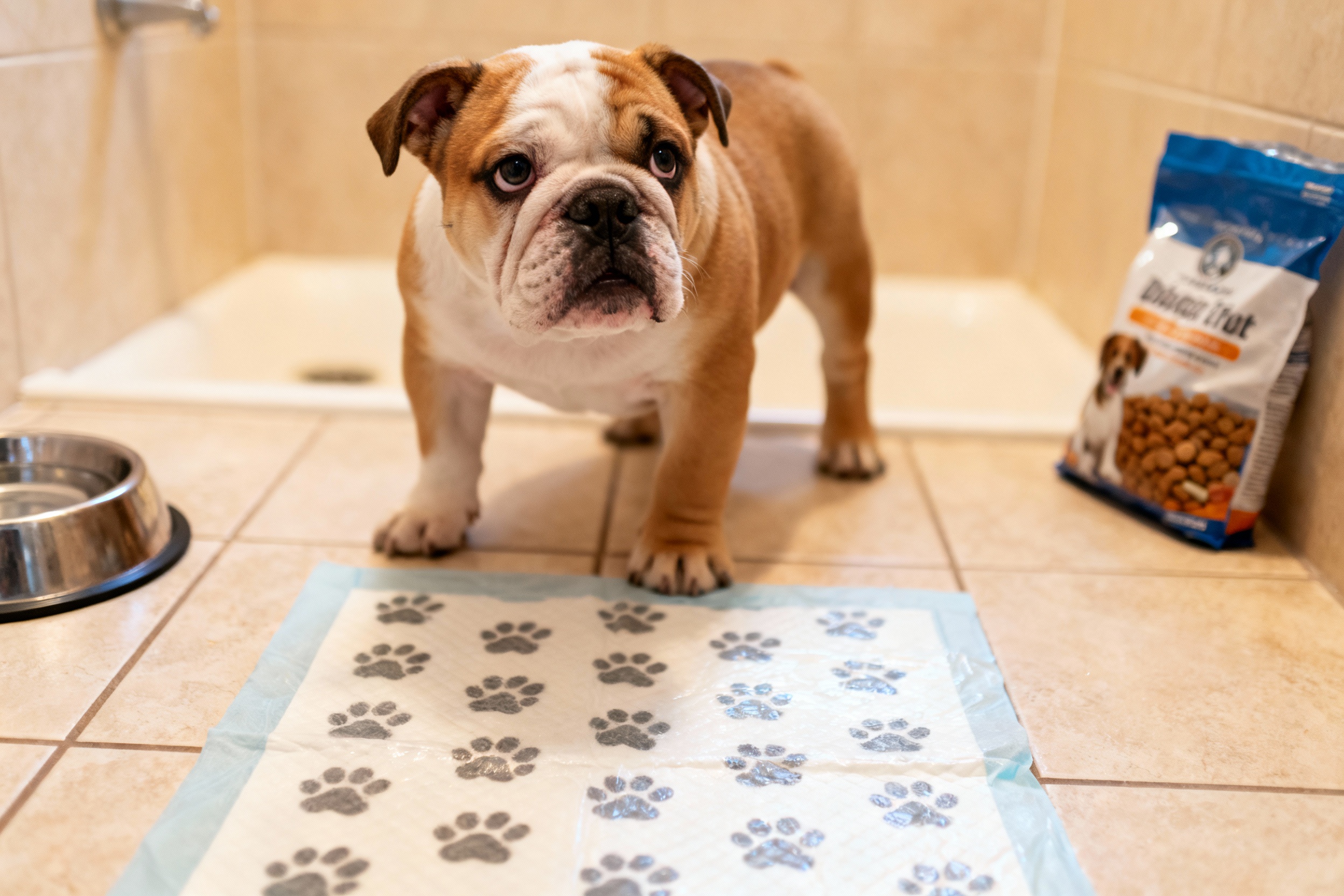
Potty training a bulldog puppy isn’t rocket science—but it’s not a walk in the park either (well, actually, it kind of is). Bulldogs bring charm, stubbornness, and a bladder that needs a schedule. If you want fewer accidents and more high-fives, you need a plan, patience, and a sense of humor.
Ready to turn chaos into routine? Let’s go.
Know Your Bulldog: The Stubborn Sweetheart

Bulldog puppies will love you endlessly and test your patience daily. They respond to routines and rewards, but they also negotiate like tiny, wrinkled diplomats. Key truth: Bulldogs aren’t “dumb”; they’re deliberate.
If they don’t see the point, they’ll stall. So make the point with treats, praise, and consistency. Bladder basics: Puppies can generally hold it for their age in months plus one hour. A 3-month-old?
Around 4 hours—during the day. Nighttime stretches longer once they settle into sleep.
Set Up Your Potty Zone and Tools
You need a designated potty spot and the right gear. If you wing it, your pup will pick their own “spot” (usually a rug you like). Essentials to grab:
- Crate sized so your puppy can stand up, turn around, and lie down
- Enzyme cleaner (destroys odor so they don’t replay crimes)
- High-value treats (pea-sized, soft, irresistible)
- Leash for guided potty trips
- Baby gates or a playpen to limit access
Pick one potty location outside and stick to it.
Consistency builds your puppy’s mental map.

Create a Rockstar Potty Schedule
Bulldogs thrive with structure. You’ll feel like a bathroom valet at first, but the routine pays off fast. Take your puppy out:
- First thing in the morning
- After every meal
- After naps
- After playtime
- Before bed
- Every 2–3 hours between those events
Leash them and head straight to the potty zone. No wandering.
No sniff-safari. Give a cue like “Go potty.” When they go, praise like they just invented Wi‑Fi and reward immediately.
What goes in, must come out
Feed on a schedule—same food, same times. Bulldogs do better with predictable digestion.
Free-feeding? Hard pass.
Use the Crate: Your Secret Weapon
Crate training isn’t mean; it’s management. Dogs don’t like to soil their sleeping area, and the crate helps them learn to hold it. Crate rules that work:
- Right size only—too big and they’ll pick a corner for a toilet
- Short, positive sessions with a chew or stuffed toy
- Never use the crate as punishment
- Out for potty breaks before and after crate time
If they cry at night, wait a minute.
If the cry escalates, take them out calmly, no chatty party, potty only, then back to bed. FYI: being boring at 2 a.m. is a superpower.
Pen vs. crate
Use a playpen for short stints when you need to cook or shower. Keep the area small with bed, water, and a safe chew.
The crate remains the primary tool for night and nap times.

Spot the Signs and Act Fast
Bulldogs aren’t subtle, but you need to pay attention. If you miss the cues, accidents happen. Watch for:
- Circling or frantic sniffing
- Heading to a corner or under a table
- Sudden quiet during play
- Whining and pacing near the door
When you see it, scoop them up or leash them and head to the spot. No lectures.
Just action. If they start to go inside, a quick “Ah-ah!” interrupts, then straight outside.
Reward the Right Way

Timing matters. Reward within 1–2 seconds of finishing, not after coming back inside.
Bulldogs connect cause and effect fast—use that. Great rewards include:
- Tiny soft treats (think training treats or torn-up chicken)
- Happy praise and petting
- 30 seconds of play if they love toys
IMO, food wins the early game. Fade to praise later once the habit locks in.
Choose a potty cue
Use the same phrase every time: “Go potty,” “Hurry up,” whatever. Say it once when they start sniffing, not on loop like a broken record.
Handle Accidents Like a Pro
Accidents happen.
It’s not sabotage—it’s biology and timing. Clean it and move on. Do this:
- Blot up, then use an enzyme cleaner to erase the smell
- Increase supervision and shorten the time between breaks
- Review your schedule—did they just eat, nap, or play?
Do not:
- Rub their nose in it (outdated, cruel, and useless)
- Scold after the fact—they won’t connect it
- Let them watch you clean like it’s a show
If they squat in front of you, interrupt gently and go outside. Reward if they finish outdoors.
Boom—teachable moment.
Common Bulldog-Specific Hurdles
Bulldogs can be stubborn, sensitive, and weather-averse. Rain? They vote no.
Cold? Also no. Hot?
Definitely no. Workarounds:
- Use a covered potty area or umbrella for rain days
- Keep trips short and purposeful in extreme temps
- Bring a few treats to keep morale high
- Wipe paws after rain if your pup hates wet feet
Health note: If your puppy pees constantly, strains, or suddenly regresses, call your vet. UTIs and GI upsets can derail training.
Bell training (optional but slick)
Hang a bell by the door. Each potty trip, cue “Touch,” help them tap the bell with their nose or paw, then go out immediately.
Reward outside. Soon they’ll ring to request. FYI: teach it only for potty, not playtime, or you’ll become a doorman.
Sample Day Plan That Actually Works
Here’s a simple structure you can tune to your schedule.
Consistency beats perfection.
- Wake up: Straight outside, cue, reward
- Breakfast: Back out 10–15 minutes after eating
- Play/supervise: Short play, then out
- Crate nap: Out immediately after waking
- Lunch (if on 3 meals): Repeat eat–out rhythm
- Training/play: Keep sessions short, then out
- Dinner: Out 10–15 minutes after
- Evening calm: One more trip before bed
- Bedtime: Crate; set an alarm for a middle-of-the-night potty break for very young pups
If you work away from home, arrange a midday break or two for the first few months. No schedule, no progress—IMO that’s the make-or-break factor.
How Long Until It Clicks?
Expect 2–3 months for solid reliability, sometimes longer. Bulldogs mature at their own pace.
Measure progress by fewer accidents, faster potty trips, and your own blood pressure dropping. Graduation signs:
- Dry crate consistently
- Asking to go out
- Accident-free for 2–3 weeks
Even then, keep the routine. Freedom expands slowly, not all at once. Think dimmer switch, not light switch.
FAQ
Should I use pee pads with a bulldog puppy?
You can, but it adds an extra step.
Pee pads teach “inside is okay sometimes,” which can confuse your pup. If you live in an apartment or face weather chaos, use pads near the door and gradually move them outside until they’re gone.
What if my bulldog refuses to go in the rain?
Go to the same spot, use a big umbrella or a covered area, and bring high-value treats. Keep it short—out, cue, reward, back in.
You can also lay down a small patch of artificial turf for rainy days. Consistency beats drama.
How do I stop my puppy from sneaking off to potty?
Use gates or a playpen to shrink their world. Keep a leash on them indoors for “tether training” so they stick near you.
If they disappear, you’ve given too much freedom too soon. Adjust access, not expectations.
Is my puppy being spiteful with accidents?
Nope. Dogs don’t do spite.
They do habits, stress, and biology. If accidents increase, tighten the schedule, rule out medical issues, and reset to basics for a week.
How many treats is too many?
Use tiny pieces—think pea-sized or smaller. You reward only for outdoor potty success.
If your pup gets pudgy, swap some treats for part of their kibble ration or use a mix of food and praise.
Can I train a bulldog to use a specific spot in the yard?
Yes, and it’s smart. Always go to that spot on leash first, give the cue, reward there, then release to explore. Over time, they’ll head there automatically, which keeps the rest of your yard cleaner.
Conclusion
Toilet training a bulldog puppy takes structure, speed, and a sense of humor.
Build a routine, supervise like a hawk, and reward the wins right away. Stick to one spot, clean accidents properly, and keep your cool. Do that, and your stubborn sweetheart turns into a potty pro—wrinkles, snorts, and all.
Leave a Reply