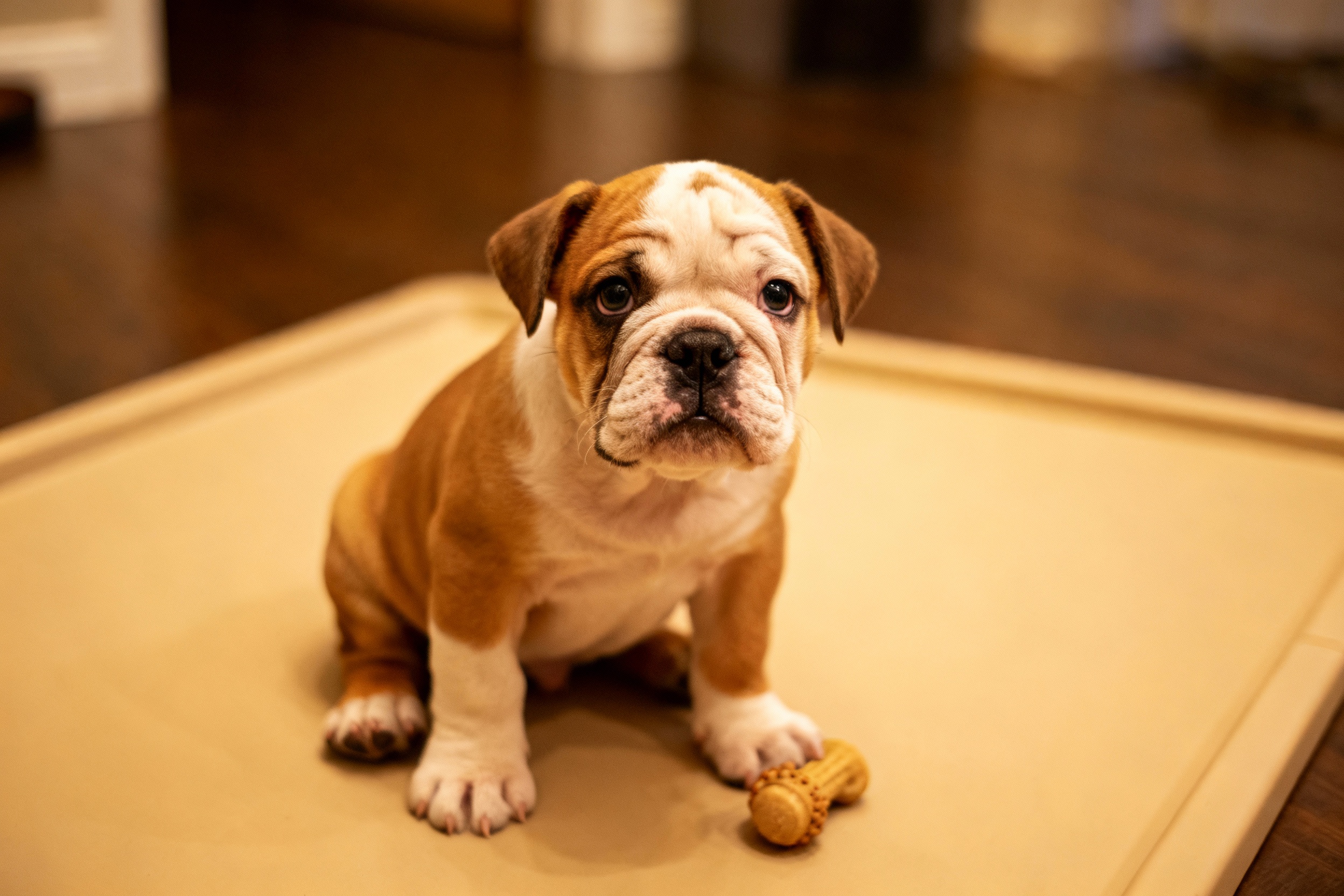
Your 7-week-old bulldog puppy just arrived, and your heart already melted. Now what? You’ve got a wrinkly, snorty potato with feet who needs structure, sleep, and a plan.
Training at this age won’t look like military drills—it’s gentle, bite-sized lessons that build a confident, happy bulldog. Let’s set you up so those first weeks feel less chaotic and a lot more “aww.”
Set Your Puppy Up for Success (Before Training)
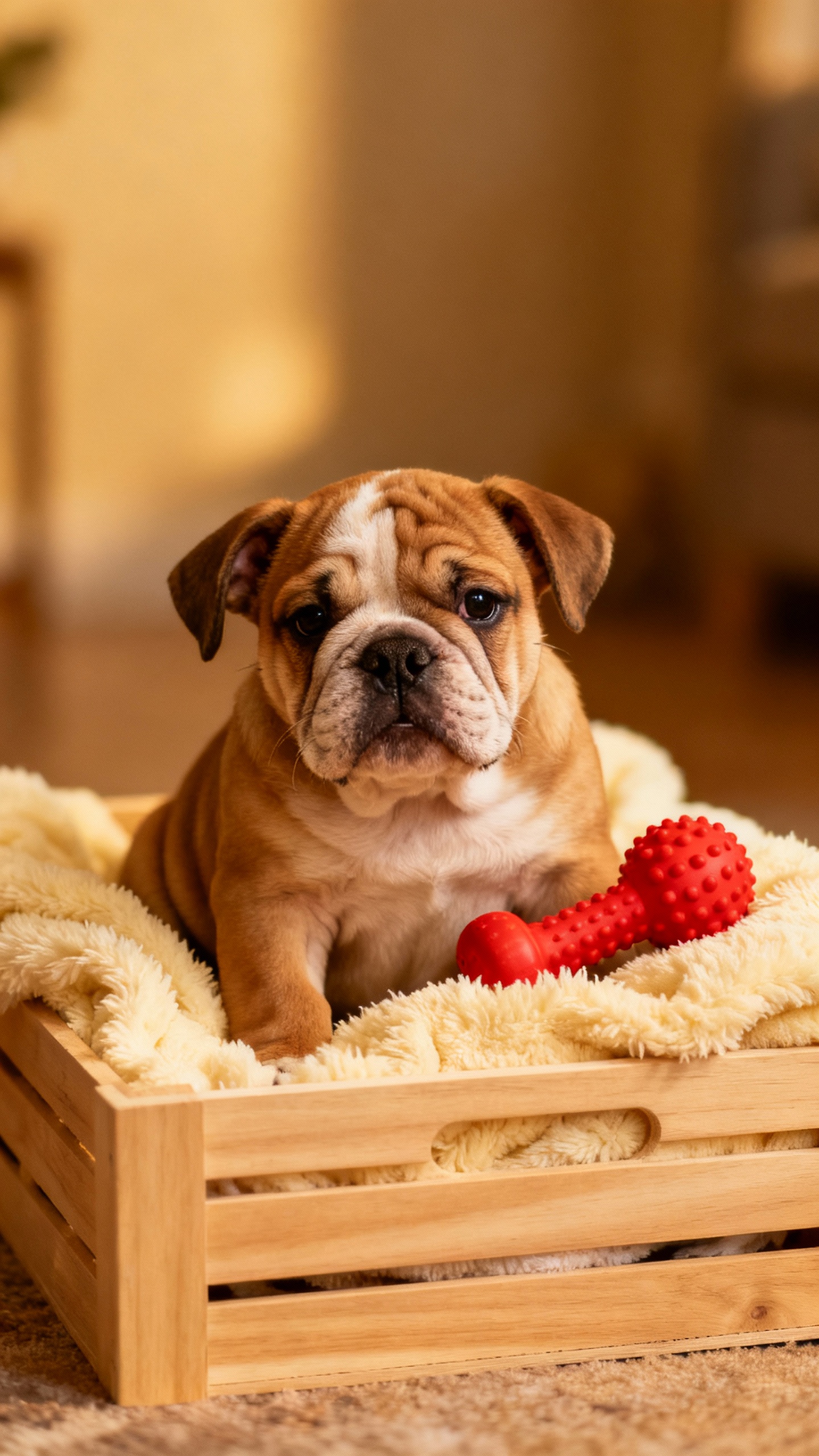
Your bulldog baby needs a safe setup first. Create a “tiny world” with a crate, a small playpen, a waterproof mat, and a couple of chew toys.
Keep the space calm and predictable—chaos equals accidents and confusion. Bulldog puppy must-haves:
- Crate: Size it so your pup can stand, turn, and lie down. Too big invites accidents.
- Playpen: A gated area keeps your puppy safe when you can’t watch 100%.
- Chew toys: Soft rubber toys, puppy-safe chews—save your toes.
- Food + water schedule: Consistent times help with potty timing.
Bulldog-Specific Notes
Bulldogs overheat easily—even babies. Keep the space cool, skip heated pads, and avoid rough play after meals.
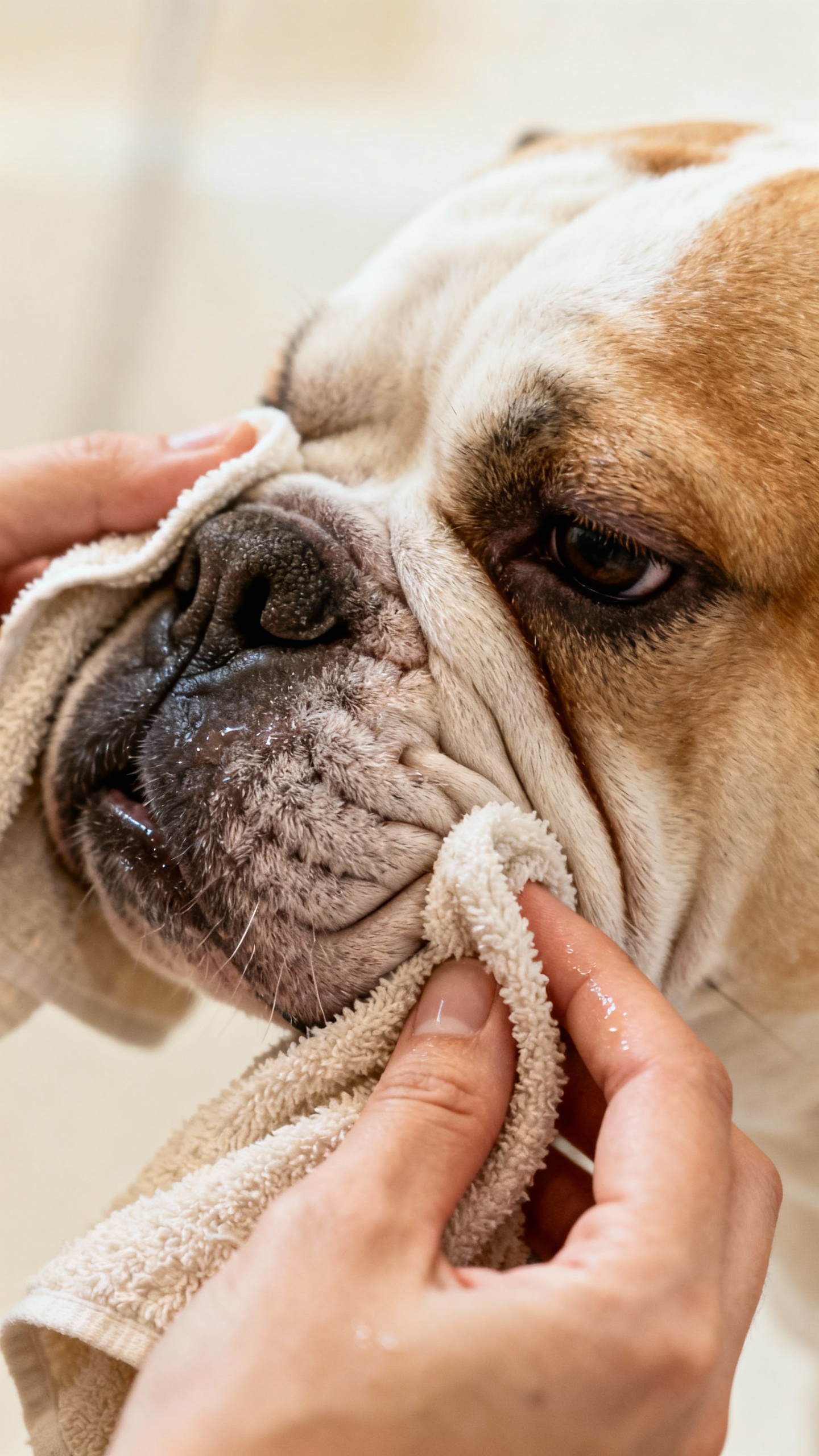
And clean those face folds daily with a damp cloth and dry them well. Funky folds? Not cute.
Potty Training Without Tears (Yours or Theirs)
At 7 weeks, bladder control equals “not much.” You’re laying foundations, not expecting perfection.
Use a tight routine, tons of praise, and reasonable expectations. Simple potty schedule:
- Right after waking
- After eating or drinking
- After play sessions
- Every 45–60 minutes when awake
When you head outside, pick one potty spot. Say a cue like “Go potty” as they start, not before. When they finish, celebrate like they discovered fire—treat within 2 seconds.
If You Live in an Apartment
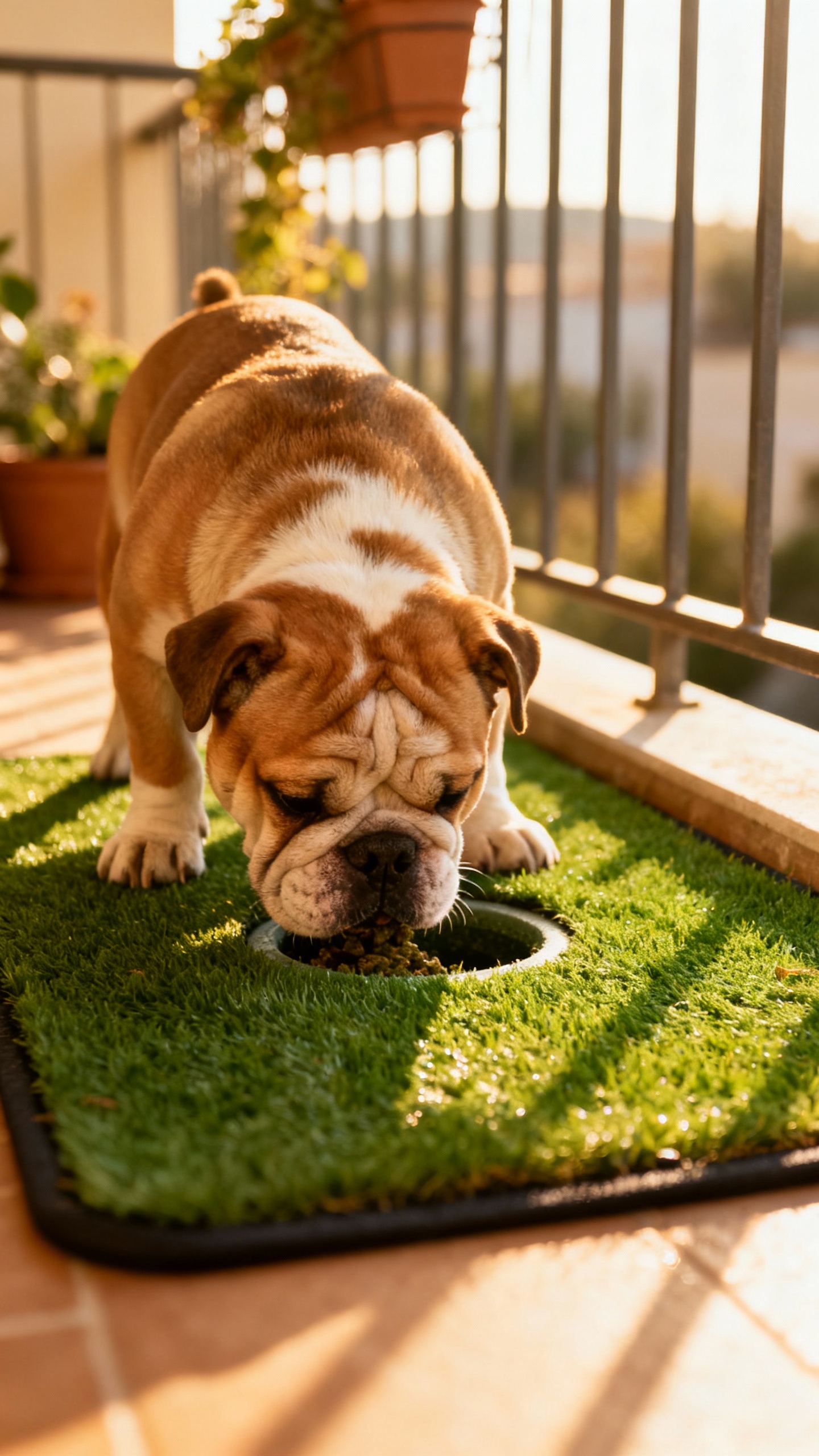
Use a balcony turf pad or a specific pee pad area as a temporary step.
Still take your pup outside often so the final goal stays clear. FYI, bulldogs can be stubborn. Consistency beats arguments.
Crate Training: The Cozy Den Strategy
Crate training helps with potty training and teaches your pup to self-soothe.
And no, it’s not “mean” when done right—it’s bedtime, not jail time. Step-by-step:
- Make the crate comfy with a blanket and a safe chew.
- Toss treats inside and let your pup explore. No door shut yet.
- Feed meals inside the crate for positive vibes.
- Close the door for a minute or two while you sit nearby. Gradually increase.
Keep crate sessions short and sweet during the day.
At night, place the crate near your bed so you can hear those tiny “I gotta go” whimpers. Nighttime potty trips will happen. It’s normal.
Coffee helps.
How Long Is Too Long?
At 7 weeks, aim for 1–2 hours max in the crate when awake. Overnight, they might make 3–4 hours, maybe. Don’t push it—accidents in the crate slow progress.
Training Basics: Tiny Lessons, Big Wins
Your puppy’s brain is a goldfish with wrinkles right now.
Keep sessions super short: 2–3 minutes, a few times a day. Use soft, pea-sized treats and a happy voice. Start with:
- Name recognition: Say their name once. When they look, mark it with “Yes!” and treat.
- Come: Crouch down, open arms, “Puppy, come!” Reward like a game show host.
- Sit: Lure the nose up with a treat, bottom hits the floor, “Yes!” + treat.
- Leave it (intro): Show a treat in your fist.
When they back off, “Yes!” + treat from the other hand.
End every session while your pup still wants more. Quit before the meltdown. IMO, “leave it” pays rent for the next 10 years.
Socialization (But Do It Smart)
Between 7–16 weeks, puppies soak up the world like sponges.
You want confident, not reckless. Since vaccines aren’t complete yet, invite healthy, vaccinated dog friends over and carry your pup in public spaces to people-watch. Expose your pup to:
- Different floor textures (carpet, tile, grass, rubber mats)
- Sounds (doorbells, vacuum, traffic at a distance)
- People in hats, glasses, hoodies, wheelchairs, etc.
Pair every new thing with treats. New thing appears?
Treat buffet. Scared face? Back up, reduce intensity, and try again later.
Biting, Chewing, and Zoomies (aka Baby Shark Season)
Your bulldog will chomp anything they can reach.
Because puppy. You can shape what’s allowed without sounding like a supervillain. When your pup bites:
- Redirect to a chew toy immediately.
- If they keep coming, stand up and go silent for 5–10 seconds. Party’s over.
- Reward calm behavior quickly.
Calm pays.
Rotate toys so novelty stays high. If the nip fest escalates, your pup likely needs a nap or a potty break—not a lecture.
Teething Timeline
Puppy teeth stick around until about 12–16 weeks, then the swap begins. Offer soft rubber chews and chilled teething toys.
Skip rock-hard chews; bulldog teeth and jaws don’t need the extra challenge.
Feeding, Sleep, and Energy: The Real Schedule
A 7-week-old bulldog needs tons of sleep—like 18–20 hours a day. Training flops when your pup is overtired. Build your day around naps, not the other way around. Sample rhythm (adjust to your life):
- Wake, potty, brief play, breakfast, potty, nap
- Short training, potty, play chew, nap
- Lunch, potty, calm play, nap
- Gentle socialization, potty, nap
- Dinner, potty, quiet play, bedtime routine
Feed a high-quality puppy formula designed for medium breeds.
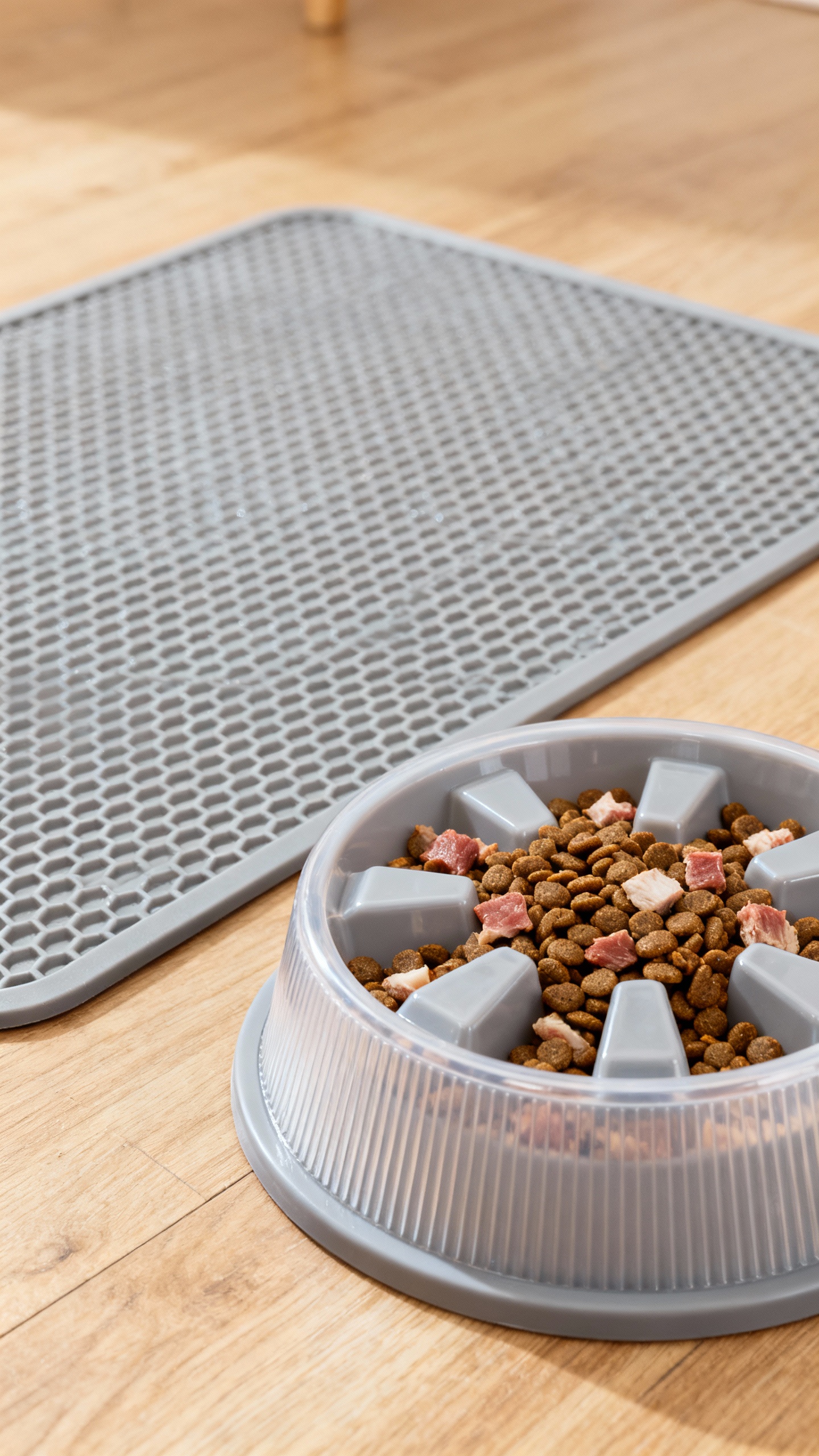
Bulldogs tend to gain fast, so measure meals. Too much weight + short snout = breathing drama you don’t want. FYI: ask your vet about DHA-rich foods to support brain development.
Exercise: Keep It Chill
Short play sessions on soft surfaces beat long walks at this age.
Avoid stairs, jumping off couches, and slippery floors. Those joints and growth plates need time and patience.
Handling, Grooming, and Vet-Ready Skills
Make grooming a party now so adult-you says thanks later. Bulldogs require regular face and skin upkeep, so normalize touch everywhere—gently. Practice daily:
- Lift lips and peek at teeth, treat.
- Touch paws and nails, treat.
- Wipe face folds, treat.
- Brief brush sessions, treat.
Use super soft wipes for folds and dry thoroughly.
Moisture equals irritation. Pair every handling moment with something yummy so the vet becomes less “doom” and more “snacks.”
Car Rides and Collars
Introduce the collar for a few minutes at a time with treats. Add a lightweight harness later.
For car rides, secure your pup in a crash-tested crate or puppy seat with a harness attachment. Short trips, treat party at the end. No noses out the window—those eyes are precious.
Common Mistakes to Avoid
- Too much freedom too soon: Accidents and chewing happen fast.
Keep the playpen useful.
- Inconsistent schedules: Bulldogs thrive on predictable routines.
- Scolding for accidents: Scolding teaches hiding, not potty skills. Clean with enzymatic cleaner and move on.
- Overexertion: Watch for panting, slowing down, or flopping. Bulldogs overheat quickly.
- Neglecting socialization: Miss this window and you pay later with fear or stubbornness (more stubbornness, anyway).
FAQ
Can I start leash training at 7 weeks?
Yes, lightly.
Clip on a lightweight leash indoors for a minute or two while you reward following you. Make it a casual game. Formal walks can wait until vaccines progress and your pup handles a harness calmly.
How often should I feed a 7-week-old bulldog?
Offer three to four small meals per day.
Keep meal times consistent to help with potty timing. If your pup inhales food, use a slow feeder to prevent gulping air.
My puppy cries in the crate—what do I do?
Start with micro-sessions and stuff a safe chew. If crying spikes, you likely moved too fast.
Shorten the time, sit nearby, and build up gradually. Calm exits only—no dramatic rescues mid-wail unless it’s a potty emergency.
When should I start obedience classes?
Once your vet says it’s safe to attend a puppy class that requires vaccine proof—often around 10–12 weeks. Meanwhile, keep socializing at home and with known vaccinated dogs.
Early positive experiences beat any fancy command list.
What vaccines or health checks are urgent?
Your pup should see the vet ASAP for a wellness exam, deworming plan, and a vaccine schedule (typically DHPP series, then rabies later). Ask about parasite prevention and bulldog-specific concerns like breathing, skin, and eye care.
How long until potty training “clicks”?
Most puppies show real progress by 12–16 weeks with consistent routines. At 7 weeks, you’re building habits.
Celebrate small wins, because those stack fast.
Conclusion
Training a 7-week-old bulldog puppy looks simple: tiny lessons, naps on repeat, and heaps of praise. Keep sessions short, routines steady, and expectations realistic. You’ll dodge common pitfalls, raise a confident little hippo, and, IMO, enjoy the process way more.
Stick with it and that stubborn streak turns into loyal, goofy brilliance.
Leave a Reply