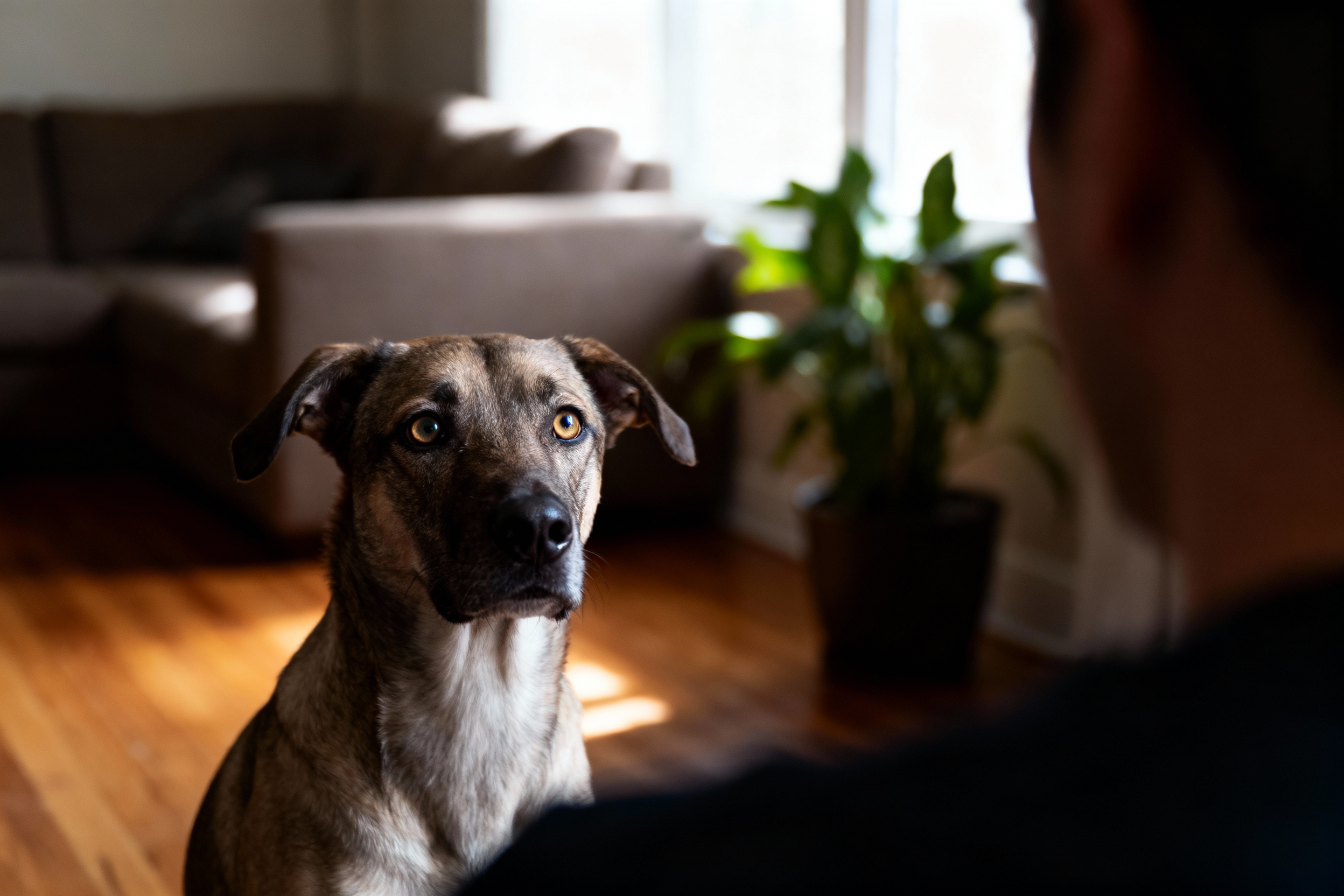
Your dog locks eyes with you, unblinking, like they’re trying to download your soul. Cute? A little creepy?
Both can be true. That stare means something—usually several things—and once you decode it, you’ll stop asking, “Buddy, are you okay?” and start nodding like, “Got it. Snack time.”
The Look: What That Unblinking Stare Actually Means

You don’t get one reason—you get a menu.
Dogs use eye contact like we use texts: to ask, remind, bond, and sometimes complain. The context matters more than the stare itself. Common meanings:
- Connection: Your dog feels close to you and wants to bond.
- Expectation: They want something—food, a walk, the squeaky hedgehog.
- Curiosity: You’re doing something weird and they’re trying to figure it out.
- Checking in: They look to you for guidance, reassurance, or cues.
- Discomfort: Very rare in a loved home, but a hard stare with stiff body language can mean stress.
Context is king
Are they wagging softly with relaxed ears? That’s love.
Are they stiff, mouth closed, tail high or tucked? That’s caution. Same stare, wildly different vibes.
Bonding: The “I Love You” Stare
Yes, your dog literally loves staring at you.
When you make soft eye contact, both of your bodies release oxytocin—the cuddle hormone. That’s the warm fuzzy feeling you get during a snuggle session or when you whisper “who’s a good dog” for the hundredth time.
How to respond
- Hold a gentle gaze for a few seconds.
- Smile and speak softly.
- Give a slow blink. Dogs read that as calm and safe.
If they flop over for belly rubs afterward, congrats—you nailed the vibe.

The “What’s In It For Me?” Stare
Let’s be honest: your dog is part philosopher, part negotiator.
That unblinking look often means: pay up. They’ve learned that staring gets results because you reward it—treats, toys, letting them on the couch despite the rules you made five minutes ago. Signs it’s a “gimme” stare:
- It happens near mealtimes.
- They look from your face to the fridge, then back, like a furry GPS.
- They stare at the leash, then at you, then at the door. Subtle.
How to handle it without creating a tiny tyrant
- Ask for a behavior (sit, down, place) before giving what they want.
- Reward calm, not pushy staring.
- Keep mealtimes consistent so they don’t stare you into submission at 4 PM.
Reading the Body: When Staring Signals Stress
Not all stares come with heart eyes.
Some carry tension. We need to read the whole dog, not just the pupils. Possible stress signs with a hard stare:
- Stiff body, still tail, closed mouth
- Whale eye (you can see the whites)
- Lip licking, yawning (not sleepy), turning the head away
- Hackles raised, low growl (take this seriously, IMO)
If you see that combo, don’t punish the warning. Create space, reduce pressure, and figure out the trigger.
Punishing a growl only removes the warning—you still get the bite risk.
When to call a pro
If the staring happens with aggression, guarding food or toys, or around kids/guests, get help from a certified trainer or veterinary behaviorist. It’s fixable. Don’t DIY a safety issue.

Decoding the “Working Dog” Stare
Some dogs are bred to stare.
Herding breeds like Border Collies use their gaze as a tool—called “eye”—to control movement. You’ll see laser focus, head low, body still, waiting for your next cue. If you’ve got a stare champion:
- Offer jobs: nose work, herding lessons, agility, fetch with rules.
- Teach impulse control: sit-stay, place, release words.
- Give mental workouts: puzzle feeders, scent games, trick training.
FYI: A tired mind beats a tired body for these dogs. You can throw the ball forever and still lose.
“Are You Okay?” Check-Ins

Dogs stare to read you.
They watch your face and posture to decide what comes next. If you sigh dramatically, they’ll tilt their head. If you put on sneakers, they’ll vibe-check: walk time or betrayal (gym)? Use it to your advantage:
- Pair hand signals with cues.
Dogs love visual info.
- Be consistent with routines. You’ll get fewer confused stares.
- Reward calm eye contact during training. It builds focus and confidence.
Teach “look at me”
- Hold a treat by your eyes.
When they glance at your face, mark “yes” and reward.
- Repeat until they offer eye contact on their own.
- Add the cue “look.”
You’ll turn random staring into a useful skill.
Health Check: When Blinking Matters
Dogs blink less than humans, but constant, glassy, unblinking eyes can sometimes point to issues. Pain or discomfort changes how they use their eyes and face. Watch for:
- Redness, discharge, squinting, pawing at the eye
- Light sensitivity or bumping into things
- Sudden behavioral changes: clinginess, agitation, or avoidance
If you see these, book a vet visit. Better to rule out eye problems, pain, or neurological issues than hope Google fixes it.
How To Respond To The Stare Without Making It Weird
You don’t need to win a staring contest.
You just need to answer the question the stare asks. Quick responses menu:
- Affection stare? Soft eyes back, slow blink, head scratch.
- Asking for stuff? Ask for a sit, then reward if appropriate.
- Stressed stare? Create space, lower intensity, redirect gently.
- Focus stare during training? Mark and reward. That’s gold.
IMO, the best rule: reinforce calm, clear communication. It keeps the relationship balanced and sweet.
FAQ
Is it okay to stare back at my dog?
Yes, with soft eyes and a relaxed face.
Keep it short and friendly. Don’t lean over or lock in like a statue—some dogs find that pushy. Think “fond gaze,” not “interrogation lamp.”
Why does my dog stare while pooping?
They feel vulnerable and want to make sure you’ve got their back.
In the wild, pack members watch for threats during “business time.” It’s basically “you good?” “Yeah, you good?” Teamwork at its weirdest.
Does staring mean my dog is dominant?
Nope. “Dominance” gets overused and misapplied. Most staring reflects curiosity, bonding, or asking for something. Focus on body language and context, not outdated dominance charts.
Why does my dog stare when I eat?
Because it works.
If that gaze ever got them a crumb, they’ll try forever. Teach an alternate behavior like “place” during meals and reward that instead. Your sandwich deserves peace.
Can I teach my dog to stop staring?
You can redirect it.
Teach “look” on cue for training, and “place” or “settle” when you don’t want the laser eyes. Reward what you want, ignore what you don’t (unless it’s stress—then address the cause).
Is unblinking staring ever dangerous?
It can be if paired with stiff posture, a closed mouth, and other stress signals. Don’t push it.
Create distance, remove triggers if possible, and seek professional help if it repeats.
Bottom Line
Your dog’s unblinking stare is a Swiss Army knife of communication. Sometimes it says “love you,” sometimes “feed me,” sometimes “help.” Read the whole picture—eyes, tail, body—and respond to the message, not just the look. Do that consistently, and the stare stops feeling creepy and starts feeling like what it is: your dog’s way of talking to their favorite human.
Leave a Reply