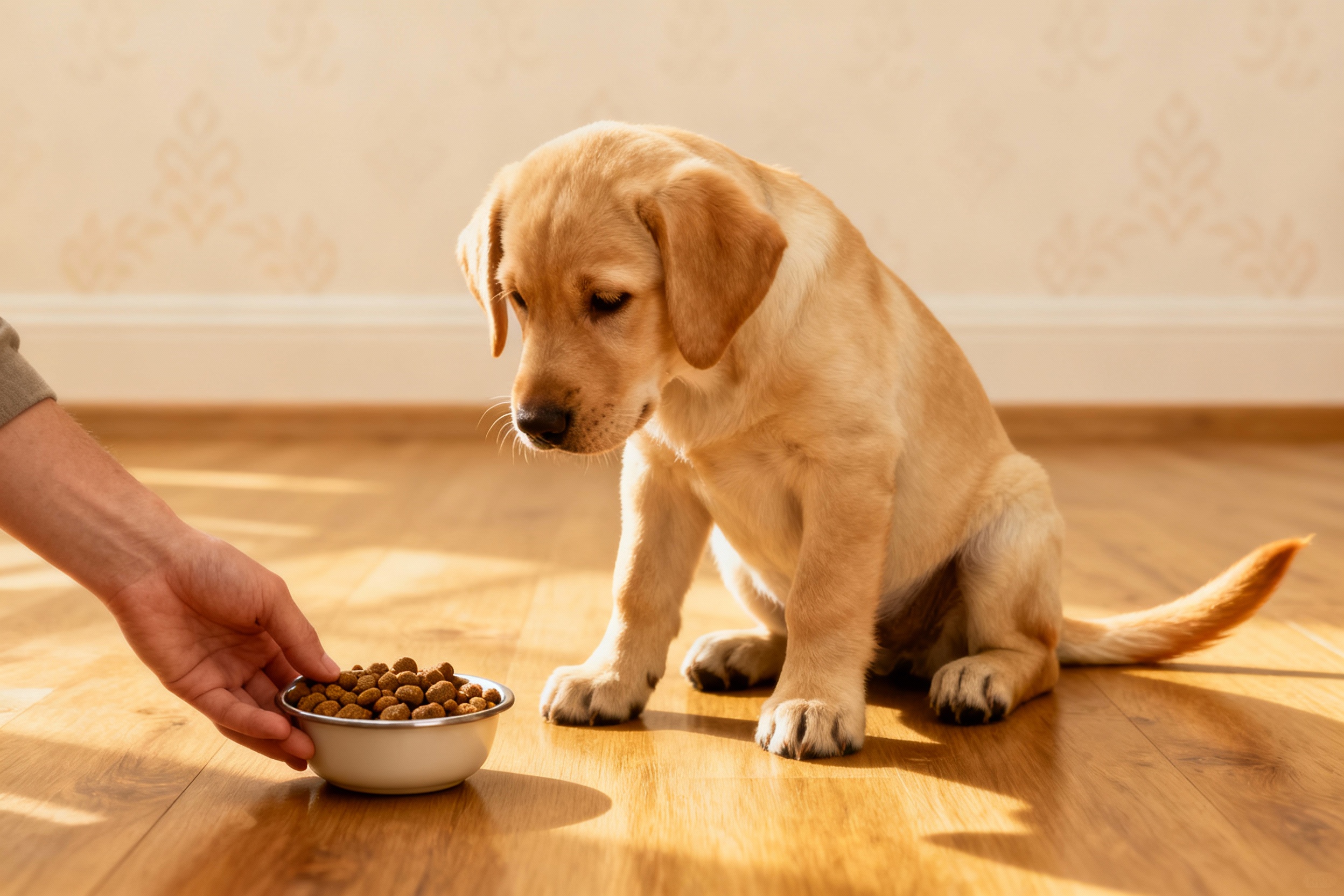
Puppy eyes can convince you to do anything, including overfilling the food bowl. But your Labrador Retriever puppy needs more than love and a mountain of kibble. Labs grow fast, eat with enthusiasm, and flirt with chubbiness.
Feed smart now, and you’ll set up a healthy adult dog with great joints, shiny coat, and zoomies for days.
Understand Lab Puppy Growth (So You Don’t Overdo It)
Labradors grow like teenagers on a pizza diet. They pack on muscle and bone from 8 weeks to 12-18 months, and their appetite absolutely matches that pace. But here’s the catch: excess weight puts stress on growing joints, which can trigger hip and elbow issues.
Aim for a body that looks lean, not chunky. You should feel ribs easily with a light touch, and see a slight waist when you look from above. No waist? Time to reassess portions.
Quick Growth Timeline
- 8–12 weeks: Settling in, eating 3–4 times a day, tiny tummy.
- 3–6 months: Rapid growth, still puppy food, lots of structure needed.
- 6–12 months: Growth slows a bit, reduce to 2–3 meals.
- 12–18 months: Transition to adult food when growth stabilizes.
Choose the Right Food (Puppy, Large-Breed, and Why It Matters)
Do not grab any bag with a cute puppy on it. Labs need a large-breed puppy formula.
These recipes balance calcium and phosphorus and keep calories in check to support steady growth, not “blow up like a balloon” growth. What to look for:
- AAFCO statement for growth, including large-breed puppies.
- Protein: around 26–30% (dry matter), from quality animal sources.
- Fat: around 12–18% (dry matter) for energy and coat health.
- Calcium/Phosphorus: proper ratio (about 1.2–1.4:1).
- DHA (from fish oil) for brain and eye development.
IMO, stick with reputable brands that publish research and feeding trials. Boutique and “grain-free everything” isn’t automatically better. FYI: Grain-free formulas have raised concerns for heart health in some dogs, so talk with your vet before going that route.
How Much and How Often?
Portion Like a Pro
Feeding charts on the bag give you a starting point, not gospel. Labs vary a lot in metabolism and activity.
General Meal Schedule
- 8–12 weeks: 4 meals per day
- 3–6 months: 3 meals per day
- 6–12 months: 2 meals per day
Portion Guidelines
Use the bag’s weight/age chart, then adjust weekly based on body condition. As a rough ballpark:
- 8–12 weeks: 1–1.5 cups total per day (split into 4 meals)
- 3–6 months: 2–3 cups total per day (split into 3 meals)
- 6–12 months: 3–4 cups total per day (split into 2 meals)
Every brand’s calorie density differs, so always cross-check the calories per cup. Adjust by 10–15% at a time if your puppy looks too lean or too fluffy.
Portion Control Hacks
- Use a kitchen scale for accuracy.
Cups lie. Scales don’t.
- Measure the entire day’s food in the morning so you don’t “accidentally” over-treat later.
- When training, use part of the daily ration as treats.
Treats, Chews, and Training Rewards (Without Blowing the Budget…or the Waistline)
You’ll train a Lab. You’ll use treats.
And yes, they’ll try to upsell you on steak. Keep treats to under 10% of daily calories. Smart options:
- Kibble as rewards (mix with 10–20% extra-high-value treats).
- Soft training treats you can split into pea-size pieces.
- Low-calorie options like tiny bits of cooked chicken or freeze-dried meats.
Skip dangerous or tummy-twisting stuff:
- No cooked bones, ever.
- Limit rich chews (pig ears, large bully sticks) for young pups—they can upset the gut.
- No xylitol (sweetener), grapes, raisins, onions, or garlic.
Prevent Gulping, Bloat, and Tummy Drama
Labs inhale food like it’s a contest.
Slowing them down helps digestion and reduces choking risks.
Slow-Feeding Tools
- Slow feeder bowls with ridges.
- Food puzzles and snuffle mats to engage the brain.
- Split meals into two bowls placed a few feet apart.
Routine Matters
- Feed on a consistent schedule.
- Offer fresh water always, but avoid massive water chugging right before/after meals.
- Wait 60–90 minutes after meals before intense play or running.
A quick note on bloat: While giant breeds face the highest risk, some Labs still get it. If you see a swollen belly, unproductive retching, restlessness—call the vet immediately.
All About Poops, Coats, and Other “Data Points”
Your pup’s body gives you feedback. Glamorous? Not really.
Helpful? Absolutely. What “good” looks like:
- Stools: Firm, log-shaped, easy pickup, 1–3 times daily.
- Coat: Glossy, minimal dandruff, no bald spots.
- Energy: Playful, curious, not lethargic.
- Weight: Ribs palpable, defined waist.
Red flags:
- Frequent diarrhea or mucus in stool
- Chronic itchiness, ear infections, or hot spots
- Vomiting more than once or twice
If issues pop up, chat with your vet before you start switching foods every week. Make any diet change gradually over 7–10 days.
When to Switch to Adult Food
Large-breed puppies usually transition at 12–18 months.
Early switch can shortchange nutrients; late switch can push extra calories. Look at:
- Growth curve leveling off (height gain slows).
- Body condition stable with consistent portions.
- Vet’s thumbs-up at a checkup.
When you do switch, go slow:
- Days 1–3: 25% new, 75% old
- Days 4–6: 50/50
- Days 7–9: 75% new, 25% old
- Day 10: 100% new
Supplements: Helpful or Hype?
Hot take: Most pups on a complete, balanced large-breed puppy food don’t need extra supplements. Over-supplementing calcium or phosphorus can harm growth. If you want extras, consider:
- DHA/fish oil for brain and skin—ask your vet for correct dosing.
- Probiotics during transitions or mild tummy upset.
Skip random multi-vitamins unless your vet recommends them.
IMO, less is more.
FAQ
How do I know if my Lab puppy is overweight?
Run your hands along the ribs. If you can’t feel them easily, we have a problem. Look from above for a waist and from the side for a slight tummy tuck.
If your pup looks like a loaf, reduce portions by 10% and increase gentle activity.
Can I feed raw or home-cooked?
You can, but do it carefully. Puppies need precise calcium, phosphorus, and trace minerals. Work with a veterinary nutritionist for a balanced recipe.
Otherwise, stick to a high-quality large-breed puppy food—way easier and safer.
My puppy has diarrhea—should I change foods immediately?
Not always. New homes, vaccines, and worming can cause temporary tummy upsets. Keep bland, small meals, add a vet-recommended probiotic, and monitor 24–48 hours.
If diarrhea persists, worsens, or includes blood/lethargy, see your vet and bring a stool sample.
How many treats can I use for training?
Keep treats under 10% of daily calories. To stay on target, swap part of the meal for training treats. Use the puppy’s kibble for most reps and reserve high-value goodies for tough distractions.
Is free-feeding a Lab puppy okay?
Nope.
Free-feeding plus a food-loving breed equals chunk city. Scheduled meals build routine, help with house training, and protect joints by preventing overeating.
Do I need a slow feeder?
If your pup vacuums food in 30 seconds, yes. Slow feeders or puzzle toys reduce gulping, improve digestion, and add mental enrichment.
Think of it as turning mealtime into a mini brain game.
Wrapping It Up
Feeding a Labrador Retriever puppy isn’t about stuffing the fluff—it’s about steady growth, smart portions, and good habits. Choose a large-breed puppy food, measure meals, use treats strategically, and watch that waistline. Do this, and you’ll raise a healthy Lab who can hike, swim, and steal socks for years to come.
FYI: they’ll still act starving. You’ll know better.
Leave a Reply