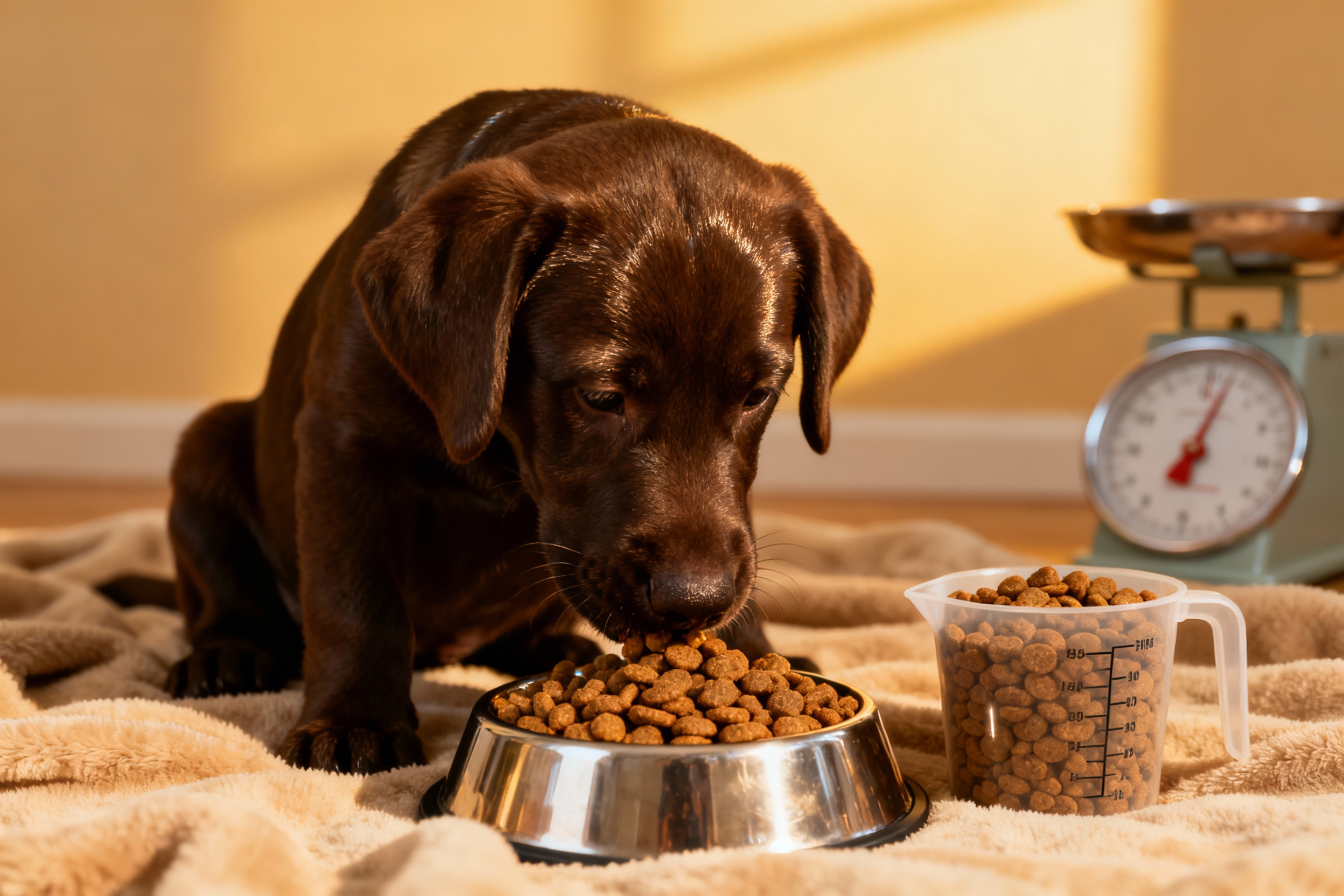
Your Labrador puppy looks adorable, but a little too lean? Totally normal to worry, especially with a breed known for chonk potential. The trick: add weight the healthy way without turning your pup into a couch potato with a snack habit.
Let’s dial in smart nutrition, routine, and a few pro tips to grow a strong, happy Lab.
First, decide if your Lab actually needs more weight
Before you start pile-driving calories, check body condition. A healthy Lab pup should look athletic, not ribby.
- Feel the ribs: You should feel them easily with a light layer of padding. If they poke out like piano keys, your pup likely needs more calories.
- Look from above: A slight waist is good.
A dramatic hourglass means too lean.
- From the side: Slight tuck at the belly? Perfect. Extreme tuck?
Time to adjust food.
If you’re unsure, snap a side and top photo and ask your vet for a body condition score. Quick, simple, accurate.
Feed the right food, in the right way
Growing Labs need nutrient-dense puppy food that supports bones, brain, and muscle. Not all kibble is created equal.
- Choose a large-breed puppy formula: It balances calcium and phosphorus to avoid rapid, risky growth.
- Check calories and protein: Aim for ~380–450 kcal/cup and at least 26% protein (dry matter).
Higher isn’t always better, but skimpy diets won’t help.
- Use measured meals: Ditch the “always full” bowl. Feed 3-4 small meals/day for puppies under 6 months, then 2-3 meals as they mature.
How much to feed (quick guide)
Follow the bag’s chart as your starting point, then adjust weekly:
- If your pup seems hungry, ribby, and energetic: increase by 10–15%.
- If stool turns soft or your pup seems sluggish: dial back slightly and slow down changes.
FYI, you’ll tweak amounts often during growth spurts. That’s normal.
Add healthy calorie boosters (without wrecking the diet)
You can bump calories and palatability without turning meals into a junk food festival.
- High-quality puppy wet food: Mix 1–3 tablespoons into kibble.
Adds calories and flavor.
- Goat’s milk or puppy-safe broth: A splash can entice picky eaters. Avoid high-sodium broths.
- Cooked toppers: Lean turkey, chicken, or salmon (no skin, no bones, no seasoning). 1–2 tablespoons per meal.
- Eggs: One cooked egg a few times a week can help. Great protein and fats.
- Plain pumpkin or Greek yogurt: Teaspoon or two for gut health.
Choose unsweetened, no xylitol.
Important: Keep toppers to 10% of total calories to avoid unbalancing the diet. You want complete nutrition, not a random buffet.
What about oils and “weight-gain” powders?
You can use small amounts of fish oil (for omega-3s) or salmon oil, but stick to label doses to avoid loose stools. Skip mystery weight-gain powders.
IMO, most aren’t necessary if you feed solid puppy food and a few smart toppers.
Train, play, and build muscle (not just fat)
You want sturdy, not squishy. Exercise builds appetite and lean mass.
- Short, frequent play: 5–10 minute sessions throughout the day. Fetch on soft ground, tug, nose games.
- Leash walks: Gentle, age-appropriate.
Avoid overdoing hard surfaces while growth plates develop.
- Puzzle feeders: Makes meals fun and slows fast eaters (and yes, Labs inhale food).
Avoid: Long runs, stairs marathons, or jumping off furniture. Protect those growing joints.
Use a routine to spark appetite
Dogs love predictability.
- Feed in the same quiet spot each day.
- Offer meals for 15–20 minutes, then pick up what’s left. Try again next meal.
- Light play before meals often kickstarts appetite.
Track growth like a pro
Puppies grow fast, then slow, then fast again.
Don’t panic during plateaus.
- Weigh weekly: Use a scale and jot it down. Steady gain beats sudden jumps.
- Body condition checks: Ribs, waist, energy, stool. Adjust food accordingly.
- Growth expectations: Many Labs hit 50–70% of adult weight by 6 months, then fill out slowly.
Pro tip: If weight stalls for 2–3 weeks despite extra food and your pup seems tired or picky, call your vet.
When to loop in your vet
Sometimes weight struggles signal something else.
Better safe than sorry.
- Parasites: Roundworms, hookworms, and friends can sap calories. Ask for a fecal test and proper deworming.
- Dental pain or teething issues: Soften kibble with warm water if chewing looks uncomfortable.
- Illness signs: Lethargy, vomiting, diarrhea, coughing, dull coat, or a sudden drop in appetite.
- Food sensitivities: Persistent soft stools or itchiness? You might need a different protein or formula.
IMO, any puppy with poor weight gain and low energy deserves a quick checkup.
Smart treat strategy (because Labs live for snacks)
Treats can help, but they shouldn’t replace balanced meals.
- Limit treats to 10% of daily calories.
- Pick nutrient-dense options: freeze-dried meats, training bites, small cheese cubes (sparingly), or fruit like blueberries.
- Use treats as training fuel, not random bribes.
Sample daily plan
- Breakfast: Large-breed puppy kibble + 1 tbsp wet puppy food + warm water splash.
- Midday: Kibble in a puzzle toy.
- Evening: Kibble + 1 tbsp cooked chicken + teaspoon pumpkin.
- Training: A few small, high-value treats spread across sessions.
Common mistakes that slow weight gain
- Free-feeding: Most puppies don’t self-regulate.
Structure wins.
- Switching foods constantly: Give each diet 10–14 days unless it clearly fails.
- Over-exercising: Burns too many calories and stresses joints.
- Too many low-cal treats: Fills the belly, not the calorie needs.
- Ignoring stool quality: Soft/loose poop often means the diet or portions need a tweak.
FAQ
How fast should a Labrador puppy gain weight?
Steady, consistent gain works best. Expect noticeable weekly increases early on, then slower growth after 6 months. Focus on body condition and energy over hitting a specific number every week.
What’s the best food to help my Lab puppy gain weight safely?
Choose a reputable large-breed puppy formula with solid protein, balanced calcium/phosphorus, and good calorie density.
Brands that conduct feeding trials and have veterinary nutritionists on staff usually deliver reliable growth diets.
Can I give my puppy human foods to boost calories?
Yes, in small, smart amounts. Cooked chicken or turkey, plain scrambled eggs, a bit of salmon, and plain Greek yogurt can help. Keep toppers under 10% of total calories and avoid onions, garlic, cooked bones, fatty skin, and anything with xylitol.
Do I need supplements for weight gain?
Usually not.
A complete puppy food covers the bases. You can add fish oil for omega-3s if your vet agrees. Skip random “bulking” supplements—most add cost, not meaningful benefit.
Is my puppy underweight or just lanky?
Labs go through leggy, awkward phases (the “teen giraffe” look).
If you can feel but not see ribs prominently, energy looks great, and stool looks normal, your puppy might be fine. If ribs show clearly and you see low energy or poor coat, increase calories and talk to your vet.
Could parasites be the reason my Lab isn’t gaining?
Absolutely. Parasites are common in pups and can block weight gain.
A fecal test and proper deworming usually fix the issue fast.
Wrap-up
You can add healthy weight to your Lab puppy with simple tweaks: feed a quality large-breed puppy diet, use measured, frequent meals, add smart toppers, and build muscle with sensible play. Track progress weekly and loop in your vet if gains stall. Do that, and your pup will grow from cute noodle to sturdy Lab legend—without the extra fluff.
FYI, that tail thump you hear? That’s the sound of progress.
Leave a Reply