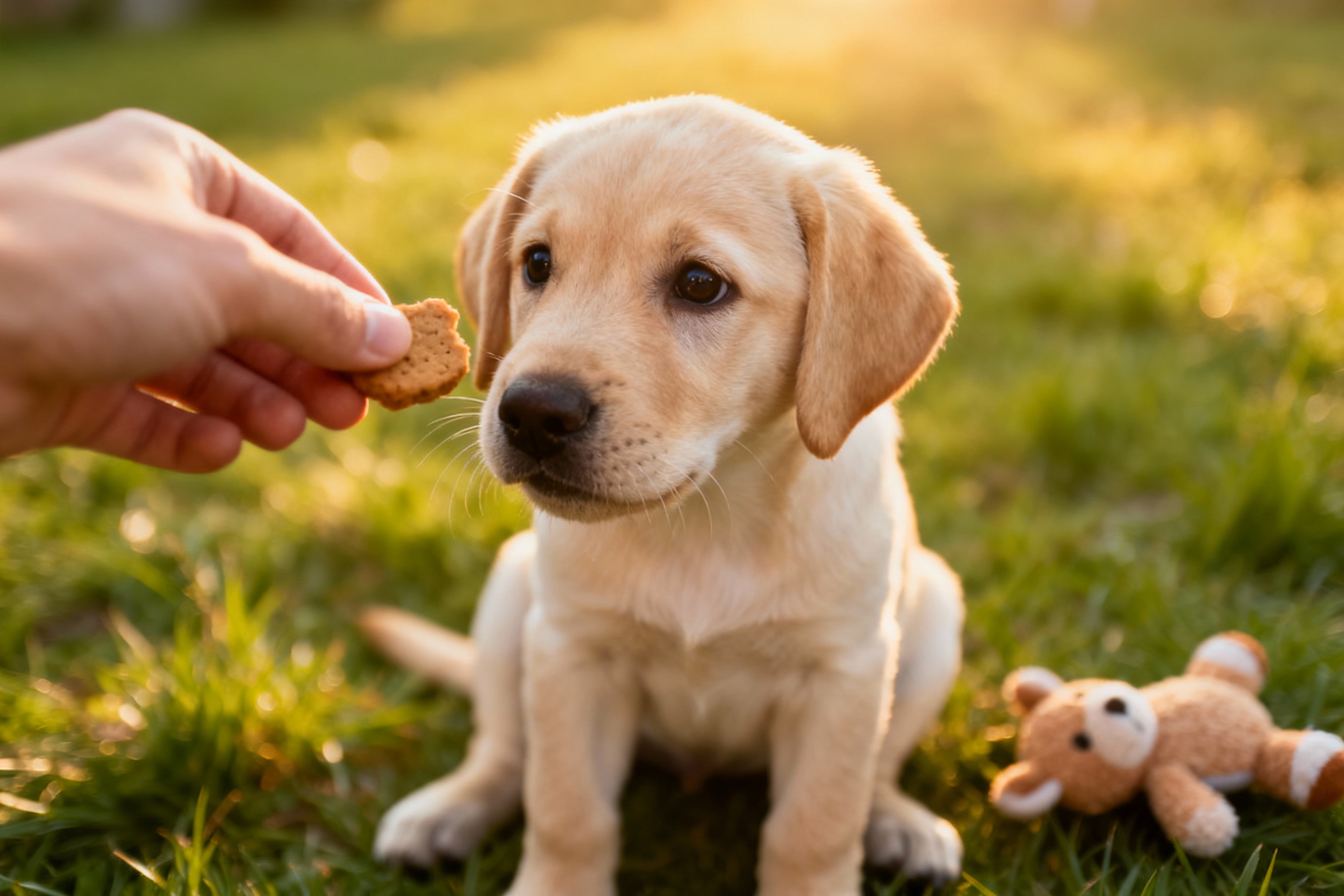
Your 3-month-old Lab is a chaotic mix of zoomies, teething, and “why is the sock in his mouth again?” Good news: this is the perfect age to start real training. Short sessions, tons of rewards, and consistency will turn that adorable gremlin into your dream dog. Let’s make those floppy ears work for you, not against you.
Know Your Puppy: What 3 Months Looks Like
At three months, Labs explode with curiosity and energy.
They learn fast, but they get bored faster. Think toddler brain with turbo mode. Key facts you’ll want to know:
- Attention span: 3–5 minutes per session, tops.
- Teething: Biting and chewing ramp up now. It’s not “naughty,” it’s normal.
- Sleep: They still need 16–18 hours a day.
Overtired puppies act like tiny tornadoes.
- Potty needs: Frequent. Like every 45–90 minutes and after meals, naps, and play.
Set Up Your Training Environment
You can’t out-train a bad setup. Make your home work for you.
- Crate: Right size = pup can stand, turn, and lie down.
Use it for naps and quiet time, not punishment.
- Playpen or gated area: Prevent chaos while you cook, work, or blink.
- Chew station: A basket of safe chews and toys. Rotate daily to keep it exciting.
- Treats: Tiny, soft, and high-value. You want your pup saying “Heck yes!” not “Meh.”
Safety FYI
Hide cords, pick up laundry, and move trash cans.
Labs see your house as a buffet of chewable life choices. Save yourself the “sock extraction” vet bill.
Potty Training Without Tears
Potty training at this age means prevention and timing. No shame, no scolding.
Just pattern-building.
- Take them out first thing in the morning, after every nap, after meals, after play, and right before bed.
- Use a cue like “Go potty” as they start. Praise and treat immediately after they finish, not mid-stream.
- Supervise indoors. If you can’t watch, crate or pen.
Accidents happen when we miss the signs.
- Clean with enzymatic cleaner. Regular cleaners leave pee perfume. Your pup will RSVP again.
Accident Troubleshooting
If accidents continue, shorten intervals between potty trips.
Keep a log for a few days. Patterns pop fast, and IMO, data beats guesswork every time.
Basic Manners: The Core 5 Cues
Keep sessions short, fun, and upbeat. End while your puppy still wants more.
- Name recognition: Say their name once.
When they look, mark with “Yes!” and treat. This unlocks everything else.
- Sit: Lure the nose up with a treat. When the bum hits the ground, “Yes!” and reward.
It’s the Swiss Army knife of cues.
- Down: From sit, lure the nose to the floor and out. Reward calm holds.
- Come: Start indoors. Crouch, open arms, say “Puppy, come!” in your happiest voice, reward like they won the lottery.
- Leave it: Present a treat in a closed fist.
When pup looks away or stops pawing, “Yes!” and give a different treat from the other hand.
Session Structure
Try 3–5 mini-sessions per day. Each lasts 3 minutes. Mix play between reps.
Stop if your pup wanders or gets frustrated. Training should feel like a game, not taxes.
Leash Skills for Wiggly Noodles
You don’t teach loose-leash walking by dragging. You teach it by making “near you” the best place to be.
- Start inside with zero distractions.
Reward for standing or walking by your side.
- Use a front-clip harness for better control without neck pressure.
- Practice “Let’s go” as a cue to move with you. Reward every few steps at first.
- Handle pulling smartly: Stop moving, wait for slack, then praise and move. No yanking.
You’re teaching, not waterskiing.
Leash Games
Play “Find it” by tossing a treat near your foot when your pup checks in. Or do two steps, treat, two steps, treat. It’s “follow the snack truck,” and it works.
Bite Inhibition and Chewing (Hello, Shark Week)
Your Lab isn’t “aggressive.” They’re teething and learning jaw control.
You’ll guide them.
- Redirect: When teeth land on you, calmly say “Uh-uh,” then offer a chew toy. Reward when they chew the right thing.
- Chew variety: Rubber toys, frozen Kongs with a smear of peanut butter (xylitol-free, FYI), braided cloth toys.
- Play smart: No rough wrestling. Tug is fine with rules: start on cue, end on cue, and swap for a treat when you say “drop.”
Calm the Croc
Overtired pups bite more.
Enforce naps after play or training. A 20–40 minute crate nap can reset the gremlin to “good dog” mode.
Socialization Done Right
You’re building your Lab’s worldview now. Make it positive and gradual.
- People and dogs: Meet friendly, vaccinated dogs and calm humans.
Avoid dog parks for now; it’s chaos roulette.
- Surfaces and sounds: Walk on grass, wood, tile; hear traffic, vacuums, doorbells. Pair each with treats and praise.
- Handling: Touch paws, ears, collar daily. Treat each time.
Your future vet will thank you.
- Car rides: Short, treat-filled trips. End somewhere nice sometimes, not just the clinic.
Red Flags
If your pup shows fear (freezing, tail tucked, whale eyes), back up. Create distance, lower intensity, and pair the trigger with treats at a safe range.
Confidence grows in layers, not leaps.
Daily Routine That Actually Works
Puppies thrive on predictability. Build a rhythm and watch behavior improve. Sample day (adjust as needed):
- Wake, potty, short play
- Breakfast + 3-minute training
- Nap in crate
- Potty, play, chew time
- Short walk + leash practice
- Lunch or snack in a puzzle feeder
- Nap (longer)
- Potty, socialization outing (pet-friendly store parking lot, quiet street)
- Training games (come, leave it)
- Early evening zoomies, then settled chew
- Dinner + calm hangout
- Bedtime potty, crate for night
Enrichment Ideas
Rotate puzzle toys, snuffle mats, cardboard box “treasure hunts,” and simple scent games. Mental work tires puppies faster than laps around the coffee table, IMO.
Common Mistakes (And Easy Fixes)
- Too long sessions: Shorten them.
Always end on a win.
- Inconsistent rules: If “no couch,” then no couch for everyone, always. Dogs don’t understand “only when you’re cute.”
- Delayed rewards: Mark behavior the second it happens with “Yes!” then treat. Timing beats treat size.
- Not managing energy: Alternate play, train, nap.
A wired puppy can’t think.
- Skipping socialization: Expose safely and positively now, or deal with fear later. Your choice.
FAQ
How many training sessions should I do each day?
Aim for 3–5 mini-sessions of 3–5 minutes each. Sprinkle them around meals and play.
You’ll see better results than one marathon session.
When can I start leash training?
Right now. Start indoors with a harness and practice check-ins and short “Let’s go” walks. Add distractions slowly.
Think progression, not perfection.
My puppy bites a lot. Is that normal?
Totally normal at three months. Redirect to chews, enforce naps, and avoid rough play.
Reward calm mouths like you mean it.
What treats work best for training?
Soft, pea-sized, and extremely tasty. Boiled chicken bits, soft training treats, or a smear from a squeeze tube. Keep it high-value for new or hard behaviors.
How long can my puppy hold their bladder?
A rough guide is age in months plus one, in hours.
So about 4 hours max during the day for a 3-month-old. Night stretches can run longer, but don’t push it.
Should I use a clicker?
If you like gadgets, yes. If not, a crisp “Yes!” works just as well.
The key is consistent timing, not the tool.
Conclusion
Three-month-old Labs are equal parts chaos and potential. Keep training fun, short, and clear. Socialize kindly, manage their environment, and reward the heck out of good choices.
Do that, and your sock thief turns into the best buddy you’ve ever had—still goofy, but gloriously well-mannered.
Leave a Reply