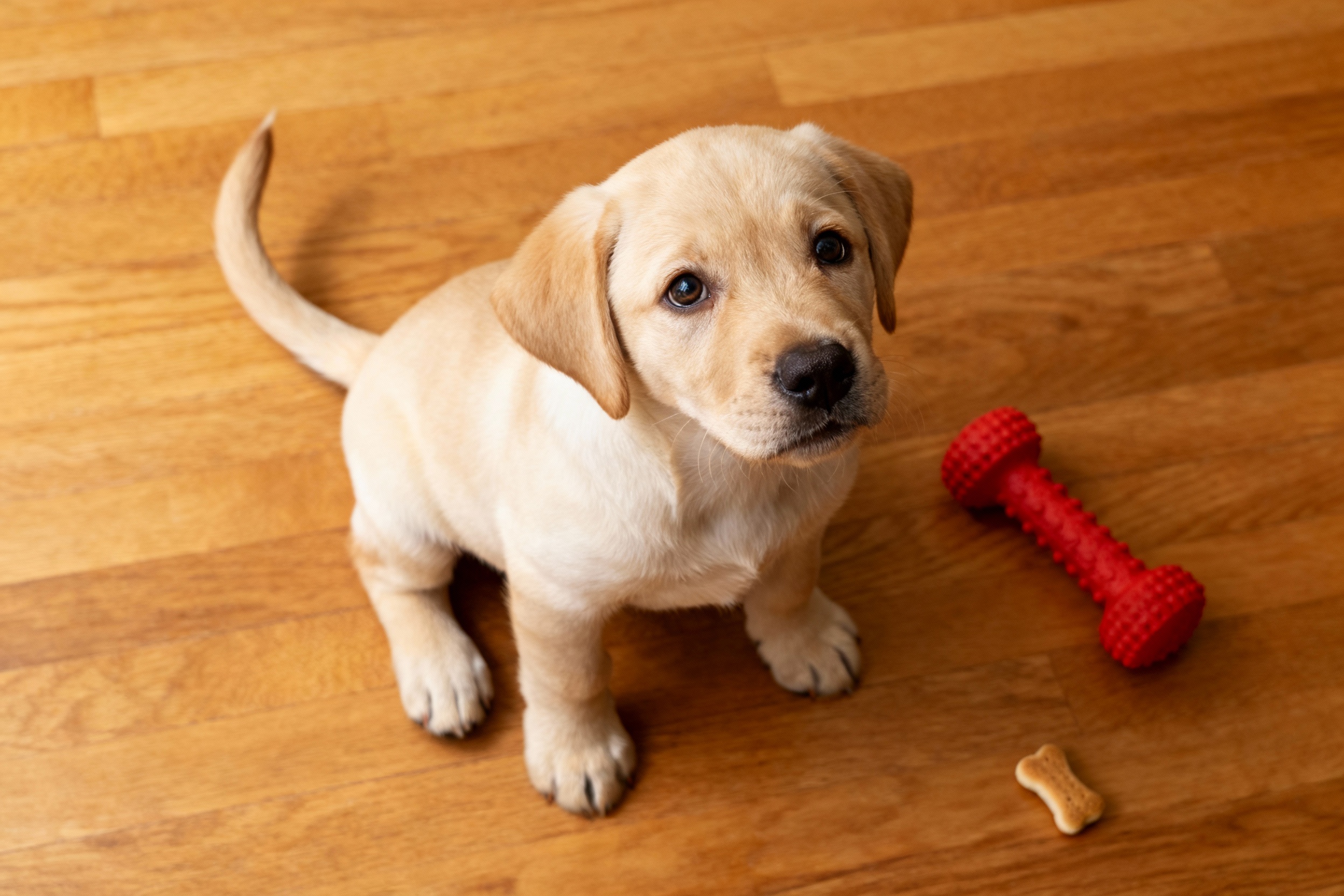
You just brought home a 6-week-old Labrador puppy. Congratulations… and buckle up. You’ve adopted a tiny land shark with zoomies and the attention span of a fruit fly.
Training starts now—not next month. The good news? Labs are eager, food-motivated, and ridiculously smart.
If you set the right habits early, you’ll have a happy, well-mannered buddy in no time.
First Things First: 6 Weeks Is Very Young
At 6 weeks, your Lab is basically a baby. Many pups stay with their litter until 8 weeks, so if yours came home now, adjust your expectations. Focus on bonding, routine, gentle guidance, and short-but-frequent training moments. Key priorities at this age:
- Build trust and a predictable routine
- Start potty training immediately
- Introduce a crate and short alone-time sessions
- Teach micro-manners: name, “sit,” gentle mouth
- Socialize safely and positively
Set Up Your Home Base
Create a calm space that says, “This is where we relax.” Puppies thrive on structure and consistency. What you need:
- Crate sized so the pup can stand, turn, and lie down—no bigger
- Puppy pen or gated area to prevent chaos
- Chew-safe toys: rubber toys, soft chews, frozen washcloth for teething
- Potty pads only as backup; prioritize outdoor trips
Crate = Cozy, Not Prison
Make the crate comfy and positive.
Feed meals in the crate, toss treats inside, and praise calmly when your puppy enters. Close the door for a minute or two while you sit nearby. Build up slowly.
No long crying sessions—this isn’t boot camp.
Potty Training Without Tears (Yours or the Puppy’s)
At 6 weeks, that tiny bladder resets like a kitchen timer. Frequent trips keep everyone sane. Routine that works:
- Take the pup out every 45–60 minutes while awake
- Always go out after waking, after eating, after play, and before bed
- Use one spot and a cue like “Go potty”
- Celebrate like you won a game show when they go outside
Accidents happen. Clean with an enzymatic cleaner and move on.
Don’t scold. Your pup won’t connect the dots and you’ll just raise a nervous dog. IMO, calm consistency beats drama every time.
Nighttime Strategy
Keep the crate near your bed for the first week or two.
Set an alarm every 3–4 hours to take your pup out. Yes, it’s annoying. But you’ll sleep better knowing you’re preventing accidents and building habits.
Micro-Training: Tiny Sessions, Big Wins
Six-week-old Labs have short attention spans.
Keep sessions 1–3 minutes, a few times per day. Think snack-sized learning, not a TED Talk. Start with these:
- Name Recognition: Say their name once. When they look at you, mark “Yes!” and treat.
- “Sit”: Lure the head up so the butt hits the floor.
Mark and treat.
- Recall Game: Crouch low, say “Puppy, come!” in a happy tone, reward like a champ.
- Handling: Touch paws, ears, mouth while feeding tiny treats. Vet visits will thank you.
Use a Marker Word
Pick a consistent marker like “Yes!” to tell your pup the instant they do the right thing. It’s Labrador for “You nailed it.” You can use a clicker too, but your voice works great.
Bitey Gremlin Mode: Managing Puppy Nipping
Lab puppies explore with their mouths.
They’ll chew on you, your clothes, your hopes, your dreams. Teach bite inhibition early. When nipping starts:
- Redirect to a chew toy immediately
- If they latch onto skin, say “Ouch” calmly, stand up, and pause play for 10–20 seconds
- Use frozen teething toys to soothe gums
- Avoid rough wrestling—it ramps them up
Consistency matters. Everyone in the household should respond the same way.
Otherwise your pup learns, “I can bite Dad, but not Mom,” and that’s chaos.
Socialization: Curate the World (Carefully)
You’re building your Lab’s mental Wikipedia right now. Positive exposure prevents fear later. But 6-week-old puppies haven’t finished their vaccines, so safety first. Safe socialization ideas:
- Invite vaccinated, friendly adult dogs for calm, short visits
- Carry your pup in public places to watch and listen
- Play sound clips: traffic, thunder, doorbells—low volume, treats paired
- Meet people in different hats, glasses, and coats—pair with snacks
Vet and Vaccine Game Plan
Schedule a vet visit ASAP for a wellness check and vaccine plan.
Ask about parvo risk in your area. Until your vet clears you, skip high-traffic dog areas like dog parks and pet store floors. FYI: better safe than sorry.
Feeding, Energy, and Sleep (Yes, Puppies Need Naps)
Fuel the brain and body right.
Over-tired puppies go feral. Your Lab needs a lot of sleep to grow—like 18–20 hours total per day. Daily rhythm idea:
- Feed 3–4 small meals of high-quality puppy food
- Potty break, short play or training, then down for a nap
- Rinse and repeat all day
Watch for the “witching hour” zoomies. When your gremlin starts spinning out, guide them to a chew in their crate or pen.
Calm wins. IMO, a good nap solves 80% of puppy problems.
Basic Manners You Can Start Now
Even at 6 weeks, your Lab can learn the foundations that make life easier later. Skills to introduce:
- “Sit” before meals, leashing, and going outside
- Gentle taking of treats—present a closed fist until the mouth softens
- Collar and harness wearing—pair with treats and praise
- Leash introduction indoors—let them drag it a bit under supervision, then practice a few steps with treats
Alone-Time Training
Teach your puppy that alone doesn’t equal abandonment. Start with 1–3 minutes in the crate while you step out of the room.
Return calmly before they panic. Build to 10–15 minutes over a week. Don’t sneak out; be boring, predictable, and low-key.
Common Mistakes to Avoid
We all mess up.
Let’s dodge the big ones:
- Overtraining: Keep sessions short. Quit while your puppy still wants more.
- Inconsistent rules: Set house rules now and stick to them.
- Punishing accidents: Clean up and move on.
- Too much freedom: Use gates and pens to prevent bad habits.
- Skipping socialization: Safe exposure beats “waiting until they’re older.”
Sample Day Plan (Flexible, Not Rigid)
- 6:30 AM: Outside potty, then breakfast in the crate
- 7:00 AM: Short training (name + sit), gentle play, potty
- 7:30 AM: Nap in crate
- 9:00 AM: Potty, handling practice, chew time
- 9:30 AM: Nap
- 12:00 PM: Potty, lunch, mini recall game
- 12:30 PM: Nap
- 2:30 PM: Potty, socialization field trip (car ride, people watching)
- 3:00 PM: Nap
- 5:30 PM: Potty, dinner, calm play
- 6:00 PM: Nap
- 8:00 PM: Potty, short cuddle, settle time
- 10:00 PM: Last potty, bed
- Overnight: 1–2 potty breaks as needed
FAQ
Can I start obedience training at 6 weeks?
Yes, but keep it tiny and fun. Focus on name, sit, recall games, and handling.
Use treats and praise. Think “kindergarten skills,” not calculus.
How do I stop my puppy from crying in the crate?
Make the crate positive with meals and treats. Start with seconds, not hours.
Place it near you at night. If the puppy cries, check if they need to potty. If not, wait for a brief pause in whining before you open the door to avoid teaching “crying equals freedom.”
Is it safe to socialize before full vaccinations?
Yes, with caution.
Host vaccinated dog friends, carry your pup in public, and avoid high-risk surfaces. Ask your vet for local guidance. The risk of poor socialization can outweigh the disease risk when you do it safely.
How much should a 6-week-old Lab eat?
Usually 3–4 small meals per day.
Follow your puppy food’s guidelines by weight and adjust for body condition. You should feel ribs under a light layer of fat, not see them. Your vet can help fine-tune.
When do I start leash training?
Right now—indoors.
Clip the leash, let them explore, then reward a few steps next to you. Keep it positive and short. You’ll move outside once vaccines progress and your pup feels confident.
What chew toys are safe?
Durable rubber toys, soft puppy chews, and frozen cloths for teething work well.
Avoid hard bones, antlers, and anything that doesn’t indent with your thumbnail—they can damage puppy teeth.
Conclusion
You’ve got a baby Labrador—a fuzzy sponge soaking up habits. Keep training short, positive, and consistent. Prioritize potty habits, gentle crate time, bite inhibition, and safe socialization.
Celebrate the small wins, laugh at the chaos, and remember: today’s tiny reps build tomorrow’s awesome dog. You’ve got this.
Leave a Reply