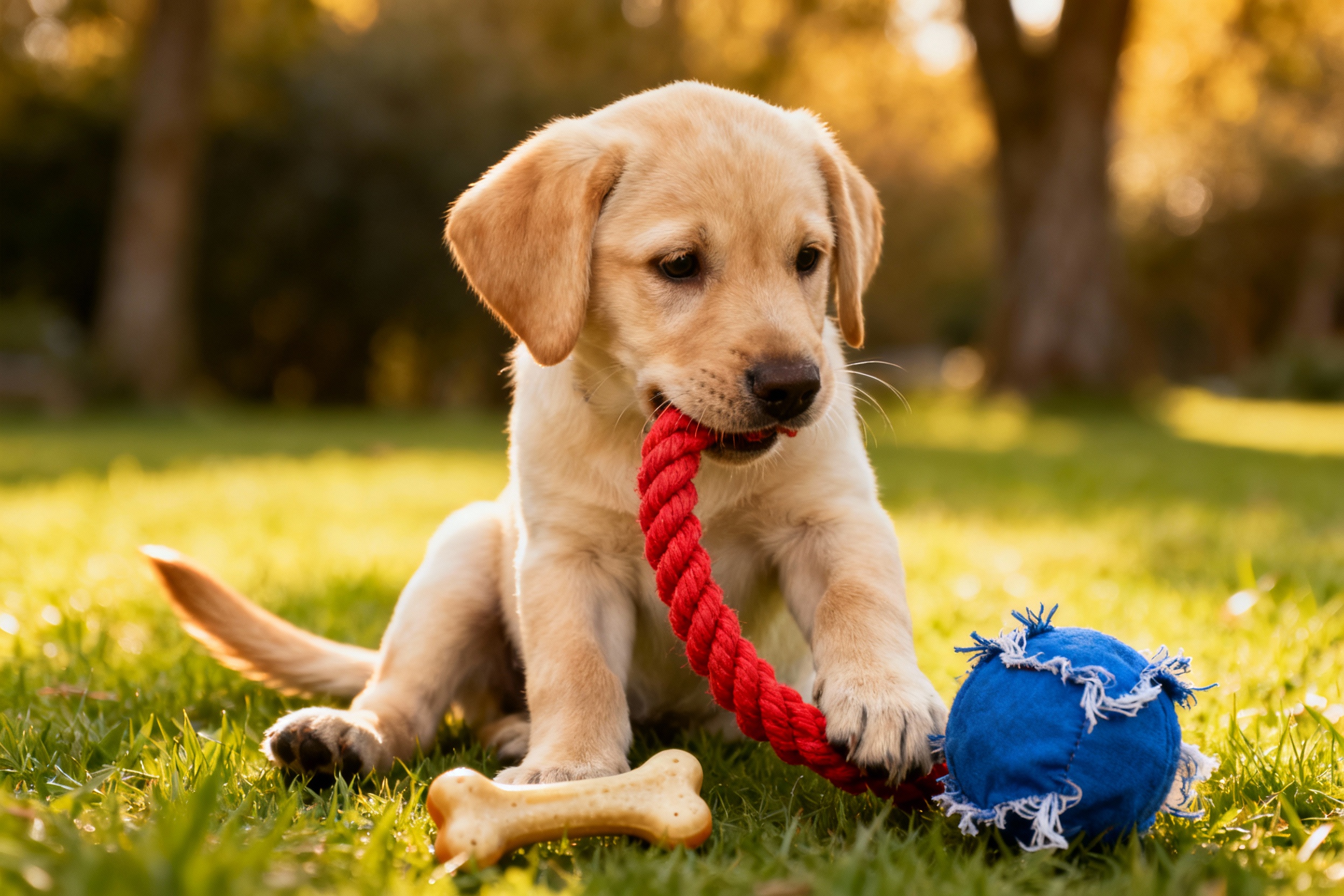
Labrador puppies come with two settings: adorable and turbocharged. You blink, and they’ve found your shoe, your sock, and your sanity—usually all at once. The trick isn’t to slow them down; it’s to channel that energy into stuff that works for you and them.
Let’s set you up with smart, fun ways to keep your Lab pup busy without needing a personal trainer or a second mortgage on chew toys.
Know Your Lab: Energy With a Side of “What’s That?”
Labradors were bred to work. Translation: your puppy has a job even if you don’t give one. That job might currently be “taste-testing chair legs,” but we can fix that. Key idea: tire their brain before you try to tire their body.
A mentally satisfied Lab behaves better, settles faster, and chews fewer cables. Win-win.
Morning Routines That Burn Energy (Without Melting You)
Start strong. A structured morning turns chaos into calm and sets the tone for the day.
- Sniffari walk (10–15 minutes): Let your puppy’s nose lead while you control the pace.
Sniffing = brain work. Brain work = nap later. Magic.
- Micro training session (5 minutes): Sit, down, touch, name recognition.
Keep treats tiny and your praise big.
- Short play burst (5 minutes): Tug or fetch with clear rules: start on cue, drop on cue, end on cue. Labs love structure. They won’t tell you that, but they do.
Why Short Sessions Work
Puppies fatigue fast.
You’ll see sloppy sits and zoomy chaos if you push too long. Keep it brief, end on a win, and watch your pup nod off like someone after Thanksgiving dinner.
Indoor Games That Quiet the Chaos
When the weather stinks or you need a chill day, indoor activities can save your sanity.
- Food puzzles: Stuff a Kong with soaked kibble and a smear of peanut butter, then freeze it. Puzzle bowls, snuffle mats, and treat-dispensing toys also rock.
Rotation keeps them “new.”
- Hide and seek: You hide, your puppy finds you. Start easy with visible spots and call happily. It builds recall and confidence.
- Box game: Scatter a few treats across open cardboard boxes and let your pup search.
Cheap, fun, and very Lab.
- Name-the-toy game: Start with one toy, say its name, then toss it. Gradually add toys. Labs love jobs; this feels like a job.
DIY Puzzle Ideas (Budget-Friendly)
- Muffin tin + tennis balls: treats in cups, balls on top.
- Tea towel burrito: wrap kibble, fold, and let them unroll.
- Plastic bottle roller: a few holes, some kibble, supervised only.
Smart Fetch and Tug (Because They Live for It)
Fetch isn’t just throwing chaos down a hallway.
You can make it structured and brainy.
- Impulse control fetch: Ask for a sit. Wait, then throw. Release on a word like “fetch.” You just made patience a game.
Nice.
- Drop trade: Teach “drop” with trades—toy for treat, treat for toy. Don’t chase your dog; chasing is a Lab superpower.
- Tug with rules: Start and stop on cue. If teeth meet skin, game pauses.
Tug drains energy and builds great focus when done right.
The 60-Second Training Sandwich
Try this combo between fetch throws:
- Ask for a sit or down.
- Add a “stay” for 3–5 seconds.
- Release to fetch as the reward.
You just layered obedience into play without boring your puppy. IMO this is top-tier Lab parenting.
Socialization Without Overwhelm
Labs usually love people and dogs, but your puppy still needs careful socialization. Not everything is a dog park free-for-all (FYI: skip dog parks for young pups).
- Field trips: Hardware stores, café patios, school pick-up lines—let your pup watch the world with treats on tap.
- Surface safari: Walk on grass, gravel, rubber mats, metal grates (safely).
Confidence grows with variety.
- Controlled puppy playdates: One calm, vaccinated dog beats ten wild ones every time.
What “Busy” Looks Like During Socialization
You don’t need chaos to keep a Lab busy. Five calm minutes of watching traffic with treats can drain more energy than a 20-minute sugar-rush wrestle session. Quality > quantity.
Training That Feels Like Games
Use that Labrador appetite to your advantage.
Training should be fun and short.
- Hand targeting (“touch”): Pup boops your palm. Use it to redirect, call inside, or break fixation on squirrels.
- Settle on a mat: Treat for calm on a specific mat or bed. Bring it to cafes or guests’ houses.
Your future self will thank you.
- Loose-leash walking: Reward beside your left knee. If the leash tightens, you stop. No yanking, no lectures—just clear rules.
- Short recall games: Two people call the pup back and forth, reward each time.
Keep it easy and happy.
Micro-Workouts You Can Sprinkle In
- Commercial break obedience: 2 minutes of sits/downs/stand.
- Door manners: sit before going outside, release word to go through.
- Food bowl zen: sit, eye contact, “okay!” to eat. Builds impulse control fast.
Chew Needs Are Real (Save Your Furniture)
Puppies chew to soothe gums, explore, and relax. Give them legal targets.
- Rotate textures: Rubber, rope, nylon (supervised), and safe edible chews sized for puppies.
- Stuff-and-freeze: Freeze soft foods in safe toys to extend the chew session.
- Chew stations: Place approved chews in rooms where you hang out.
Convenience equals success.
Redirection Formula
If your puppy grabs a shoe:
- Stay chill. Drama = reward.
- Offer a better chew and praise the switch.
- Secure the shoe. Lesson learned: manage the environment.
Age-Appropriate Exercise (Don’t Overdo It)
Labs grow fast.
Joints need protection. Yes, they act like tiny athletes; no, you shouldn’t train them like one.
- Rule of thumb: About 5 minutes of structured walking per month of age, up to twice daily. Free play on soft ground is fine.
- Avoid: Long runs, repetitive jumping, stairs marathons, and hardcore fetch sessions on slick floors.
- Do: Sniff walks, gentle play, short swims when your vet approves, and puzzle time galore.
Spotting Overtired vs.
Understimulated
– Overtired: bitey gremlin mode, zoomies, ignoring cues, glassy eyes. Time for a nap and a calm chew. – Understimulated: pacing, stealing objects, barking at you like you owe rent. Time for a sniffari or training game.
Sample Daily Flow (Steal This)
Use this as a framework, then tweak for your life and your puppy’s vibe.
- Morning: Sniff walk, 5-minute training, chew toy while you get ready.
- Midday: Potty break, short play, puzzle feeder before nap.
- Afternoon: Socialization field trip or calm neighborhood watch + settle practice.
- Evening: Structured fetch/tug, dinner in a puzzle, cuddle and grooming touch.
- Before bed: Quick potty, two-minute calm training, stuffed Kong to unwind.
FAQ
How much exercise does a Lab puppy actually need?
Not as much as you think.
Aim for short, frequent bursts of activity and plenty of mental work. Follow the 5-minutes-per-month-of-age guideline for walks and add sniffing, puzzle feeders, and brief training. Too much high-impact play can stress growing joints.
What’s the best way to stop nipping?
Teach bite inhibition with calm redirection.
Offer a chew when nipping starts, pause play if teeth hit skin, and resume when your pup settles. Pair this with more naps and mental games—overtired puppies nip more. IMO consistency matters more than any “quick fix.”
Are puzzle toys worth it, or just hype?
They’re worth it.
Food puzzles channel the Lab brain and appetite into something productive. Start easy, rotate toys, and occasionally feed full meals in puzzles. You’ll see faster settling and less mischief.
How do I keep my puppy busy while I work from home?
Use a crate or playpen near your workspace.
Give a stuffed frozen Kong, a snuffle mat, or a lick mat. Break the day into short potty breaks, 5-minute training sessions, and micro play. Structure beats chaos every time.
When can my Lab puppy start swimming?
Check with your vet first, then introduce shallow, calm water with a secure life jacket.
Keep sessions short and warm the puppy after. Swimming tires them out beautifully, but joints and confidence come first.
My puppy steals things constantly. How do I fix that?
Teach a reliable “drop” and “leave it” with trades and rewards.
Manage the environment—close doors, use laundry bins, and give legit chew options. Don’t chase; you’ll turn theft into a game your Lab will win, forever.
Conclusion
Keeping a Labrador Retriever puppy busy isn’t about running them into the ground—it’s about mixing brain games, bite-sized training, and age-appropriate play. Build routines, rotate activities, and celebrate the calm moments you create.
Do that, and you’ll raise a happy Lab who steals hearts instead of socks. FYI: the socks still go missing sometimes. That’s just part of the deal.
Leave a Reply