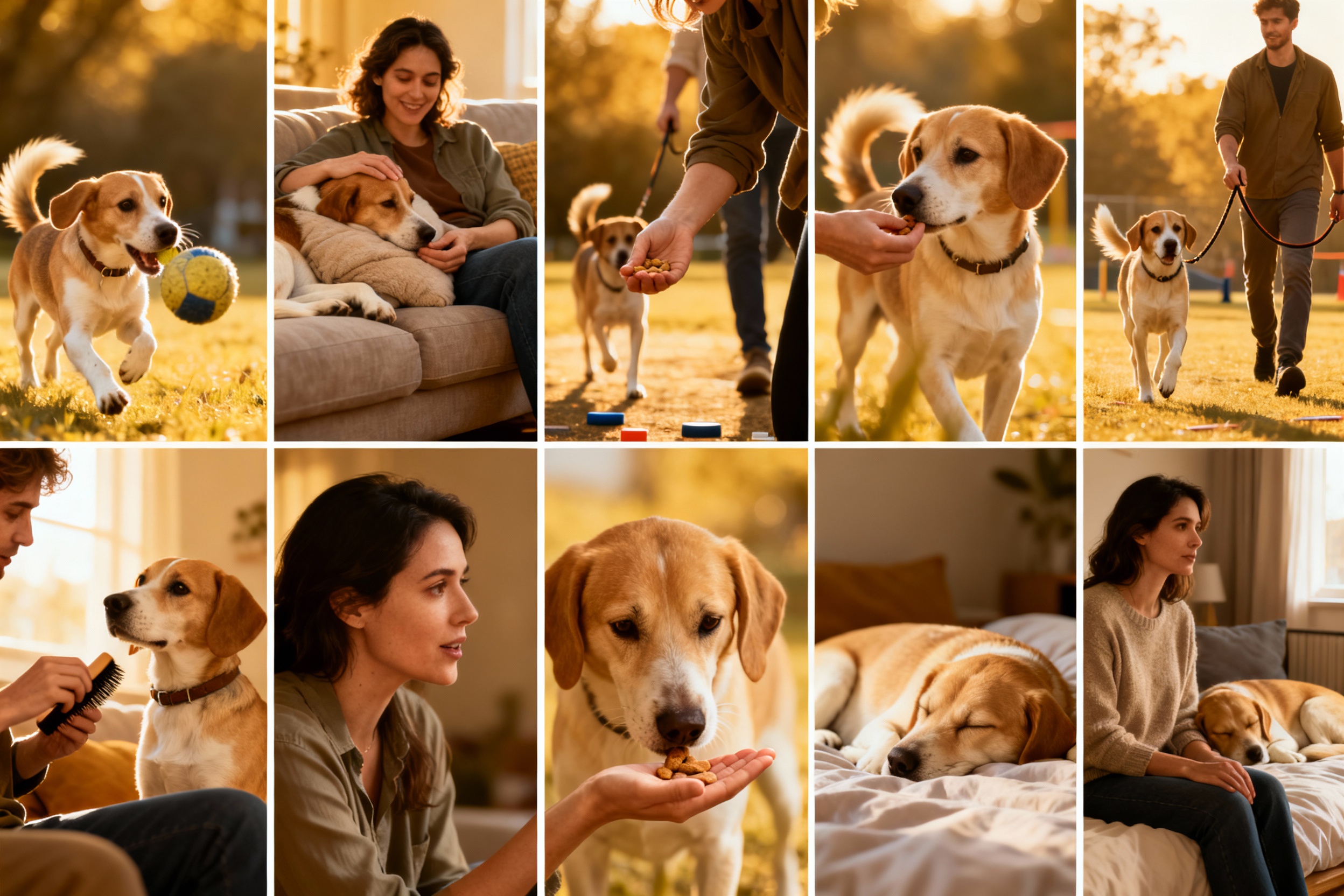
You bring a dog home and suddenly it’s obvious: one person gets the epic tail wags, the couch cuddles, and the “I will follow you into the bathroom” devotion. Why? Dogs don’t draw names out of a hat.
They bond with the human who meets their needs, reads their signals, and makes life feel safe and fun. The good news? You can become that person—no witchcraft required.
What Actually Makes a “Favorite Person”?

Dogs love consistency, clarity, and comfort.
They pick the human who delivers those things most often. Not the loudest person. Not the one who buys the fanciest bed.
The one who shows up and gets it right. In short: dogs choose the person who meets their emotional and practical needs with predictable, positive interactions. Sounds simple, right? It is—if you know what to focus on.
The Role of Early Socialization (and Why It’s Not Everything)
Puppies form strong preferences between 3–14 weeks when their little brains soak up social info like sponges. If you handled the pup gently and often during that window, you probably have a head start.
But it’s not all decided in puppyhood. Adult rescues bond deeply too. Your daily actions can rewrite the script. Time, patience, and good vibes can beat history, IMO.
For rescues: start slow
– Give them a predictable routine before big adventures. – Use soft voices and zero pressure. – Let them approach you first.
Being cool and patient wins trust faster than being extra.

10 Ways To Win Your Pup’s Heart
You want the crown? Earn it. These are practical, science-backed ways to become your dog’s number one.
- Make Feeding Time Sacred – Dogs love whoever controls the kitchen, FYI.
Hand-feed part of meals. Add gentle training during feeding: sit, wait, eye contact, then release. You build trust and impulse control in one go.
- Walk With Purpose – Don’t doom-scroll.
Lead fun, sniffy walks. Mix structure (heel for a minute) with freedom (go sniff). A dog that explores with you bonds with you.
- Train in Short, Happy Bursts – 5 minutes, 2–3 times a day.
Use high-value treats and a cheery voice. Finish while they still want more. You’ll become the person who makes learning fun.
- Play Their Favorite Game – Not your favorite—theirs.
Tug, fetch, flirt pole, scent games, puzzle toys. Find what lights them up and make it your special thing together.
- Speak “Dog” With Your Body – Soft eye contact, relaxed shoulders, angled body rather than head-on. Reward calm behavior.
Dogs notice when you’re easy to read.
- Be Consistent With Rules – Same cues, same boundaries. If “off the couch” means off the couch, keep it that way. Inconsistent humans confuse dogs, and confusion kills trust.
- Create Safe Spaces – A comfy bed or crate that you never use for punishment.
Guard that calm zone like a bouncer. Safety equals attachment.
- Groom Gently and Often – Pair brushing, nail care, and ear checks with treats. You become the spa human, not the torture goblin.
- Respect Their Social Battery – Some dogs love crowds; others tap out fast.
Read their signals and advocate for them. They’ll see you as their protector.
- Be There—Literally – Quality time beats grand gestures. Sit on the floor.
Watch TV with a hand on their chest. Do nothing together. That counts.
Reading Your Dog’s Signals (So You Don’t Try Too Hard)
We love dogs.
We also smother dogs. Learn to notice when your pup wants space vs. snuggles.
Green-light signals
- Soft eyes and blinks
- Loose, wiggly body and tail
- Choosing to come close and lean in
Red-light signals
- Lip licking, yawning out of context
- Turning head away, showing the whites of eyes
- Freezing or slow-motion movements
Respond to red lights by giving space and making interactions optional. You’ll earn trust faster than forcing affection.

Why Some Dogs Naturally Favor Certain People
Dogs prefer people who match their energy and communication style. Calm, confident humans often win nervous dogs.
Playful, active humans often win sporty dogs. Your smell, voice, and routine become little anchors. Other factors that matter: – Routine involvement – Who feeds, walks, trains, and plays? – Emotional consistency – Who stays calm when the doorbell rings? – Reinforcement history – Who keeps rewarding good behavior without nagging?
And yes, dogs can have multiple favorite people. But they often pick a primary attachment figure—like a furry little stage-five clinger with standards.
Bond-Building Activities That Punch Above Their Weight

You don’t need hours a day. You need the right minutes.
Scent-based games
– Scatter kibble in the yard and say “Find it!” – Hide treats in boxes or snuffle mats. – Play “shell game” with three cups and a treat.
Scent work taps your dog’s superpower and lowers stress.
Cooperative care
– Teach chin rest on your palm for grooming. – Pair nail touches with treats, then gradual clippers or file exposure. – Practice gentle restraint with consent cues. This turns scary stuff into team activities.
Micro-training rituals
– Sit before meals. – Wait at doors. – Name eye contact (“look”). These tiny reps add up to a shared language.
Common Mistakes That Block Bonding
Let’s avoid the landmines.
- Inconsistent cues – “Down” sometimes means lie down, sometimes means get off.
Pick one cue per behavior.
- Over-stimulation – Hyping your dog 24/7 creates a chaos bond, not a secure one. Sprinkle calm into your fun.
- Using punishment for fear-based behavior – Yelling at a barky, anxious dog just cements fear. Teach alternative behaviors and reward calm.
- Ignoring decompression – New dogs need quiet days.
Big outings right away can backfire.
- Forcing hugs – Many dogs tolerate hugs rather than enjoy them. Try gentle chest rubs or butt scratches if they lean in.
How Long Does It Take?
Some dogs glom onto a person within days. Others take months to fully relax.
If you keep routines tight and interactions positive, you’ll usually see a noticeable shift within 2–6 weeks. Deep, unshakeable trust? That can take 3–6 months—worth every minute, IMO.
FAQ
Can I become my dog’s favorite if someone else already is?
Yes.
You don’t need to dethrone anyone. Increase your role in high-value activities: feeding, training, play, and calm hangouts. Keep it consistent for a few weeks.
Most dogs expand their circle—or even switch their primary bond—when the reinforcement history changes.
Do treats make me the favorite, or is that “cheating”?
Treats are tools, not bribes. Use them to teach and reinforce behaviors, then gradually mix in life rewards like play and access to sniffing. A balanced approach builds respect, not just snack worship.
My dog follows me but cuddles someone else.
Who’s the favorite?
Attachment looks different for different dogs. Following you can signal security and curiosity. Cuddling someone else might mean that person gives the best naps.
Watch who your dog seeks when stressed or scared—that’s usually the primary attachment figure.
Do certain breeds bond more strongly to one person?
Some breeds (and individuals) lean “velcro,” while others spread the love. Herding, guardian, and some working breeds often choose a primary human. Still, personality and experience matter more than breed stereotypes.
What if my dog seems afraid of me even though I’m trying?
Dial everything down.
Sit sideways, avoid looming, speak softly, and toss treats rather than reaching. Pair your presence with good stuff and give them exits. If fear persists, bring in a qualified, positive reinforcement trainer or behavior consultant.
Is sleeping in my room or on my bed important for bonding?
It can help, but it’s not required.
Proximity increases oxytocin for both of you, but you can build the same bond with evening cuddles and morning routines. Do what fits your sleep and your dog’s manners.
Final Thoughts
Dogs don’t play favorites randomly. They pick the human who makes life safe, fun, and understandable.
If you want that promotion to Favorite Human, keep it simple: feed, train, play, advocate, and chill together. Do it consistently and kindly. Before long, you won’t just share a home—you’ll share a bond that feels like magic without any smoke and mirrors.
Leave a Reply