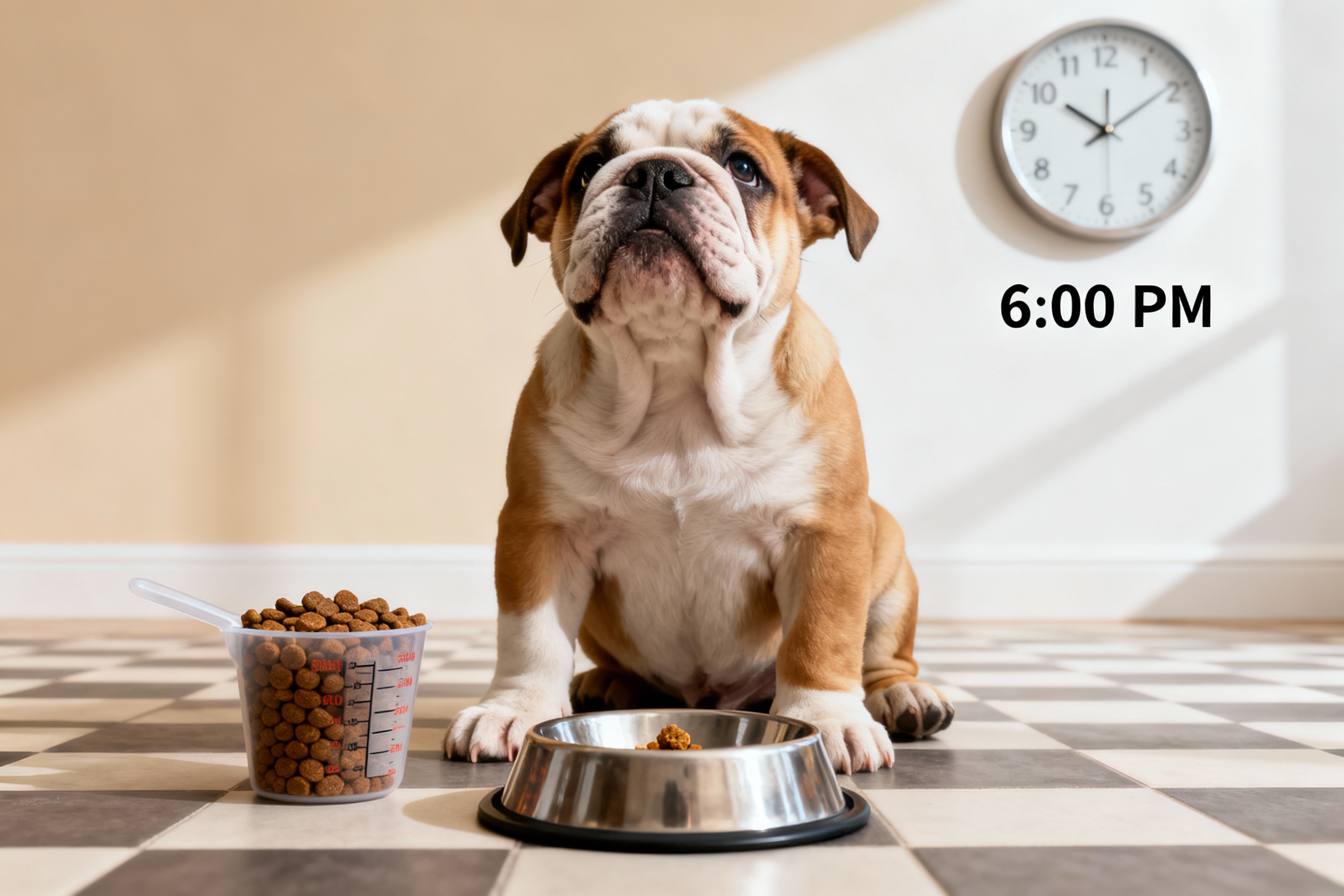
Bulldog puppies eat like they’re training for a nap marathon. They’re chubby-cheeked, stubborn, and insanely cute—and they need the right amount of food to grow strong without turning into little meatballs. You want healthy, not hefty.
Let’s break down exactly how much to feed your Bulldog puppy, when to feed, and what to feed, without overcomplicating it.
How Much Should a Bulldog Puppy Eat?
Bulldog puppies don’t all need the same portions. Size, age, and activity matter a lot. A couch-loving 10-week-old and a zoomie-prone 6-month-old won’t match up.
As a quick guide:
- 8–12 weeks: 1–1.5 cups per day, split into 3–4 meals
- 3–4 months: 1.25–2 cups per day, split into 3 meals
- 5–6 months: 1.5–2.25 cups per day, split into 2–3 meals
- 7–12 months: 1.75–2.5 cups per day, usually 2 meals
These ranges assume a high-quality puppy formula and an average English Bulldog build. Start at the lower end, watch body condition, and adjust weekly. French Bulldogs will need less (think 0.75–1.75 cups depending on age). Bigger American Bulldogs?
Expect more. Always check your specific food’s calorie content.
Portioning by Calories (The Smarter Way)
Feeding by cups works, but calories keep you honest. Most Bulldog puppies need roughly:
- 8–12 weeks: 600–800 kcal/day
- 3–6 months: 750–1,000 kcal/day
- 7–12 months: 800–1,100 kcal/day
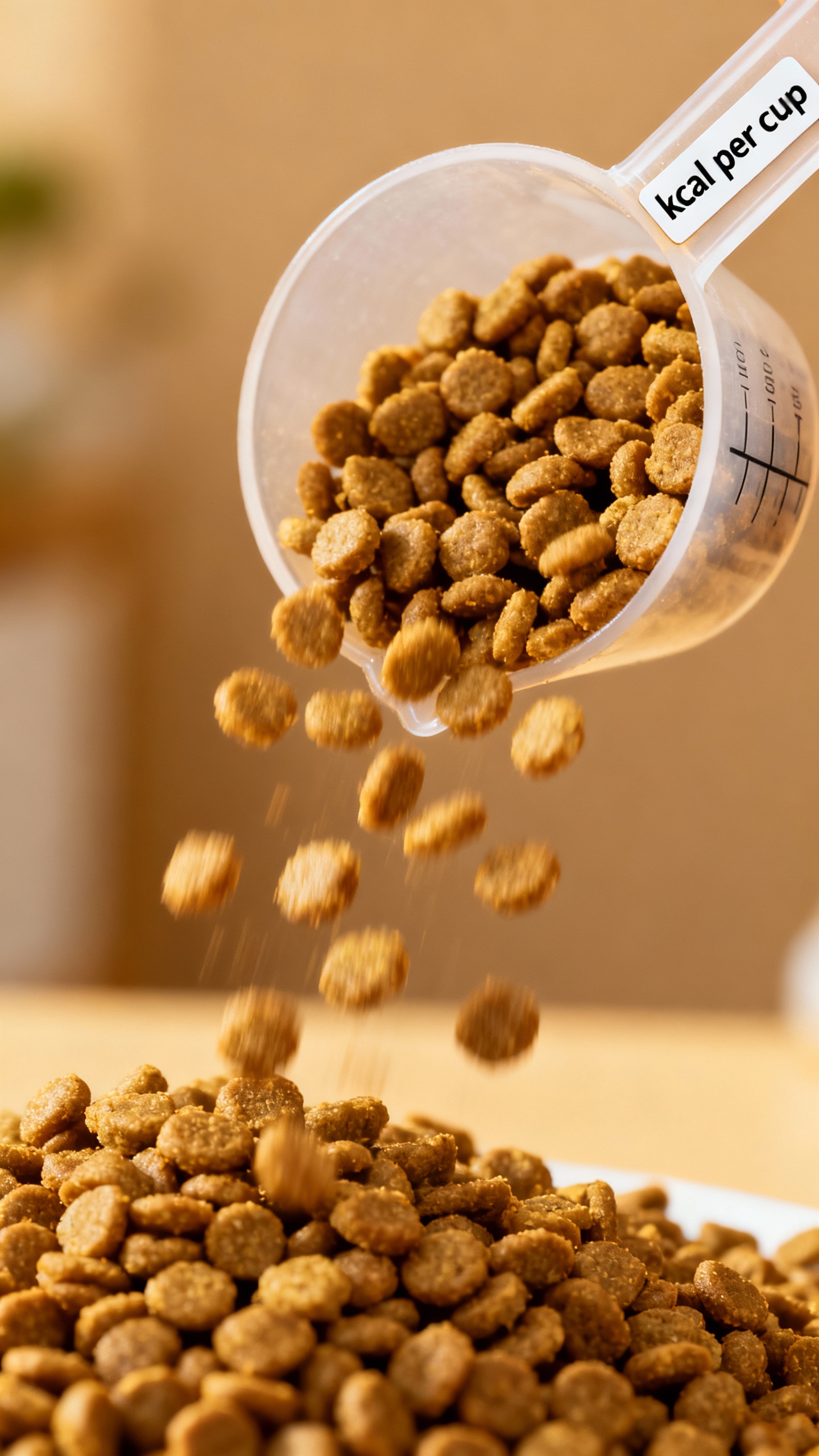
Then look at your bag’s kcal per cup.
Example: If your food has 400 kcal/cup and your pup needs 900 kcal/day, feed about 2.25 cups spread over the day. Easy math, big payoff.
What Should You Feed? (And What to Avoid)
Bulldogs grow fast, but their joints and gut need gentle handling. Choose a balanced, complete puppy food with:
- AAFCO “growth” or “all life stages” statement
- Controlled calcium and phosphorus (aim around 1.2–1.5% Ca, 1.0–1.3% P on a dry matter basis)
- Real meat proteins with moderate fat (not super high-fat formulas)
- DHA for brain development
Avoid:
- Grain-free fads unless your vet says otherwise
- High-calorie “performance” foods (too rich for most Bulldogs)
- Random human foods that wreck tummies (onions, garlic, grapes—hard no)
Dry, Wet, Raw—Which Works?
– Dry (kibble): Easiest for portion control and dental crunch.
Good for most Bulldogs. – Wet: Tasty but calorie-dense. Mix a little with kibble if you must. – Raw: Possible, but get help from a vet nutritionist to keep it balanced. IMO, it’s overkill for most new puppy owners.
Feeding Schedule That Actually Works
Bulldogs thrive on predictable routines.
And they’ll remind you if you’re late. Loudly.
- 8–12 weeks: 3–4 meals/day
- 3–6 months: 3 meals/day
- 6–12 months: 2 meals/day
Feed at consistent times. Pick up bowls after 15–20 minutes to prevent grazing and to keep potty schedules regular. Bonus: you’ll spot appetite changes faster.
Treats and Training Rewards
Treats count.
Keep them under 10% of daily calories. Use kibble as training rewards to stay honest, and sprinkle in high-value treats sparingly. FYI, Bulldogs will absolutely try to convince you that treats don’t count.
They do.
Body Condition: Your Real Feedback Loop
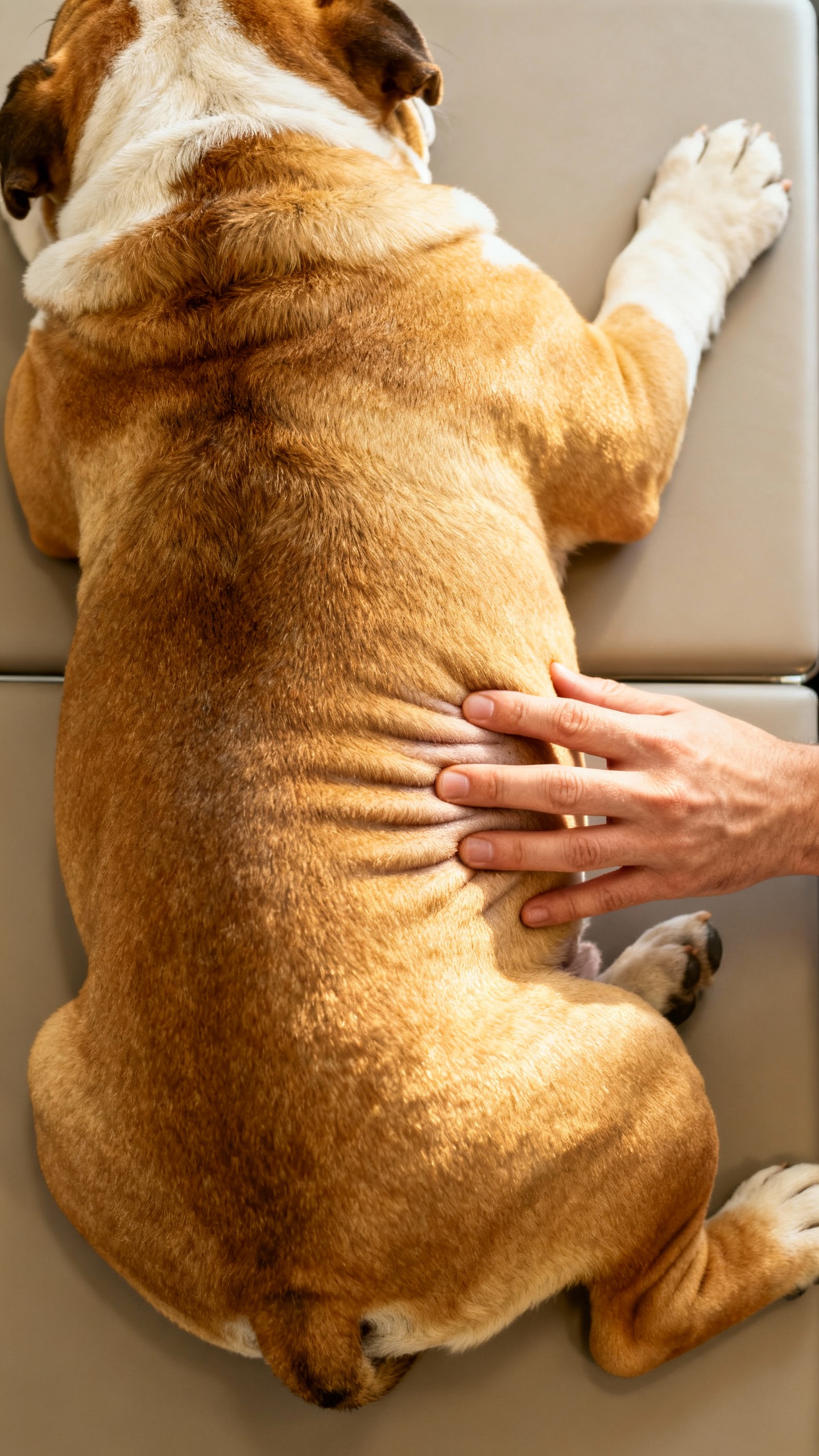
Don’t feed the bag. Feed the dog in front of you. Use a simple body check:
- Ribs: Feel them easily under a thin fat layer.
Not sticking out, not buried.
- Waist: Visible from above—gentle tuck, not a sausage.
- Tummy tuck: Slight upward tuck from chest to belly (Bulldogs will still look stocky).
If your puppy looks like a loaf of bread with legs, scale back by 10–15%. If ribs vanish, reduce food. If ribs show like xylophone keys, bump up by 10%.
Growth Spurts and Plateaus
Expect appetite swings.
Growth spurts happen around 12–16 weeks and 5–6 months. Increase slightly when your pup seems hungrier and leans out. As growth slows near 9–12 months, gradually reduce.
Common Bulldog Feeding Gotchas
Bulldogs come with quirks.
Cute, drooly quirks.
- Gas and sensitive stomachs: Switch foods gradually over 7–10 days. Choose easily digestible formulas. Probiotics can help.
- Allergies/skin issues: Often environmental, not just food.
If food’s the culprit, chicken and beef are common triggers. Work with your vet before swapping 12 times.
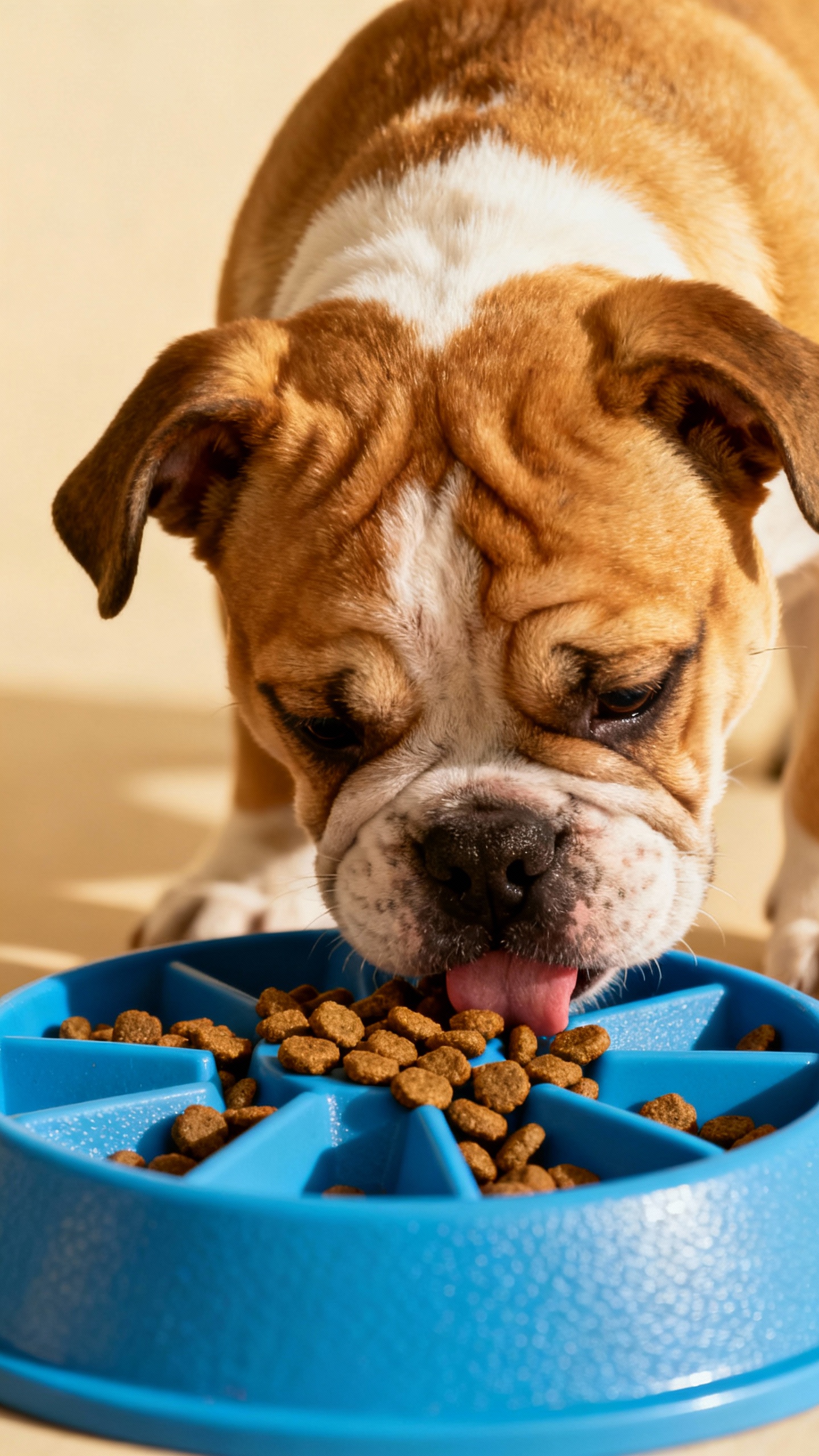
- Overheating at meals: Fast eaters can gulp air. Use a slow feeder bowl.
- Hip/elbow health: Keep growth steady, not rapid. Overfeeding stresses joints.
Supplements: Do You Need Them?
Usually, no.
A complete puppy diet covers bases. You can consider:
- Omega-3s (EPA/DHA): For skin, joints, and brain. Pick a dog-safe fish oil and follow dosing.
- Probiotic: Helpful during food changes or tummy upset.
Skip calcium supplements unless your vet prescribes them.
Too much calcium can mess with bone development.
Sample Daily Feeding Plan
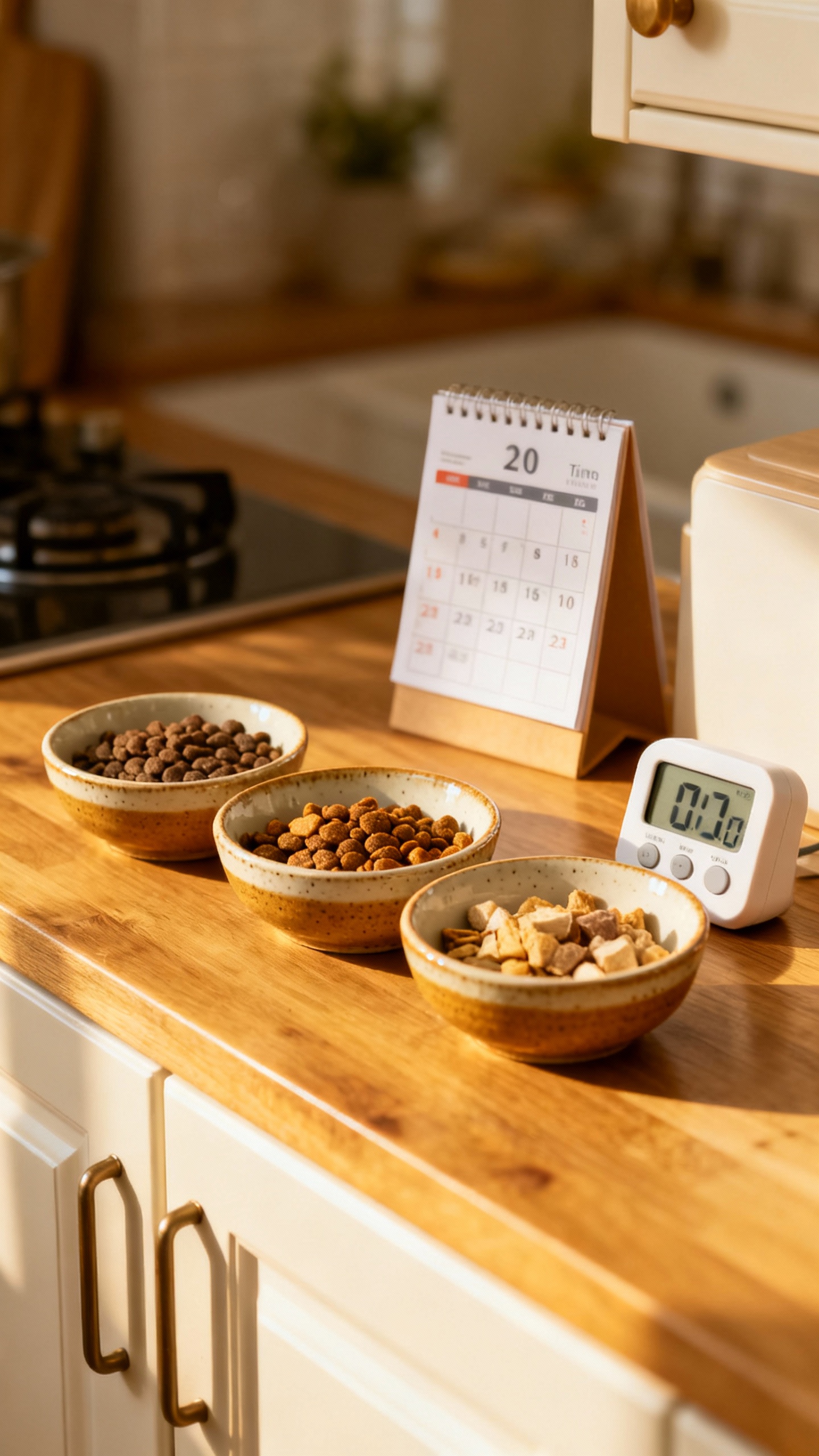
Here’s a simple, realistic setup for an English Bulldog puppy around 4 months old, ~20–25 lbs, on a 400 kcal/cup kibble, needing ~850–950 kcal/day.
- Breakfast (8 AM): 0.75 cup kibble + a splash of warm water
- Lunch (1 PM): 0.5 cup kibble
- Dinner (6 PM): 0.75 cup kibble
- Treats/training: 50–80 kcal worth of kibble or soft treats
Adjust up or down by 1–2 tablespoons per meal as your pup grows or leans out. Tiny tweaks beat big swings.
Switching to Adult Food
Bulldogs don’t need puppy food forever. Transition when growth slows and your pup nears adult size:
- English Bulldogs: 10–12 months
- French Bulldogs: 9–12 months
- American Bulldogs: 12–15 months
Switch gradually over 7–10 days, blending a little more adult food each day.
Watch stool quality and energy levels. If poop turns into pudding, slow down the transition.
FAQ
How do I know if I’m feeding too much?
Check body shape weekly. If you can’t feel ribs easily or the waist disappears, you’re overfeeding.
Also watch stools—big, soft piles usually mean too much volume or too-rich food.
My Bulldog puppy inhales food. How do I slow them down?
Use a slow feeder bowl, spread food on a lick mat, or split meals into smaller portions. Add a little water to the kibble.
Avoid real rocks or toys in bowls—choking hazard, not worth it.
Are Bulldogs prone to food allergies?
They can be sensitive, but true food allergies are less common than Instagram suggests. If you see chronic itch, ear gunk, paw licking, or recurrent soft stools, talk to your vet. An elimination diet beats random guessing, IMO.
Can I feed homemade meals?
Possible, but you need a vet nutritionist to balance calcium, phosphorus, vitamins, and calories.
Unbalanced DIY diets can stunt growth. If you go this route, get a pro recipe, not a TikTok.
How many treats can I give daily?
Keep treats under 10% of daily calories. For a puppy eating 900 kcal/day, that’s about 90 kcal of treats.
Use part of the kibble allotment for training so you don’t blow the budget.
What if my puppy skips a meal?
If your pup otherwise acts normal and water intake looks good, it’s probably a one-off. Teething, minor tummy blips, or heat can curb appetite. If it lasts more than a day, or you see vomiting/lethargy, call your vet.
Bottom Line
Feed for steady growth, not maximum chunk.
Start with age-appropriate portions, split meals through the day, and tweak based on body condition. Choose a solid puppy formula, keep treats reasonable, and use slow feeders if you’ve got a little vacuum. Do that, and you’ll raise a healthy Bulldog who eats well, naps hard, and looks like a tank—in the best way possible.
FYI, a little common sense goes a long way here.
Leave a Reply