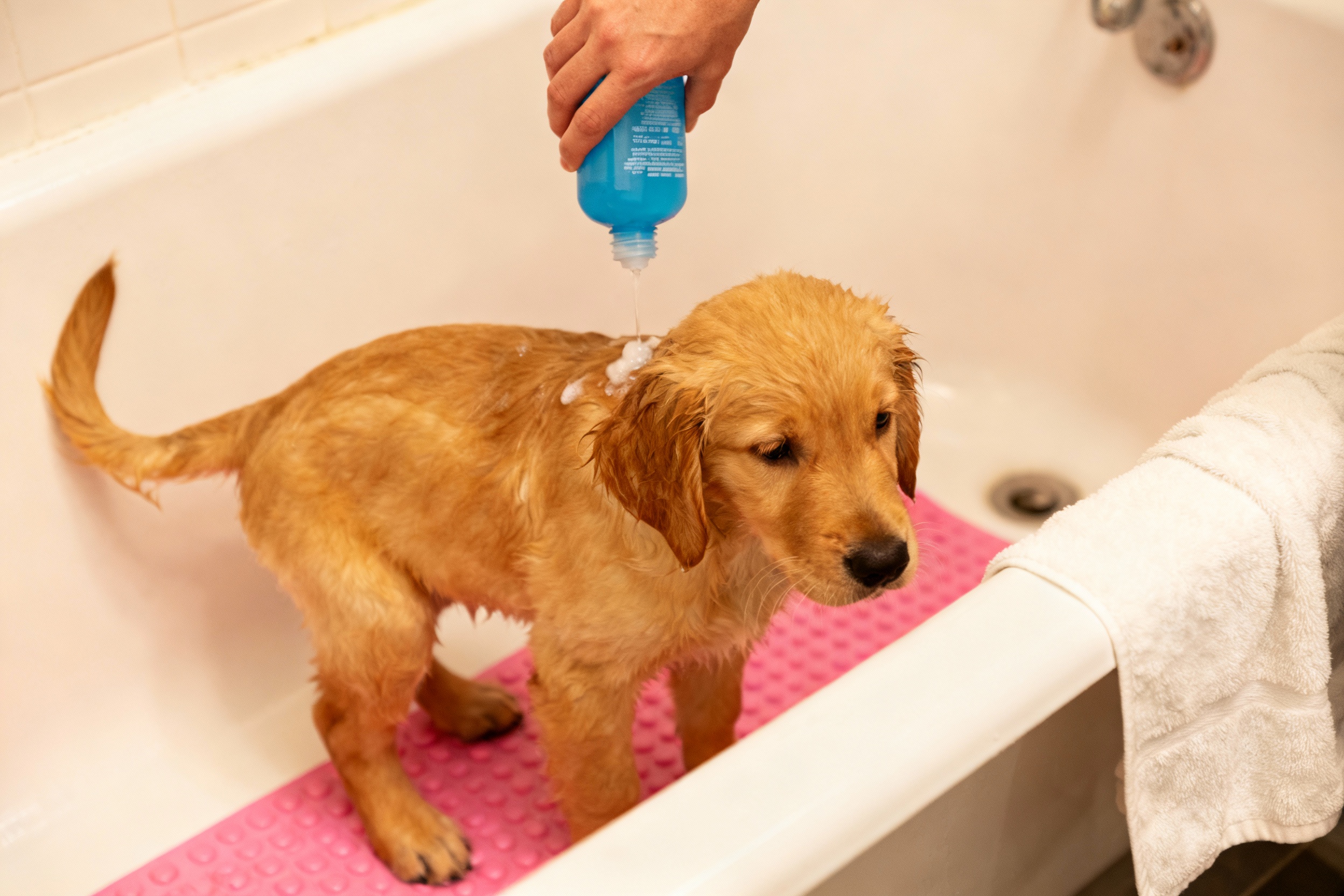
You adopted a golden retriever puppy. Congrats—and condolences to your clean floors. Goldens love water, mud, and chaos, which means baths happen.
The good news? Bath time can be easy, quick, and even fun if you set it up right. Let’s turn your slippery, wriggly noodle into a squeaky-clean fluffball without tears (yours) or dramatic escapes (also yours).
Know Your Golden: Why Bath Time Matters

Golden retriever puppies don’t just get dirty—they collect grime like it’s a hobby.
Their fluffy double coat traps dust, dander, and mystery crumbs. Regular baths help with odor control and skin health, and they set the tone for grooming routines your adult golden will need. How often? Every 4–6 weeks works for most puppies. Spot-clean mud splats or puddle crimes with a damp cloth between full baths.
More than once a week can dry their skin unless your vet says otherwise.
Gather Your Gear (Before You Get a Wet Dog Zoomie)
You don’t want to run mid-bath for a towel while your puppy reenacts a slip-n-slide. Set up everything first.
- Puppy-safe shampoo: Gentle, fragrance-light, pH-balanced, and preferably oatmeal or aloe based. No human shampoo—wrong pH, itchy results.
- Optional conditioner: Good for fluffy coats, reduces tangles.
Choose a dog-safe formula.
- Non-slip mat: In the tub or sink. Stability = less panic.
- Cup or sprayer: Handheld sprayer makes life easier. A plastic cup works too.
- 2–3 absorbent towels: One for the dog, one for your floor, one for your soul.
- Soft brush: Slicker or pin brush for pre- and post-bath.
- Cotton balls (optional): Lightly in ears to keep water out—don’t push deep.
- Treats: The currency of cooperation.
Prep Like a Pro
Pre-bath prep turns chaos into a vibe.
Do it, and your future self will thank you.
Brush First
Brush out tangles and loose hair before the bath. Wet mats turn into felt. Focus behind ears, around the collar area, and the pants (aka hind leg fluff).
Trim Nails (Optional)
If your puppy tolerates it, trim nails before bathing.
Wet nails get soft and harder to cut cleanly. If nail trimming feels like a duel, skip it for now.
Water Temperature Check
Use lukewarm water—think baby bath, not spa sauna. Too hot or too cold equals drama.
Step-by-Step: The Bath Itself
Alright, game time.
Keep your vibe calm and cheerful. The puppy mirrors your energy—if you panic, they’ll go full Tasmanian devil.
- Secure the area: Close doors. Put down the non-slip mat.
Place a towel nearby.
- Introduce the water: Start the water gently. Let your puppy sniff the sprayer. Feed a treat.
- Wet the coat thoroughly: Start at the neck and work back.
Avoid spraying directly into ears or eyes. Lift the coat with your fingers so water reaches the underlayer.
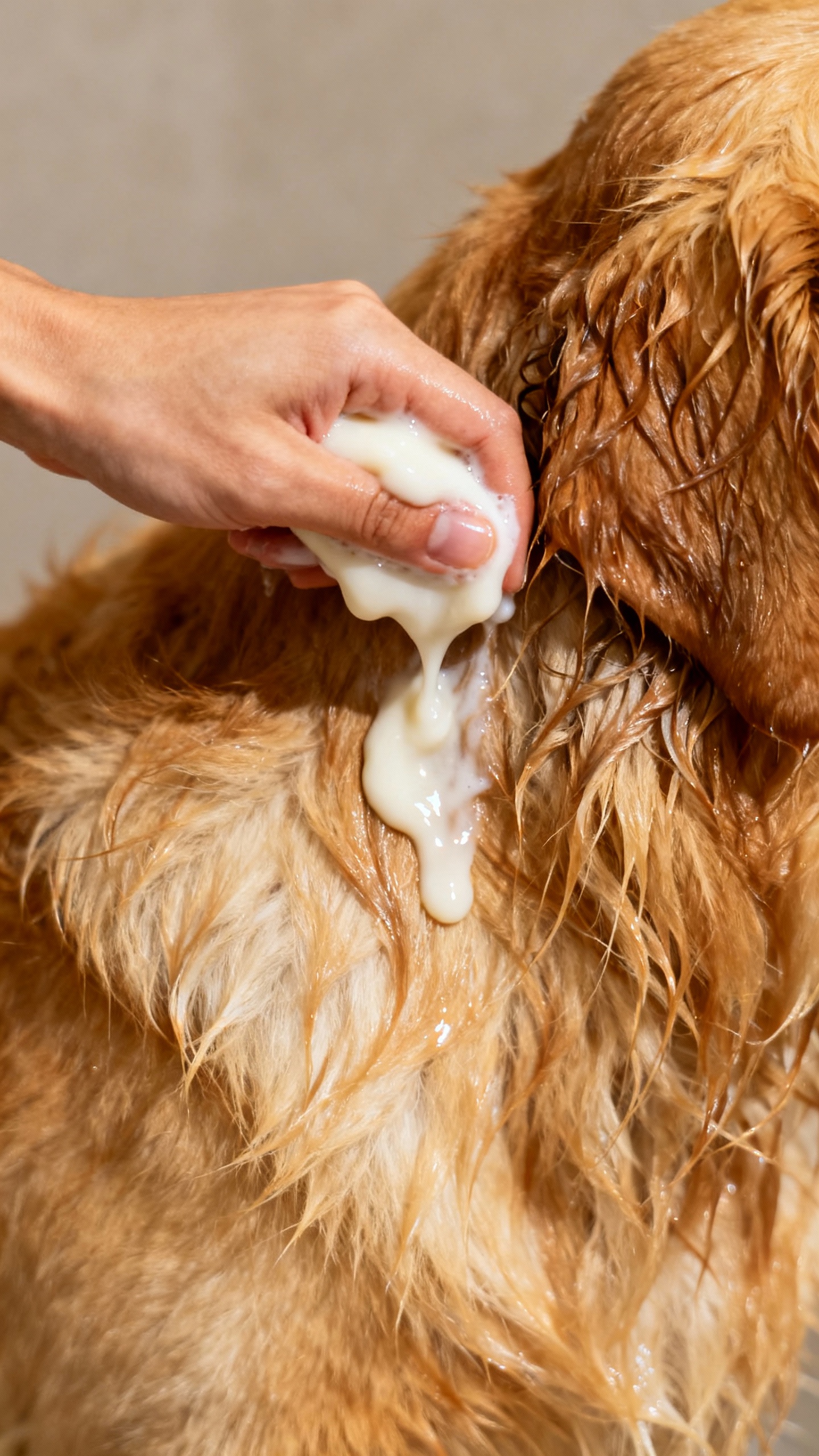
- Shampoo smart: Dilute shampoo with water (about 1:5) to spread it evenly. Lather from neck to tail, then legs, belly, and butt floof last.
Use a damp cloth for the face—no direct soap near eyes.
- Massage gently: Aim for 2–3 minutes. Turn it into a mini spa moment. Your puppy will forgive you faster.
- Rinse like you mean it: Rinse until the water runs clear.
Then rinse again. Leftover shampoo causes itchiness—hard pass.
- Optional conditioner: Apply and leave for 1–2 minutes if the label says so. Rinse thoroughly.
Face and Ears 101
Use a wet washcloth for the face.
Wipe gently around eyes and muzzle. For ears, keep water out and clean the outer ear flap only. After the bath, use a vet-approved ear cleaner if your vet recommends one.
FYI, water in ears can lead to infections—so be careful here.

Drying Without Drama
Towel dry thoroughly. Expect one mighty shake—embrace it, or armor your bathroom in towels like a DIY car wash.
- Towel method: Press and squeeze; don’t scrub. Scrubbing mats the coat.
- Air dry vs. blow dry: If the room is warm, air drying is fine.
If you use a dryer, set it to cool or low, keep it moving, and introduce it slowly with treats.
- Final brush: Once mostly dry, brush again to prevent tangles and keep the coat fluffy.
Hot Spots: What to Watch For
Goldens can get “hot spots”—angry, damp skin patches. Dry the coat well, especially around the neck where collars trap moisture. If you see red, oozy areas or your puppy chews a spot obsessively, call the vet.
IMO, prevention beats ointment any day.
Make Bath Time Positive (So Future You Doesn’t Suffer)

You want a dog that willingly walks into the tub. It’s possible, even with a golden who thinks chaos is a lifestyle.
- Slow introduction: Do “practice sessions” with the dry tub—treats for stepping in and out.
- Use a lick mat: Smear a little dog-safe peanut butter or yogurt on a lick mat stuck to the wall. Distraction = cooperation.
- Keep it short: Aim for 10–15 minutes total.
Puppies have short patience and colder bodies.
- End on a win: Big praise, warm towel cuddles, then a calm play session or nap.
Common Mistakes (So You Don’t Learn the Hard Way)
We’ve all done at least one of these. No judgment—just avoid them next time.
- Using human shampoo: It can dry and irritate puppy skin. Dog shampoo only.
- Forgetting to rinse: Soap residue = itch city.
- Water too hot: Puppies overheat quickly.
Keep it lukewarm.
- Bathing too often: You’ll strip natural oils. Stick to 4–6 weeks unless disaster strikes.
- Ignoring the brush: Mats get worse with water. Always brush first.
- Skipping ear care: Moist ears can mean infections.
Keep them dry.
Special Cases: Sensitive Skin, Fleas, and Outdoor Mud Monsters
Not every bath looks the same. Tailor your approach to your puppy’s needs.
Sensitive or Itchy Skin
Choose a hypoallergenic, fragrance-free shampoo. Oatmeal or aloe helps.
If itching continues or you see dandruff or red patches, talk to your vet. Sometimes food allergies play a role.
Fleas or Ticks
Use vet-recommended preventatives rather than relying on flea shampoos. If you spot fleas, consult your vet for a full plan.
Wash bedding, vacuum thoroughly, and treat the environment. FYI, flea baths help temporarily but don’t solve infestations.
Post-Mud Mayhem
For epic mud, hose off outside with lukewarm water if possible, then do a proper bath indoors. Avoid caking your drains with half the backyard.
FAQ
When can I give my golden retriever puppy their first bath?
After they settle in and feel safe with you—usually around 8–10 weeks.
Keep it short and warm, and focus on positive associations. If the breeder or rescue already introduced baths, even better.
Can I bathe my puppy after vaccinations?
Yes, you can bathe after vaccinations. Just keep the puppy warm and calm, and avoid heavy stress that day.
If your pup seems tired or sore, reschedule bath time.
How do I keep water out of my puppy’s ears?
Place a small cotton ball lightly in each ear canal entrance and avoid spraying near the head. After the bath, remove the cotton and gently dry the ear flap. Use a vet-recommended ear cleaner if advised.
My puppy hates baths—what now?
Scale way back.
Do 2–3 minute “happy tub” sessions with treats and no water. Then add a trickle of water, then a quick rinse another day. Reward constantly.
You can also try a different space, like a sink or walk-in shower, to reset their expectations.
What temperature should the water be?
Lukewarm—about the temperature you’d use for a baby. If it feels pleasantly warm on your wrist without any sting, you’re good.
Do I need a conditioner for my golden puppy?
Not mandatory, but it helps reduce tangles and keeps the coat soft. Pick a dog-safe conditioner and rinse it thoroughly.
If your pup has sensitive skin, skip it or go very light.
Final Touches After the Bath
Do a quick once-over: check paws, trim a few wispy hairs if needed, and make sure the collar is bone-dry before putting it back on. Give a small meal or a chew once your puppy fully dries. Then bask in the fluff.
You earned it.
Conclusion
Bathing a golden retriever puppy doesn’t need to be a wrestling match. Prep your gear, keep the water warm, rinse like your life depends on it, and make the whole thing a treat-filled hangout. Do that consistently and, IMO, you’ll raise a dog who trots into the tub like a champ.
Clean pup, happy nose, and minimal bathroom floods—that’s the dream.
Leave a Reply