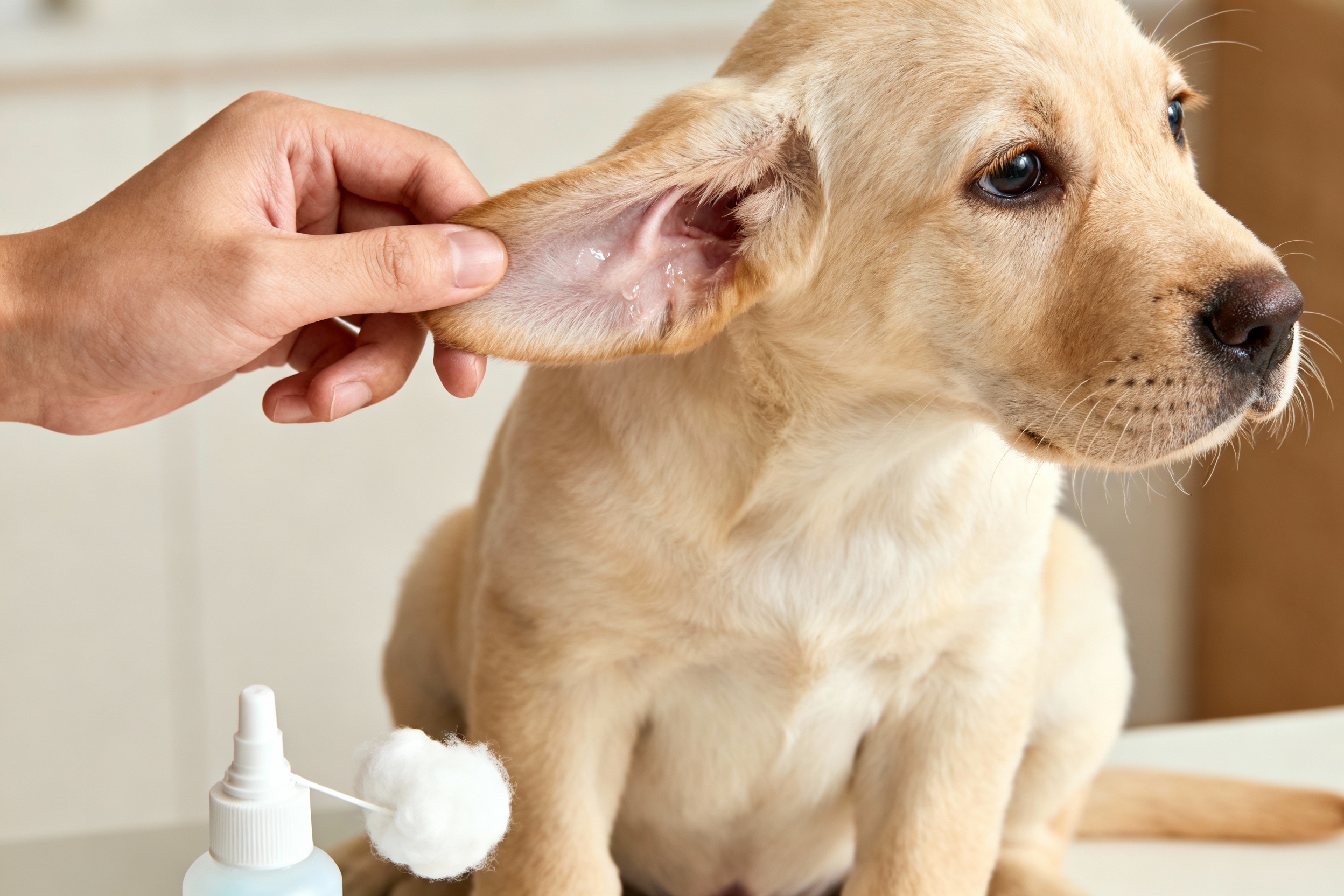
Your Lab puppy’s ears look adorable, but they’re also wax factories with a side hustle in collecting dirt. Skip routine cleaning and you’ll invite itchiness, infections, and a vet bill that makes you wince. The good news?
You can keep those flappy ears clean in minutes, without turning bath time into a wrestling match. Here’s exactly how to do it—no stress, no drama.
Why Lab Puppy Ears Need Regular Love
Labrador Retrievers have floppy ears that trap moisture and heat. That cozy vibe becomes a party venue for yeast and bacteria.
Gross, yes, but fixable. Puppies also roll in life like it’s their job. Dirt, grass, lake water—straight into the ear canal. Routine cleaning prevents infection, keeps them comfy, and helps you spot issues early.
What You Need (Keep It Simple)
You don’t need a vet clinic in your kitchen.
Just gather:
- Vet-approved ear cleaner (labeled for dogs; no hydrogen peroxide or alcohol)
- Cotton balls or gauze (never Q-tips deep in the canal)
- Treats (bribery works—embrace it)
- Towel (for the inevitable shake-off)
- Good lighting (you want to actually see what you’re doing)
Picking the Right Cleaner
Look for a product that says “ear cleanser,” “ear flush,” or “otic solution.” For Labs that swim a lot, choose a cleaner with drying agents like alcohol-free astringents. FYI: some cleaners include antifungals or antibacterials—great if your vet recommends them, but not necessary for routine care.
How Often Should You Clean?
The short answer: weekly for most Lab puppies. If your pup swims often, you might clean after every swim.
If you barely see wax and their ears look healthy, every 10–14 days works. On the flip side, if you smell a funky, sweet odor or see discharge, stop DIY-ing and call your vet.
Signs You’re Overdoing It
Too much cleaning can irritate the ear. Redness, persistent head shaking right after cleaning, or dryness could mean you’re going too far.
IMO, aim for “clean enough,” not “sterile like an operating room.”
Step-by-Step: Clean Those Floppy Ears Like a Pro
You’ve got the supplies. You’ve got the pup. Now here’s the play-by-play:
- Set the vibe. Keep it calm, keep it positive.
Sit on the floor. Treat in hand. Ear rubs first.
- Inspect the ear. Gently lift the ear flap.
You should see pale pink skin and a mild wax color. Stop and call your vet if you see blood, thick dark discharge, crusts, swelling, or smell a strong odor.
- Fill the canal. Place the nozzle just at the ear opening (don’t jam it in). Squeeze enough cleaner to fill the canal—you’ll hear a little “glug.” Totally normal.
- Massage the base. Use your fingers to massage the ear canal base for 15–20 seconds. You’ll hear squishing.
That’s the cleaner breaking up gunk. Your pup may make faces. Ignore the drama.
- Let them shake. Step back, hold the towel up, and let them do the full-body sprinkler move.
It helps bring debris up and out.
- Wipe, don’t dig. Wrap a cotton ball or gauze around your finger and wipe the visible part of the canal and inner flap. Only go as far as your finger comfortably reaches. No Q-tips deep inside—you’ll push debris in and risk injury.
- Repeat if needed. If the cotton ball comes out nasty, you can do a second flush. No more than two rounds per ear.
- Treat and praise. Finish strong.
Make it a party so next time they don’t sprint under the couch.
Training Your Puppy to Actually Tolerate This
Labs are smart and food-motivated. Use that to your advantage.
- Desensitize. Touch the ear flap casually during cuddles. Treat.
Repeat. Build trust.
- Pair the bottle sound with snacks. Open/close the cleaner near them. Treat.
Less suspense later.
- Keep sessions short. One ear today, one ear tomorrow if your puppy gets squirmy. Progress beats perfection.
- Use a helper. A calm person feeding treats while you clean keeps the wiggles contained.
What If Your Puppy Hates It?
Try a lick mat with peanut butter (xylitol-free) on a tile wall. It buys you two clean hands and 60–90 seconds of quiet focus.
If your puppy shows fear or fights hard, ask your vet or a trainer for cooperative care tips. FYI, forcing it can make future cleanings way harder.
After-Swim and After-Bath Care
Water sitting in a Lab’s ears = yeast rave. Dry them out:
- Towel dry the ear flap right after swimming or bathing.
- Use a drying ear cleaner after water play—same steps as above.
- Skip cotton swabs.
Yes, I’m repeating myself. It matters.
Red Flags: When to Call the Vet
Sometimes you’re not dealing with “dirty.” You’re dealing with “infected.” Cleaners won’t fix infections; meds will. Call your vet if you notice:
- Strong odor (sweet, yeasty, or foul)
- Red, swollen ear canal or scabs
- Brown, black, yellow, or pus-like discharge
- Head tilt, frequent scratching, or crying when touched
- Shaking all day, not just after cleaning
IMO, early treatment = fewer meds, less discomfort, and less money out of your pocket.
Common Mistakes to Avoid
- Using the wrong products. No vinegar, alcohol, or hydrogen peroxide.
They burn and irritate.
- Cleaning too often. Over-cleaning strips natural defenses. Stick to the schedule that keeps ears comfy and wax-light.
- Stuffing Q-tips in the canal. I know, the temptation is real. Don’t do it.
- Skipping the massage step. It’s how the cleaner breaks up debris deep down.
- Ignoring early signs. If something seems off, it probably is.
Trust your nose and eyes.
FAQ
Can I use baby wipes to clean my Lab puppy’s ears?
You can wipe the ear flap with a fragrance-free baby wipe in a pinch, but don’t use wipes for the canal. They won’t dissolve wax or dry moisture properly. Use a dog-specific ear cleaner for the inside.
How do I know if I’m putting in enough cleaner?
You should see the liquid fill the canal opening and hear that little squish when you massage.
If you barely see any fluid, use more. The canal is longer than you think, especially in floppy-eared breeds like Labs.
My puppy yelped when I touched his ear. What now?
Pain means you might be dealing with an infection, a foreign object (like a foxtail), or a scratch. Don’t clean. Call your vet instead.
Cleaning a painful ear can make it worse and definitely makes your pup hate ear care.
Is coconut oil okay as an ear cleaner?
Nope. It’s not formulated to break down wax or dry moisture, and it can leave residue that yeast love. Stick to vet-approved ear solutions that actually do the job.
How do I keep ear hair under control?
Labs don’t usually need ear hair plucked like some breeds.
If you see excess fluff or mats around the canal entrance, ask your groomer to trim lightly. Plucking can irritate and IMO isn’t necessary for Labs unless your vet says otherwise.
What if my puppy won’t stop shaking after I clean?
A few shakes right after cleaning is normal. If your puppy keeps shaking for hours, scratching, or acting uncomfortable, the cleaner might irritate them or there’s an underlying problem.
Switch to a gentler formula and check with your vet if it continues.
Conclusion
Clean ears = happy Lab. With the right cleaner, a quick massage, and a few treats, you’ll keep infections at bay and your puppy comfortable. Make it a calm, consistent routine, watch for red flags, and don’t overthink it.
Your Lab will hear every snack bag crinkle perfectly—mission accomplished.
Leave a Reply