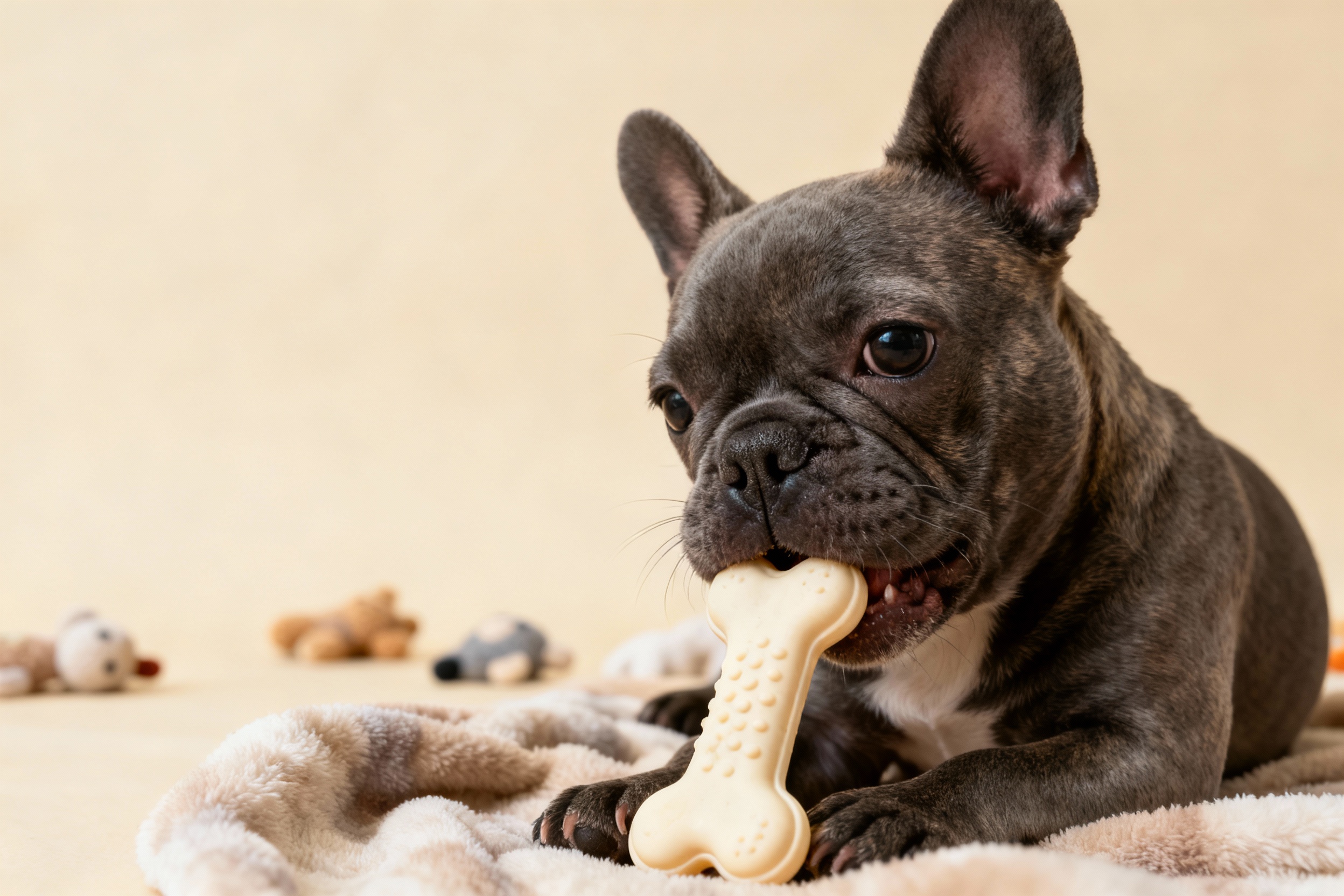
Teething turns your sweet Frenchie into a tiny land shark. Chew marks show up on table legs. Drool appears out of nowhere.
Your pup looks at you like, “Help?” Good news: you can help them through it without sacrificing your shoes or your sanity. Here’s the game plan to soothe the gums, protect your stuff, and survive the bitey phase with your friendship intact.
Know the Teething Timeline (So You Don’t Panic)
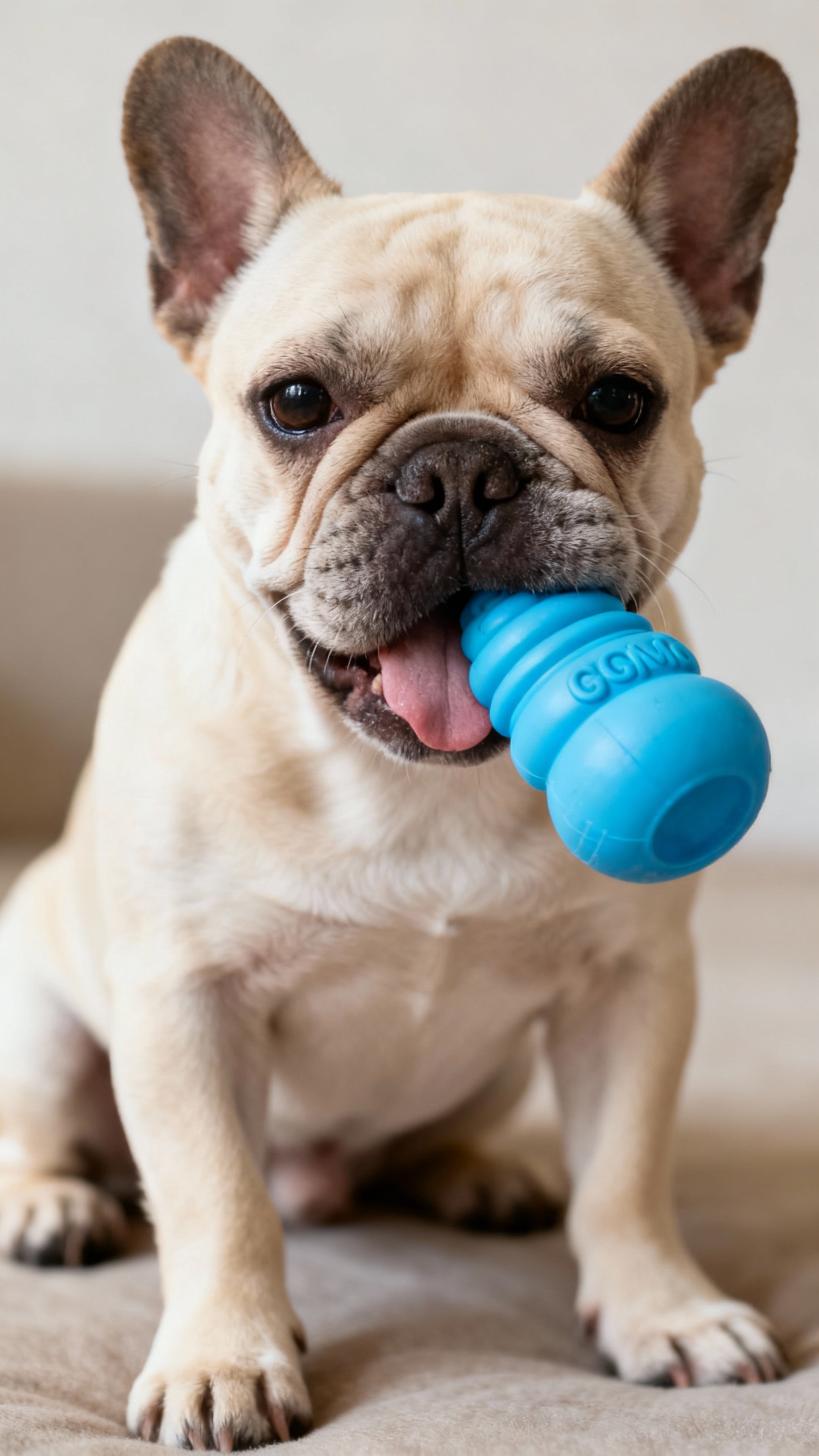
Puppies teethe in two waves. First, baby teeth pop in by 6-8 weeks.
Then the real party starts: adult teeth replace them from about 3 to 8 months. Frenchies ride this timeline too, but some run early or late. It’s normal. What you might see:
- Chewing everything like it owes them money
- Drool and little blood spots on toys (tiny, not dramatic)
- Gums that look red, sore, or a bit puffy
- Slight appetite dip on tough days
FYI: If you see heavy bleeding, fever, or your pup won’t eat for a day, call your vet.
Don’t “wait and see” that stuff.
Build a Teething Toolkit (Seriously, Gather Supplies)
You can’t stop the urge to chew, but you can redirect it. Stock your house like a smart human and you’ll save your furniture. Top picks for Frenchie mouths:
- Soft rubber toys with some give (Kong, West Paw). Too hard can crack teeth.
- Freezable toys for cooling relief.
Cold numbs gums and reduces inflammation.
- Rope toys for gentle gnawing (supervise, trim frayed ends).
- Edible chews like bully sticks or collagen chews in short sessions.
- Frozen treats (more on that in a sec) for soothing and distraction.
What to Avoid
- No rock-hard chews like antlers, hooves, or bones. If a fingernail can’t dent it, skip it.
- No stuffed toys alone unless you supervise. Frenchies will perform surgery and eat the fluff.
- No flavored sprays that claim to stop chewing.
Mixed results, sometimes upset tummies.

Cool the Gums, Calm the Chaos
Cold fixes a lot. You can turn your freezer into a teething first-aid kit with minimal effort.
Easy, dog-safe freezer ideas
- Frozen washcloth: Wet, twist, freeze, supervise. Perfect texture for sore gums.
- Freezable toy stuffed with food: Use a puppy-safe paste or smear yogurt and freeze.
- Ice cube “pops”: Freeze low-sodium broth with a few kibbles inside.
- Frozen treats: Small dollops of plain Greek yogurt or mashed banana (tiny portions).
Keep sessions short so you don’t chill your pup too much.
A few minutes of cold, then a break. Repeat as needed.
Redirect, Don’t Scold (Training That Actually Works)
Teething isn’t “bad behavior.” Your pup isn’t plotting against your baseboards. You just need to channel the chewing to the right stuff. Try this simple routine:
- Catch the chew: “Uh-uh” or “Leave it.” Calm voice.
No big drama.
- Swap with a toy: Offer a high-value chew and praise.
- Reward: When your Frenchie bites the toy, party. Treats! Cheer!
You win!
Set up a “Chew Zone”
Contain the chaos during peak bite-o’clock (usually evening).
- Use a playpen or gated area with 3-4 different textures of toys.
- Rotate toys every few days to keep them novel.
- Keep one “special” frozen chew for extra spicy moods.
IMO, prevention beats correction every time. If your Frenchie can’t reach the table leg, they can’t destroy it. Wild, I know.

Keep Chews Safe and Short
Frenchies have compact jaws and sometimes questionable decision-making skills.
You need rules for chew time. Safety basics:
- Supervise every chew session, always.
- Size matters: Chews should be bigger than your pup’s mouth to avoid choking.
- Time cap: 10-15 minutes per session to prevent jaw fatigue and tummy troubles.
- Swap out worn toys before they shred into swallowable bits.
Signs a chew is too much
- Your pup whines mid-chew (pain, not drama)
- Gums look pale or bleed every time
- They guard the chew and get tense—time for a trade-up with a treat
Feed Smart: Gentle on Gums, Good for Teeth

Sore gums can make crunchy kibble feel like gravel. A few small tweaks help your Frenchie eat comfortably.
- Slightly soften kibble with warm water for 5-10 minutes on rough days.
- Stick to routine to avoid stomach upsets. No crash-test-dummy food experiments.
- Add dental-friendly treats approved for puppies to support oral health.
Dental hygiene (yes, even for puppies)
Start brushing early with puppy toothpaste and a finger brush.
- Go slow: 10-20 seconds per session at first.
- Focus on the gum line where plaque loves to party.
- Make it fun with praise and tiny treats.
End on a win.
FYI: Brushing during teething feels weird, but it helps the adult teeth arrive to a cleaner neighborhood.
Comfort and Routine: The Secret Sauce
Teething makes puppies cranky. Keep life predictable and your Frenchie will handle it better.
- Short play bursts to burn energy without overdoing it.
- Gentle tug with soft toys to satisfy the urge to pull and chew (let them “win” often).
- Cozy naps in a calm space. Overtired pups act like gremlins.
- Teething massages: Gently rub the outside of the muzzle and under the jaw for a minute.
IMO, calm humans make calmer dogs.
Your Frenchie reads your vibe like a book.
When to Call the Vet
Most teething chaos lives in the “annoying but normal” bucket. Still, you should watch for red flags. Get a vet check if you notice:
- Retained baby teeth still hanging out after 7-8 months
- Bad breath with pus or obvious swelling
- Refusing food for more than 24 hours
- One-sided chewing or yelps when chewing
- Broken teeth or chips on hard toys
Your vet might recommend pulling retained baby teeth, especially in small breeds like Frenchies. It prevents crooked adult teeth and future dental drama.
FAQs
How long does teething last for a French Bulldog?
Most Frenchies start serious teething around 3 months and finish by 7-8 months.
Some wrap earlier, a few linger. You’ll know it’s ending when the chewing eases up and all the adult teeth have moved in.
Is it normal to see blood on toys?
A little pink or a tiny smear now and then is normal as baby teeth loosen. Heavy bleeding or a constant mess isn’t.
If you see clots, swelling, or your pup seems in real pain, call your vet.
What’s the safest chew for a teething Frenchie?
Soft rubber toys with give, freezable options, and supervised bully sticks work great. Avoid antlers, bones, or anything rock-hard. If you can’t dent it with your fingernail, it’s too hard for puppy teeth.
Can I use teething gels?
Most over-the-counter teething gels aren’t necessary and some contain ingredients you shouldn’t use on dogs.
Cooling and appropriate chews do the job. If you think your pup needs extra help, ask your vet for safe options.
Why is my Frenchie chewing everything at night?
Evenings bring “witching hour” energy and sore gums from a full day of chewing. Schedule a frozen-chew session, a short training game, then a calm cuddle or crate nap.
Structure beats chaos every time.
Do puppy teeth sometimes stay in?
Yep, especially in small breeds. If a baby tooth stays while the adult tooth comes in, you may see double teeth. Your vet can remove the baby tooth to prevent crowding and plaque traps.
Wrap-Up: You’ve Got This
Teething feels like forever, but it’s temporary.
Stock the right toys, use cold smartly, redirect without drama, and keep your routine steady. Protect your furniture, protect those tiny gums, and celebrate the wins. Soon your Frenchie will retire from land-shark life and go back to being your squishy-faced shadow—with a shiny new smile to boot.
Leave a Reply