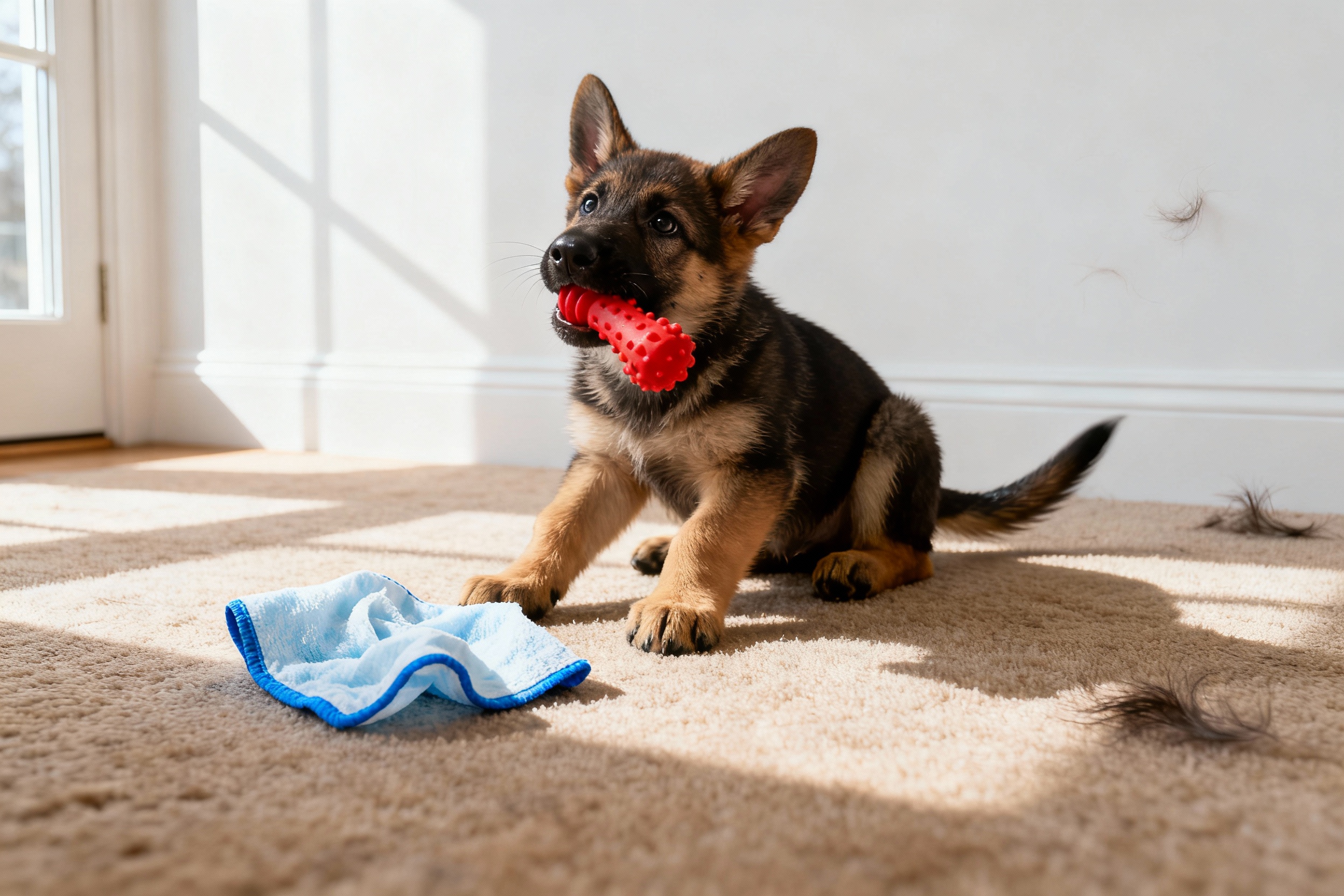
Teething turns your sweet German Shepherd pup into a tiny land shark. Those needle teeth? They’re coming and going, and your shoes are collateral damage.
The good news: you can absolutely help your pup feel better and save your stuff. Let’s walk through what actually works—no fluff, just real-life strategies.
What Teething Looks Like (And When It Ends)
German Shepherds start teething around 3-4 months and finish by 7-8 months. Expect drooling, chewing, sore gums, and the occasional tiny tooth on the floor.
Cute? Kind of. Chaotic?
Definitely. You’ll also see changes in appetite and mood. Your pup might get cranky or extra cuddly.
That’s normal. If they refuse food entirely or act lethargic, call your vet—teething shouldn’t make them miserable.
Key Milestones
- 3-4 months: Baby teeth start falling out
- 4-6 months: Big chew phase, adult teeth erupt
- 6-8 months: Adult teeth settle; chewing gradually decreases
Cold Stuff = Instant Relief
Cold helps numb sore gums. Use it.
It’s simple and effective.
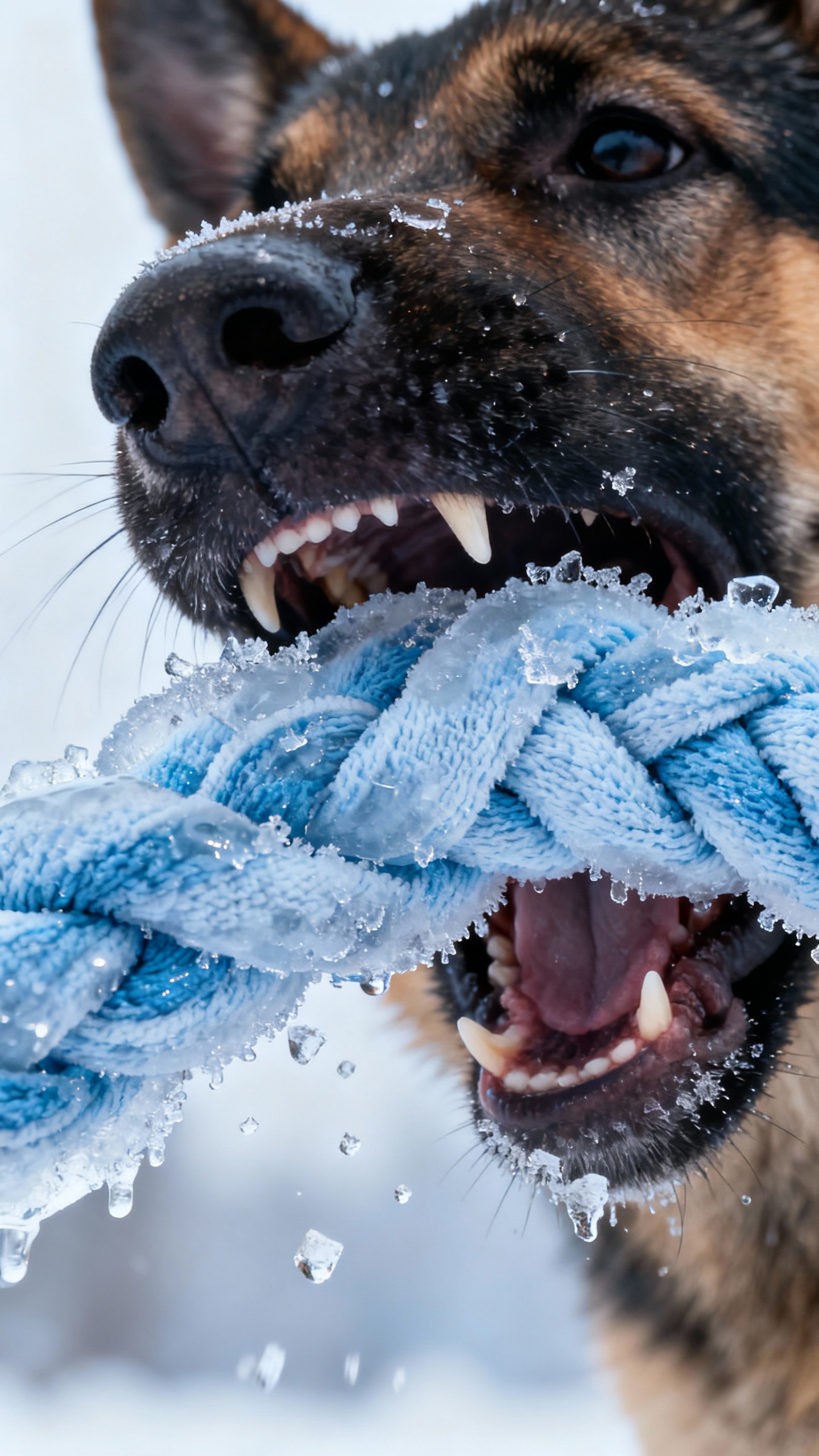
- Frozen washcloth: Wet, twist, freeze 2-3 hours. Offer under supervision. Cheap and effective.
- Chilled chew toys: Rubber toys you can refrigerate work great.
Avoid hard plastics.
- Frozen veggies: Baby carrots or green beans for a quick crunch. Small portions only.
What to Skip
- Ice cubes: Tempting, but easy to crunch and swallow. Not worth the risk.
- Homemade flavored ice: Messy, sticky, and can upset the stomach.
Hard pass.
Pick Chews That Won’t Wreck Teeth
Puppy gums need gentle pressure, not a dental demolition derby. If it feels like a rock, don’t buy it.
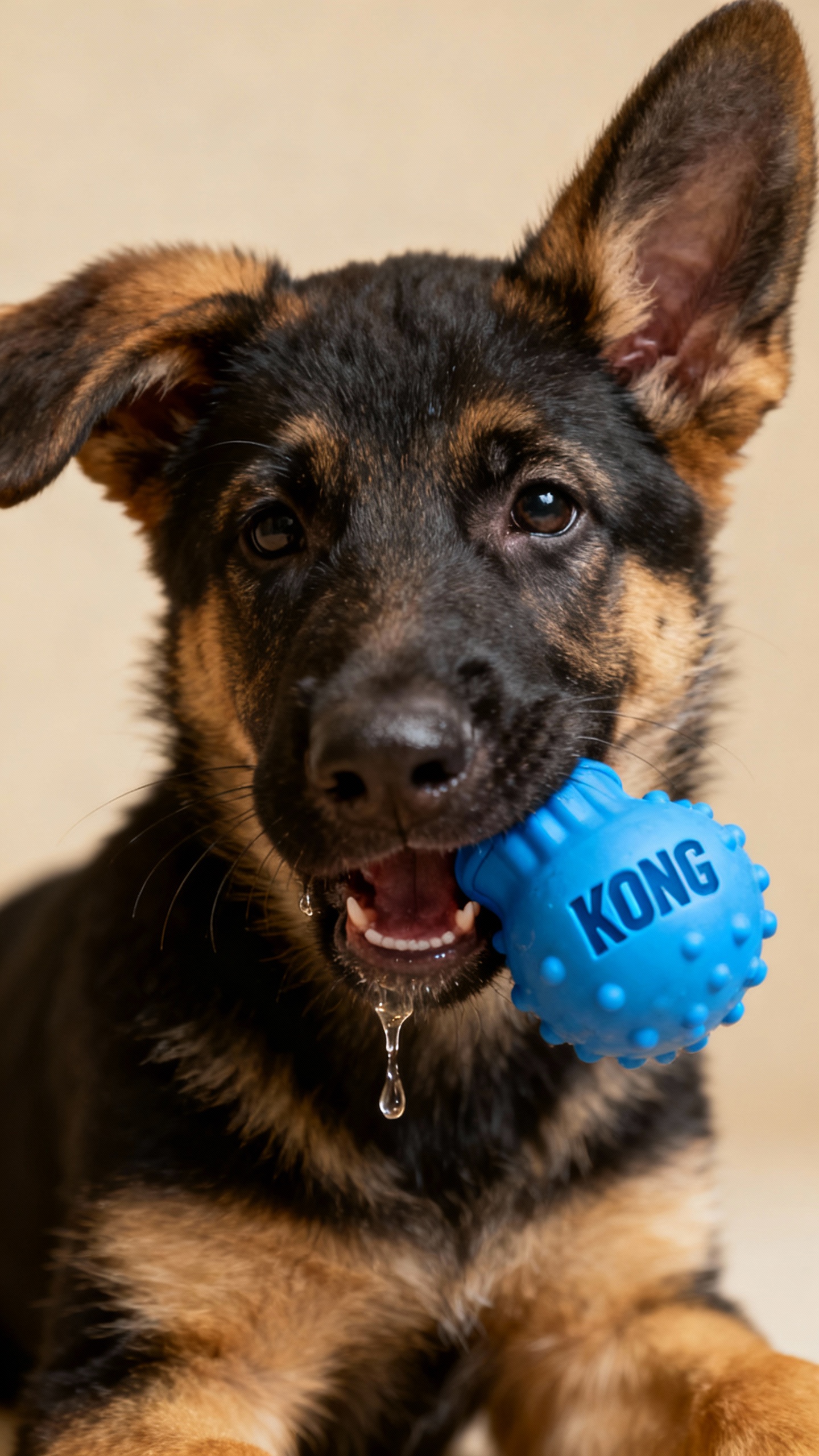
- Soft rubber toys: Think KONG Puppy line. They flex, they soothe, they last.
- Rope toys: Great for tug (light tug!), and you can wet/freeze them for extra relief.
- Edible chews: Puppy-safe dental sticks or soft yak-milk chews formulated for puppies.
Hard No Items
- Antlers, bones, hooves: Too hard.
Broken teeth are expensive, FYI.
- Sticks: Splinters, mouth injuries, vet bills. Nope.
- Rawhide: Choking and blockage risk. Better options exist.
Channel the Chew Drive (So Your Couch Survives)
Your Shepherd wants to chew.
You can either guide that energy or mourn your coffee table. Your call.
- Rotate toys: Keep 3-4 out, stash the rest. Fresh “new” toys feel exciting.
- Supervise and swap: When they mouth the wrong thing, calmly trade with a chew toy.
Praise like they just solved world peace.
- Use play to tire them: Short training, fetch, and sniff games reduce destructive chewing. Tired pup = better choices.
Enrichment Ideas
- Stuffed toys: Smear a little peanut butter or yogurt inside a KONG, then freeze.
- Snuffle mats: Scatter kibble; let your pup forage. Mental work tires them out.
- Easy puzzle feeders: Keep it simple during teething—frustration makes chewing worse.
Build Bite Inhibition (Without Killing the Fun)
German Shepherds play with their mouths, and teething makes it extra bitey.
Teach gentle mouthing now and you’ll thank yourself later.
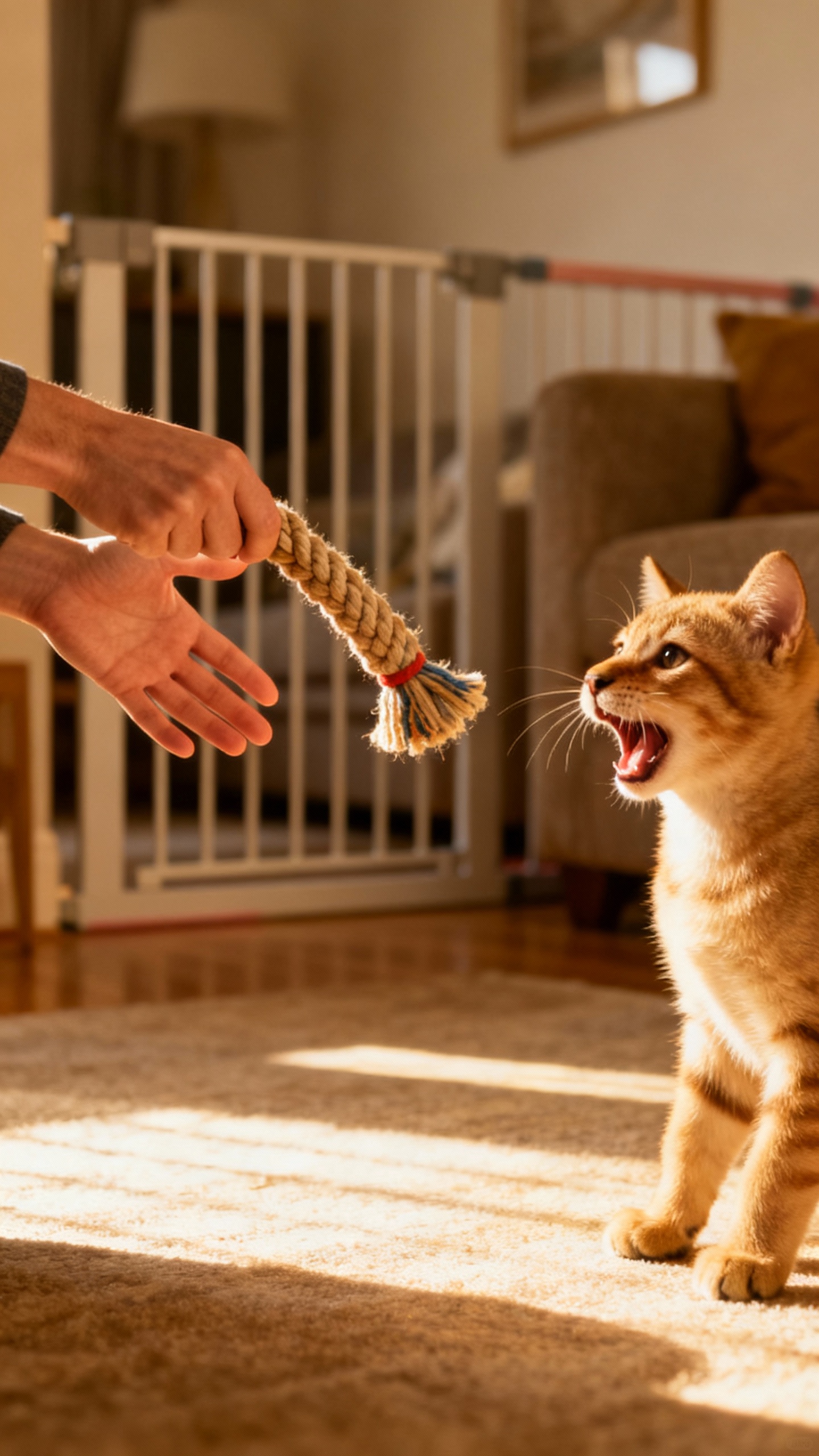
- Yelp once, then redirect: If they nip skin, say “ow,” go quiet for a second, then offer a toy.
- Use short play bursts: Keep sessions fun, stop if they get wild, then restart calmly.
- Reward soft mouths: Calm licks or gentle mouthing earn attention and treats.
Consistency Tips
- Everyone uses the same rules: Family, friends, even neighbors. Mixed messages = confused pup.
- Hands are not toys: Always swap to a chew. Hands-off policy makes a big difference.
Protect Your Stuff Like a Pro
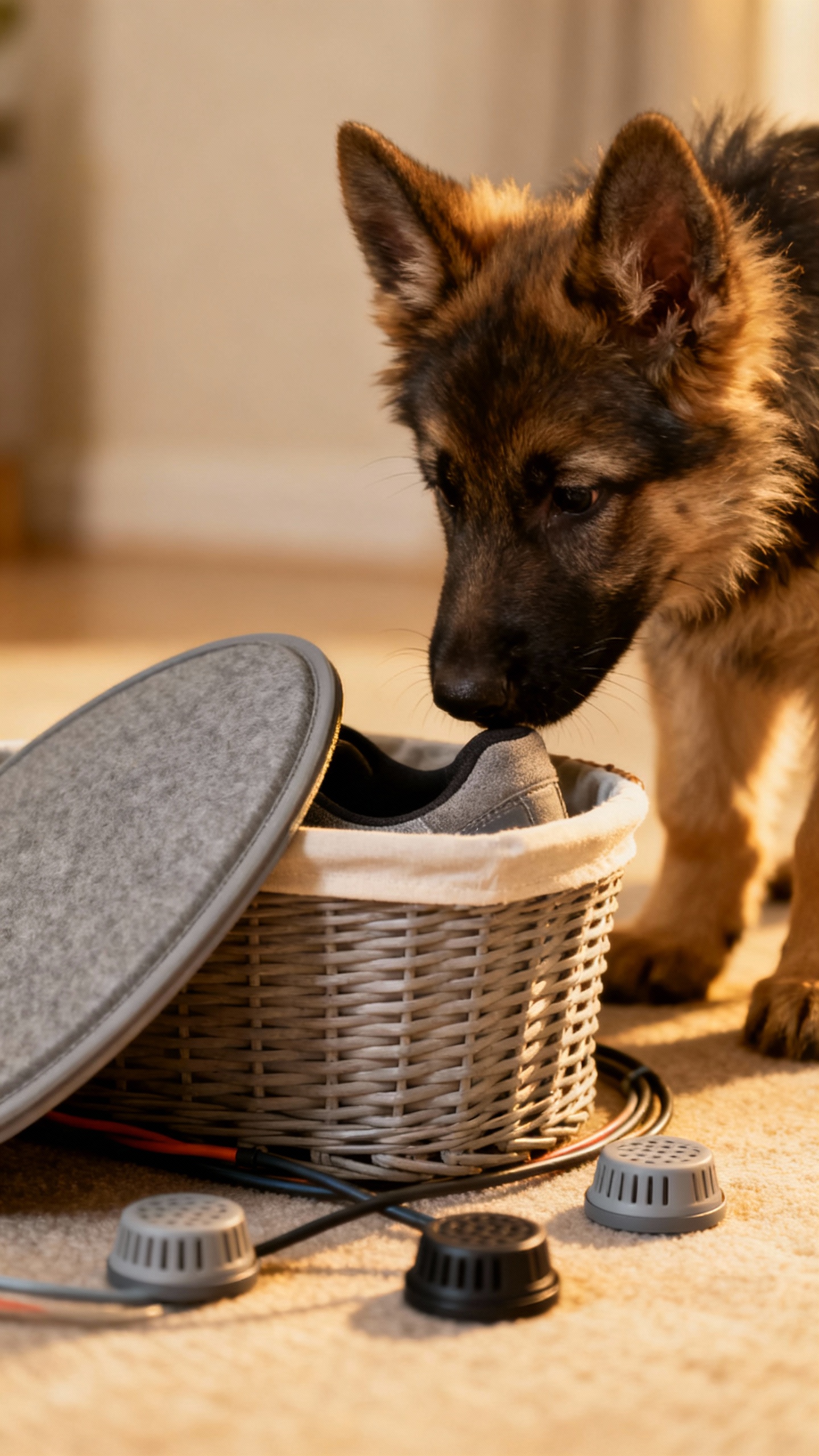
Yes, management matters.
It’s not cheating—it’s smart.
- Puppy-proof zones: Use baby gates and exercise pens. Fewer bad options = fewer bad choices.
- Bitter sprays: Apply to table legs, cords, and baseboards. Test first so you don’t stain.
- Crate training: Cozy, safe downtime.
Give a chill chew in the crate to build positive vibes.
Cord and Shoe Tactics
- Cable covers: Hide cords in sleeves or under rugs. Shock-proof your space, literally.
- Shoe basket with a lid: Put them away. Temptation management, IMO.
Feeding and Dental Care During Teething
Sore gums can make crunchy kibble feel rough.
You can soften things a bit without creating a picky eater.
- Slightly moisten kibble: Warm water or low-sodium broth for 5-10 minutes.
- Cool snacks: Plain yogurt on a lick mat, or chilled banana slices in moderation.
- Start dental habits: Introduce a puppy toothbrush and dog-safe toothpaste. Go slow and keep it positive.
Monitor the Mouth
- Check for retained baby teeth: If a baby tooth stays while the adult one erupts, ask your vet. It can cause crowding.
- Watch the gums: Mild bleeding = normal.
Heavy bleeding, bad smell, or swelling = vet visit.
Routine, Training, and Sanity Savers
Structure helps a lot. Shepherds thrive when they know what’s next.
- Daily rhythm: Short training, play, nap, chew time, repeat. Predictability calms them.
- Gentle tugs: Tug games help, but keep rules: “take it,” “drop,” and controlled intensity.
- Socialization: New places, people, and textures.
Keep sessions short and positive while teeth erupt.
FAQs
How long does teething last for a German Shepherd?
Most German Shepherds start losing baby teeth around 3-4 months and finish getting adult teeth by 7-8 months. The most intense chewing usually hits between 4-6 months. After that, the urge to destroy… er, “explore,” gradually fades.
Is it normal for my puppy’s gums to bleed when chewing?
A little pink on toys or drool is normal.
Think “loose tooth at recess” vibes. If you see heavy bleeding, a foul odor, pus, or your pup refuses to eat, call your vet.
What’s the safest chew for a teething German Shepherd?
Soft rubber toys designed for puppies, rope toys (supervised), and puppy-formulated edible chews work best. Avoid anything that fails the “thumbnail test” (if you can’t dent it with your nail, it’s too hard).
My puppy keeps biting hands.
How do I stop it?
Yelp once, pause briefly, then redirect to a toy. Reward calm behavior. Consistency matters—same response every time, from everyone.
Rough play with hands confuses the rules, FYI.
Should I give pain meds for teething?
No over-the-counter meds unless your vet specifically tells you. Many human pain relievers are dangerous for dogs. Cold chews and appropriate toys handle 99% of teething discomfort.
Why is my puppy chewing more at night?
Evening zoomies plus sore gums equals extra chewing.
Plan a short walk, a sniff session, and a chilled chew toy before bedtime. Routine helps flip the “settle down” switch.
Conclusion
Teething won’t last forever, even if it feels like an eternity when your German Shepherd beelines for your favorite sneakers. Give safe cold chews, pick puppy-friendly toys, redirect with patience, and protect your space like a mastermind.
Keep an eye on those gums, build good habits, and ride out the chaos. You’ve got this—and soon you’ll have a fantastic adult Shepherd with a great smile, IMO.
Leave a Reply