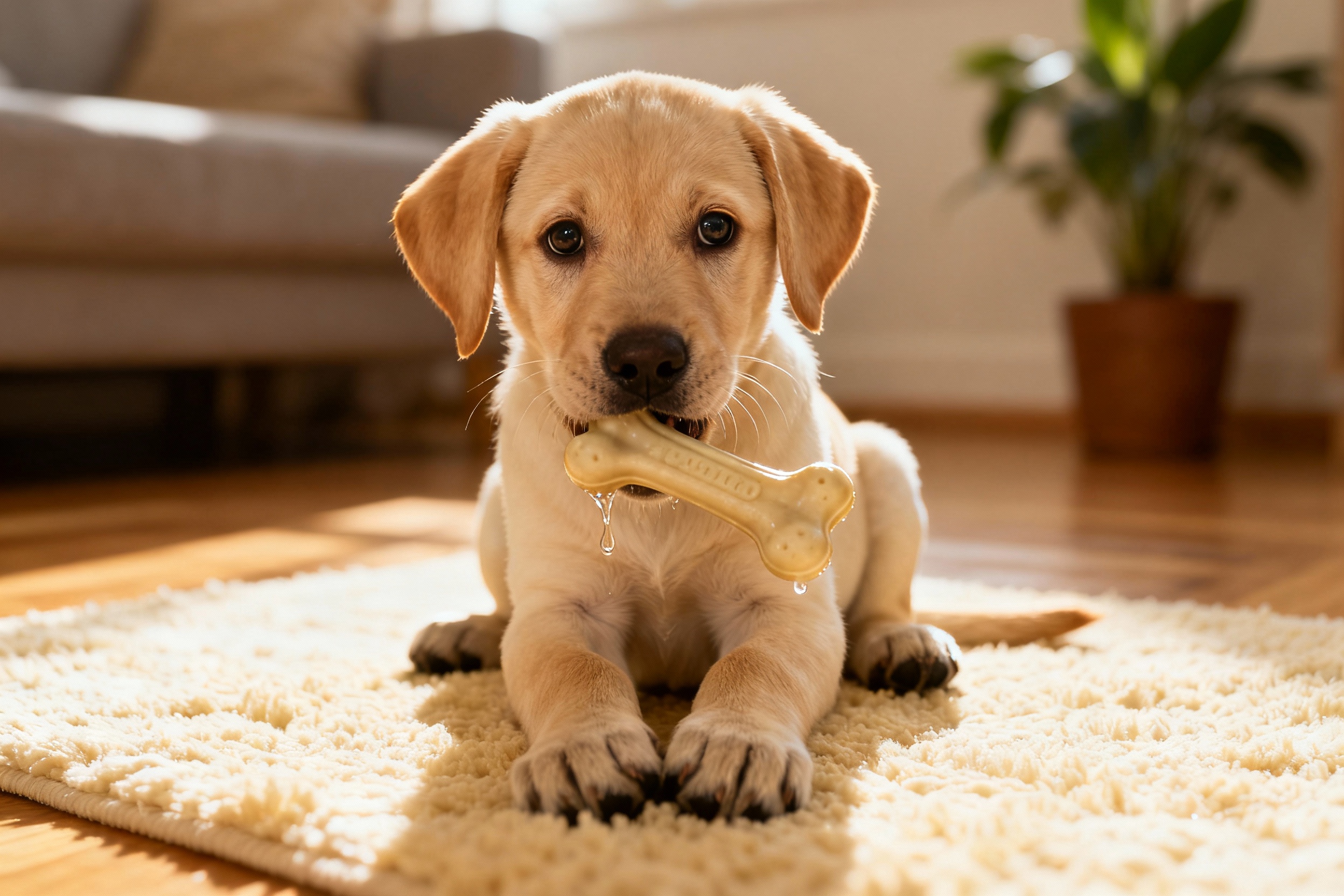
Teething turns your sweet Labrador puppy into a tiny land shark with zero remorse. Shoes? Delicious.
Baseboards? Don’t mind if I do. The good news: this chaos won’t last.
The better news: you can make it way easier (and save your furniture) with a few smart moves.
What’s Actually Going On With Teething?
Puppies don’t teethe out of spite. They chew because it relieves gum pain and helps new teeth break through. Labs just take that to Olympic levels because, well, they’re Labs.
Teething typically runs from about 12 weeks to 6 months. You’ll see drool, red gums, and the occasional baby tooth on the floor like a tiny shark tooth. Gross?
A little. Normal? Absolutely.
Teething Timeline (So You Don’t Panic)
- 8–12 weeks: Baby incisors show up and start shifting.
- 12–16 weeks: Baby teeth start falling out.
Chewing ramps up.
- 4–6 months: Adult teeth come in. Chewing peaks. Your patience gets tested.
- 6–7 months: Most Labs finish teething.
Breathe again.
Give Them The Right Things To Chew
You can’t stop the chewing, but you can channel it. Offer a variety of textures and densities so your Lab learns what’s “legal.”
- Rubber toys: Think KONG-type toys. Size up for Labs.
Stuff with soft food or peanut butter to keep them interested.
- Rope toys: Great for gentle tug and soothing. Dampen and freeze for extra relief.
- Dental chews: Choose vet-approved options sized for large breeds.
- Frozen washcloths: Twist a clean cloth, soak in water or low-sodium broth, freeze, and offer as a DIY teether.
Skip hard stuff like bones, antlers, and hard nylon chews. Rule of thumb: if it hurts when you hit your knee with it, it can crack a tooth. And cracked teeth mean vet bills you didn’t budget for.
Rotation Keeps It Fresh
Rotate 4–6 toys every few days.
Labs get bored fast. A “new” old toy feels exciting again and keeps them from hunting your slippers.
Use Cold To Soothe Sore Gums
Cold helps numb discomfort and reduce inflammation. Easy hacks?
You bet.
- Freeze stuffed toys: Stuff a rubber toy with wet kibble or canned food, then freeze.
- Frozen fruit: Offer a few frozen blueberries or banana slices as a treat. Small amounts only, FYI.
- Chilled carrots: A peeled, cold carrot can be a great chew. Supervise and remove small chunks to prevent gulping.
Always supervise frozen chews. Labs can turn anything into a swallowable object if you blink.
Save Your Stuff: Management Is Your Best Friend
Let’s be honest: puppies don’t “know better” yet.
You must set the stage for success.
- Puppy-proof rooms: Hide cords, put shoes away, block access to wood furniture legs with gates or pens.
- Use bitter deterrent sprays: Apply to table legs, baseboards, and other chew targets. Reapply daily at first.
- Exercise and training: A tired Lab chews less destructively. Aim for several short play and training sessions instead of one long zoomie marathon.
- Crate or playpen: When you can’t watch them, manage them.
This prevents bad habits from forming, IMO.
Redirection: Your Daily Move
Puppy grabs a shoe? Don’t scold. Calmly trade for a chew toy, praise heavily, and move on.
Repeat a few hundred times. It works.
Feed The Mouth, Calm The Mind
Chewing isn’t just about gums; it’s a stress reliever. Give your Lab “jobs” that satisfy both brain and bite.
- Food puzzles: Slow feeders, snuffle mats, and puzzle toys turn mealtime into enrichment.
- Frozen meals: Stuffed, frozen KONGs can occupy 20–30 minutes while soothing gums.
- Training snacks: Use tiny treats during short training bursts to mix mental work with munching.
Pro tip: Count puzzle food and stuffed-toy meals toward their daily calories.
Labs think “round” is a shape goal.
Gum Care And Tooth Fairy Duties
Yes, you should start dental care now. No, it’s not weird.
- Finger brush + dog toothpaste: Gently rub gums and new teeth a few times a week. Pick a dog-safe toothpaste (chicken flavor slaps, apparently).
- Check for retained baby teeth: If a baby tooth refuses to leave while the adult tooth crowds in, call your vet.
- Watch drool and blood: A little is normal.
Pools of drool or persistent bleeding is not.
Pain Relief: What’s Safe?
Do not give human pain meds. Many are toxic to dogs. If your pup seems miserable—whining, not eating, pawing at the mouth—talk to your vet. They can advise safe options and check for infection or problematic teeth.
Training Through The Chomp Phase
Teething time = perfect time to teach bite manners and mouth skills.
- “Gentle” cue: Hand-feed a few kibble pieces.
Close your fist if teeth touch skin, open when they lick softly. Reward calm mouths.
- “Leave it” and “drop”: Practice daily with low-stakes items, then graduate to Real Life (aka socks).
- Structured play: Short tug sessions with clear rules—start, stop, and trade—teach self-control.
Keep sessions short and upbeat. Labs aim to please but also aim for chaos if bored.
When To Call The Vet
Most teething goes smoothly, but watch for red flags:
- Bad breath plus swelling that doesn’t ease
- Refusal to eat or dropping food repeatedly
- One-sided face pawing or yelping while chewing
- Retained baby teeth at 6–7 months
- Broken tooth or gray/dark tooth color
If you spot these, get a dental check. Early fixes beat expensive surgeries later, FYI.
FAQs
How long does teething last for a Labrador Retriever?
Most Labs finish between 6 and 7 months.
Some wrap up a bit earlier, some take longer. You’ll see the worst chewing around 4–6 months when adult teeth push through.
Are ice cubes safe for teething puppies?
Small, smooth ice cubes can be okay in moderation if your pup doesn’t chomp them into sharp shards. I prefer crushed ice, frozen broth cubes, or frozen toys because they’re gentler and less risky, IMO.
Always supervise.
What should I do if my puppy hates chew toys?
Change the game. Try different textures, add flavor (safe dog-friendly pastes), or make them “alive” by tossing or tugging. Rotate toys and stuff them with food.
Movement and novelty sell it.
Can I use teething gels for dogs?
Some pet gels exist, but check with your vet first. Many gels do little, and a cold chew usually works better. Avoid any product not specifically for dogs.
Why does my Lab chew more at night?
They’re tired, gums ache, and boredom hits.
Pre-bed routine helps: potty break, 10 minutes of calm training, then a frozen stuffed toy in their crate or bed. They snooze, you keep your sanity.
Is it normal to find blood on toys?
A few spots of blood on chew toys during tooth loss is normal. Persistent bleeding, swelling, or foul smell isn’t.
Call your vet if you’re unsure.
Conclusion
Teething turns your Labrador into a lovable menace, but you’ve got this. Stock the right chews, use cold wisely, manage the environment, and train a little every day. Keep an eye on dental health, call your vet if anything looks off, and remember: this phase ends.
Your shoes will forgive you—eventually.
Leave a Reply