
So you’ve fallen for a Golden Retriever puppy. Same. Those floppy ears and marshmallow paws could melt a glacier.
But how do you spot an original, healthy, well-bred Golden—and not get duped by a sketchy listing or a mix misrepresented as “purebred”? Let’s cut the fluff and get you armed with the essentials before you bring home your golden goofball.
Know the Golden Retriever “Look” (Without Being Weird About It)

Golden Retrievers aren’t clones, but they share some signatures. If a pup looks like a Labrador cosplaying as a Golden, raise a brow.
- Head and expression: Broad skull, slightly tapered muzzle, dark, kind eyes.
The “soft” look matters. No squinty or round bug-eyes.
- Ears: Medium size, set just above the eye line, lying flat close to the cheek.
- Coat: Dense, water-repellent double coat with feathering on chest, legs, and tail. Not curly, not wiry.
- Color: Cream to rich gold.
Not red (Irish Setter vibes) and not white like a Samoyed. FYI, “English Cream” is a marketing term, not a separate breed.
- Body: Balanced, athletic build with a level topline and a waggy, feathered tail carried in line with the back.
Weight and size at puppy stage
At 8–10 weeks, many Golden pups weigh 8–15 lbs. They should feel sturdy, not frail or bloated.
Pro tip: oversized paws can hint at future size, but if the pup looks like Bigfoot, ask questions about breeding.
Paperwork: The Boring Stuff That Saves Your Wallet
Yes, paperwork is unsexy. It’s also how you avoid scams.
- Registration: Ask for litter registration from a recognized kennel club (AKC, KC, CKC, FCI affiliate). Verify the breeder and litter online.
No papers “later”—that’s code for never.
- Parent info: See both parents’ registered names and numbers. Cross-check health clearances (more on that next).
- Contract: A real breeder uses a written contract: health guarantees, return policy, and spay/neuter terms if not for breeding.
Red flag phrases
- “Rare colors” like white, red, or merle
- “No parents on site” and no video proof
- “Papers cost extra” (hard pass)

Health Clearances: Where the Real Pros Shine
Golden Retrievers face real genetic risks. Responsible breeders test their breeding dogs and share results openly.
IMO, this is nonnegotiable.
- Hips and elbows: OFA or PennHIP certifications. Ask for numbers and look them up.
- Eyes: Annual exam by a veterinary ophthalmologist (CAER/CERF).
- Heart: Cardiac exam, ideally by a veterinary cardiologist.
- DNA tests: For conditions like PRA1/PRA2, Ichthyosis (skin), PRCD-PRA. Not a substitute for hips/elbows/heart/eyes—just a bonus.
How to verify
Request the parents’ registered names and check databases (e.g., OFA).
If a breeder gets defensive, that’s your cue to moonwalk out.
Temperament Check: The Golden Personality Test
A legit Golden Retriever pup acts like a social butterfly with manners. You want confident, curious, and people-focused—not timid or feral.
- Confidence: Pup explores, recovers quickly from new sounds or surfaces.
- Sociability: Seeks human contact, enjoys gentle handling.
- Biddability: Follows your movement, responds to claps or kisses. A little food-motivated?
Perfect—training will be a breeze.
Behavior red flags
- Persistent fear, freezing, or hiding from people
- Extreme hyperarousal that never settles
- Resource guarding at 8 weeks (rare but concerning)
Breeder Vibes: Read the Room
The breeder matters more than the puppy’s cuteness (I know, unfair). Great breeders match pups to homes like a dating app that actually works.
- Environment: Clean space, socialization tools, different surfaces and toys. Puppies raised in a barn with zero human interaction?
Hard pass.
- Questions: Good breeders interview you. If they don’t care where the pup goes, they care about your money, not the dog.
- Access: You meet or video-chat with the puppies, see the dam (and ideally the sire), and get weekly updates.
- Timing: Puppies go home at 8+ weeks. Earlier indicates ignorance or greed.
Price reality check
A well-bred Golden Retriever usually isn’t cheap.
If someone offers a “purebred” Golden for a too-good-to-be-true price, it’s either a scam or corners got cut on health and care. FYI, good breeders put a lot into health testing, socialization, and vet work.
Coat, Color, and Grooming Q&A (Because Internet Myths Never Die)

Let’s squash some myths while we’re here.
- “English Creams are superior.” Nope. “English-style” Goldens often come from European lines with lighter coats, but they’re the same breed. Quality depends on the breeder, not the shade.
- “Darker Golden = better working dog.” Not automatically.
Temperament and training matter most.
- “Short-haired Golden” usually means mixed breed or a young pup before feathering develops. True Goldens have a double coat with some fluff factor.
Grooming hints for ID
By 8–12 weeks, you should see soft feathering on legs, chest, and tail. The coat feels plush, not slick like a Lab’s.
If the coat sheds glittery golden tumbleweeds later, congrats, it’s a Golden. Stock up on lint rollers.
Quick At-Home Checks Before You Commit
When you meet the pup (or evaluate via video), run through this mini checklist.
- Eyes: Clear, bright, no excessive tearing or redness.
- Ears: Clean and odor-free.
- Nose and breathing: No constant coughing, wheezing, or crust.
- Gait: Steady and symmetrical. No limping or bunny-hopping.
- Skin and coat: Clean, no bald patches or flaky explosions.
- Tummy: Rounded but not bloated.
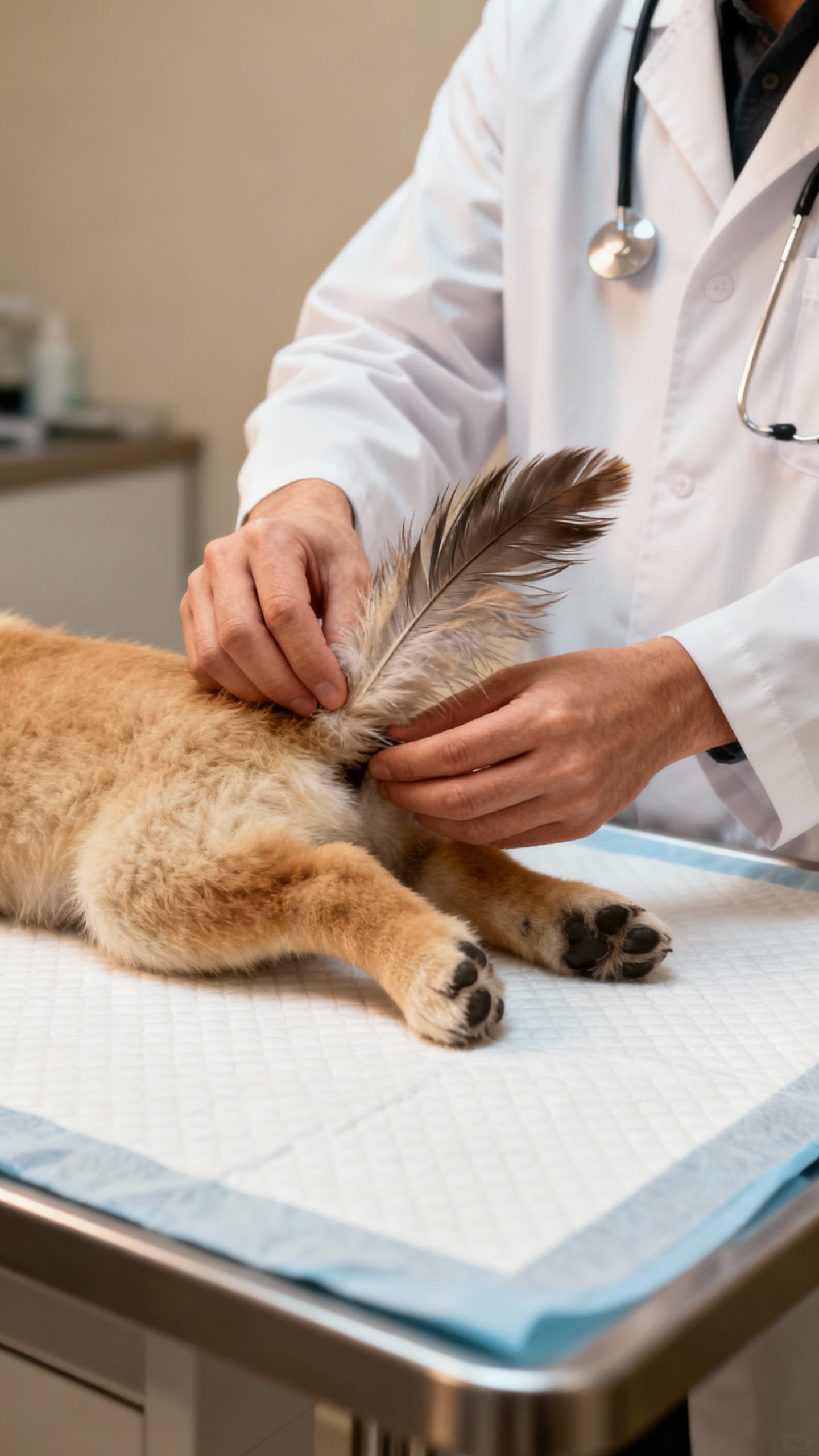
Worms are common in pups but should be treated, with records to prove it.
- Social response: Pup engages with toys and people, tolerates gentle handling.
When in Doubt, Bring Backup
If you’re unsure, ask a trusted trainer or vet to look at videos or come along. You can also request a DNA test for breed verification if things feel murky. IMO, it’s better to pause and verify than to rush and regret.
FAQ
How can I tell if a Golden Retriever puppy is purebred without papers?
You can’t know with certainty without documentation or DNA testing.
You can evaluate conformation, coat, and temperament, and ask to meet the parents. But if someone refuses papers or proof, factor that into the price and your risk tolerance.
Are darker or lighter Goldens healthier?
Color doesn’t equal health. Health depends on genetic testing, responsible breeding, and proper care.
A well-bred cream-colored Golden and a well-bred dark gold Golden have the same health potential.
What age should I bring a Golden Retriever puppy home?
Eight weeks minimum. That window allows critical social learning from mom and littermates. Puppies sent home at six or seven weeks often struggle more with bite inhibition and confidence.
Is a “field-bred” Golden the same as a “show-bred” Golden?
Same breed, different focus.
Field lines often look leaner with higher drive and energy. Show lines lean heavier with lush coats and that classic teddy-bear head. Either can be wonderful; match the temperament to your lifestyle.
Do reputable breeders allow visits?
Usually, yes—either in-person or via video for biosecurity.
They’ll show the dam, living conditions, and puppy interactions. If someone refuses any form of viewing, that’s a red flag.
What vaccinations and vet care should a puppy have before pickup?
Expect at least one core vaccine round (DHPP), deworming records, a health check by a vet, and a microchip or plan for one. You should receive a health record with dates and product names.
Final Thoughts
Finding an original Golden Retriever puppy isn’t about chasing a “cream coat” or the fluffiest ears on Instagram.
It’s about responsible breeding, clear health testing, solid temperament, and transparent paperwork. Trust your gut, verify everything, and don’t rush. The right pup is worth the wait—because you’re not just buying a dog; you’re recruiting a best friend who’ll steal your socks and your heart.
FYI, the sock theft is non-negotiable.
Leave a Reply