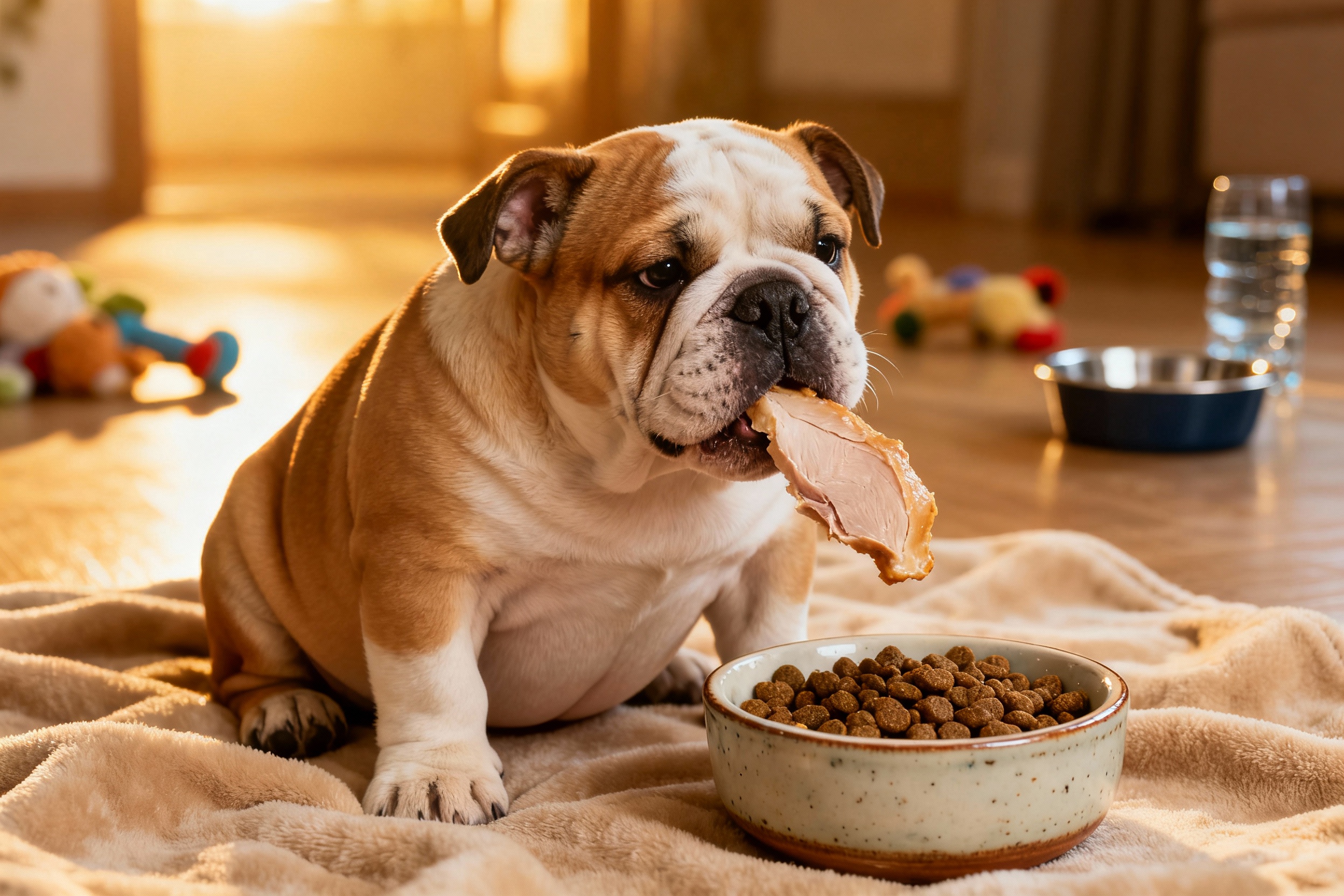
Your bulldog puppy looks adorable, but their ribs peek through a bit too much? You’re not alone. Bulldogs grow differently than other breeds, and sometimes they need a little nudge to put on healthy weight.
Let’s talk practical steps, vet-approved tips, and a few “learned it the hard way” notes to help your wrinkly potato chunk up safely.
First, Decide If Your Bulldog Puppy Actually Needs More Weight

Before you start loading bowls, make sure your pup is truly underweight. Bulldogs have thick frames but can still look a little lean during growth spurts.
- Rib check: You should feel ribs with light pressure, not see them poking out dramatically.
- Waist test: Viewed from above, you want a slight waist, not a dramatic tuck.
- Energy watch: Low energy, dull coat, or slow growth can hint at underfeeding or health issues.
If you’re unsure, ask your vet for a body condition score (BCS). IMO, a quick weigh-in and BCS saves weeks of guessing.
Choose the Right Food (Quality Matters More Than Quantity)
Bulldogs have sensitive stomachs and food allergies more often than other breeds.
That means you want nutrient-dense food without junk fillers.
- Pick a large-breed puppy formula? For bulldogs, go with breed-appropriate puppy food, not necessarily large-breed. Bulldogs fall in a weird middle zone; many do best on standard puppy formulas with controlled calcium.
- Protein and fat: Aim for roughly 22–28% protein and 12–18% fat.
- Short ingredient list: Avoid mystery meat by-products and excessive corn/soy. Choose foods with named meats (chicken, beef, salmon) in the first ingredients.
- Digestibility: High-quality kibble or gently cooked/fresh diets often help bulldogs absorb more calories with fewer tummy issues.
What if your puppy has a sensitive tummy?
Try a limited-ingredient puppy formula or one with a novel protein like salmon or lamb.
Add a probiotic specific for dogs. Bulldogs and gas? Yeah, it’s a saga.
A good probiotic can reduce bloat and help weight gain through better absorption.

Feed on a Schedule (and Split Those Meals)
Instead of one or two bigger meals, split the day into 3–4 smaller meals. Bulldogs can’t inhale jumbo servings without consequences (hello, burps and bloats).
- Start with the bag’s feeding guide for your pup’s current weight, then increase by 10–15% if they’re underweight.
- Use a kitchen scale to keep portions consistent. Scoops lie, scales don’t.
- Watch the poop: Soft stools mean you increased too fast.
Dial back a bit.
How fast should you increase?
Add extra calories gradually over 7–10 days. Fast increases can cause diarrhea, which does the opposite of weight gain. Slow and steady wins here, FYI.
Upgrade Calories the Smart Way
We’re not stuffing your puppy with junk.
We’re boosting calories that support growth.
- Top with healthy fats: A teaspoon of salmon oil or anchovy oil per day adds calories and helps skin and coat. Don’t go wild—fatty stools and gas will find you.
- Add fresh proteins: Cooked lean ground turkey, chicken, or eggs (scrambled with no butter/salt) can help. Think 10–20% of the meal, not 80%.
- Choose a “puppy loaf” topper: High-calorie wet puppy foods (the pâté style) boost intake for picky eaters.
- Use goat’s milk or puppy-safe kefir: Great for calories and gut health.
Start small—2–3 tablespoons.
Foods to avoid (bulldog edition)
No onions, garlic, grapes/raisins, xylitol, cooked bones, or heavy dairy. Also skip coconut oil overloads—more GI drama than it’s worth, IMO.

Make Meals Irresistible for Picky Puppies
Bulldogs can act like tiny food critics. Make the meal too tempting to ignore.
- Warm it up: A splash of warm water on kibble releases aromas.
- Try texture combos: Mix kibble with a small amount of wet food or a fresh topper.
- Use a high-value training treat during meals: Sprinkle a few crushed training treats on top to kickstart interest.
- Calm eating space: Feed in a quiet area with no competition, especially if you have other pets.
When your puppy walks away from the bowl
Pick it up after 15 minutes and offer it at the next mealtime.
Free-feeding bulldogs often backfires. Structure builds appetite.
Exercise: The Secret Weight-Gain Partner

Sounds backward, but short, controlled exercise can stimulate appetite and build muscle—not just fat.
- Two to three short sessions of play or gentle walks daily (5–15 minutes each, depending on age).
- Puzzle feeders and sniff walks burn mental energy and boost appetite.
- Avoid overheating: Bulldogs overheat fast. Walk in cool times, bring water, and watch that breathing.
Muscle matters
Healthy weight isn’t just belly weight.
Light tug (with soft, gentle pulls) and controlled hill walks can help build safe muscle in older puppies.
Track Progress Like a Pro
You can’t manage what you don’t measure. Keep it simple.
- Weekly weigh-ins: Use a baby scale or weigh yourself holding the pup.
- Photos from the side and top: Compare every two weeks to spot subtle changes.
- Stool log: Gross? Maybe.
Useful? Absolutely. Consistency tells you if your plan works.
If your puppy doesn’t gain after 3–4 weeks of increased calories, loop in your vet.
When to Call the Vet (Don’t Wait Too Long)
Some bulldogs struggle because of underlying issues like parasites, food intolerances, or congenital problems.
- Red flags: Chronic diarrhea, vomiting, coughing, nasal discharge, dull coat, lethargy, or rapid breathing.
- Parasite check: Puppies need regular deworming and fecal tests.
- Allergy talk: If you see itchy skin, ear gunk, paw licking, or constant gas, consider a diet trial with your vet.
Sample Daily Plan for a Bulldog Puppy That Needs to Gain
This is a general example—adjust to your pup’s age, current weight, and brand specifics.
- Meal 1 (morning): Puppy kibble portion + 1–2 tablespoons wet puppy food + warm water splash.
- Meal 2 (midday): Puppy kibble portion + 1 scrambled egg (no salt/butter) or a few tablespoons cooked lean turkey.
- Meal 3 (evening): Puppy kibble portion + 1 teaspoon salmon oil + 2 tablespoons goat’s milk.
- Treats: Use training treats during short sessions.
Count treats toward daily calories.
- Exercise: Two short sniff walks + 10 minutes indoor play.
Pro tip: If stools get soft, reduce toppers first, then adjust kibble slowly. Gut first, gains second.
FAQs
How fast should a bulldog puppy gain weight?
Steady is best. Expect small weekly increases, not dramatic jumps.
If your pup looks fuller, has good energy, and stools stay solid, you’re on the right track. Big spikes often mean too many calories or bloat, not true growth.
Can I use puppy weight-gain supplements?
You can, but most aren’t necessary if you feed a balanced puppy diet and add calorie-dense toppers. If you do try one, pick a vet-recommended brand and avoid sugar-heavy gels.
Whole foods plus a quality probiotic usually work better, IMO.
Is raw food good for weight gain?
Raw can be calorie-dense, but it carries safety risks, especially for puppies with developing immune systems. If you want fresh, try gently cooked, complete-and-balanced puppy diets from reputable brands. Safe and effective wins every time.
What if my bulldog puppy has constant diarrhea?
Stop the toppers, switch to a simple, highly digestible puppy food, and call your vet.
Diarrhea prevents nutrient absorption, so you’ll never see healthy weight gain until you fix the gut. A fecal test and probiotic plan can make a huge difference.
How many times a day should I feed?
Feed 3–4 times daily for puppies. As your bulldog grows and fills out, you can shift to 2–3 meals.
Smaller, frequent meals help digestion and reduce gas—your nose will thank you.
Which oils are best to add?
Stick with salmon or anchovy oil for omega-3s and controlled calories. Start at 1/2 teaspoon and work up to 1 teaspoon daily depending on size. Skip random vegetable oils—they don’t bring the same benefits.
Wrapping It Up
You don’t need magic powder to help your bulldog puppy gain weight—just a smart plan.
Choose a digestible, high-quality puppy food, add calorie-dense toppers in small amounts, feed 3–4 times a day, keep exercise short and consistent, and track progress weekly. If things stall or your pup seems off, call your vet sooner rather than later. With a little patience and a lot of snorts, your bulldog will fill out into the chunky, healthy cuddle loaf you signed up for.
Leave a Reply