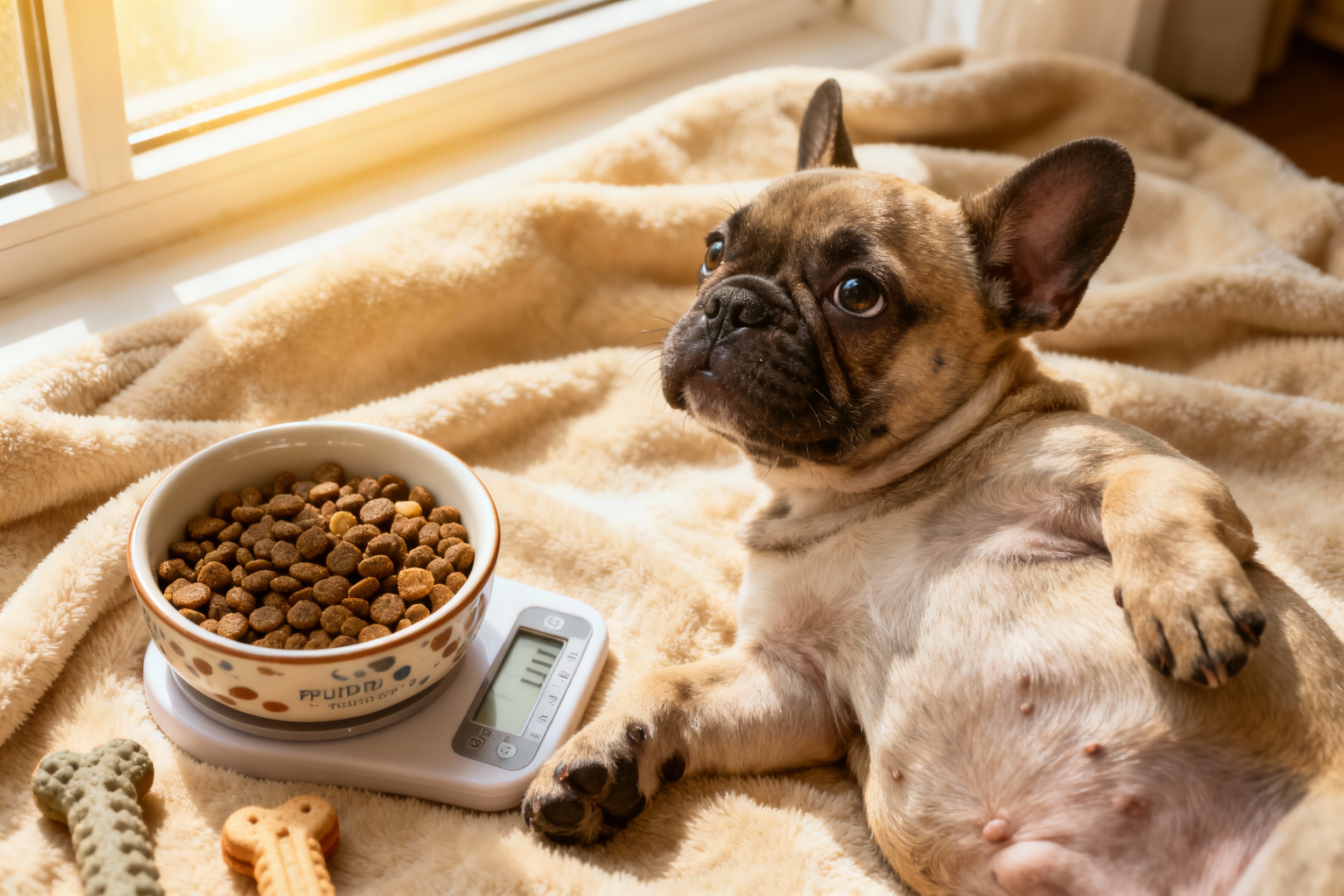
Your Frenchie puppy looks adorable, but a little too bony for your liking? You’re not alone. Growing French Bulldogs can be picky eaters, speedy metabolizers, and tiny drama queens about food bowls.
Let’s talk about how to add healthy weight safely—without turning your pup into a couch potato with a belly.
First, What “Healthy Weight” Looks Like
You can’t fix what you don’t measure, right? Frenchie puppies vary, but most should look compact and sturdy—not ribby, not chunky. You should feel ribs easily but not see them glaring back at you like xylophone keys. Quick body check:
- Ribs: You feel them with light pressure, not see them easily.
- Waist: Visible from above but not dramatic.
- Energy: Puppy zoomies happen daily.
Low energy may signal underfeeding or health issues.
If your puppy seems underweight and tired, check with your vet first. Frenchies are prone to gut issues and parasites, and that changes the plan.
Dial In the Calories (But Don’t Overdo It)
Puppies burn calories like tiny athletes. They need enough to grow bones, muscles, and brains (and chaos).
But Frenchies can’t handle rapid weight gain due to joint stress and breathing quirks. As a starting point:
- Feed a complete, balanced puppy formula—large labels mean nothing if the nutrients aren’t right.
- Use the feeding chart on the bag or can as a baseline, then increase by 10–20% if your puppy looks lean.
- Split meals into 3–4 feedings daily. Smaller meals digest better and support steady energy.
How to calculate a healthy bump
Add ~5–10% calories each week, then reassess. If your pup gains ~1–2% body weight weekly and looks fuller (not puffy), you’re on track.
If you see diarrhea or a bloated belly, dial back and adjust the food type.
Pick Food That Actually Builds Weight
You don’t need “bulking” hacks—you need nutrient density. Quality protein, digestible carbs, and healthy fat help your Frenchie pack muscle, not fluff. Look for:
- Protein: 25–30% for kibble; animal-based sources like chicken, turkey, salmon, beef.
- Fat: 14–20% in puppy kibble for energy and coat health.
- Digestibility: Foods with rice, oats, sweet potato, or pumpkin tend to be gut-friendly.
Consider adding toppers
Small additions make meals more enticing and calorie-dense:
- Plain cooked chicken or beef (lean and unseasoned)
- Goat’s milk or kefir (great for picky eaters—start slow)
- Canned puppy food mixed into kibble (ups taste and calories)
- Salmon oil or sardines in water (omega-3s for skin, brain, appetite)
FYI: Avoid onions, garlic, high-salt meats, and rich gravies. Your Frenchie’s tummy will write a strongly worded letter.
Make Eating Easy and Fun
Some Frenchies act like food critics.
Make the meal irresistible without turning dinner into a Broadway show. Try these tricks:
- Warm the food slightly to release aromas.
- Add a splash of warm water or broth (no onion/garlic) to soften kibble.
- Use a shallow, wide bowl or a tilted feeder for easier breathing while eating.
- Feed in a calm spot away from distractions and bossy pets.
Consistency beats novelty
Switching foods constantly can cause tummy upsets and refusal. Pick a plan, stick to it for 10–14 days, and only then reassess. IMO, patience beats panic.
Snack Smart: Treats That Actually Help
Treats can support weight gain if you choose wisely.
Skip the empty-calorie biscuits and go for real food or high-protein options. Great choices:
- Freeze-dried meats (chicken, beef, salmon)
- Peanut butter (xylitol-free) in small amounts
- Full-fat plain Greek yogurt (a spoonful, not a sundae)
- Training treats with 4–6 kcal each to avoid overfilling
Keep treats under 10% of daily calories so you don’t unbalance nutrients. We’re building a healthy body, not a snack-based economy.
Gut Health = Weight Gain Superpower
If your puppy can’t absorb nutrients, more food won’t fix the problem. Frenchies often have sensitive tummies, allergies, or parasites. Watch for red flags:
- Soft or frequent stools
- Gas, bloating, or burping like a tiny sailor
- Vomiting, appetite swings, itchiness
What to do if the gut’s not happy
- Vet check for parasites, giardia, or infections.
- Probiotics made for dogs—use daily for 2–4 weeks.
- Limited-ingredient diet trial if you suspect sensitivity (e.g., salmon and rice).
- Slow feeder bowls if gulping leads to hiccups and spit-ups.
Build Muscle with Play (Not Just Calories)
You want lean mass, not fluff.
Short bursts of activity stimulate appetite and muscle growth. Do this:
- 3–4 short play sessions daily: tug, fetch, gentle chase
- Soft-surface walks for joint safety—no marathon stairs
- Interactive toys that make them work a little for food
Avoid: Overheating, long runs, and rough jumping. Frenchies run hot and breathe hard—keep sessions short and fun. Hydrate like you mean it.
Weekly Check-Ins: Track, Tweak, Repeat
Small changes compound.
If you eyeball everything, you’ll miss progress. Simple system:
- Weigh weekly at the same time of day.
- Take a side and top photo in good light every week.
- Adjust calories by 5–10% based on weight trends and body shape.
If your puppy isn’t gaining after 2–3 weeks of increased calories, circle back to the vet. Something else might be going on.
Sample Daily Plan (Adjust to Your Pup)
This is an example, not gospel. Always tailor to your dog’s age, size, and brand specifics.
- Breakfast: Puppy kibble + warm water + spoon of canned puppy food
- Midday meal: Kibble + spoon of plain Greek yogurt
- Dinner: Kibble + a little cooked chicken + salmon oil
- Training treats: 10–20 small, high-protein bites across the day
- Hydration: Fresh water always; consider a splash of goat’s milk as a topper 3–4x/week
FYI: Transition new foods over 5–7 days to avoid tummy chaos.
FAQs
How fast should my French Bulldog puppy gain weight?
Aim for slow and steady—about 1–2% of body weight per week.
Big jumps can stress joints and the heart. If growth stalls for more than two weeks despite more calories, call your vet.
Can I give my puppy raw food to help with weight?
Raw can work for some dogs, but it requires careful handling and balance. If you try it, use a complete raw formula made for puppies.
IMO, beginners do better with high-quality puppy kibble or cooked diets first.
What if my puppy refuses kibble?
Try mixing with canned puppy food, warm water, or a tiny bit of shredded chicken. Switch to a different protein or size kibble—mouth feel matters. Also check the bowl height and shape; brachycephalic faces appreciate shallow, tilted bowls.
Are puppy vitamins necessary for weight gain?
If you feed a complete, balanced food, you usually don’t need extras.
Over-supplementing can cause imbalances. A probiotic and omega-3s are safe add-ons for most pups—ask your vet for dosing.
How many meals per day works best?
Three to four meals per day work best for Frenchie puppies. Smaller, frequent meals digest better and keep energy stable.
Two meals can leave them too hungry and won’t help steady weight gain.
When should I worry about being underweight?
If ribs show clearly, hips feel sharp, or your puppy seems tired or gassy, check in with your vet. Parasites, food intolerances, or infections can block weight gain. Don’t wait weeks if your gut says something’s off.
Bottom Line
You can help your Frenchie puppy gain weight with smart calories, tasty toppers, gentle play, and a happy gut.
Keep meals frequent, track progress weekly, and tweak slowly. If things stall or your puppy seems off, loop in your vet. With a little patience (and a lot of cuteness), you’ll build a sturdy, healthy Frenchie—no crash bulking required.
IMO, slow and steady wins the pup race.
Leave a Reply