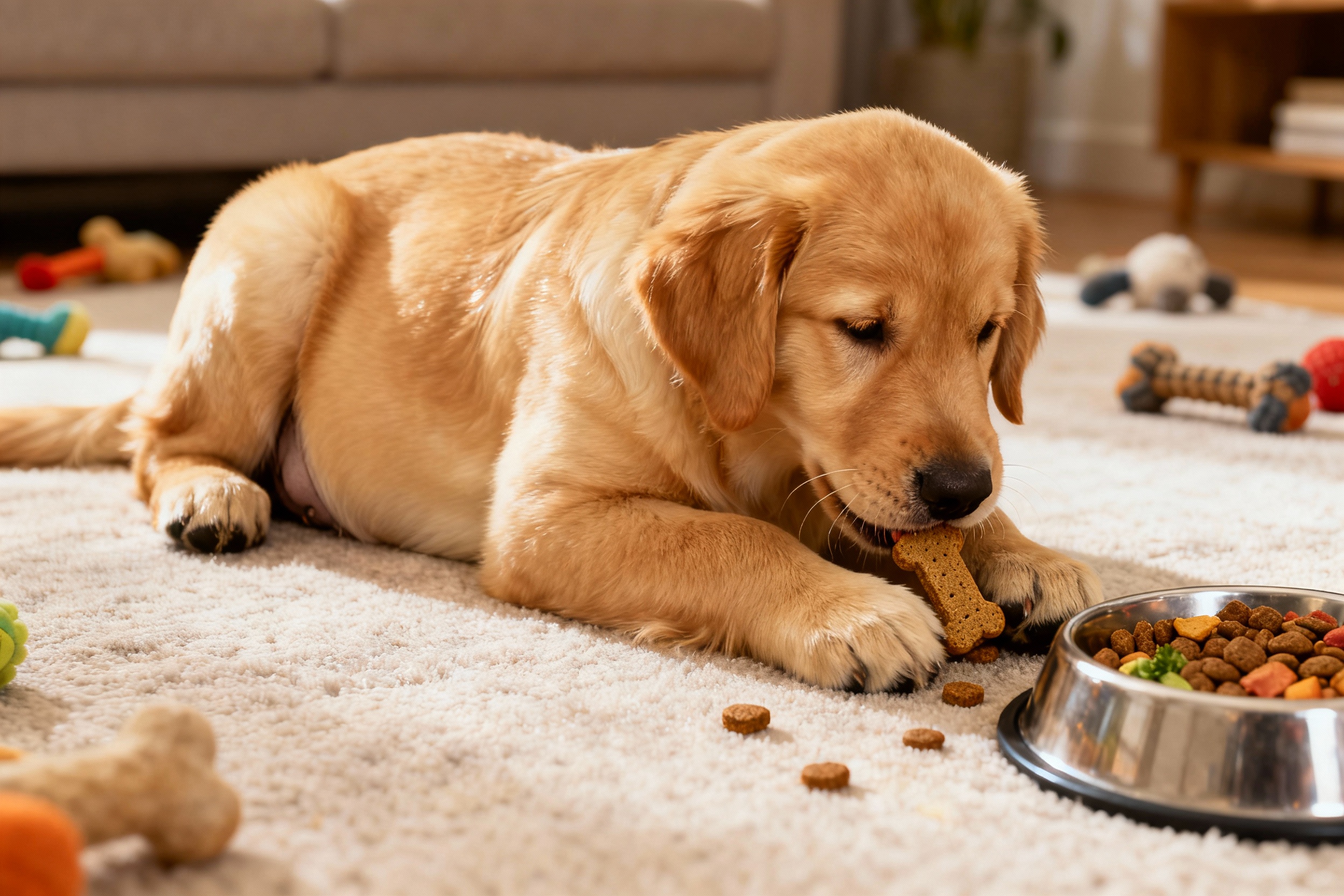
Your Golden Retriever puppy looks a little lanky and you’re wondering how to add some healthy weight—without turning them into a couch potato? You’re in the right place. We’ll talk real food, smart feeding schedules, and sneaky tricks to boost calories the right way.
No fluff, no guilt, just solid tips you can actually use today.
First, decide if your puppy actually needs more weight

Before you start piling extra scoops into the bowl, check if your pup is truly underweight. Golden pups go through awkward growth spurts where they look like deer on ice—skinny legs, sudden height, the whole thing. That doesn’t automatically mean they need more calories. Quick body check:
- Feel for ribs: You should feel ribs easily with a light layer of padding—not see them protruding.
- Look from above: A slight waist is normal.
Extreme tuck-in? Might be too thin.
- Energy level: Healthy pups act playful and curious. Lethargy or weakness can mean more than just “needs food.”
When in doubt, weigh and track weekly. Puppies grow fast.
A weekly weigh-in gives you a sanity check and helps you catch trends.
Feed a nutrient-dense puppy diet (not adult food)
Goldens need a diet designed for growth. Adult formulas don’t cut it—they lack the right protein, fat, calcium, and phosphorus balance for developing bodies. Look for “complete and balanced” puppy food with:
- Protein: 26–30% from quality sources (chicken, turkey, salmon, lamb).
- Fat: 14–18% to fuel growth and add easy calories.
- Large-breed puppy formulation: This matters for Goldens to protect joints and keep calcium/phosphorus in safe ranges.
Dry, wet, or raw?
IMO, dry kibble + a little wet topper hits the sweet spot for cost, convenience, and palatability. Wet food adds flavor and moisture, which helps picky eaters.
If you feed raw, great—but make sure it’s balanced and safe, ideally with veterinary nutritionist guidance.

Increase calories the smart way
More food can help—but let’s not blow up their belly all at once. Gradual increases prevent GI upset and help your pup actually absorb the nutrients. Try this step-by-step:
- Calculate their daily feeding amount using the bag’s chart for weight and age.
- Add 10% more for 5–7 days. Watch stool quality and energy.
- If all good, add another 10%.
Stop when you see steady weight gain and a healthy body score.
High-calorie add-ins that won’t wreck their gut:
- Wet puppy food as a topper (easy calories, big flavor).
- Salmon oil (omega-3s + calorie boost). Start small: 1/4–1/2 tsp for young pups; increase slowly.
- Goat’s milk or puppy-safe kefir for probiotics and calories (tiny amounts to start).
- Eggs (cooked), 2–3x per week for protein and fat.
- Plain pumpkin mixed in can help sensitive tummies tolerate increases.
Foods to skip (for real)
Avoid avocado, grapes/raisins, onions, xylitol, macadamia nuts, and fatty table scraps. Also avoid calcium-heavy supplements unless a vet prescribes them—too much can harm growing bones.
Dial in the feeding schedule
Puppies burn calories like tiny athletes.
Frequent, balanced meals help them absorb nutrients better than one giant food coma. Simple schedule:
- 8–12 weeks: 4 meals/day
- 3–6 months: 3 meals/day
- 6–12 months: 2–3 meals/day (Goldens often do best with 3 until 9–10 months)
Pro tip: If your puppy picks at food, make meals “event-based.” Offer for 15–20 minutes, then pick up the bowl. Predictability builds appetite. Free-feeding can create grazers with meh appetite and unknown calorie intake.

Make food irresistible (picky eater hacks)
Some puppies act like food critics.
Fine.
- Warm the food slightly to release aroma.
- Add warm water or low-sodium bone broth to kibble. Instant gravy vibes.
- Rotate proteins (chicken, fish, lamb) within the same brand line to keep things interesting.
- Use puzzle bowls sparingly if weight gain is the goal—awesome for enrichment, but we want efficient intake.
- Reward with part of their meal during training to avoid filling them with empty-calorie treats.
What about treats?
Keep treats under 10% of daily calories. Choose meat-based training treats or use their kibble.
FYI, high-sugar “puppy biscuits” add calories but not nutrition. You want quality calories, not just numbers.
Build muscle, not just fluff

Healthy weight isn’t just fat—it’s muscle. Muscle needs good protein and smart movement. Age-appropriate exercise ideas:
- Gentle leash walks 2–3 times daily.
Short and frequent beats long and exhausting.
- Controlled play on grass, not slippery floors.
- Basic puppy strength: sit-to-stand reps, gentle hill walking, and balance work on soft surfaces.
Avoid: repetitive high-impact fetch, jumping off furniture, and long runs. Golden joints need time to mature.
Rule out medical reasons for low weight
If you feed more and still see ribs, check health. Puppies can have issues that kill appetite or block weight gain. Common culprits:
- Worms/parasites (very common in puppies—ask for a fecal test).
- Giardia or coccidia causing diarrhea and poor absorption.
- Dental pain from retained baby teeth or mouth injuries.
- Food sensitivities causing soft stools and poor nutrient uptake.
If your pup vomits, has persistent diarrhea, acts lethargic, or won’t eat for more than 24 hours, see your vet.
Don’t “wait it out” with babies.
Sample daily plan for a 12-week Golden pup
Just to visualize how this might look, here’s a simple template. Adjust amounts for your puppy’s weight and brand guidelines.
- Breakfast: Puppy kibble + warm water + 1–2 tbsp wet puppy food.
- Lunch: Puppy kibble + a teaspoon goat’s milk or kefir.
- Snack: Training session using part of dinner’s kibble.
- Dinner: Puppy kibble + 1 scrambled egg (no butter/salt) 2–3x/week.
- Supplements: Salmon oil once daily (start tiny, build up slowly).
Track body condition weekly. If weight gain stalls, add 10% more food and reassess after 5–7 days.
FAQ
How fast should a Golden Retriever puppy gain weight?
Steady and slow wins.
Expect a few ounces to a pound per week depending on age. Growth isn’t linear—some weeks they stretch up, then fill out. Use weekly weigh-ins and body condition, not just a number on a chart.
What’s a healthy weight for my Golden puppy at X months?
Ranges vary wildly.
At 3 months, many Goldens land around 20–30 lbs; at 6 months, 35–55 lbs. Genetics plays a big role. Aim for a visible waist, palpable ribs without sharp edges, and good energy levels over chasing a “perfect” number.
Can I switch to adult food to cut costs?
Not yet.
Large-breed puppy food supports joint development and balanced growth. Switch to adult around 12 months (some wait until 14–15 months). Ask your vet if your pup grows unusually fast or slow.
Are homemade diets good for weight gain?
They can be—but only if balanced by a vet nutritionist.
Most DIY recipes miss key nutrients, which can stunt growth or harm bones. If you want to go homemade, get a recipe tailored to your pup. Otherwise, stick to high-quality commercial puppy food and add safe toppers.
What if my puppy eats but still looks skinny?
Time for data and a vet check.
Track exact calories, stool quality, and weight over two weeks. If weight doesn’t budge despite increases, test for parasites and discuss absorption issues or food allergies. Sometimes simply switching protein sources helps.
How do I prevent overfeeding while trying to add weight?
Increase in small steps, monitor stool, and keep an eye on the waistline.
Overfeeding shows up as soft stools, gassiness, and a belly without muscle. If those pop up, pull back 10% and stabilize before trying again.
Bottom line
You can help your Golden puppy gain healthy weight with a large-breed puppy diet, small calorie bumps, tasty toppers, and smart movement. Keep meals frequent, track progress weekly, and don’t ignore gut signs.
If things don’t improve, loop in your vet—no shame, just teamwork. FYI, a little patience plus consistent habits usually wins. IMO, your lanky fluffball will fill out beautifully with the right plan.
Leave a Reply