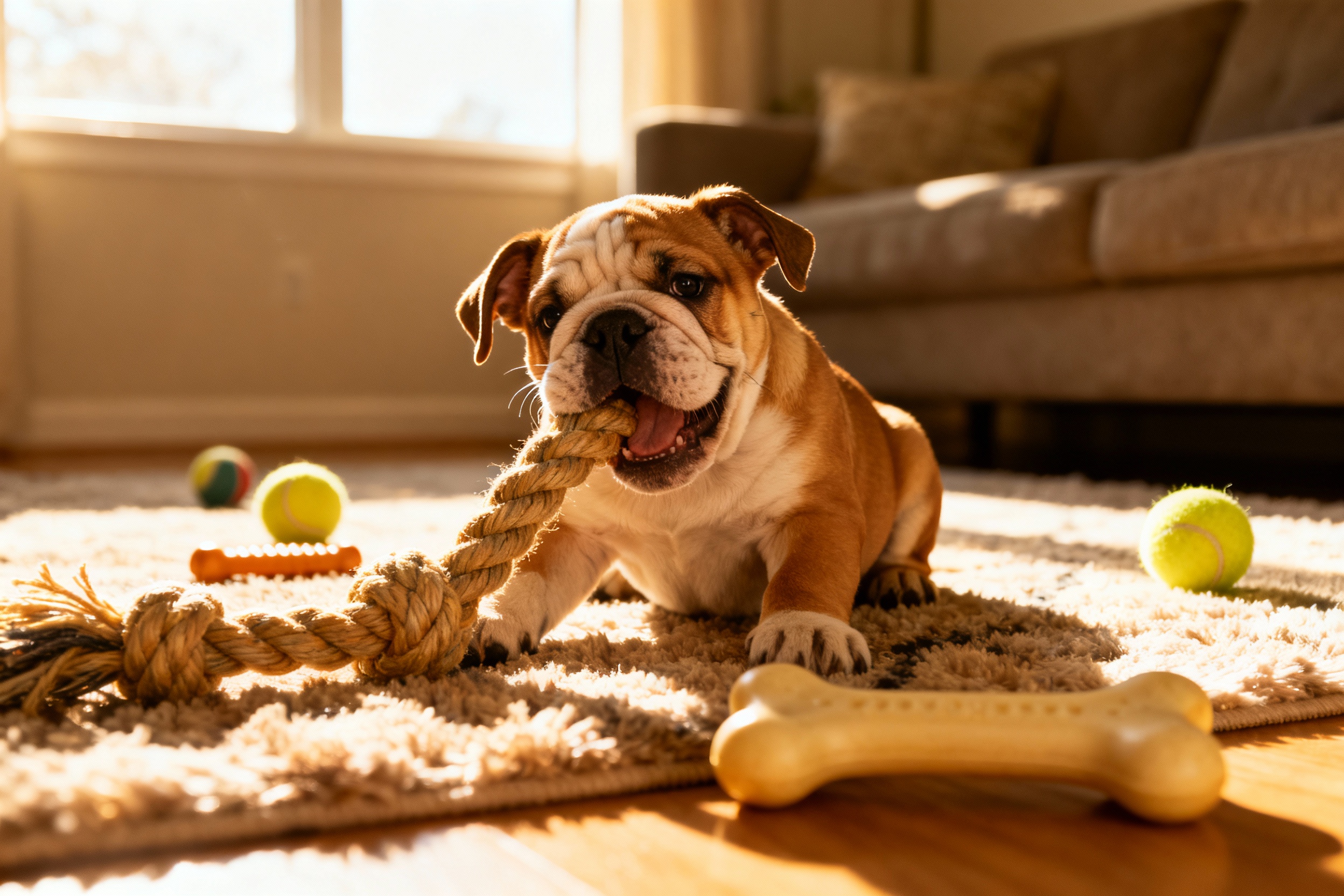
Bulldog puppies are adorable meatballs with legs—and enough stubborn charm to run your entire household by noon. They snooze like champs, then suddenly wake up and decide chaos sounds fun. You want to keep that brain busy and that body safe without overdoing it, right?
Let’s talk practical, low-impact ways to tire out your little land hippo (with zero guilt and minimal chewed furniture).
Know Your Bulldog’s Energy Budget

Bulldog puppies don’t need marathon workouts. They need short, thoughtful sessions that stimulate their brains and protect their joints. Think “smart sprints,” not “endurance training.” Rule of thumb: aim for several short play bursts throughout the day—5 to 10 minutes each—plus plenty of naps.
Overheating and overexertion can lead to trouble with bulldogs, especially with their flat faces. When in doubt? Cut it short and give water and rest.
Safe Play Windows
– Early morning and late evening work best—cooler temps and calmer vibes – Indoors on hot days – Watch for heavy panting, slowing down, or flopping—those mean “break time”
Brain Games Beat Boredom
You can run out of fetch throws.
You won’t run out of brain games. Bulldogs thrive on puzzles because they mix problem-solving with rewards—aka bulldog nirvana. Easy brain games to start:
- Scatter feeding: Toss kibble on a snuffle mat or across a safe room. Slows eating and engages the nose.
- Find it: Let your pup watch you hide a treat under a cup or small towel.
Gradually increase difficulty.
- DIY puzzle: Put a few treats in a muffin tin, cover some holes with tennis balls, and cheer on the chaos.
- Rolled towel: Roll a towel with treats inside and let your pup unroll it like a tiny bulldozer.
Choosing the Right Puzzle Toys
– Look for slow-feeder bowls and beginner puzzle toys with big openings – Avoid anything that requires intense chewing or has tiny detachable parts – Rotate toys every 2–3 days so they feel “new” again

Training = Mental Exercise (and Sanity Saver)
Training doubles as entertainment and manners practice. Keep sessions short, upbeat, and tasty. Bulldogs love food, so, yes, you’ve got leverage. Start with:
- Name recognition: Say the name, reward eye contact—simple and powerful.
- Sit, down, and stay: 2-3 minute sessions, 2-3 times daily.
- Touch/target: Teach your pup to boop your palm with their nose—great for redirection.
- Leave it: Vital for bulldogs who believe everything is edible.
Make Training a Game
– Use treat scatter breaks during training to reset excitement – End on a win—one last easy behavior, then a party – FYI: If your puppy looks bored or frustrated, you moved too fast.
Step back a level.
Low-Impact Play That Burns Energy
Bulldogs + impact sports = nope. You want activities that protect joints while satisfying that puppy urge to move. Try these:
- Gentle tug: Soft rope, low intensity, controlled. Teach “take it” and “drop” early.
- Short fetch indoors: Roll a soft ball down a hallway—no jumping, no sprinting on slippery floors.
- Obstacle stroll: Pillows, boxes, low stools to walk around or step over.
Great for body awareness.
- Frozen lick mats: Smear with yogurt or pumpkin and freeze. Licking calms the brain and tires them out.
Environmental Setup Matters
– Use rugs or yoga mats to prevent slips – Keep play spaces cool and well-ventilated – Offer water nearby and schedule breaks automatically

Socialization Without Overwhelm
You want a confident bulldog, not a shutdown one. Socialization doesn’t mean “meet 50 dogs at the park.” It means you pair new experiences with good vibes. Build a socialization checklist:
- Different surfaces: grass, concrete, carpet, rubber mats
- Sounds: doorbells, hair dryers, traffic, kids laughing
- People: hats, sunglasses, umbrellas, wheelchairs
- Handling: paws, ears, tummy—always pair with treats
Keep sessions brief and positive.
If your puppy starts avoiding or freezing, you’ve hit the “too much” line. Back off, give space, try again later.
Safe Puppy Outings
– Car rides to watch the world (windows cracked, AC on, crate for safety) – Carry your puppy in public spaces pre-vaccines to see sights and smells – Short, calm meet-and-greets with known friendly dogs
Chew Time: The Secret Weapon

Bulldog puppies chew like it’s a career. Channel it the right way and you’ll get silence and a happy dog. Best options:
- Rubber chew toys with some give—stuff with soft treats for bonus points
- Frozen wet washcloth (clean) for teething relief—always supervised
- Lick mats with peanut butter (xylitol-free), baby food, or pumpkin
Rotate chews to prevent boredom.
Remove anything that splinters or breaks. IMO, two or three high-quality chews beat a pile of cheap ones.
Build a Daily Routine (Your Future Self Will Thank You)
Structure calms bulldogs. A simple schedule keeps energy predictable and tantrums rare. Sample rhythm:
- Morning: potty, 5-minute training, breakfast in a puzzle feeder
- Mid-morning: nap, then gentle play or chew time
- Afternoon: short socialization outing or scent game
- Evening: training refresher, lick mat, cuddles
Keep naps sacred.
Puppies need a shocking amount of sleep—up to 18–20 hours a day. Over-tired bulldogs act wild, then crash hard. Aim for calm cycles, not constant stimulation.
Red Flags: When to Pause the Fun
Bulldogs won’t always self-regulate.
You will. Stop and rest if you see:
- Excessive panting, tongue fully out, or noisy breathing
- Wobbling, limping, or reluctance to move
- Glassy eyes, drooling, or flopping down mid-play
Keep a fan handy. Use cooling mats in summer. And teach “settle” on a mat—reward your pup for lying down calmly while you relax.
Magic.
FAQ
How much exercise does a bulldog puppy need?
Short bursts are best—5 to 10 minutes of low-impact activity several times a day. Pair that with mental work like training and puzzles. Quality beats quantity, especially with their breathing and joint considerations.
Are walk routines safe for bulldog puppies?
Yes, if you keep them brief and cool.
Stick to shaded sidewalks, go slow, and avoid long distances. FYI: No forced marches. Focus on sniffing and exploring more than step goals.
What toys work best for bulldog puppies?
Soft rubber chews, beginner puzzle feeders, snuffle mats, and plush toys with reinforced seams.
Avoid small, hard toys or anything that encourages jumping or frantic tugging. Always supervise when you introduce a new toy.
How do I prevent overheating during play?
Play indoors during hot hours, use fans or AC, and schedule breaks. Offer water frequently, keep sessions short, and watch for heavy panting or slowing down.
If in doubt, stop and cool down immediately.
Can I use treats for training without overfeeding?
Absolutely. Use tiny treats, or even regular kibble, and subtract training rewards from daily meals. Balance with lick mats or frozen stuffers that take time but don’t pack extra calories.
What if my bulldog puppy gets the zoomies?
Guide the chaos.
Close off risky spaces, scatter a few treats on a mat, or start a short sniff-and-search game. Zoomies usually fade fast if you redirect rather than chase.
Conclusion
Keeping a bulldog puppy busy isn’t about doing more—it’s about doing smarter. Mix short brain games, gentle movement, and structured downtime, and you’ll raise a calm, confident companion.
Protect the joints, respect the nap, and celebrate the little wins. IMO, that’s the secret sauce to living happily with your delightful little tank.
Leave a Reply