Your German Shepherd puppy didn’t come with an off switch. They’re smart, energetic, and a little bit extra—in the best way. The good news?
You can channel that chaos into fun, productive activities that build skills and burn zoomies. Let’s keep your furry rocket busy before your couch pays the price.
Know Your Puppy’s Engine: Energy + Brain Power

German Shepherds don’t just run—they think while they run. That combo means you need to satisfy both body and brain every day.
Skip one and you’ll get mischief. Rule of thumb: Aim for a balance of short training bursts, structured play, and quiet enrichment. Overdo the running, and you create a cardio monster. Overdo the thinking, and you get a frustrated genius.
How Much Is “Enough”?
– For young pups (8–16 weeks): 5–10 minute activities, many times a day – For older pups (4–12 months): 15–20 minute sessions, 3–5 times daily – Rest matters.
Growth plates still develop until ~12–18 months, so avoid high-impact repetitive jumps and long-distance runs.
Turn Mealtime Into a Game
Your pup needs to eat. Why not make it work for both of you? Ditch the bowl a few times a week and make mealtime a brain workout.
- Snuffle mats: Sprinkle kibble and let your pup forage.
It taps into their sniffing superpowers and tires them out mentally.
- Food puzzles: Start easy with a wobble toy and level up. Rotate puzzles to keep things fresh.
- Scatter feeding: Toss kibble in the yard or around a room. Simple, fast, and surprisingly effective.
DIY Food Games
– Muffin tin + tennis balls: Kibble under balls = instant nose work – Towel burrito: Roll food into a towel and let them unroll their prize – Cardboard box search: Crumpled paper + kibble = enrichment gold Pro tip: If your pup gets frustrated, simplify the puzzle.
We want “Aha!” not “I quit.”

Strategic Training That Tires Them Out
Training with a German Shepherd isn’t optional. It’s the whole game. They love learning, and you’ll love the calm that follows.
- Micro-sessions: 3–5 minutes, 3–6 times daily.
Keep it fun and upbeat.
- Foundations: Name recognition, sit, down, place, recall, leash manners.
- Impulse control: “Leave it,” doorway manners, waiting for food. This stuff saves your sanity.
Make It Enrichment, Not Homework
– Practice in different rooms and outside to generalize skills – Add distractions slowly—treats, toys, people, squirrels (okay, maybe not squirrels yet) – End on a win every time. Confidence fuels progress. IMO: If you train nothing else, nail recall and “leave it.” You’ll thank yourself daily.
Play With Purpose
Yes, fetch is great—but shepherds need variety.
Rotate games to prevent boredom and overuse injuries.
- Tug with rules: Ask for a sit before tugging, teach “out,” and resume the game as a reward. This builds control and bite inhibition.
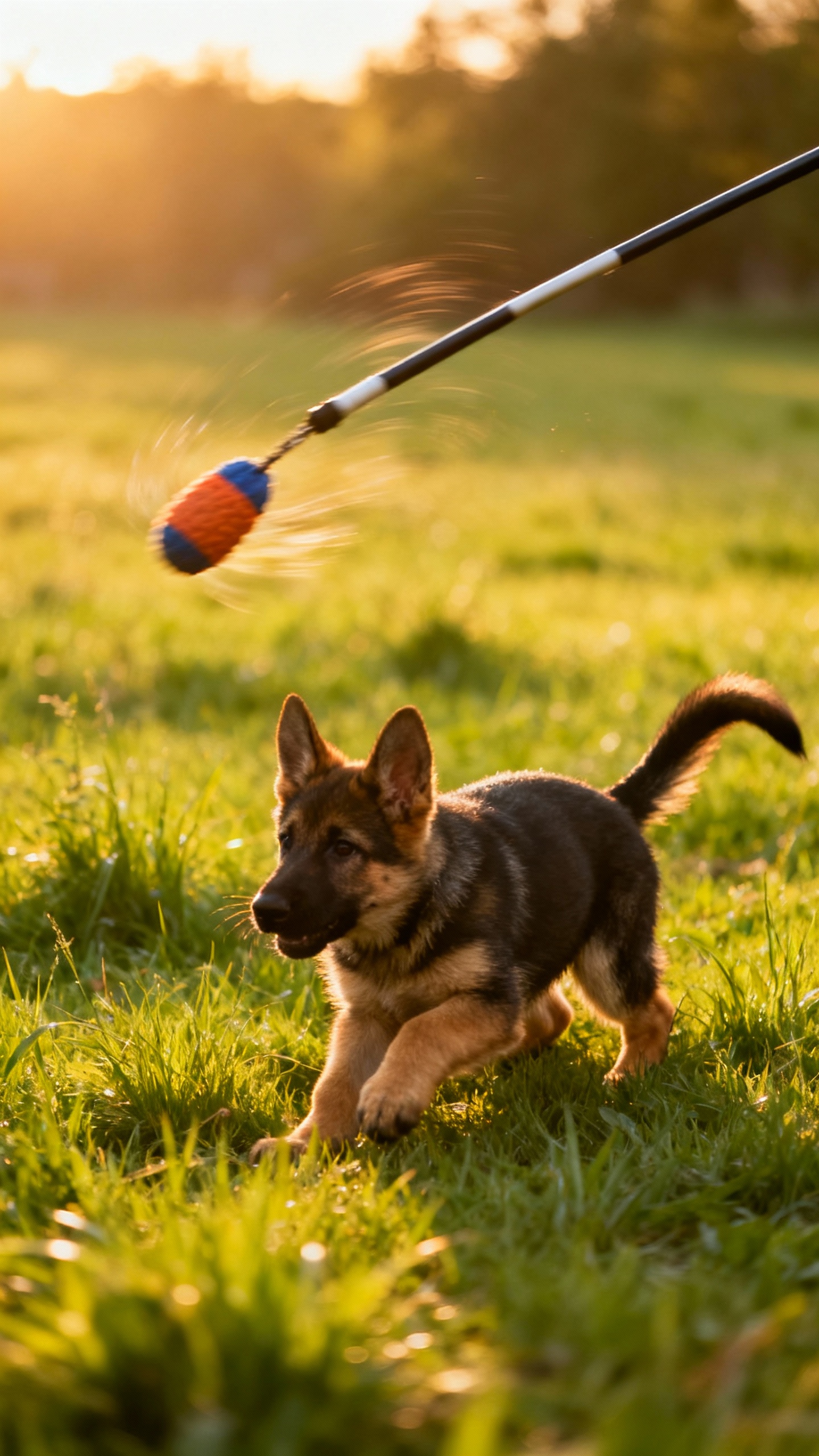
- Flirt pole: A fishing pole with a toy. Short sprints, quick catches, big smiles.
Use grass and soft surfaces.
- Fetch with cues: Add “wait” and “drop” to level up the brain work.
- Hide-and-seek: You hide; they find. It builds recall and confidence.
Safeguards for Growing Joints
– Avoid repetitive stairs, high jumps, and long-distance runs – Keep sessions short and smooth, not frantic – Prioritize soft surfaces for sprinting and sliding FYI: Tired and limping are not the same. We want balanced fatigue, not strain.
Sniffing: The Secret Weapon
Your German Shepherd’s nose is a supercomputer.
Let it work. Sniffing calms the brain, drains energy, and builds focus.
- Decompression walks: Long leash (10–15 ft), safe area, lots of sniffing. This counts as real exercise.
- Scent games at home: Hide treats or toys and give a “find it” cue.
- Beginner nose work: Three boxes, one with a treat.
Let them search and reward big.
IMO: Ten minutes of nose work can beat thirty minutes of hyper fetch for mental fatigue.
Socialization Without the Chaos
Busy doesn’t mean overstimulated. Shepherds need careful socialization to grow into confident, stable adults.
- Surfaces and sounds: Grates, tile, wood, gravel; traffic, vacuum, blender.
- People and objects: Hats, wheelchairs, kids on scooters, umbrellas.
- Calm dog exposure: Seek steady role-model dogs, not wild play free-for-alls.
Structure These Outings
– Keep sessions short and positive – Reward calm observation—not just interaction – Give a “check in” cue for eye contact and engagement Key idea: Your pup should learn that the world is interesting, but you’re the most interesting thing in it.
Solo Activities So You Can Actually Work
You can’t entertain your pup 24/7. Teach them to chill without you micromanaging.
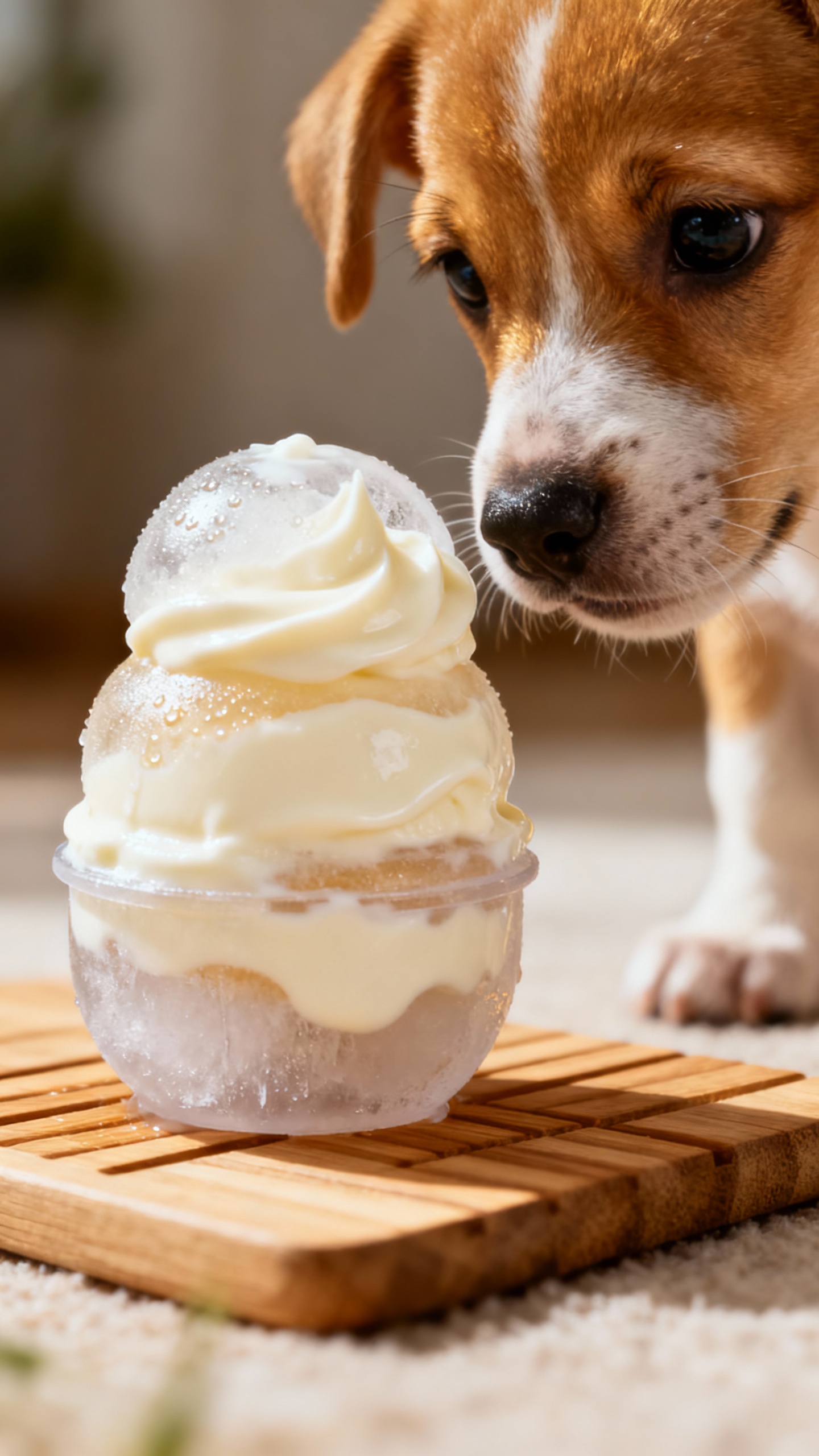
- Stuffed Kongs: Layer kibble, wet food, and yogurt.
Freeze for longer-lasting goodness.
- Chews: Bully sticks, yak chews, or vet-approved options. Supervise and size appropriately.
- Safe confinement: Crate or playpen time after exercise. Quiet music or a white noise machine helps.
The Magic Formula
Exercise + Training + Chew = Nap.
Repeat as needed. Pro tip: Don’t wait until they’re wild to start crate time. Make it part of the routine with calm entry and bonus snacks.
DIY Obedience Games That Feel Like Play
Turn obedience into mini-games so your shepherd thinks you’re fun (because you are).
- “Find your place” relay: Send to a bed or mat from different spots. Reward heavily.
- Call-away: Toss a treat, let them go, then call back for a bigger reward.
- Collar grabs = cookies: Gently grab collar, feed, release.
This prevents “catch me if you can” drama.
- Follow the leader: Walk around the house, change direction, reward attention. Builds leash manners indoors.
FYI: Layer easy wins between hard things. Confidence skyrockets when they feel successful.
Sample Daily Rhythm (Adjust to Age)
– Morning: Potty, short sniffy walk, 5–10 min training, breakfast in a puzzle – Midday: Play session (tug or flirt pole), quick nap, short obedience game – Afternoon: Snuffle mat or scatter feed, crate rest – Evening: Decompression walk, recall practice, dinner in a Kong, calm chew – Before bed: Potty, short cuddle, lights out Keep it flexible.
You’ll learn your pup’s natural peaks and dips.
Common Mistakes (And Quick Fixes)
– Too much fetch, not enough thinking: Add puzzles and impulse control. – Over-socializing with chaos: Choose calm exposures over dog park mayhem. – Skipping naps: Overtired pups get bitey and wild. Schedule rest. – Training marathons: Short bursts win. End on a high note. – Ignoring the nose: Sniffing isn’t “doing nothing.” It’s mental work.
FAQ
How long should I exercise my German Shepherd puppy each day?
Think variety over marathon sessions.
Aim for several short activity blocks that mix training, play, and sniffing. For young pups, sprinkle 5–10 minute sessions throughout the day; for older pups, 15–20 minute activities work well. Always include rest between sessions.
Can I run with my puppy?
Not yet.
Growth plates need time to close, which can take 12–18 months. Stick with brisk walks, sniffing, and short, playful sprints on soft ground. When your vet clears it, build running gradually.
What toys keep a German Shepherd puppy busy the longest?
Food puzzles, frozen Kongs, and durable tug toys top the list.
Rotate toys weekly so they feel “new.” Pair toys with rules (like “sit to play”) to add a training layer.
How do I prevent destructive chewing?
Meet their needs before they invent hobbies. Give daily exercise, mental work, and approved chews. Supervise closely, crate when you can’t, and redirect to legal chew items every time.
Consistency beats lectures.
My puppy gets wild in the evenings. Help?
That’s the witching hour—totally normal. Try a sniffy walk, a short training game, then a stuffed Kong in the crate or bed.
The exercise-train-chew-nap sequence works like magic.
Is dog daycare a good idea for a German Shepherd puppy?
Maybe. Choose structured, well-supervised programs with small groups. Many shepherd pups do better with controlled playdates and training classes than free-for-all daycare.
Quality over quantity.
Conclusion
Keeping a German Shepherd puppy busy doesn’t mean exhausting them—it means engaging them. Mix brain games, structured play, sniffing, and steady socialization, then guard those naps like treasure. Do that, and you’ll raise a smart, calm partner who channels that big energy into all the right places.
And yes, your couch survives. Win-win.
Leave a Reply