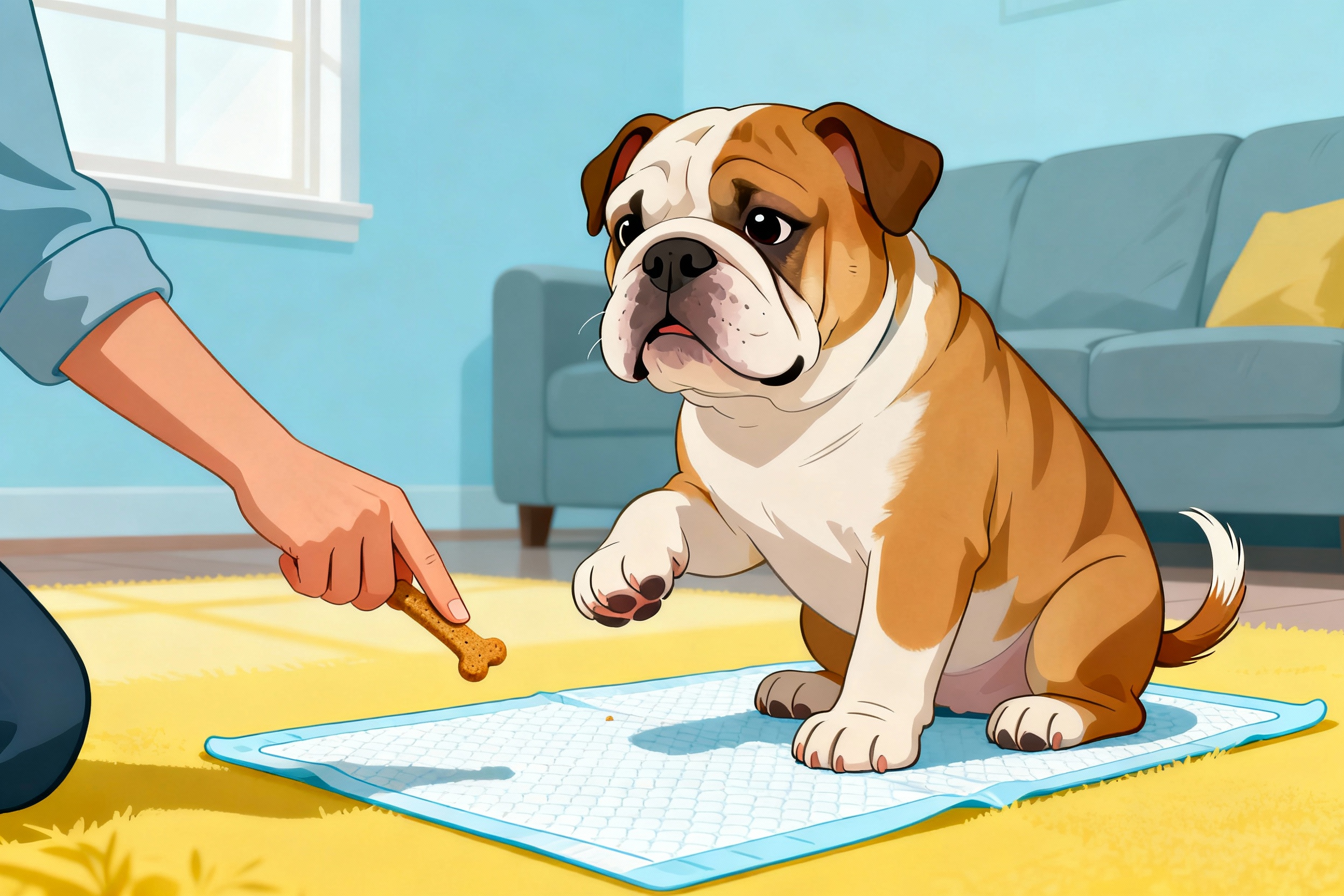
Bulldog puppies are clumsy little potatoes with strong opinions and tiny bladders. You want a clean floor; they want to pee where they stand. Good news: you can absolutely potty train your bulldog pup without losing your mind or your rugs.
Let’s set realistic expectations, build great habits, and make your bulldog think going outside is the best party ever.
Know Your Bulldog: Short Noses, Big Personalities
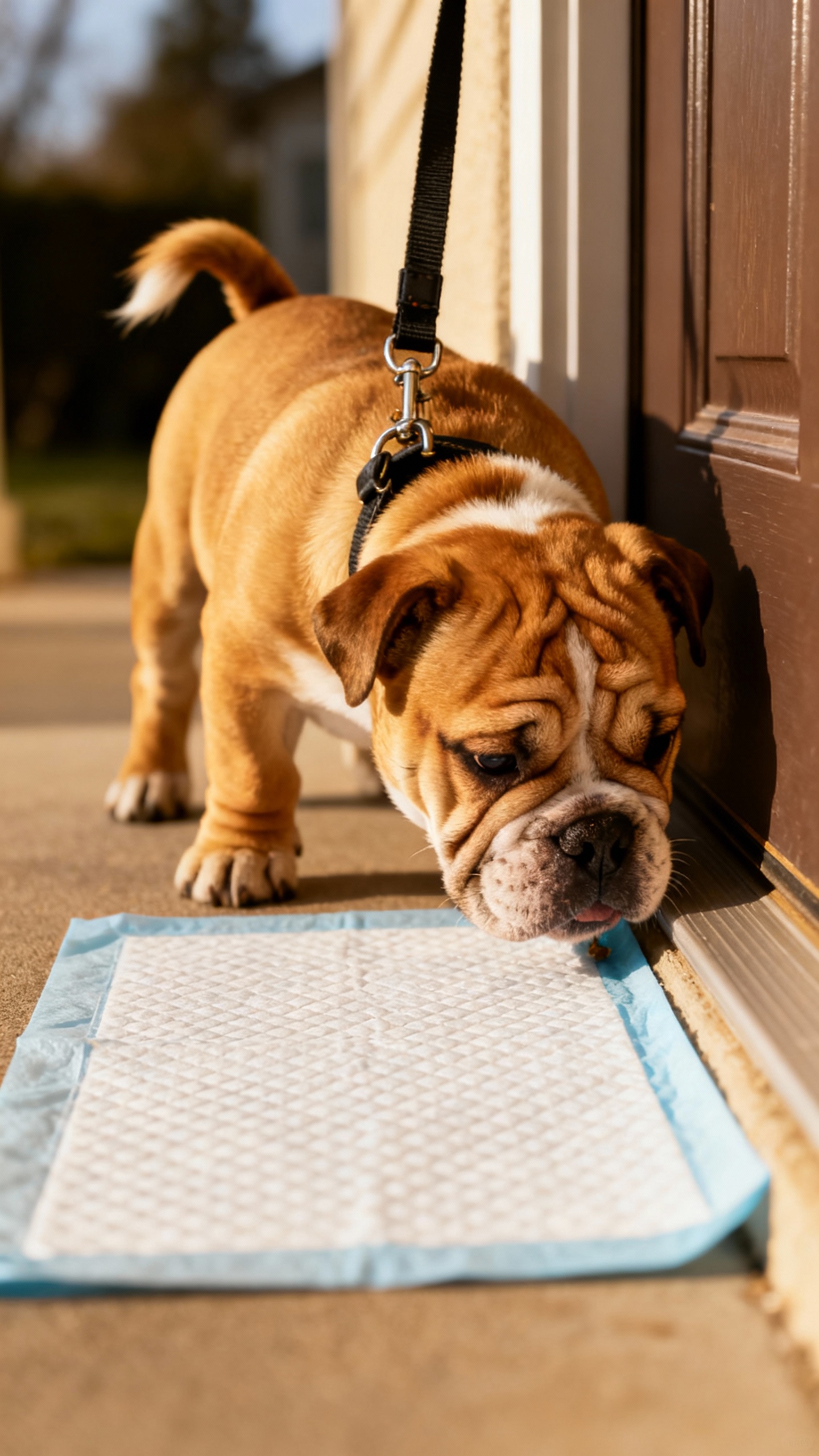
Bulldogs learn routines fast, but they also test boundaries. Cute, right? Until your living room becomes a splash zone. Here’s the deal: bulldog puppies can’t hold it for long, and brachycephalic breeds (short-nosed) tire easily.
That affects schedules, crate time, and outdoor sessions. You’ll get faster results if you work with their quirks, not against them.
The Golden Rule: Management Beats “Fixing” Mistakes
You win when you prevent accidents through structure. If your pup pees inside, your training plan needs tweaks.
No shame—just adjust and keep going.
Build a Potty Schedule That Actually Works
Bulldog puppies need frequent breaks. Think “annoyingly often.” It pays off. Start with this rhythm:
- Right when they wake up (every nap, every morning)
- After every meal and big drink
- After playtime or zoomies
- Every 1–2 hours while awake (you’ll stretch this over time)
- Right before bedtime
Nighttime? Most pups can’t make it through the night at first. Set one alarm for a quick potty trip.
Keep it boring and quiet—no party, no eye contact Olympics.
How Long Can They Hold It?
General guideline: months of age + 1 = hours they can hold it (up to ~4–5 hours early on). Many bulldog pups lag a bit here. If you keep missing, tighten the schedule.

Crate Training: Your Secret Weapon
Used well, a crate speeds up potty training and keeps your bulldog safe.
It’s not “dog jail”—it’s a cozy den. Pick the right crate:
- Just big enough to stand up, turn around, and lie down
- Use a divider so your pup can’t potty in one corner and nap in another
Crate game plan:
- Introduce it with treats and meals inside so it feels like home
- Short sessions at first—2–5 minutes, then gradually longer
- Always potty before crate time and right after
Huge tip: Don’t crate immediately after a big drink or rowdy play. Give a quick potty break first.
What If My Pup Hates the Crate?
Keep the door open at first. Toss treats inside.
Feed meals in the crate. Add a safe chew. Close the door for a few seconds, then open.
Build up slowly. You want calm, not drama.
The Outside Routine: Make Potty The Main Event
Potty trips are business, not social hour. Bulldogs get distracted easily (leaves, wind, their own shadow). Use a leash and go to the same spot. The scent triggers the urge.
Stand still. Don’t turn it into a walk until after they go. Choose a potty cue:
- Say it softly as they start: “Go potty,” “Hurry up,” whatever you like
- Stick with one phrase forever
Reward like you mean it:
- Treat within 2 seconds of finishing
- Use high-value snacks—soft, stinky, tiny
- Then praise and start a short walk or play as the “bonus prize”
Cold, Rainy, or Hot Weather Tips
Bulldogs overheat easily and hate extreme temps. Keep sessions short.
Use a covered spot or puppy rain jacket. FYI, some bulldogs boycott wet grass—bring them to the driest patch, go fast, and reward big.
Indoor Backup Plans (Without Confusing Your Pup)
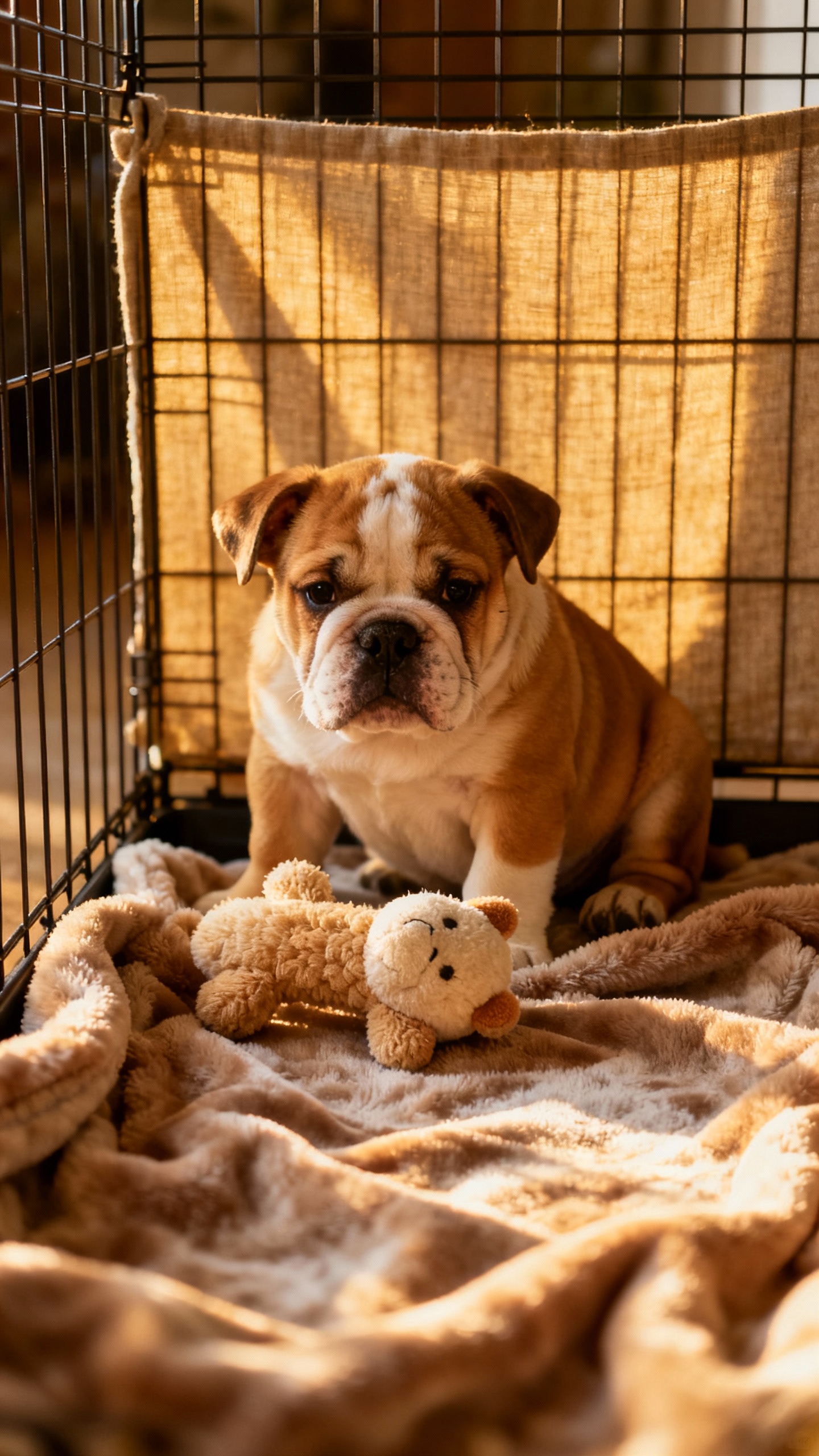
Ideally, you avoid pee pads to keep the message clear: potty happens outside. But life happens—high-rise living, weather, work hours. If you must use pads:
- Place them in one consistent area near the door
- Keep your outdoor schedule anyway
- Gradually move pads closer to the door, then outside, then remove
Alternative: A porch/balcony potty box with turf works better than random pads.
Accidents Happen: Clean Fast, Move On
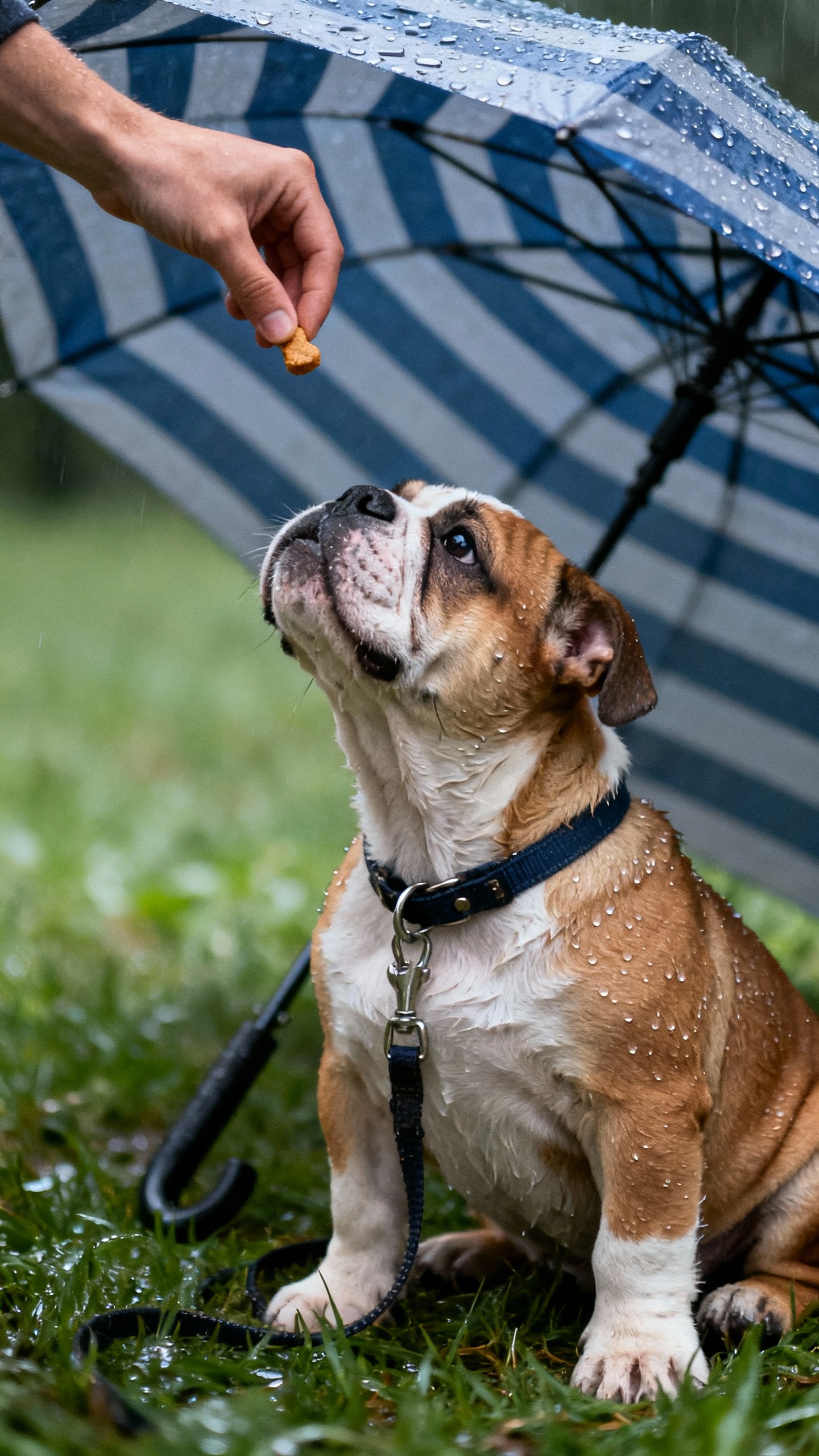
You’ll miss one.
Or five. Don’t scold. Don’t rub noses.
That’s outdated and just breaks trust. Do this instead:
- Interrupt gently if you catch them mid-stream: “Outside!” and walk quickly
- Finish outside and reward if they go
- Clean the spot with an enzymatic cleaner—kills odor so they don’t re-mark
Track patterns. If most accidents happen at 2 p.m., add a 1:45 p.m. potty break. Data beats frustration, IMO.
Feeding, Water, and Health: The Boring Stuff That Matters
Schedules matter. Free-feeding makes potty timing guessy. Feed on a routine:
- 2–3 meals at consistent times
- Pick up the bowl after 15 minutes
Water rules:
- Fresh water available, but monitor big gulps
- Remove water 1–2 hours before bed (unless your vet says otherwise)
Watch for health issues:
- Frequent accidents after progress?
Ask your vet about UTIs or GI upsets
- Soft stool often means diet changes or parasites—fix that, and potty training gets easier
Bulldog-Specific Notes
Bulldogs often have sensitive tummies. Sudden food switches can wreck your progress. Transition foods over a week.
Also, avoid overexertion before potty trips—panting and overheating can distract and delay.
Proofing and Independence: From “Baby Steps” to Real Life
Once your puppy nails the basics at home, level up gradually. Increase difficulty like this:
- New outdoor spots (front yard, then sidewalk grass)
- Different times of day and light rain
- More distractions (kids, dogs at a distance)
Expand freedom indoors:
- Start with one puppy-proofed room
- Use baby gates and tethers to prevent sneaky accidents
- Earn more space as your pup stays accident-free
IMO, structure equals freedom. Earned independence keeps your rug safe and your pup confident.
Common Mistakes (And Easy Fixes)
Too much freedom too soon. Use gates, crates, and leashes to supervise. Inconsistent rewards. Pay your pup every single time for the first few weeks. Turning potty time into a walk first. Potty first, then party. Expecting adult bladder control. They’re babies. Be fair. Skipping the vet when things regress. Rule out medical issues early.
FAQ
How long does potty training a bulldog puppy take?
Most bulldog pups get reliable in 4–8 weeks with consistency.
Full house freedom can take a few months. Progress rarely looks linear—expect good weeks and random setbacks. Keep the schedule tight and rewards strong.
Should I wake my puppy at night to go out?
Yes, at first.
Set one alarm in the middle of the night based on age and progress. Keep it quick, quiet, and all business. As your puppy wakes dry and holds longer, drop the night trip.
Are pee pads a bad idea?
Not “bad,” just potentially confusing.
If outdoor potty is your end goal, use pads strategically and phase them out. Place them by the door, then move them outside, then remove. Consistency matters more than the tool.
What if my bulldog refuses to go in the rain?
Use a covered spot, bring a big-value treat, and keep a cheap umbrella handy.
Take them to the same place, give the cue, wait calmly, reward instantly, then head inside to warmth. Short and sweet beats a soggy standoff.
My pup pees again right after we come inside—help?
Stay out a few extra minutes after they go to allow a “double piddle.” Many puppies release in stages. If accidents happen right after, your outside time ended too soon or rewards came too late.
Adjust both.
Can I punish accidents?
Nope. Punishment just teaches your pup to hide it from you. Interrupt kindly, go outside, reward success, and clean with enzymatic cleaner.
Training is a strategy game, not a courtroom drama.
Wrap-Up: You’ve Got This
Potty training a bulldog puppy takes patience, structure, and a tiny treat pouch you’ll forget to remove before Zoom calls. Keep the schedule tight, use a crate wisely, reward like a vending machine, and adjust based on data—not vibes. Stick with it for a few focused weeks, and you’ll trade paper towels for proud victory laps.
FYI: clean floors feel amazing.
Leave a Reply