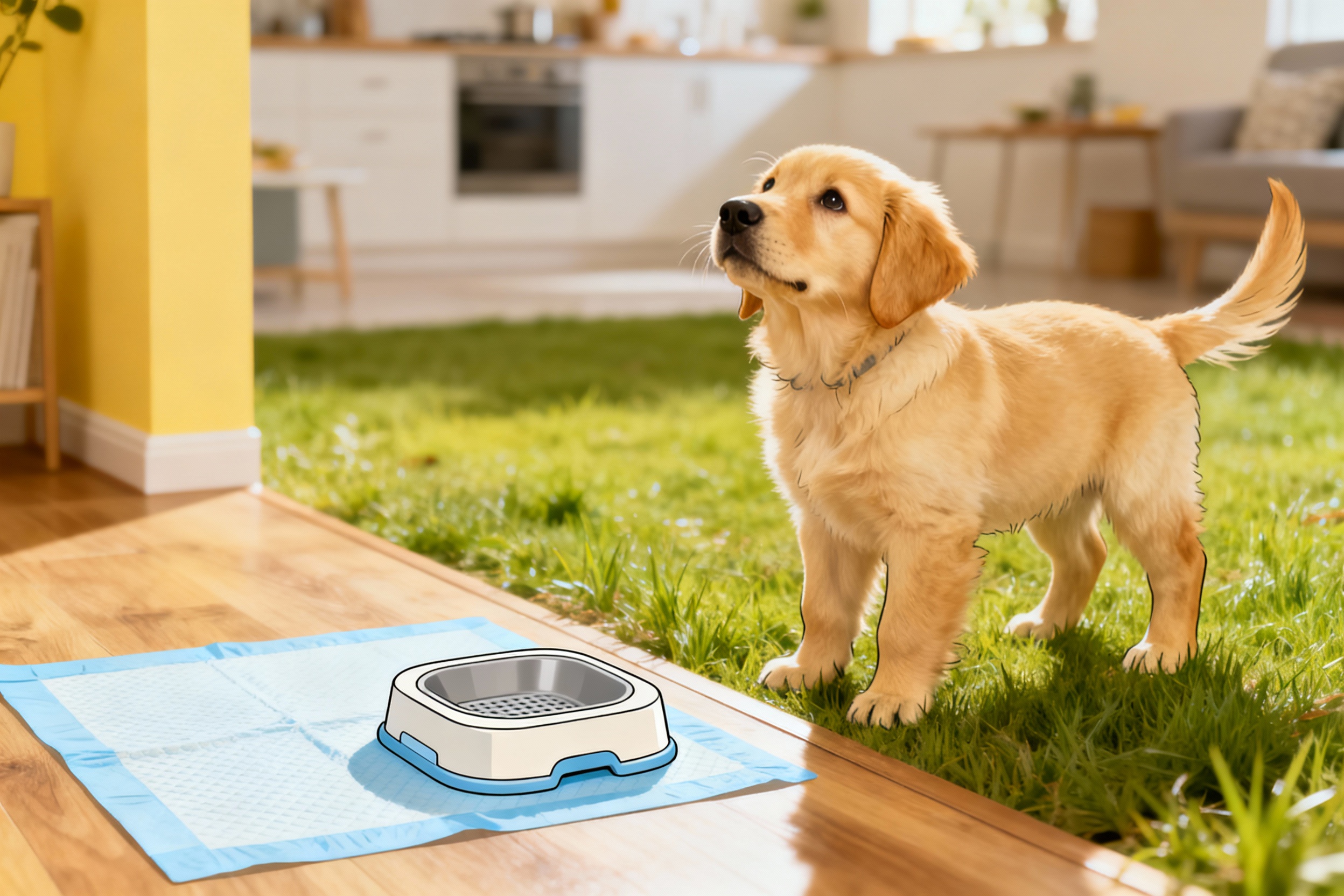
Puppies are cute. Your floors? Also cute.
Let’s keep both that way. Potty training a Golden Retriever puppy doesn’t need to be chaos and carpet cleaner. With a plan, consistency, and a pocket full of treats, you can get from “oops” to “outside champ” way faster than you think.
Know Your Golden: Why They’re Actually Easier to Train
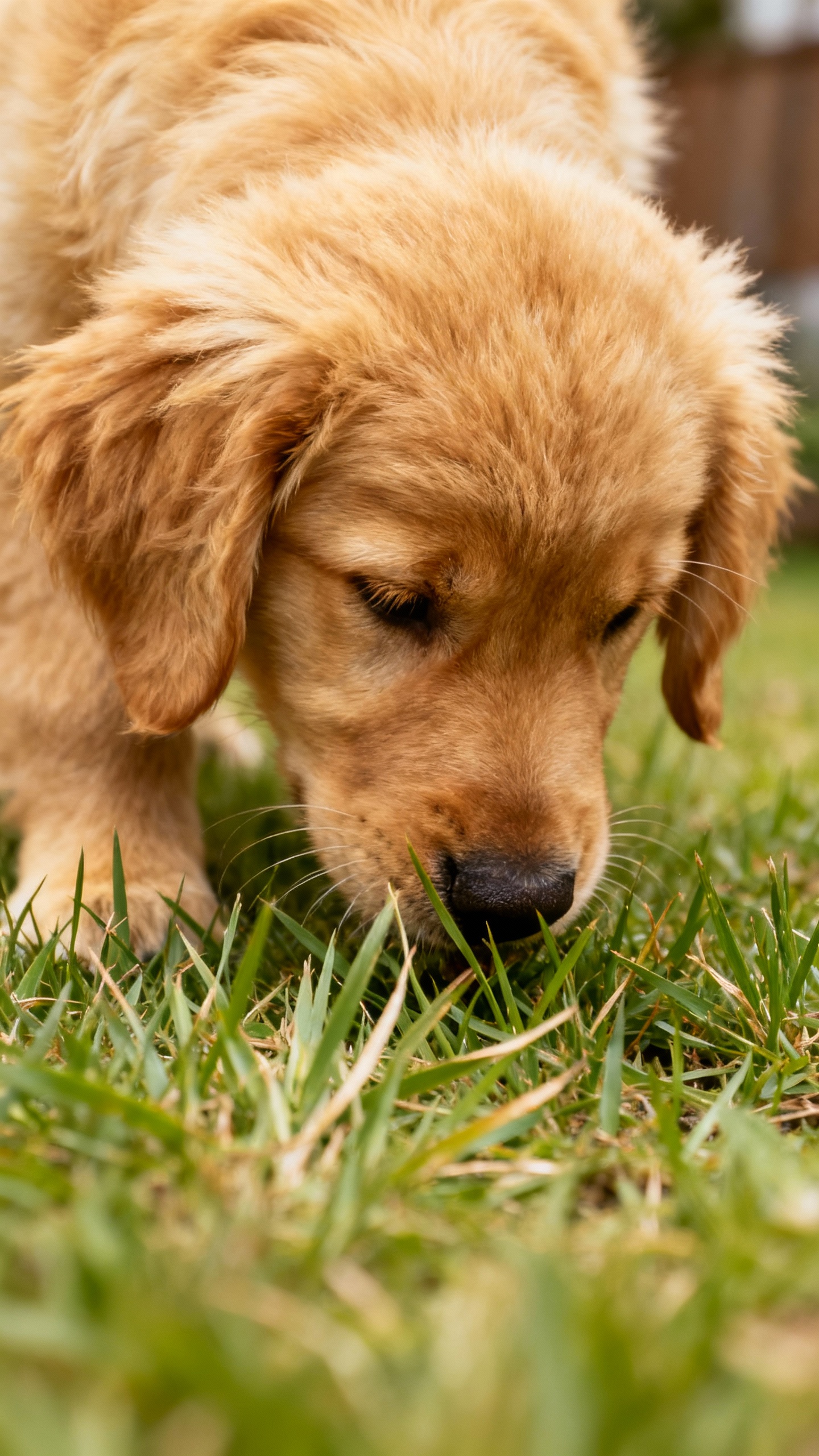
Golden Retrievers want to make you happy.
It’s basically their life mission. That eagerness makes potty training smoother—if you give clear signals. They also have puppy bladders the size of a thimble.
So yes, accidents will happen. But with a routine, your golden fluff ball will connect the dots quickly. Rule of thumb: a puppy can hold it about one hour per month of age (up to 4–5 hours max). Don’t push it—your rug will protest.
Set Up the Potty Training Foundation
Start strong and keep it simple.
You’re building habits, not negotiating hostage terms with a sock thief.
- Choose one potty spot outside. Same place, same command. Less guesswork for your pup.
- Use a crate that’s just big enough to stand, turn, and lie down.
Dogs dislike soiling their den.
- Block access to rooms you can’t supervise. Baby gates are your best friend.
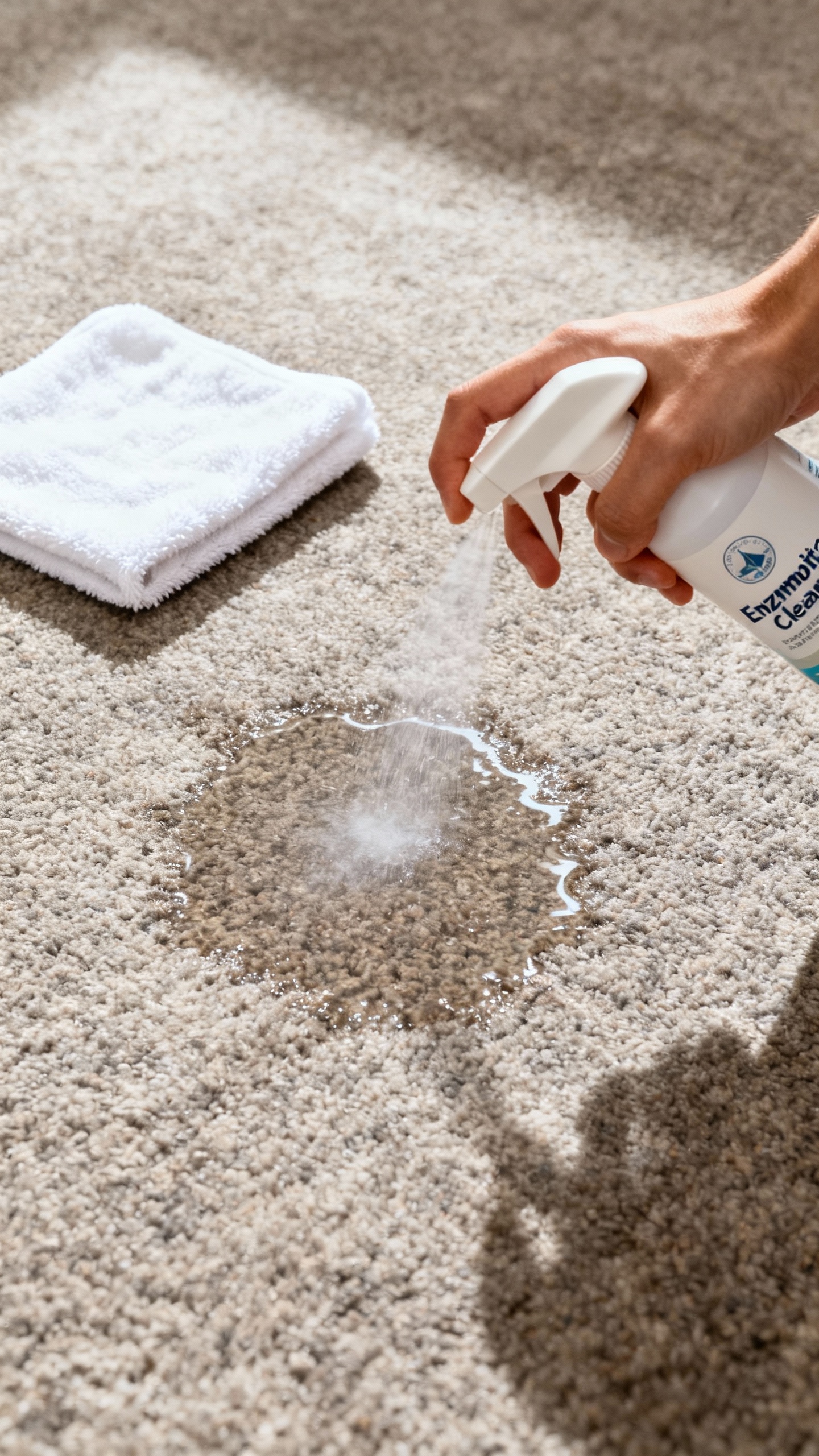
- Get a cleaner with enzymatic action. Regular cleaners won’t cut the scent, and your pup will revisit the scene of the crime.
Pick a Cue Word and Stick to It
Choose a phrase like “go potty” or “hurry up.” Say it as you reach the spot, not while you’re still putting on a shoe.
Timing matters. Then praise like you just won the lottery once they finish.

Create a Daily Schedule (And Actually Follow It)
Golden puppies thrive on patterns. You’ll feel like a walking calendar, but it works. Take your puppy out:
- Right after waking up (every nap included)
- Right after eating or drinking
- Before and after playtime
- Every 1–2 hours during the day (depending on age)
- Right before bedtime
Feed at consistent times.
Free feeding equals surprise poop-o-clock. IMO, doing meal times at 7 a.m. and 6 p.m. keeps things predictable and your sanity intact.
Nighttime Routine That Doesn’t Break You
Put your pup to bed after a final potty break and a calm cuddle. Young pups may need one quick midnight trip.
Keep it boring: no play, low light, out–pee–praise–back to bed. You’re not hosting a 2 a.m. party.
Make Outside Worth It
Dogs repeat what pays off. If outdoors equals treats and cheers, you’ll win this fast.
- Bring rewards outside.
Don’t promise treats indoors and then forget. Reward within 2–3 seconds of finishing.
- Use praise + treat + quick play for a triple win. Then head back in calmly.
- Skip long walks until after they go.
Otherwise, you’ll train them to hold it for more walk time.
What to Do If They Don’t Go
Give 5–10 minutes at the potty spot. No result? Back inside for 10–15 minutes supervised or crated, then try again.
You’re managing opportunities, not begging.
Supervision: The Secret Sauce
If your puppy is loose in the house, your eyes are on them. Period. That laser focus prevents most accidents. Watch for these signs:
- Sniff–circle–sniff pattern
- Sudden zoom-out from play
- Heading toward a favorite corner or rug
- Whining or pacing near the door
When you see any of that, calmly head straight outside.
No speeches. No panic. You’ve got this.
Accidents Happen.
Here’s the Right Response.

Let’s be real: you will miss a cue. It’s fine. Handle it like a pro.
- Catch them mid-act? Say “outside!” in a neutral tone and move quickly to the potty spot.
Praise if they finish outside.
- Find a puddle later? Clean it and move on. Dogs don’t connect punishment after the fact. Scolding just confuses them.
- Deep clean with an enzymatic cleaner.
Otherwise the smell becomes a neon sign that says “Bathroom here.”
Common Mistakes to Avoid
- Too much freedom too fast. Earned freedom prevents backsliding.
- Inconsistent schedules. Weekends count.
Sorry.
- Rewarding late. Treats must happen immediately after they finish outside.
- Blaming the puppy. Training is a you-and-them job, not a whodunnit.
Crate and Confinement: Tools, Not Punishment
Crates help you prevent accidents and build bladder control.
Use them kindly. Crate Tips:
- Introduce the crate with treats and chew toys. Keep the vibe happy.
- Start with short sessions while you’re present.
- Use the crate when you can’t supervise, not as a timeout.
If a crate isn’t your style, try an exercise pen with a bed, water, and chew toys. Keep the space small at first to discourage pottying inside.
Expand as your puppy stays clean.
How Long Can They Hold It in the Crate?
Generally: age in months = hours they can hold it (up to 4–5 hours max during the day). At night, they might stretch a bit longer. FYI, every puppy is different—err on the side of more breaks.
When Progress Stalls
If you plateau, simplify.
Go back to basics for a week: tighter schedule, higher-value treats, more supervision. Track potty times to spot patterns. Still struggling?
Rule out medical issues like UTIs with your vet. Goldens are cooperative by nature—if they’re trying and failing, something’s off.
Level Up: Add a Bell or Door Signal
Teach your puppy to ring a bell hanging by the door. Lure them to touch it with their nose, say “outside,” then go immediately.
Celebrate every honest ring. If they start ringing for fun, take them out, give 2–3 minutes, and come back in if nothing happens. The game gets boring fast.
Timeline: What to Expect
Every pup is different, but here’s a realistic arc for a Golden Retriever:
- Weeks 8–10: You’re doing lots of trips outside, tons of praise, accidents happen.
- Weeks 10–14: Fewer accidents, clearer signals, longer holds.
- Weeks 14–20: Mostly reliable with supervision.
Night holds improve.
- 5–6 months: Clean indoors with consistent routine. Accidents rare.
IMO, long-term success comes from not rushing freedom. Earned access > mopping floors.
FAQ
How long does it take to fully potty train a Golden Retriever puppy?
Most Goldens get reliable by 4–6 months with consistency.
Some nail it earlier, others need more time, especially in new environments. Stick to the routine and you’ll see steady progress.
Should I use pee pads?
Pee pads can confuse puppies since you’re basically saying “sometimes inside is fine.” If your goal is outdoor potty only, skip pads and manage with crates and supervision. Use pads only if you live in a high-rise or have mobility constraints.
What treats work best for potty training?
Small, soft, high-value treats that your puppy goes nuts for.
Think tiny bits of chicken, cheese, or soft training treats. Keep them by the door so you never forget. Reward immediately after they finish.
What if my puppy keeps having accidents in the same spot?
Do a deep enzymatic clean and block access for a while.
Then supervise closely and increase outdoor trips. Sometimes a small furniture rearrangement breaks the habit because the cue changes.
Do I need to wake up at night to take my puppy out?
Young puppies often need one quick nighttime potty trip. Set an alarm, keep it low-key, and go right back to bed.
As their bladder matures, you can stretch the time and drop the night break.
My puppy won’t go outside when it’s raining. Help?
Pick a semi-sheltered potty spot and go with them. Keep a stash of high-value treats for rainy days.
Praise like crazy when they go—Goldens are people-pleasers, and your enthusiasm helps them power through the drizzle.
Conclusion
Potty training a Golden Retriever puppy boils down to this: consistency, supervision, and instant rewards. Keep the routine tight, keep your cool during setbacks, and celebrate the small wins. Do that, and your golden fluff will turn into a bathroom pro—your floors will thank you, and so will future you.
Leave a Reply