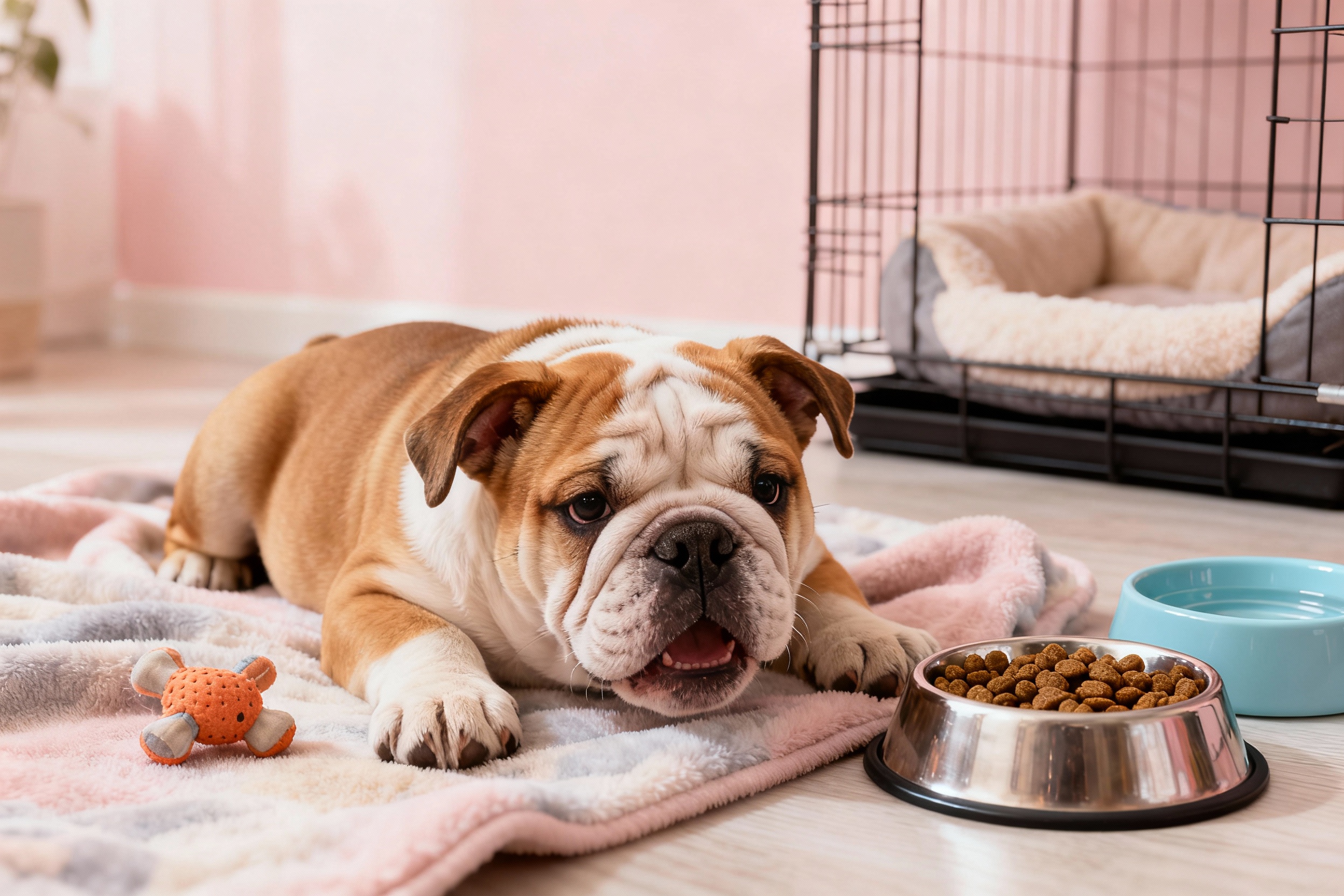
Bulldog puppy on the horizon? Buckle up. These wrinkly charmers bring joy, chaos, and snoring that could rattle drywall.
You don’t need to panic, but you do need a plan. Let’s get your home (and your expectations) bulldog-ready so you can focus on the fun stuff—like tiny paws and big personalities.
Know Your Bulldog: Personality, Needs, and Quirks

Bulldogs are mellow comedians. They love people, naps, and snacks—in that order.
They also demand structure because cute stubbornness turns into chaos fast. Key traits to expect:
- Stubborn but sensitive: They need gentle, consistent training. They shut down if you get harsh.
- Low energy, not “no energy”: Short play sessions and slow walks work best.
- Heat sensitive: That squishy face? Adorable, but not optimized for hot weather.
- Velcro vibes: Bulldogs love sticking close.
Prepare for “supervisor” mode during every chore.
Bulldog Breeds: English vs. French vs. American
Not all bulldogs are the same.
English Bulldogs are stocky snuggle tanks. French Bulldogs are smaller, sassier, and louder about it. American Bulldogs tend to be more athletic and need more exercise.
This guide leans English, but much still applies to Frenchies and other bully breeds. FYI, always check your specific breed’s health needs.
Puppy-Proofing Your Space (Because Bulldogs Are Opportunists)
Puppies explore with their mouths and bulldogs snack on anything that smells like attention. Set your home up so your new buddy can’t make a five-minute mistake that takes weeks to fix. Do this before pickup day:
- Block off rooms with baby gates.
Create one puppy-safe zone as home base.
- Hide power cords with cable covers. Chewing + electricity = no thanks.
- Elevate plants and bags. Lots of houseplants are toxic. So are purse snacks.
- Secure trash with lidded bins.
Bulldogs are gifted dumpster divers.
- Check temperatures: Keep cool zones ready—fans, AC, or cooling mats.
Create a Cozy Den
Bulldogs love safe, snug spots. Choose a crate that fits their adult size with a divider for now. Add a washable bed, a soft blanket, and a chew toy.
The crate becomes their “bedroom,” not a timeout zone.
Gear You Actually Need (and What You Don’t)
Let’s trim the fluff. You don’t need a gadget that recites affirmations to your pup. You do need bulldog-friendly basics. Essentials:
- Crate + playpen: Potty training and sanity savers.
- Harness (Y-shaped) and a 4–6 ft leash.
Avoid neck collars for walks.
- Slow-feeder bowl: Bulldogs inhale food. Slow them down to reduce gas and choke risk.
- High-quality puppy food: Look for AAFCO growth standards and moderate calories. Bulldogs gain fast.
- Chews and toys: Rubber toys, snuffle mats, and soft chews.
Skip brittle bones and tiny pieces.
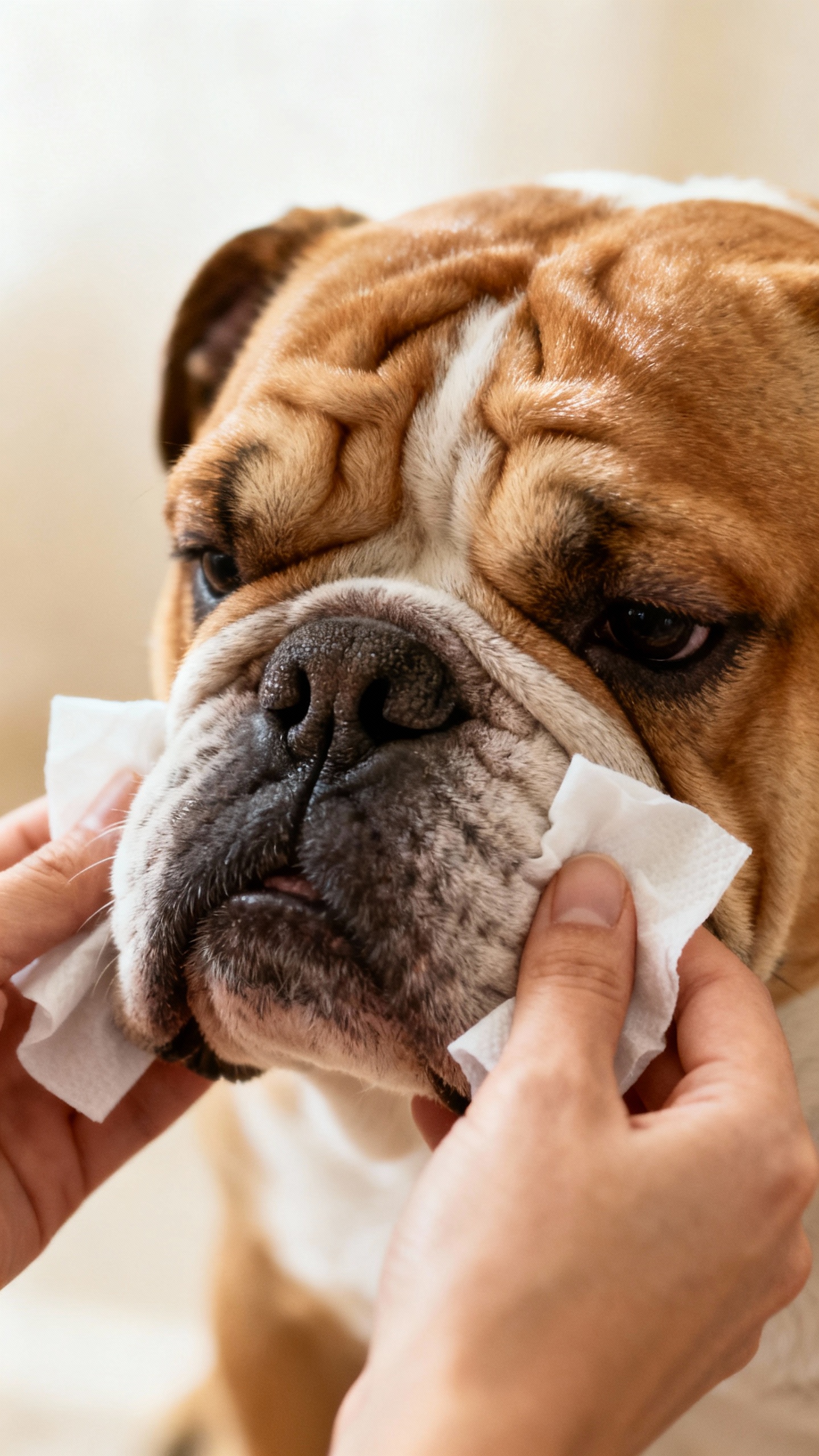
- Grooming kit: Soft brush, ear cleaner, gentle wipes, and bulldog-safe wrinkle balm.
- Cooling gear: Cooling mat or vest for warm days. This is not optional in summer, IMO.
Nice-to-haves:
- Elevated feeder (if recommended by your vet)
- Enzyme cleaner for accidents
- Portable fan for car rides
Health Prep: Vets, Insurance, and Breed-Specific Care
Bulldogs are healthy when well-bred and well-cared-for, but they carry some known issues. Prepare early, and you’ll save money and stress.
- Find a bulldog-savvy vet before pup comes home.
Ask about their experience with brachycephalic breeds.
- Schedule a wellness exam within the first 72 hours. Bring breeder/vet records.
- Consider pet insurance ASAP. Pre-existing conditions get excluded, so earlier is smarter.
Bulldog Health Checklist
- Breathing: Watch for snorting and overheating.
Learn red flags for brachycephalic airway syndrome.
- Skin and wrinkles: Clean folds 2–3 times weekly with vet-approved wipes. Dry thoroughly.
- Ears: Bulldogs get gunky. Clean weekly and after baths.
- Weight: Keep them lean.
Extra pounds make breathing and joint issues worse.
- Vaccines and deworming: Follow your vet’s schedule, not your neighbor’s opinion.

Training: Start Early, Keep It Simple, Make It Fun
Bulldogs don’t love being told what to do. But they love treats. Use that.
Keep sessions short (3–5 minutes), upbeat, and constant. Day-one priorities:
- Name recognition: Say their name, treat. Repeat until they snap their head to you every time.
- Potty plan: Out every 2–3 hours, after naps, play, and meals. Praise like you won the lottery when they go outside.
- Crate conditioning: Feed meals in the crate.
Toss treats in. Make it Happy Place, not Jail.
- Bite inhibition: Redirect with a toy. No hand wrestling.
Bulldog-Friendly Commands
Focus on practical cues:
- Leave it (for socks, rocks, and the remote)
- Wait (at doors and for meals)
- Come (payday recall earns the best treats)
- Settle (teach calm on a mat)
Socialization window: From about 8–16 weeks, introduce safe, positive experiences.
People with hats, children being children, different surfaces, and gentle puppies. Keep sessions short and happy. Avoid dog parks until fully vaccinated.
Feeding and Hydration Without the Tummy Drama

Bulldogs have sensitive stomachs and Olympic-level gas if you rush food changes.
Keep it simple and steady.
- Stick to breeder’s food for the first week, then transition over 7–10 days.
- Three meals a day for puppies, then two as your vet advises.
- Slow-feeder bowls reduce gulping and choking risk.
- Fresh water always, but pick a heavy bowl so it doesn’t become a splash pad.
Treats and Supplements
Use small, soft treats for training. Think pea-sized. For supplements, talk to your vet before starting anything.
More isn’t better, and bulldogs don’t need a multivitamin if you feed a balanced diet, FYI.
Grooming and Daily Care Routines
You don’t need a spa membership, but you do need consistency. Bulldogs shine with simple routines. Weekly basics:
- Wrinkle care: Wipe folds with a gentle cleanser, then dry. Moisture = irritation.
- Brush: A soft brush keeps skin happy and reduces shedding.
- Ears and nails: Clean ears weekly.
Trim nails every 2–3 weeks—shorter nails help joints.
- Teeth: Brush 3–4 times a week if you can. Dental sticks help but won’t replace brushing.
Bath Time Tips
Use lukewarm water, bulldog-safe shampoo, and rinse like your life depends on it. Dry thoroughly, especially in folds and between toes.
Bulldogs can get funky fast if you leave moisture behind.
Exercise and Play: Short, Sweet, and Smart
Bulldog puppies need controlled activity. No marathon fetch sessions. Think brain games and gentle movement.
- Short walks: 5–10 minutes, a few times a day, on cool surfaces.
- Brain work: Snuffle mats, scent games, and easy puzzle toys.
Mental work tires them out—win.
- No jumping off furniture: Protect those joints while they grow.
- Heat rule: If it’s hot, skip the walk and play indoors. Overheating isn’t worth the risk, IMO.
First Week Game Plan
Want a smooth landing? Use this simple timetable and adapt as needed.
- Day 1–2: Keep it calm.
Introduce crate, potty routine, and family members. No big outings.
- Day 3–4: Practice name, sit, and come. Short car ride to nowhere for confidence.
- Day 5–6: Meet a friendly vaccinated dog, visit a pet-friendly store for socialization.
- Day 7: Vet check, weigh-in, and schedule vaccines.
Celebrate with a nap. For both of you.
FAQ
How do I keep my bulldog puppy cool in summer?
Limit outdoor time to early morning and late evening. Use cooling mats, fans, and shaded rest spots.
Offer water often and skip high-energy play. If your pup pants hard, drools excessively, or acts wobbly, get inside and call your vet.
What should I look for in a responsible breeder or rescue?
Look for health testing (especially airway, hips, and eyes), transparent vet records, and a clean environment. Breeders should welcome questions and ask you plenty, too.
Rescues should provide medical history and honest behavior notes. Walk away from anyone pushing quick sales or refusing visits.
Are bulldogs good with kids and other pets?
Usually, yes. Bulldogs adore people and often do great with kids who respect boundaries.
Supervise all interactions and teach gentle handling. With other pets, slow introductions and positive reinforcement work best.
Do bulldogs need a lot of exercise?
Not tons, but they do need consistency. Short, frequent walks and play sessions beat one long workout.
Focus on mental enrichment and joint-safe movement.
How much should I feed my bulldog puppy?
Follow your food’s guidelines based on age and weight, then adjust with your vet’s help. Keep them lean—you should feel ribs without digging. Overfeeding now causes long-term problems, including breathing and joint stress.
What training mistakes should I avoid?
Don’t punish accidents, yank leashes, or train when your puppy is overtired.
Keep sessions short and fun, reward generously, and end on a win. Consistency beats intensity every time.
Conclusion
A bulldog puppy will steal your couch, your heart, and probably a few socks. Prepare the space, nail the routine, and keep health front and center.
Do that, and you’ll get a loyal, goofy best friend who makes every day better—even the snore-filled ones. Now go buy the slow-feeder and the wrinkle wipes. Your future self says thanks.
Leave a Reply