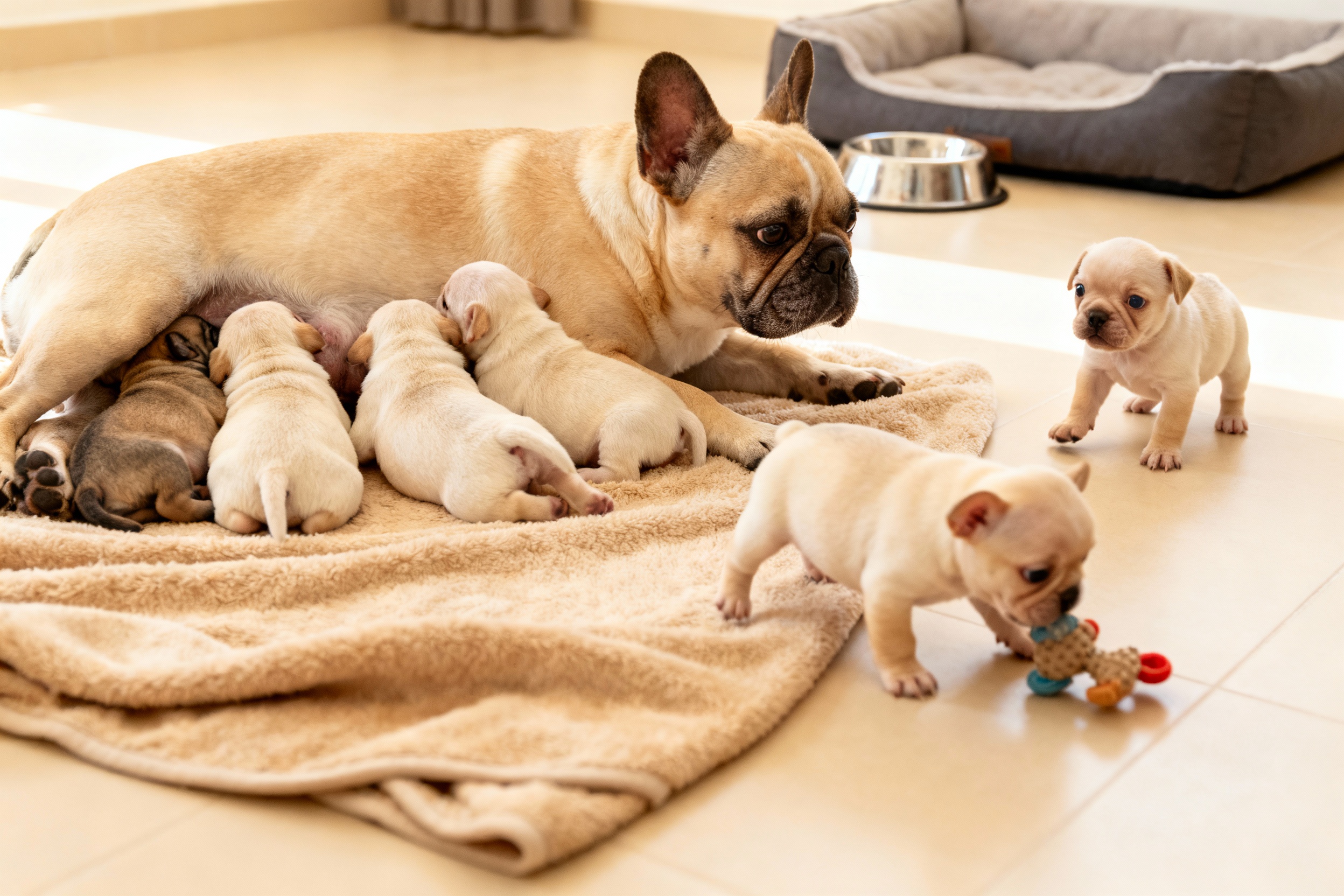
French Bulldog puppies don’t come with an instruction manual, but they might as well. These little bat-eared potatoes are adorable, stubborn, and surprisingly high-maintenance from day one. If you’re prepping for a litter or just curious, you’re in the right place.
Let’s walk through the real-world basics—no fluff, no panic, just what you need to raise healthy, happy Frenchie pups.
Before the Birth: Prep Like a Pro

You can’t wing whelping. French Bulldogs often need C-sections because of their build, so line up your vet early. Ask about timing, emergency contacts, and what to expect with recovery.
Set up a warm, clean whelping area. You’ll want:
- Whelping box with low walls and a pig-rail to prevent squishing
- Heating source (heat pad set on low under half the box or a heat lamp)
- Clean towels, puppy scale, bulb syringe, iodine for umbilical stumps
- High-calorie food and calcium for mom (per vet guidance)
Keep the room quiet and draft-free. Frenchie moms can feel overwhelmed, and calm moms make calm babies.
IMO, it’s half nursery, half zen den.
Day 1–7: The Fragile Week
Newborn Frenchies need vigilant care. They can’t regulate body temperature, so you must. Aim for:
- Ambient temperature: 85–90°F (29–32°C) for the first few days, then gradually lower
- Weight checks: weigh daily at the same time; pups should gain steadily
- Nursing every 2–3 hours: help weak pups latch; rotate them so everyone eats
Watch for signs of trouble: crying constantly, cold bodies, refusal to nurse, or a bloated belly.
Don’t wait—call your vet. Newborn Frenchies can crash fast.
Helping Mom Bond (Safely)
Some Frenchie moms act clueless at first. Supervise nursing sessions, especially if she’s groggy post-surgery.
Keep her nails trimmed and never leave her alone with pups until you trust her. Sounds paranoid? It’s not.

Weeks 2–3: Growth Spurts and First Milestones
Eyes open around day 10–14, ears soon after.
You’ll see wiggling turn into crawling, and yes, it’s painfully adorable. Keep the whelping box clean and dry. Replace bedding daily.
Continue:
- Daily weigh-ins
- Temperature control (slowly drop to ~80°F by week 3)
- Monitoring mom’s health (appetite, milk supply, any fever or discharge)
Handle pups gently every day. Short, calm sessions build trust and reduce future anxiety.
Deworming and Early Vet Care
Ask your vet about deworming schedules—often around 2 weeks and again at 4, 6, and 8 weeks. Plan vaccines to start at 6–8 weeks, but that timeline can vary.
FYI, keep the litter away from public spaces and unknown dogs until fully vaccinated.
Weeks 3–5: Weaning Without the Drama
It’s gruel time. Start weaning around week 3–4 with a mushy mix:
- Puppy formula + high-quality puppy kibble, blended to oatmeal consistency
- Offer 3–4 small meals a day in shallow dishes
- Let pups explore and make a mess (they will—embrace the chaos)
Keep nursing available at first, but gradually reduce as they eat more solids. Watch for tummy upsets.
If stools go soft or pups act lethargic, dial back, hydrate, and call your vet.
Potty Setup Saves Sanity
Create zones:
- Sleep area: cozy and dry
- Eat area: near you for supervision
- Potty area: pee pads or a litter turf patch on the far side
Puppies naturally avoid soiling the sleep space. Use that instinct. Is it perfect?
No. Is it better than scrubbing your floors every hour? Yes.

Weeks 5–8: Socialization and Tiny Training
This window shapes adult behavior.
Expose pups to new sights, sounds, and gentle handling every day. Vacuum noises, different flooring, soft music, car rides—go slow and keep it positive. Introduce simple training:
- Name recognition and recall with tiny treats
- Crate comfort: short sessions with bedding and a chew
- Bite inhibition: yelp softly and redirect to a toy when chomped
Frenchies love people.
Socialize with kind adults and children who understand “gentle hands.” Avoid dog parks and unknown dogs until vaccines are complete (and honestly, even then, choose wisely).
Health Checks You Can’t Skip
By week 6–8, you should have:
- First vaccine appointment per your vet’s schedule
- Microchipping (ideal before going to new homes)
- Health exams checking nostrils, breathing, palate, hips, knees, eyes, skin
Frenchies can struggle with breathing (brachycephalic issues). Any snorting, choking while nursing, or blue gums requires immediate vet attention.
Feeding, Weight, and Growth: What’s “Normal”?

Healthy Frenchie pups gain daily. If a pup stalls for 24 hours, intervene.
Offer supplemental formula with a syringe or bottle if needed (only after talking to your vet for amounts). Once on solids:
- 4 meals/day from weeks 5–8
- 3 meals/day from 8–12 weeks
- Choose a small-breed puppy formula with appropriate calcium/phosphorus
Skip trendy raw diets for young pups unless you’re working with a vet nutritionist. Their guts do not enjoy your experiments, and neither will your carpet.
Breathing, Heat, and Safety: Frenchie-Specific Must-Knows
French Bulldogs overheat easily.
Keep pups and mom cool as they grow—no direct sun, no hot rooms, and no heavy play after meals. Other non-negotiables:
- No collars in the whelping box (risk of snagging)
- Supervise with mom for the first few weeks
- Trim nails weekly so they don’t scratch mom’s mammary glands
- Watch nostrils: severely pinched nares make feeding and thriving harder
If you ever wonder, “Is this normal?” ask your vet. Fast answers save puppies.
IMO, there’s no such thing as an overcautious Frenchie parent.
Finding Great Homes (If You’re Placing Puppies)
Screen, don’t just sell. Frenchies need committed owners who understand the breed’s quirks and costs. Look for:
- People with time for training and vet care
- Safe homes with climate control (heat risk is real)
- A willingness to pet-insure or budget for potential airway or skin issues
Send pups home at 8–10 weeks with a vet record, microchip info, feeding schedule, and a blanket that smells like the litter.
That scent can calm first-night jitters better than any pep talk.
FAQ
When should I start weaning French Bulldog puppies?
Begin around 3–4 weeks when pups show interest in mom’s food and start teething. Start with a warm gruel and increase solids gradually. Keep nursing available at first so nobody crashes.
How warm should the whelping area be?
Aim for 85–90°F (29–32°C) in week one, then taper to around 80°F by week three.
Always warm the space, not the entire pup, and leave a cooler zone so they can move if they get too hot.
How often should I weigh the puppies?
Weigh daily at the same time for the first 3–4 weeks. You want steady gains. If a pup stalls or loses weight for a day, call your vet and consider supplementing.
What should I watch for with Frenchie breathing?
Look for noisy breathing at rest, cyanotic (blue) gums, trouble nursing, or constant mouth-breathing.
These can signal airway issues. Early evaluation helps—sometimes simple changes help; sometimes surgery down the road is needed.
When can puppies go outside?
Short, safe yard time after 8 weeks is fine if your yard is clean and secure. Avoid public places and unknown dogs until vaccines finish—usually around 16 weeks.
Can Frenchie moms be left alone with newborns?
Not at first.
Supervise closely for the first couple of weeks. Some moms accidentally roll on pups or get anxious. As she proves reliable, you can give her more alone time.
Conclusion
Raising French Bulldog puppies from birth takes planning, patience, and a sense of humor.
You’ll clean more bedding than you thought possible and celebrate every tiny milestone like it’s a Nobel Prize. Keep your vet close, keep your setup simple, and keep the pups warm, fed, and loved. Do that, and your little bat-eared brigade will thrive.
FYI: you’ve got this.
Leave a Reply