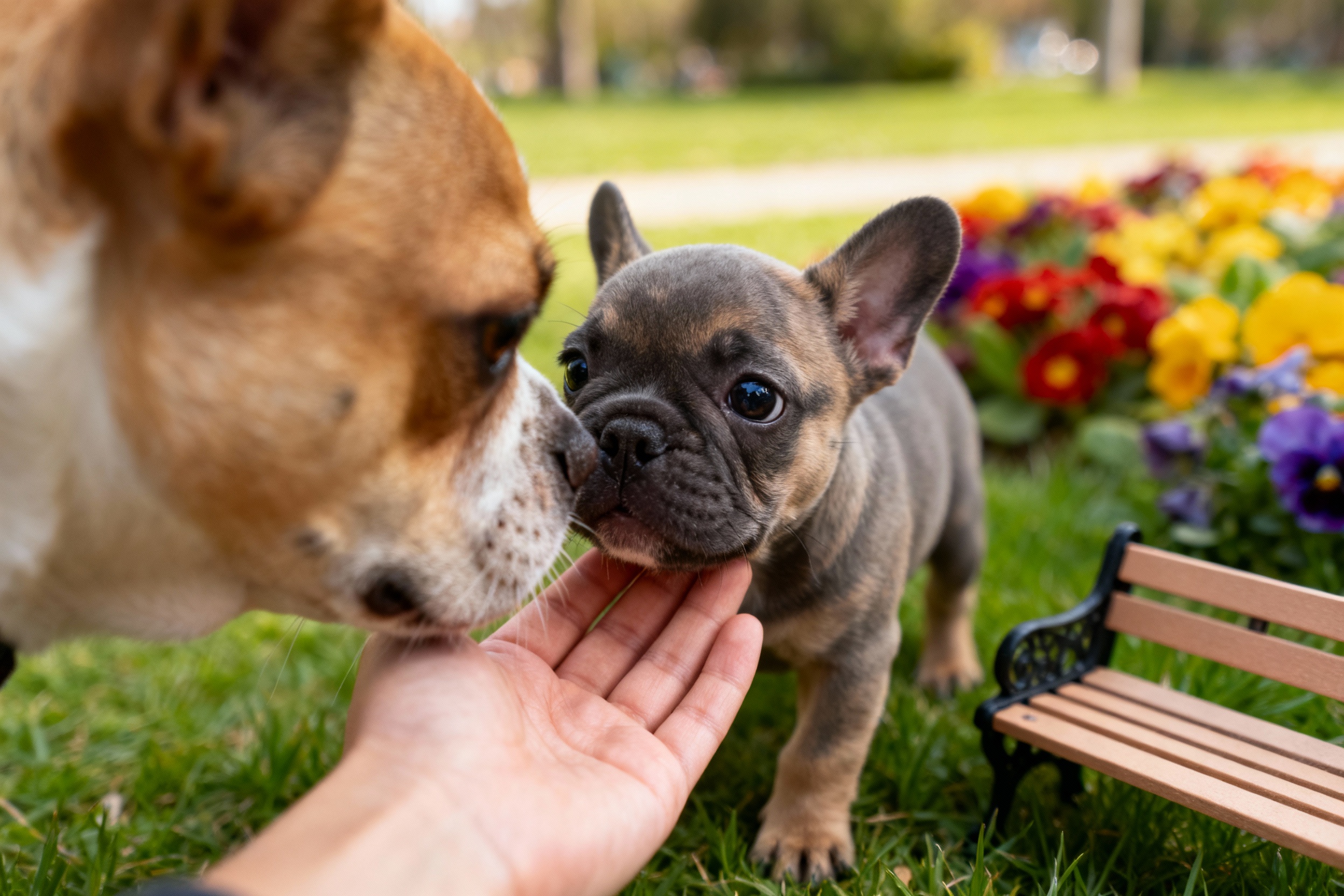
Your Frenchie puppy looks like a tiny bat with a snort soundtrack—and honestly, you won the lottery. But even the cutest gremlin needs social skills. Good socialization turns that goofy sidekick into a confident, friendly dog who can handle people, dogs, noises, and life without freaking out.
Let’s get your little potato out in the world—safely, happily, and with as few chaos moments as possible.
Why Socialization Matters (Especially for Frenchies)

French Bulldogs charm everyone, but they can lean cautious or clingy if you skip socialization. That caution becomes barking, fear, or reactivity later. Not ideal.
The magic window? 3 to 14 weeks old. Your pup’s brain soaks up experiences like a sponge. You don’t need to overwhelm them; you just need many positive, controlled exposures to the world.
Think: short, sweet adventures with treats and praise.
Start at Home: Build Confidence First
You don’t need a dog park to socialize a puppy. You need a plan and a pocket full of snacks.
- New surfaces: Carpet, tile, grass, gravel, a wobble board. Treat and praise every step.
- Household sounds: Hairdryer, blender, vacuum, doorbell.
Start soft, feed treats, calm vibes. Increase volume slowly.
- Outfit changes: Hats, sunglasses, hoodies, big coats. You look weird; your puppy thinks so too.
Pair with treats.
- Handling practice: Touch paws, ears, tail, mouth. Treat after each touch. Your vet will thank you.
Micro-Sessions Win
Keep it to 3–5 minutes a couple times a day.
End on a win. The goal: your pup looks at you like, “That was fun. What’s next?”

Vaccines vs.
Socialization: How to Leave the House Safely
Yes, your puppy needs vaccines. Also yes, you can socialize before the series ends. You just need common sense.
- Safe outings: Carry them in your arms or a puppy backpack.
Walk them on clean sidewalks, not dog-heavy dirt areas.
- Visit friends’ homes: Only where dogs are healthy and vaccinated.
- Puppy classes: Choose a class that requires vaccine proof and cleans surfaces.
- Avoid: Dog parks, pet store floors, and random dog meetups until fully vaccinated.
FYI: Controlled exposure beats wild “hope it works” experiences every time.
People, Places, Things: A Socialization Checklist
You don’t need to hit everything, but variety matters. Aim for gentle repetition rather than one-off chaos.
People
- Different looks: Kids, seniors, men with beards, people with canes, wheelchairs, backpacks.
- Rules for greetings: Ask people to squat sideways, let the puppy approach, and drop treats.
- Say no to overwhelm: One person at a time. No grabbing, lifting, or crowding.
Dogs
- Pick role models: Calm, friendly, vaccinated dogs.
One-on-one first.
- Watch body language: Loose bodies = good. Stiff, tucked tails, or avoidance = break time.
- Size matters: Frenchies play rough. Pair with dogs who won’t steamroll or get offended by snorts.
Environments
- Parking lots (in arms), café patios, quiet parks, hardware stores that allow dogs.
- Walk by bicycles, strollers, skateboards from a distance first.
- Short car rides with treats and a comfy crate or seatbelt harness.
Pro tip: Keep a “socialization go-bag” with treats, poop bags, a mat, wipes, and water.

Make Every Experience Positive (Not Just Tolerable)
If your puppy just “puts up with it,” that’s not socialization—that’s survival.
We want positive associations.
The Treat-First Rule
See a new thing? Feed before they fixate. You’re building a pattern: weird thing appears, snacks rain from the sky. Your puppy learns, “New = awesome.”
Use Distance Wisely
Too close and your pup panics; too far and they don’t notice. Find that sweet spot where they see the thing, look curious, and still eat.
Move closer slowly across sessions, not minutes.
Frenchie-Specific Considerations
- Limit overheating: Short snouts struggle in heat. Socialize during cooler hours and carry water.
- Protect the back and hips: No jumping off high surfaces. Support their body when lifting.
- Watch for stubborn streaks: Frenchies love making their own choices.
Use high-value treats to keep them engaged.
Puppy Play: Set It Up Like a Pro

The goal isn’t “go wild.” It’s good manners and good vibes.
- Neutral space: Backyard or quiet area, not your puppy’s favorite toy zone.
- Parallel walks first: Move the dogs in the same direction with space. Sniffing comes after.
- Short bursts: 2–3 minutes of play, then a break. Watch for loose curves, bouncy movement, play bows.
- Intervene early: If someone gets too amped, call a break.
Treat when both dogs check in with you.
Red Flags During Play
- Pinning without breaks, stiff posture, hard staring.
- Yelping, hiding, or repeated rolling onto the back to escape.
- One dog ignores the other’s signals to slow down.
If you see these, end the session with a calm walk. No drama, just “we’re done here.”
Train While You Socialize (Efficiency = Happiness)
Socialization + basic cues = confidence and control. Multitasking, but make it cute.
- Name game: Say their name, reward eye contact.
Use everywhere.
- Hand target (touch): Present your hand; when they boop it, treat. Great for redirecting from distractions.
- Sit and wait: Before greetings, crossing streets, or meeting dogs.
- Mat training: Bring a mat to cafés. Reward calm lying down while the world does weird human things.
IMO, hand targeting might be the most useful real-life cue you’ll ever teach.
Common Mistakes to Avoid
- Flooding: Dragging your puppy into a busy crowd and hoping for the best.
That backfires.
- Ignoring body language: Lip licking, yawning, whale eye, freezing, tucked tail = “Help me.” Adjust immediately.
- Too much, too fast: Five good minutes beats 45 chaotic ones.
- Letting strangers scoop them: Small dogs get grabbed a lot. Protect your pup’s space.
- Skipping rest: Puppies need huge naps. Overtired = gremlin mode.
FAQ
When should I start socializing my French Bulldog puppy?
Start the day you bring them home, usually around 8 weeks.
Keep it safe and controlled until vaccines wrap up. You can do tons from your living room and via carried outings.
How do I know if my puppy feels scared?
Watch for freezing, tucked tail, crouching, lip licks, yawns, turning away, or refusing treats. If you see these, add distance, lower intensity, and switch to easy wins.
Fear means pause, not push.
What if my Frenchie growls at new dogs or people?
Respect the growl. It’s information, not “bad behavior.” Increase distance, go slower, and pair the trigger with treats at a level where your pup stays relaxed. If it persists, a positive reinforcement trainer can help quickly.
Do I need a puppy class?
Strongly recommended.
Choose a force-free trainer with small class sizes and vaccination checks. Good classes offer safe dog-dog play, handling practice, and exposure to new stuff you might not think of.
Can I socialize without treats?
Technically yes, but you’ll work harder for worse results. Food speeds up learning and makes new things feel good.
Use tiny, soft treats—chicken, cheese, or a training treat they’d rob a bank for.
How much socialization is enough each week?
Aim for daily micro-sessions plus 2–3 short field trips. Track new exposures and repeat favorites. Quality beats quantity, always.
Conclusion
Socializing your Frenchie puppy isn’t about checking boxes—it’s about building a brave, flexible little buddy who trusts you when life gets loud.
Keep sessions short, pair everything with rewards, and protect their boundaries like a bodyguard with snacks. Do that, and you’ll raise a confident, hilarious sidekick who can handle the world—snorts, wiggles, and all. FYI, they’ll still be dramatic sometimes.
That’s part of the charm.
Leave a Reply