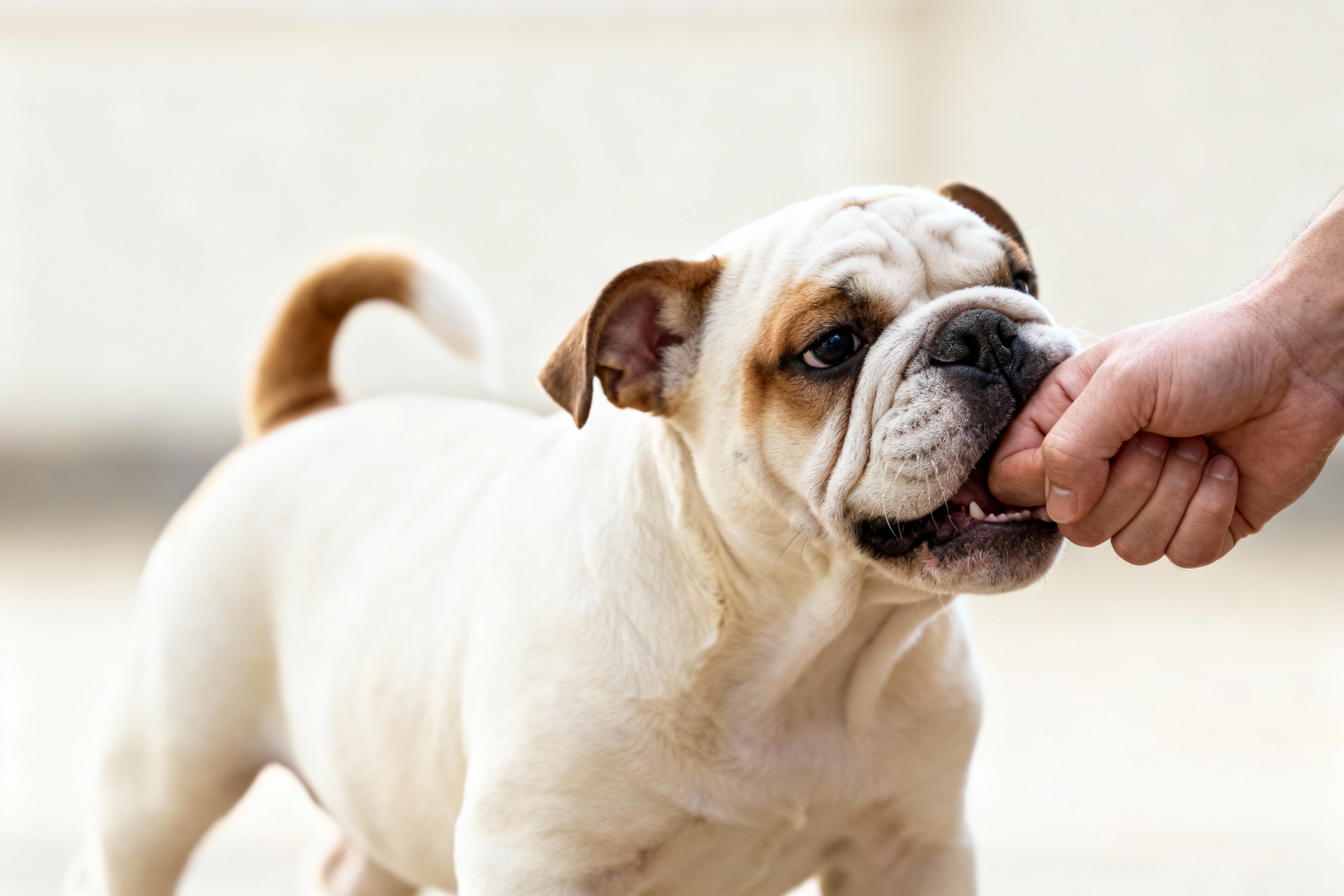
Puppy teeth look tiny. They feel like sewing needles. If your bulldog pup treats your fingers like chew toys, you’re not alone.
The good news? You can teach bite control without killing the fun or the bond. Let’s turn those nibbles into nice manners—fast.
Understand Why Your Bulldog Puppy Bites

Bulldog puppies bite for three big reasons: teething, play, and curiosity.
They don’t wake up plotting your doom—those jaws just explore the world. Add bulldog enthusiasm and boom: chomp city. Bulldogs also play rough by nature.
That stocky body and goofy energy make “gentle” a learned skill, not an instinct. So don’t label your pup “aggressive” too fast. You’ve got a normal puppy who needs guidance, not guilt.
Teething Timeline (AKA Why Everything Hurts)
Puppies start teething around 3-4 months and wrap up by 6-7 months. During this window, biting ramps up.
Gums ache, so they chew. Provide legal outlets and you’ll protect your skin (and furniture).
Teach Bite Inhibition (The Core Skill)
Bite inhibition means your dog learns to control jaw pressure. It’s the single most important skill for any puppy, especially a bulldog with a powerful mouth.
You want a dog who can play gently even when excited. Here’s a simple approach:
- Play with rules. Use a toy as a buffer between skin and teeth. If teeth touch skin, say “Ouch!” in a high but calm tone.
- Freeze for 3-5 seconds. No eye contact, no words, no movement.
Fun stops when teeth meet skin.
- Resume play calmly. Give the toy again. If biting happens twice in a minute, take a 30–60 second time-out behind a baby gate or you step away.
- Reinforce gentle mouth. When your pup mouths softly or licks instead, praise and keep the game going.
Consistency beats intensity. Do this every time and your pup learns: soft = play continues, hard = fun disappears.
What Not To Do
- No yelling or yanking. You’ll amp your pup up or scare them, neither helps.
- No muzzle-holding or alpha stuff. It’s outdated and damages trust, IMO.
- Don’t roughhouse with hands. Use toys.
Your hands are not tug ropes, FYI.
Give Them Stuff They’re Allowed To Bite
You can’t just say “don’t.” You need a “do.” Bulldogs love chewing—lean into it with a variety of safe options.
- Soft rubber toys (think Kong-type): great for teething and stuffing with food.
- Rope toys: supervised only; cut off loose strings.
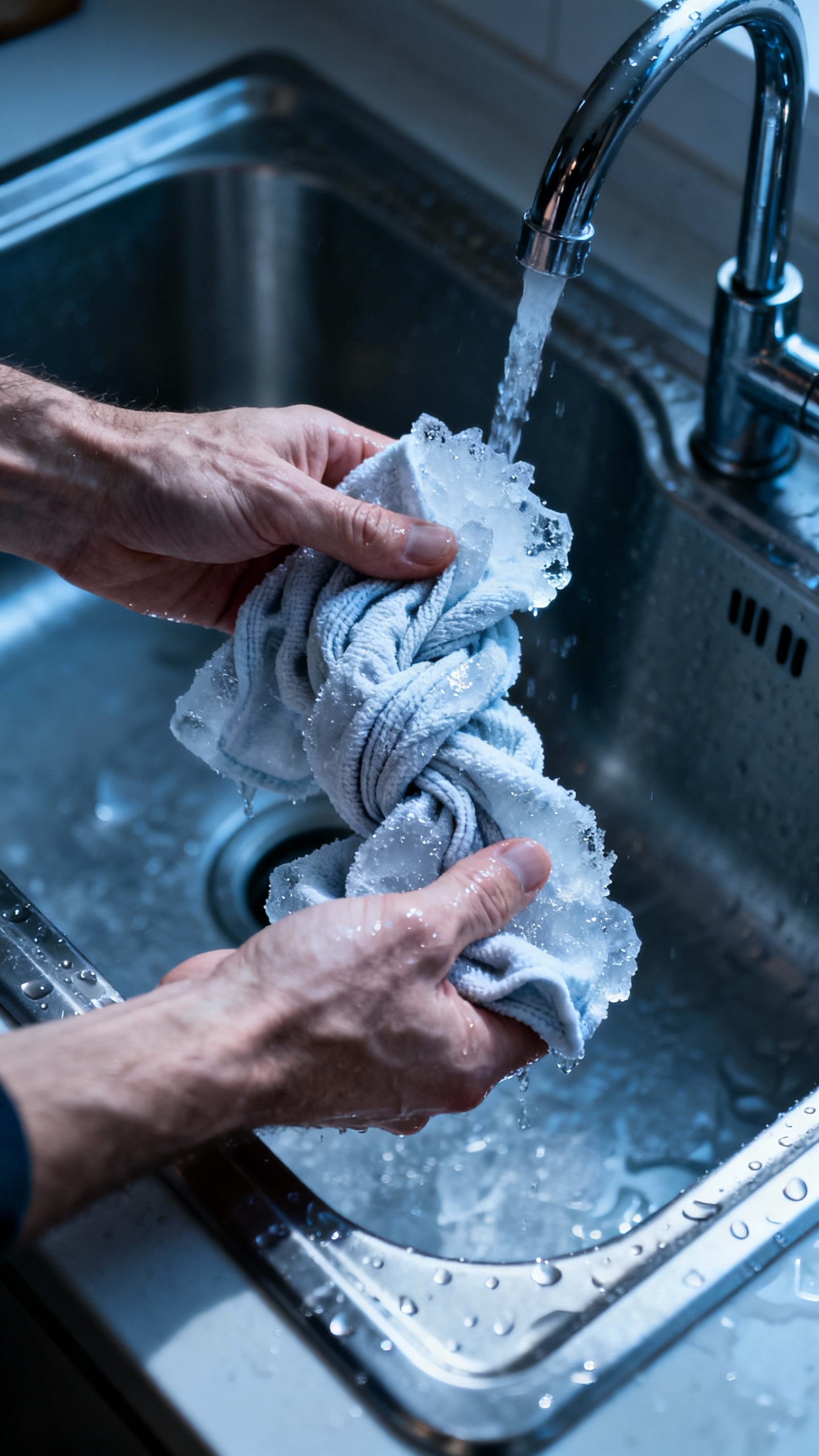
- Freeze it: wet a clean washcloth, twist, freeze, and offer for sore gums.
- Edible chews like bully sticks: size-appropriate and always supervised.
Rotate toys every few days so they feel “new.” If your pup loves a specific texture, stock up. Match the chew to the mood: rubber for bored pups, frozen for teething pain, tug toys for play sessions.
Use Food to Rewire Behavior
Bulldogs respond to food like it’s their life mission. Use it.
- Scatter feeding: Toss kibble on a snuffle mat when the zoomies hit. Nose work calms the brain.
- Stuffed Kongs: Blend kibble with wet food or yogurt, freeze, and offer during peak bite hours.
- Hand feeding for manners: Cue “easy” and only release treats for soft mouth contact.
Burn Off That Bulldog Energy (Mentally and Physically)
A tired bulldog is a polite bulldog.
You don’t need marathon walks, but you do need structure.
- Short training bursts: 3-5 minutes, 3-5 times a day. Sit, down, touch, leave it, drop.
- Puzzle feeders: Make meals a job, not a two-second inhalation.
- Tug with rules: Start with “take it,” end with “drop.” If teeth touch skin, game pauses. Simple.
- Calm play: Roll a ball instead of hyped-up fetch.
Bulldogs overheat easily—watch that.
Pro tip: Schedule high-chew activities during your pup’s “witching hours” (often morning and early evening). Preempt meltdowns and everyone wins.

Train Smart Commands That Help With Biting
A couple of taught words can save your ankles. OK, and your sleeves.
- “Drop”: Trade a treat for whatever’s in your pup’s mouth.
Mark “yes,” reward, then give the toy back sometimes so they don’t fear losing it.
- “Leave it”: Start with food in your closed hand. When your pup stops pestering, mark and reward from the other hand. Work up to toys and moving hands.
- “Easy”: While taking treats, only deliver when their mouth is gentle.
If they lunge, the treat hides. Gentle earns goodies.
Handling Exercises = Fewer Freakouts
Bulldogs need grooming and vet checks. Teach them that hands near faces mean snacks, not stress:
- Touch a cheek.
Treat.
- Lift a lip. Treat.
- Tap a tooth with a soft finger. Treat.
- Open the mouth briefly.
Treat jackpot.
Do this for 30 seconds a day. You’ll build trust and reduce defensive nibbling.
Manage the Environment Like a Pro

You can troubleshoot a lot just by setting up your space. Management prevents rehearsal of bad habits.
- Baby gates and pens: Create a calm zone for cool-downs, not punishment.
- Leash indoors: A lightweight house line lets you guide without grabbing collars (which can trigger more mouthing).
- Clothing armor: Wear long sleeves and thicker fabrics during training. Protect your skin while you teach.
If kids live in the house, set rules.
No chase games, no squealing near the pup, no waving hands in faces. Model calm play and supervise always.
Common Mistakes That Make Biting Worse
We’ve all done at least one of these. Let’s not.
- Letting the pup get overtired: Puppies with no nap schedule go feral.
Crate or pen for naps every 1–2 hours.
- Mixed messages: Rough hands one minute, “no biting!” the next. Keep play consistent: toys only.
- Ignoring early signs: Zoomies, clingy behavior, and humping often precede bitey bursts. Redirect before the storm.
- Underestimating bulldog stubbornness: They’re smart and strong-willed.
Keep sessions short and upbeat. End on a win.
FAQs
When will my bulldog puppy stop biting?
Most puppies improve a lot by 6-7 months as teething ends and training sinks in. That said, bulldogs can stay mouthy if you don’t practice bite inhibition daily.
Keep at it and you’ll see steady progress within a few weeks.
Is my puppy aggressive?
Probably not. True aggression includes stiff bodies, hard stares, growling that escalates, and no interest in play. Most biting is play, teething, or excitement.
If you see escalation or fear signs, consult a qualified trainer for a personalized plan, FYI.
Should I use a spray bottle or shock collar?
Nope. Those tools suppress behavior without teaching the right choice and can damage confidence. Bulldogs respond great to clear rules, redirection, and rewards.
Teach what to chew and how to play nicely—don’t just punish.
What toys are safest for bulldog puppies?
Choose size-appropriate rubber toys, sturdy plush with minimal seams, and supervised edible chews. Avoid super-hard items like antlers for young teeth. If you can’t dent it with a thumbnail, it’s probably too hard for a puppy.
How do I stop biting during petting?
Keep sessions short.
Pet for 3 seconds, then offer a chew toy. If the pup mouths your hand, pause, then try again with a toy in play. Reward calm lying or gentle licks.
You can also scatter a few treats while you pet to create a “hands = good stuff” association.
What about puppy classes?
Great idea. Look for force-free classes with controlled play. Your pup learns bite inhibition with other dogs and gets socialization wins.
Plus you’ll get real-time coaching—IMO, worth every penny.
Conclusion
Bulldog puppies bite because they’re pups—teething, learning, vibing. You’ll fix it with a combo of bite inhibition training, chew options, smart commands, and environment management. Keep sessions short, keep your cool, and keep toys handy.
Do that, and those needle teeth turn into a polite, kissy bulldog sooner than you think.
Leave a Reply