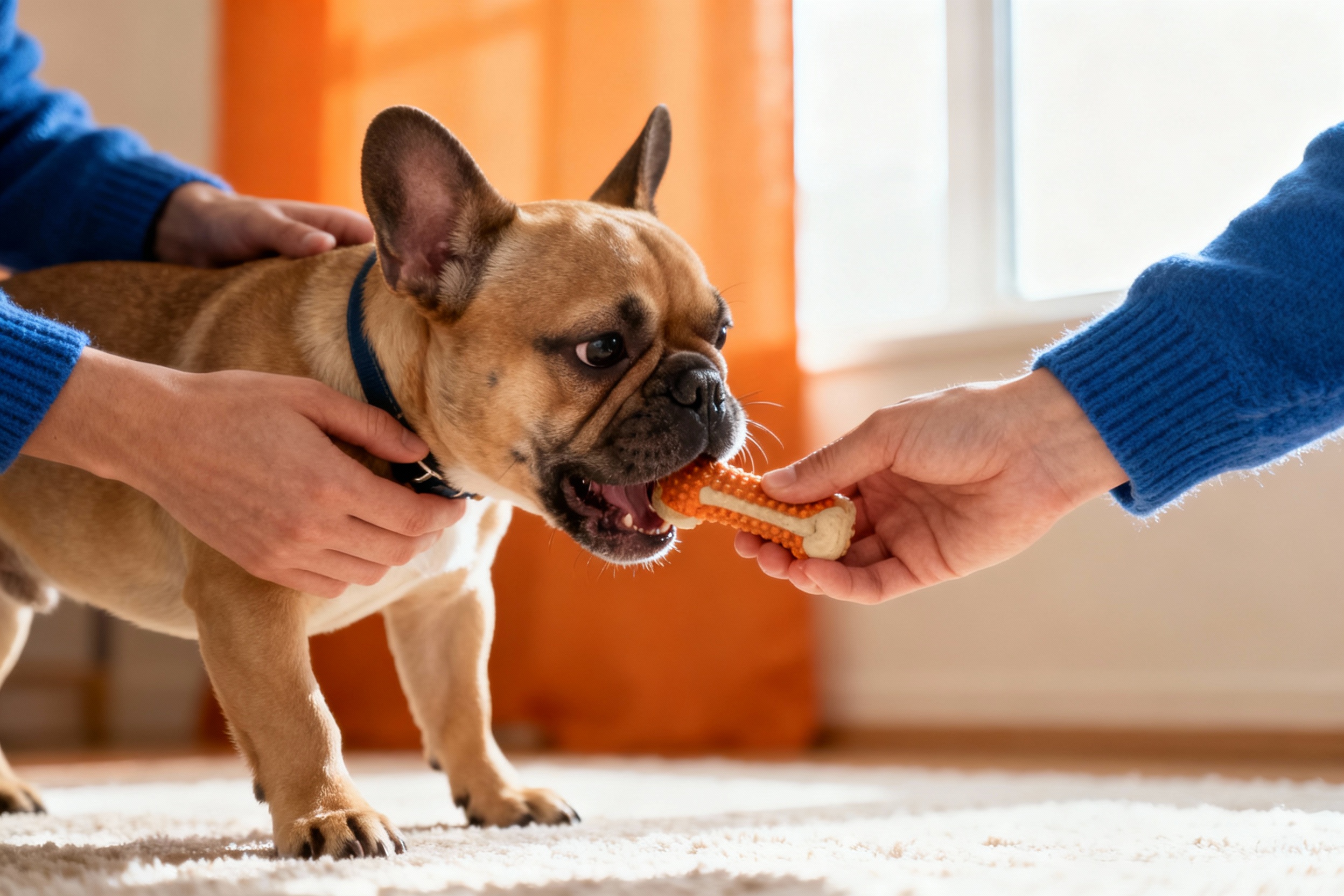
Frenchie puppy teeth hurt. Those little shark-nibbles seem cute for, like, two days. Then your hands, clothes, and sanity say “nope.” Good news: you can teach your French Bulldog pup to use their mouth gently and stop biting.
Better news: it doesn’t require magic—just consistency, timing, and the right toys. Let’s jump straight into how to curb those chomps without crushing your pup’s confidence or your vibe together.
Understand Why Your Frenchie Is Biting

French Bulldog puppies bite for three main reasons: teething, play, and curiosity. They’re not being “bad.” They’re exploring the world—your fingers included.
Teething hits from about 3–6 months. Gums hurt. Chewing helps.
Also, puppies learn bite strength by testing boundaries during play. If you don’t show them limits, they won’t guess them. Key idea: Your pup needs feedback, not scolding. You’ll teach them what to do with their mouth, not just what not to do.
Start With Bite Inhibition Training
Bite inhibition means your pup learns to control the force of their bite.
You don’t want “never bite,” you want “gentle mouth,” because dogs use their mouths for life. Here’s a simple plan:
- When your puppy bites too hard during play, say “Ouch!” in a sharp but not terrifying tone. Freeze for 2–3 seconds.
- Stop the game and withdraw attention.
No hands waving, no eye contact. Count to 10.
- Resume calmly. If they bite hard again, repeat.
If they mouth gently, praise and reward.
Consistency matters. Everyone in the home should react the same way. Mixed messages confuse pups and slow learning.
IMO, this one simple pattern teaches 80% of the lesson.
What If “Ouch” Winds Them Up?
Some Frenchies get hyped by squeals. If that’s your gremlin, skip the “ouch.” Simply say “Too bad”, drop the toy, stand up, and turn away for 10 seconds. Silence works wonders.

Redirect, Don’t Wrestle
If your pup aims for your hands, redirect to a toy they can legally destroy.
Keep a chew station ready in each room: a basket with 2–3 safe options. Best picks for Frenchie jaws:
- Rubber chew toys (like KONG) you can stuff with frozen wet food or yogurt.
- Rope toys for tug—great for energy and jaw work.
- Soft plush with squeakers for gentle chewers (supervise to avoid de-stuffing chaos).
Timing is everything. The second you see the “I’m gonna chomp that hand” face, offer the toy.
Then praise like they just paid your rent. Behavior you reward becomes behavior you get more of.
Frozen Relief for Teething
Teething Frenchies love cold pressure. Try:
- Frozen KONG with banana/yogurt blend (no xylitol, ever).
- Frozen damp washcloth tied in a knot (supervise).
- Chilled rubber toys designed for teething.
FYI, cold reduces gum inflammation and gives them a legal outlet.
Manage the Zoomies: Exercise and Structure
A tired puppy bites less.
Not exhausted—just satisfied. Frenchies don’t need marathon runs (please don’t), but they do need daily mental and physical activity. Try this daily rhythm:
- Morning: 10–15 minutes of sniffy walk + 5-minute training (sit, down, touch).
- Midday: Tug or fetch indoors, puzzle feeder, then nap.
- Evening: Short walk, flirt pole session (gentle), or a scatter feed in the yard.
Structure limits mischief.
Use a puppy playpen or gated area when you can’t supervise. Give safe chews. Freedom comes after they learn house rules.

Teach Alternate Behaviors
Don’t just say “no.” Give a “do this instead.” Top replacements:
- “Sit to say please”: Before petting, before meals, before play.
Calm sits get all the good stuff.
- “Find it!”: Toss treats on the floor when they get nippy. Nose work flips their brain from chomp to hunt.
- “Trade” cue: Offer a treat to get a toy back. Reward the release.
Zero tug-of-war over your sleeves.
Hands Are Not Toys
Stop hand-wrestling games. I know it’s fun, but you’re teaching them that skin equals play. Use toys as the “third thing” between you and their teeth.
Your future self will thank you.
Timing, Tone, and Energy (Yours Matters Too)

Dogs read your vibe. If you squeal, flap, or chase, your Frenchie thinks it’s party time. Use this formula:
- Calm correction: “Too bad.” Pause.
Turn away.
- Fast redirect: Toy in mouth. Cheerful “Yes!” when they switch.
- Short sessions: End play while it’s still good. Quit before gremlin mode starts.
And please skip aversive methods.
No muzzle grabs, no alpha rolls, no yelling. They don’t teach better choices. They just teach your puppy to distrust your hands.
Hard pass.
Socialize Smart and Set Boundaries
Puppy class with a qualified trainer? Gold. They’ll learn bite control from other puppies who yelp and pause play.
Just ensure the group size and energy match your Frenchie’s vibe. At home, teach kids to:
- Stand still like a tree if the pup gets grabby.
- Use toys, not hands, for play.
- Stop the game if teeth touch skin. Every time.
Boundaries are love.
They help your pup feel secure and calm. IMO, clear rules are how you get that squishy-faced cuddle bug you signed up for.
Track Progress and Know When to Get Help
Keep it simple:
- Log bites per day for a week.
- Note triggers (evening zoomies? visitors? kids running?).
- Adjust your schedule and training around those triggers.
If the biting looks aggressive (stiff body, growling with hard stares, guarding), or you’re not seeing improvement after 2–3 weeks of consistent training, bring in a certified positive-reinforcement trainer. You’re not failing—you’re being smart.
FAQ
When will my French Bulldog puppy stop biting?
Most Frenchies improve drastically by 5–7 months as adult teeth settle and training kicks in.
You’ll still see occasional mouthing during play, but with bite inhibition training, it’ll be gentle. Consistency shortens the timeline.
Is it okay to tap their nose or say “no” loudly?
Skip both. Physical corrections and yelling can make biting worse or create fear around hands.
Use short time-outs, redirection to toys, and rewards for calm behavior. It’s more effective and kinder.
What toys work best for strong chewers?
Go for durable rubber toys, rope for tug, and food puzzles. Rotate toys every few days so they feel “new.” Always supervise with softer toys that can rip—Frenchies are small but mighty.
How do I stop biting during petting?
Pet in short bursts with a toy available.
If the pup mouths your hand, pause petting immediately and offer the toy. Reward calm sits with gentle strokes. Over time, they learn that stillness gets affection.
My puppy bites ankles—help!
That’s herding play.
Stop moving, say “Too bad,” and step away. Then toss a toy ahead and cue “Find it!” You can also wear long socks or tuck in loose clothing while you train this out. Movement invites chase, so reduce it until they learn.
Should I use bitter sprays?
They can help protect furniture, but they won’t teach your puppy better choices by themselves.
Use them as a management tool alongside training and chew options.
Conclusion
Your Frenchie isn’t a land piranha—they’re a baby learning mouth manners. Use calm time-outs, redirect to great toys, reward gentle behavior, and give their brain and body regular workouts. Stick with it for a few weeks and you’ll see the chomp monster turn into a polite, mushy-faced legend.
FYI, you’ve got this—and your hands will thank you.
Leave a Reply