
Your German Shepherd puppy bites because puppies explore the world with their mouths, and Shepherds come preloaded with turbo-charged herding instincts. The nipping feels cute for three minutes… and then your ankle becomes a chew toy. Good news: you can fix this quickly with consistency and the right outlets.
Let’s turn your little land shark into a polite companion without killing the fun.
Understand Why Your GSD Puppy Bites
Puppies bite for four big reasons: teething, play, herding instincts, and over-arousal. German Shepherds aren’t being “dominant” when they nip. They’re wired to move things with their mouths—like sheep, kids, or your hoodie drawstrings. Your strategy changes when you know the “why.” Teething puppies need relief.
Bored puppies need a job. Overexcited puppies need a reset. If you guess wrong, you’ll nag the behavior instead of solving it.
Start With Bite Inhibition (Teach Soft Mouth)
You want your puppy to learn that human skin is off-limits and pressure matters.
That’s called bite inhibition. You can teach it during play with this simple system:
- Play gently with hands near your puppy. If teeth touch skin, say “Ouch!” in a calm, surprised tone (not yelling) and freeze for 2-3 seconds.
- If your puppy goes harder or keeps biting, stand up and end play for 20-30 seconds.
No lectures. Just boring statue mode.
- Resume play with a toy. Praise gentle behavior like it’s Nobel Prize–winning.
Consistency matters more than drama.
The puppy learns: “Bite skin = game ends. Gentle = game continues.” FYI, it’s normal if it gets slightly worse before it gets better—that’s called an extinction burst. Stay the course.
When To Avoid “Ouch!”
Some puppies think your “ouch” is a squeaky toy and get more excited.
If that happens, skip the noise and just end play quietly. No show, just go.
Redirect That Mouth To The Right Stuff
Your hands aren’t toys. Your socks aren’t toys.
Your actual toys are toys. Keep a few within reach at all times.
- Offer a toy before your pup gets grabby. Preempt the bite.
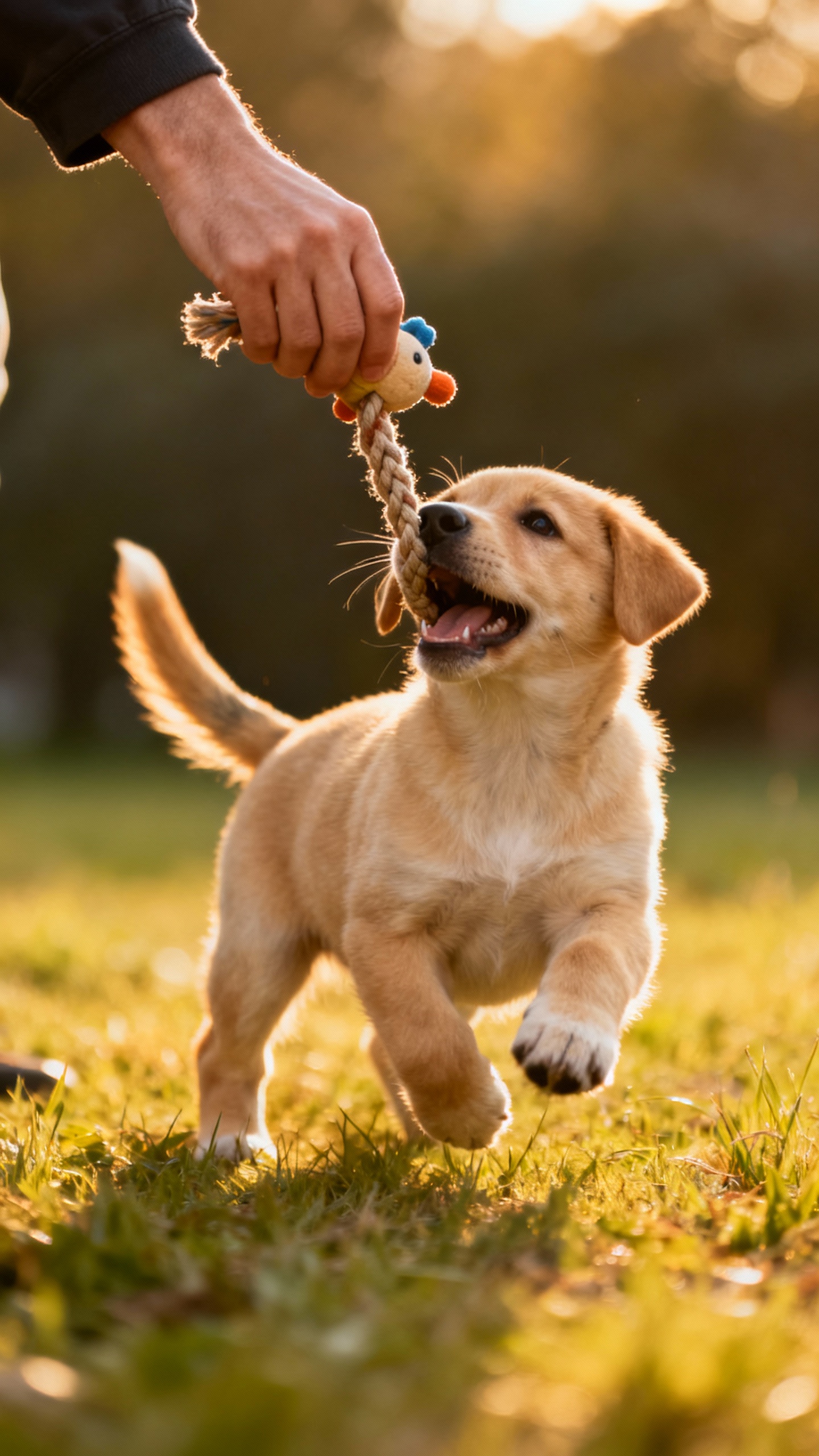
- When teeth land on you, swap your hand for a toy without fanfare.
- Reward the choice. Praise and play when your pup bites the toy, not you.
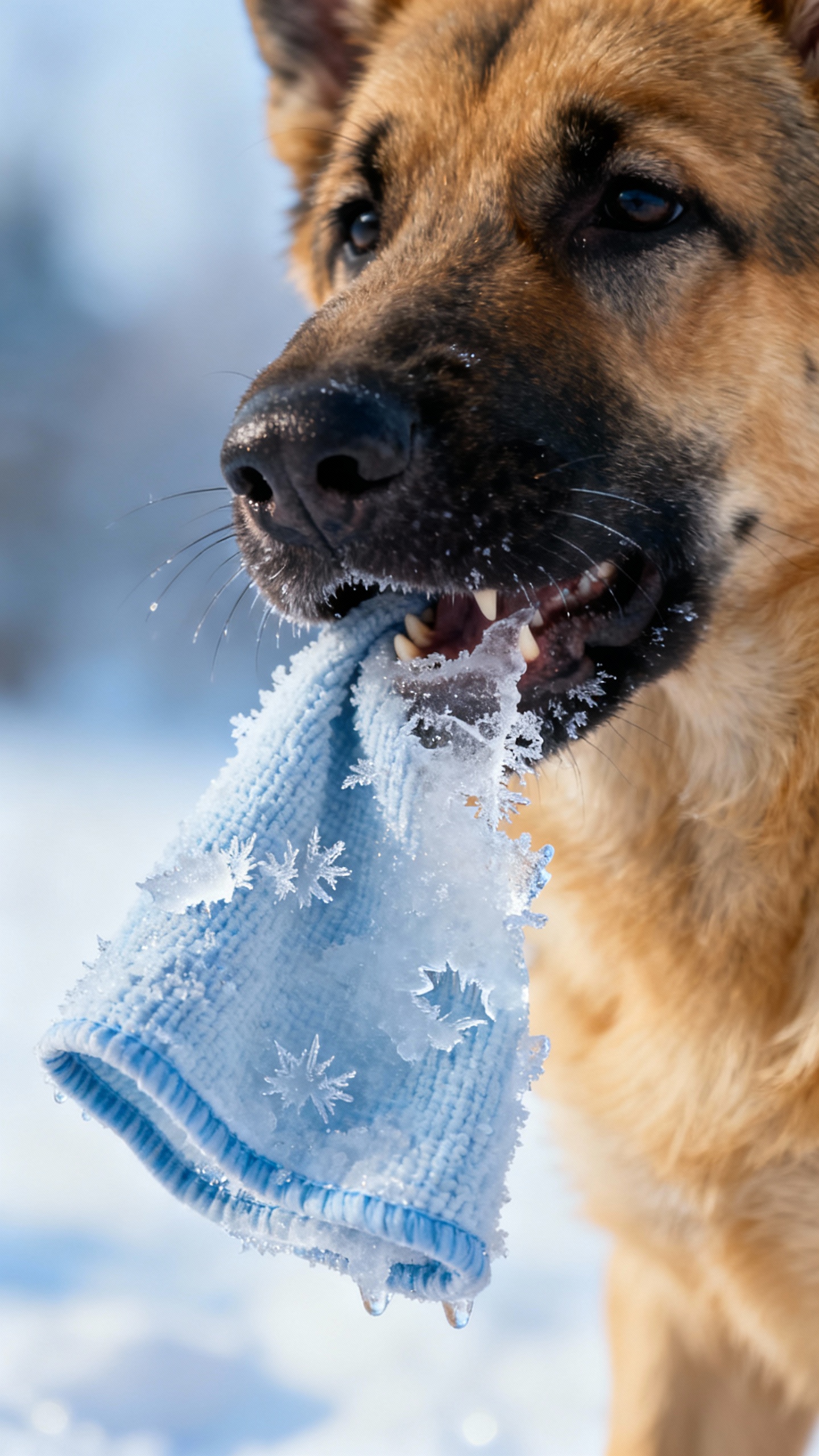
Great chew options for teething: rubber Kongs, braided rope toys, frozen dishcloths (clean and damp, then frozen), and long-lasting chews sized for puppies. Avoid hard bones or antlers—those can crack baby teeth.
IMO, stuffed Kongs are canine magic.
Make Toys “Alive”
Puppies chase movement. Drag a tug toy slowly across the floor. Wiggle it, stop it, move it again.
Inanimate objects? Meh. “Prey” that moves? Jackpot.
Teach A Reliable “Leave It” And “Drop It”
These two cues will save your butt daily.
Train them when your puppy is calm first, then in play.
Leave It (Don’t Touch)
- Hold a treat in a closed fist. Puppy sniffs/licks/paws? Wait it out.
- The moment your puppy backs off, mark (say “Yes!”) and reward with a different treat from the other hand.
- Add the cue: say “Leave it,” present the fist, reward for backing off.
Level up with placed treats and toys.
Drop It (Let Go)
- Offer a boring toy. Let the puppy take it.
- Show a high-value treat near the nose. When the puppy spits the toy, say “Yes!” and give the treat.
- Trade back and forth.
Add the cue “Drop it.” Then use it during tug: tug-tug-tug, “Drop it,” treat, resume tug. The reward is both food and the game—double win.
Pro tip: When your dog knows you’ll give things back, they’ll drop faster. Guarding often fades when trades feel fair.
Use Structure To Prevent Over-Arousal
Most biting spikes when your puppy gets overtired, understimulated, or zoomied beyond reason.
Manage the schedule like a toddler.
- Short play blocks: 5–10 minutes, then a calm break.
- Crate or pen naps: 1–2 hours of solid downtime after active play.
- Chew sessions: 15–20 minutes of quiet chewing after walks to take the edge off.
- Predictable routines: walk, train, chew, nap. Repeat. Boring?
Yes. Effective? Absolutely.
Zoomies Protocol
Zoomies hit, shark mode engages.
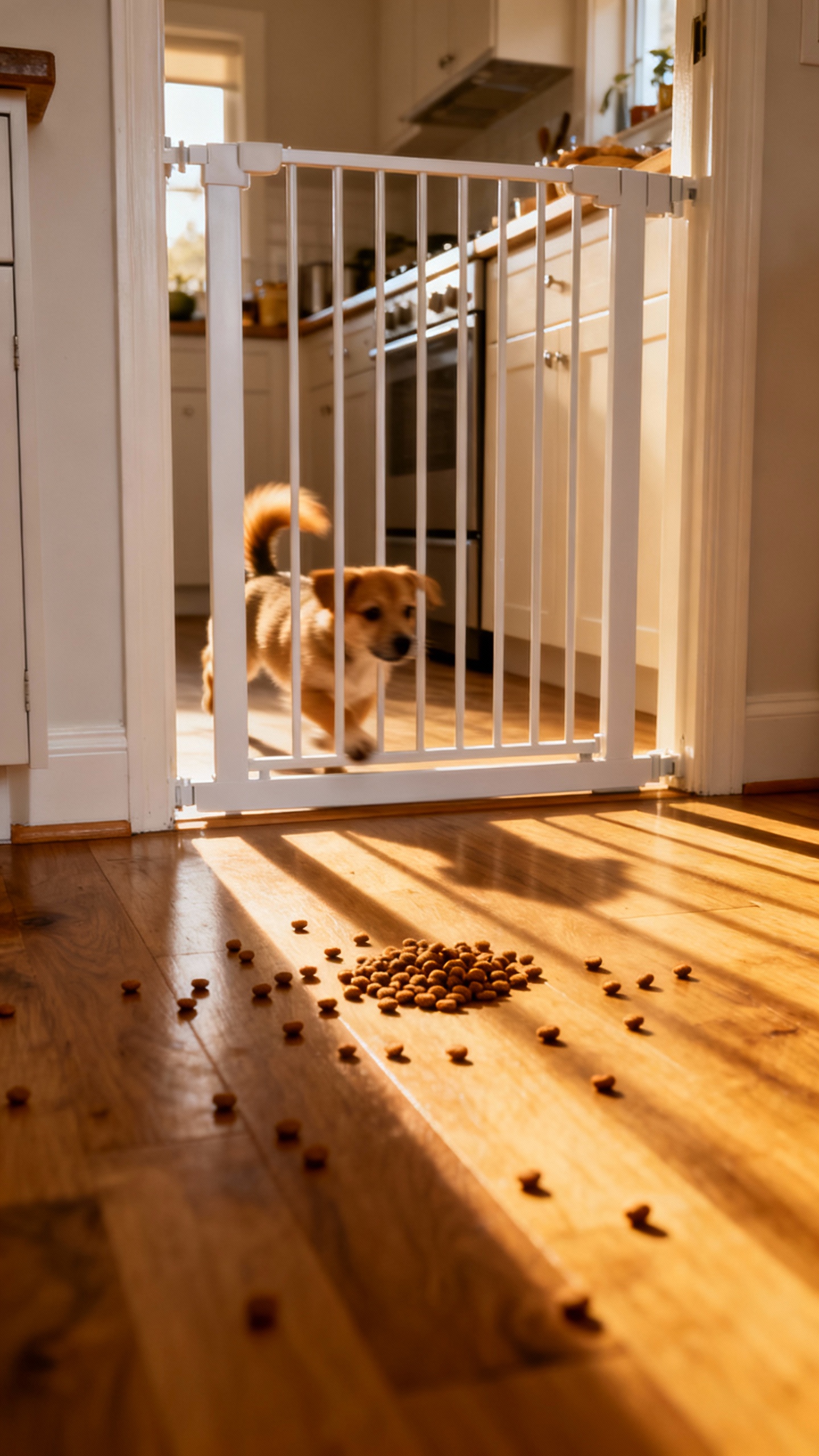
What now? Move calmly to a safe area, toss a scatter of kibble on the floor, and guide your pup behind a baby gate or into a playpen with a chew. You didn’t “punish”—you lowered arousal.
Big difference.
Give Your GSD A Job (Or They’ll Invent One)
German Shepherds need mental work like other dogs need naps. If you skip brain games, the puppy will “herd” you with their teeth. Not ideal.
Try this weekly toolkit:
- Daily training sprints: 3–5 minutes each, 3–6 times per day. Sit, down, place, recall, touch, heel position.
- Nosework: hide treats around a room. Start easy, increase difficulty.
Sniffing drains energy fast.
- Structured tug: rules-based play with “Sit,” “Take it,” “Drop,” and “Enough.”
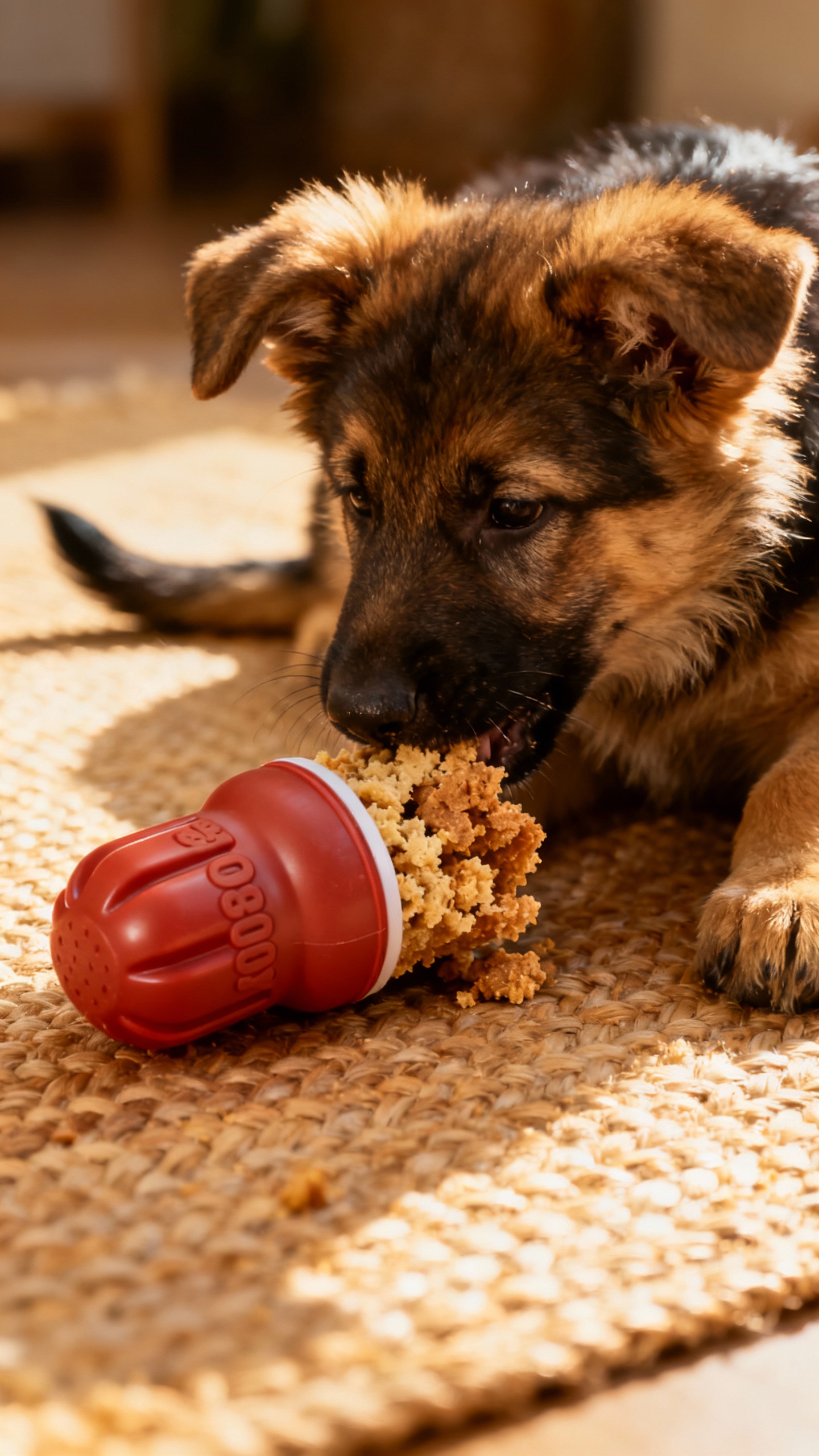
- Puzzle feeders: Kongs, lick mats, snuffle mats. Meals become work time.
- Impulse control games: hand target, “Leave it,” door manners. Bite prevention starts with calm choices.
IMO: A tired mind beats a tired body for reducing mouthiness.
You can’t out-run a German Shepherd. You can out-think one.
Socialize The Right Way (Without Creating A Bite Monster)
Socialization isn’t “let the puppy wrestle with 20 dogs.” That can backfire and crank up nipping. You want controlled exposures to different places, people, surfaces, and sounds.
- Calm meet-and-greets: one polite dog at a time, short sessions, frequent breaks.
- People practice: teach “Sit” for greetings.
Pup sits, gets a treat, then hello. No sit? No hello.
Clear rules, happy outcomes.
- Handling drills: gently touch paws, ears, collar, then treat. Less sensitivity = less mouthy protest later.
What Not To Do (Because It Backfires)
Some “tips” sound tough but create bigger problems.
- No muzzle grabs or alpha rolls. They scare puppies and damage trust.
- No yelling or smacking the nose. It can escalate arousal or create fear.
- No rough hand wrestling. You teach that skin = play. Use toys instead.
- No endless fetch marathons. Overstimulated puppies mouth more.
Mix in calm training and chew breaks.
Sample Day Plan To Reduce Biting
Use this as a template and tweak for your puppy’s age and energy.
- Morning: potty, 5-minute training, short sniffy walk, breakfast in a Kong, nap.
- Late morning: play and tug with rules, “Drop it” practice, chew time, nap.
- Afternoon: nosework or puzzle feeder, handling drills, calm leash walk, nap.
- Evening: training sprint, controlled play with a toy, settle on mat with chew, bedtime routine.
Track patterns. If biting spikes at 7 p.m., preempt it with a chew and a short nap at 6:30. You’re the project manager now.
FAQs
How long does the biting phase last?
Most GSD puppies improve a lot by 5–6 months with consistent training. Teething peaks around 4–6 months.
Keep at it and you’ll see steady wins. Some residual mouthiness can linger until adulthood, but it should be gentle and rare.
Is my puppy being aggressive?
Probably not. Play biting, herding nips at ankles, and teething chews are normal.
Warning signs of real aggression include stiff body, hard stare, frozen posture, growling when approached without context, and escalating intensity. If you see those, consult a certified trainer sooner rather than later.
Should I use bitter sprays on my hands?
You can, but it’s a Band-Aid, not a solution. Better to teach bite inhibition, redirect to toys, and manage arousal.
Bitter sprays help protect specific items (like table legs) while you train the actual behavior.
What toys work best for mouthy Shepherds?
Durable tug toys, rubber Kongs, braided ropes, and food-stuffed chew toys. Rotate toys so they stay exciting. Avoid ultra-hard chews for pups and any toy that sheds chunks.
Safety first, dental bills never.
Can I let my puppy play with older dogs to teach manners?
Yes, but choose the right mentor dog: calm, tolerant, and able to disengage. Keep sessions short and supervised. One good role model beats five chaotic wrestle buddies.
What if my puppy bites kids’ ankles?
That’s the herding instinct talking.
Put a toy in your hand and coach your puppy to chase the toy, not the feet. Teach kids to stop moving and stand “like a tree,” then you redirect and reward the pup for engaging the toy. Gate off high-chaos zones until training sticks.
Conclusion
You can absolutely stop a German Shepherd puppy from biting without getting harsh.
Teach bite inhibition, redirect to toys, structure the day, and give that big brain a job. Be boring when teeth hit skin and wildly generous when your pup makes good choices. Stick with it for a few weeks and your land shark becomes a legend.
FYI: your ankles will thank you.
Leave a Reply